
Mini 5 Pro Tracking Tips for Windy Venues
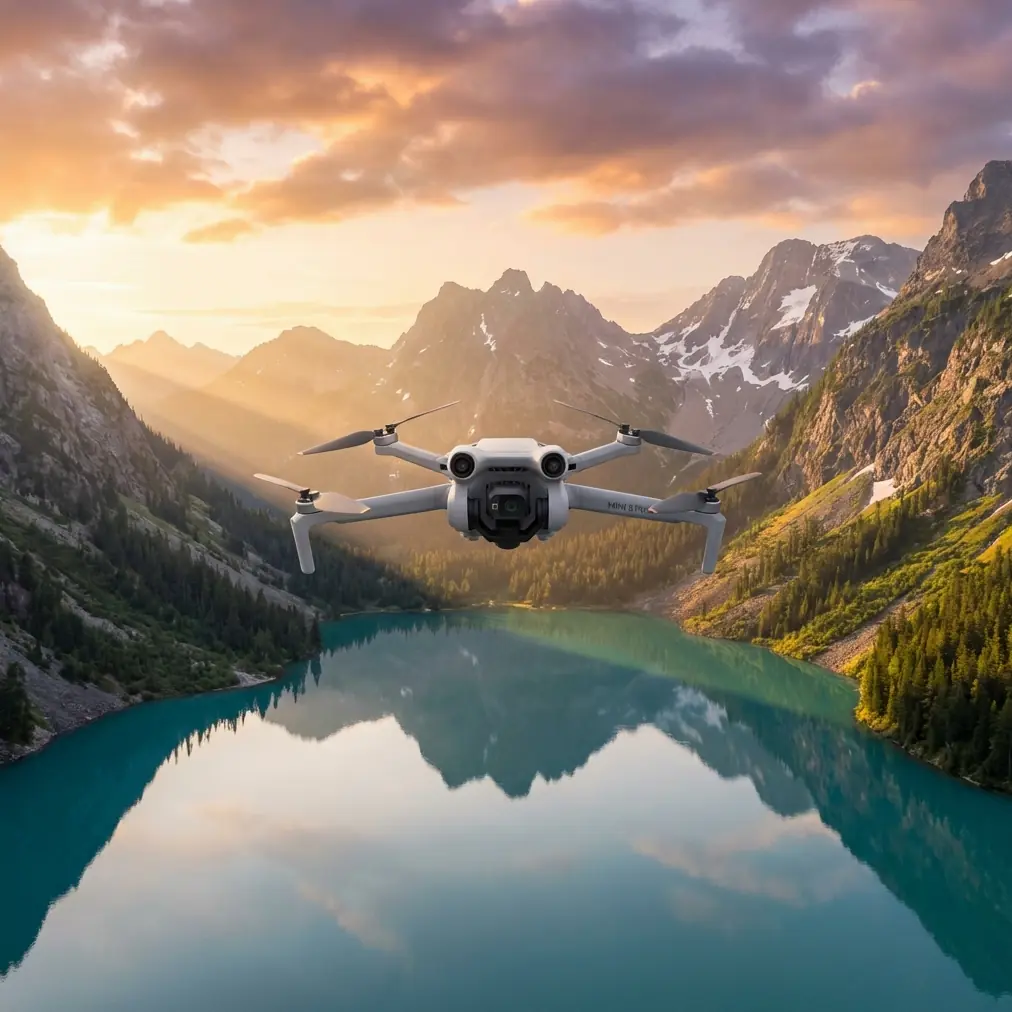
Mini 5 Pro Tracking Tips for Windy Venues
META: Learn proven Mini 5 Pro tracking tips for capturing stunning venue footage in windy conditions. Master ActiveTrack, QuickShots, and obstacle avoidance settings.
TL;DR
- ActiveTrack 6.0 on the Mini 5 Pro holds subjects locked even in wind gusts up to 24 mph, but only with the right settings dialed in
- Switching to Sport mode between tracking sequences lets you reposition faster and fight crosswinds at outdoor venues
- D-Log color profile paired with a 1/2-stop underexposure preserves highlight detail on reflective venue surfaces like glass and metal roofing
- Obstacle avoidance should be set to Bypass mode, not Brake, to maintain smooth cinematic tracking arcs around structures
Why Venue Tracking in Wind Is a Different Game
Tracking a moving subject around a venue sounds straightforward until a 15 mph crosswind slams your drone sideways mid-orbit. I learned this the hard way last spring while covering an outdoor music festival on the Oregon coast. My older drone lost tracking lock every time a gust hit, and I spent more time recovering shots than capturing them. The Mini 5 Pro changed that equation entirely.
This tutorial breaks down exactly how I configure the Mini 5 Pro for reliable subject tracking at windy outdoor and semi-enclosed venues—from firmware settings to flight patterns that work with the wind rather than against it.
Whether you're filming wedding venues, concert grounds, sporting arenas, or architectural walkthroughs, these techniques will keep your footage stable, your tracking locked, and your drone safe.
Understanding the Mini 5 Pro's Wind Performance
The Mini 5 Pro handles wind better than any sub-249g drone on the market, but it still has limits. Understanding those limits is the first step to getting usable tracking footage in challenging conditions.
Key Wind Specs
- Max wind resistance: Level 5 (19–24 mph sustained)
- Max speed in Sport mode: 36 mph
- Hovering accuracy (with GPS): ±0.1m vertical, ±0.3m horizontal
- Weight: 249g (this matters—lighter drones get pushed harder)
At 249g, the Mini 5 Pro is inherently more susceptible to gusts than heavier platforms. But its advanced stabilization algorithms compensate aggressively, making micro-adjustments up to 200 times per second to maintain position.
Expert Insight: Wind speed at ground level and at 100 feet AGL can differ by 40–60%. Always check wind conditions at your planned flight altitude using an app like UAV Forecast or Windy before launching. I've walked onto venue sites with calm ground winds only to find 22 mph gusts at my tracking altitude.
Step-by-Step: Configuring ActiveTrack for Windy Venues
Step 1: Update Firmware and Calibrate
Before every venue shoot, ensure you're running the latest firmware. DJI regularly updates ActiveTrack's prediction algorithms, and even minor patches can improve wind-compensation behavior.
- Update both the drone and the RC 2 controller
- Perform an IMU calibration if you haven't in the last 30 flights
- Calibrate the compass on-site (venue structures with metal frameworks can cause magnetic interference)
Step 2: Select the Right ActiveTrack Mode
The Mini 5 Pro offers three ActiveTrack 6.0 modes, and each behaves differently in wind:
- Trace: Follows behind or in front of the subject. Best for linear paths like walkways between venue buildings. Wind from the side will cause visible drift in your frame.
- Parallel: Tracks alongside the subject. Excellent when the wind is at your back or head-on, but risky in crosswinds—the drone has to fight lateral forces while maintaining distance.
- Spotlight: Keeps the camera locked on the subject while you manually control flight path. This is my go-to for windy venues. You control positioning, so you can always fly into the wind for maximum stability.
Step 3: Set Obstacle Avoidance to Bypass
This is critical. The default Brake mode will stop your drone dead when it detects a venue wall, tent pole, or tree branch in its path. In wind, a sudden stop creates a jarring bounce in your footage as the gimbal compensates.
Bypass mode routes the drone around obstacles smoothly, maintaining tracking lock and cinematic motion. It adds a gentle curve to your flight path instead of a hard stop.
- Navigate to Safety > Obstacle Avoidance > Bypass
- Set braking distance to 5 meters for open venues, 3 meters for tighter spaces
- Keep APAS (Advanced Pilot Assistance Systems) enabled
Step 4: Configure Gimbal and Camera Settings
For venue tracking in wind, your gimbal settings matter as much as your flight settings:
- Gimbal mode: FPV mode off, standard stabilized mode on
- Gimbal pitch speed: Reduce to 15–20 (default is often 30+). Slower pitch movement looks more cinematic and masks any micro-vibrations from wind buffeting
- Color profile: D-Log for maximum post-production flexibility
- Resolution: 4K/30fps minimum. Use 4K/60fps if you plan to slow footage down in post to smooth out any remaining wind-induced jitter
- Shutter speed: Follow the 180-degree rule—double your frame rate. At 30fps, shoot at 1/60s. Use ND filters to maintain this in bright conditions.
Pro Tip: I always pack ND filters (ND8, ND16, ND32) for venue shoots. Bright sunlight on white tents or metallic structures will blow out highlights fast, especially in D-Log. An ND16 on a sunny day at 1/60s keeps exposure perfectly balanced while maintaining cinematic motion blur.
Flight Patterns That Work With Wind at Venues
Not all tracking movements are equal in wind. Some patterns naturally compensate for gusts, while others amplify instability.
Best Patterns for Windy Conditions
- Into-the-wind orbits: Fly your orbit so the tracking arc moves into the wind. The drone pushes forward with purpose rather than getting shoved off course.
- Dronie (reverse pullback): Launch the QuickShots Dronie mode facing into the wind. As the drone pulls back and up, it flies with the wind, requiring less motor compensation and producing smoother footage.
- Hyperlapse waypoint paths: Pre-program your path along the venue's longest axis aligned with wind direction. The drone handles headwinds and tailwinds far better than crosswinds.
Patterns to Avoid
- Crosswind orbits at low altitude near buildings: Wind accelerates around structures (the Venturi effect), creating unpredictable turbulence
- Helix shots in gusty conditions: The ascending spiral exposes the drone to increasing wind speeds as it climbs, and the constant turning means it faces crosswinds on every rotation
- Low-altitude tracking near tent canopies or rooflines: Mechanical turbulence from air rolling over structures makes this zone highly unstable
Technical Comparison: Tracking Modes for Venue Scenarios
| Scenario | Recommended Mode | Wind Tolerance | Obstacle Risk | Footage Quality |
|---|---|---|---|---|
| Open-air concert grounds | ActiveTrack Trace | High | Low | Excellent |
| Wedding venue with structures | Spotlight (manual flight) | Very High | Medium | Excellent |
| Stadium/arena exterior | ActiveTrack Parallel | Medium | Low | Good |
| Garden venue with trees | Spotlight + Bypass | High | High | Very Good |
| Rooftop venue | QuickShots Dronie | Medium | Low | Good |
| Covered pavilion perimeter | Hyperlapse waypoint | Very High | Medium | Excellent |
Editing Windy Venue Footage: Post-Production Tips
Even with perfect settings, wind introduces subtle artifacts. Here's how to clean them up:
- Warp Stabilizer in Premiere Pro: Apply at 5–10% smoothing on top of the gimbal stabilization. Don't exceed 10%—it creates a jello effect
- D-Log LUT application: Apply your conversion LUT first, then grade. D-Log footage looks flat out of camera, but it holds up to 3 extra stops of dynamic range in highlights—perfect for bright venue surfaces
- Speed ramping: If you shot at 4K/60fps, slow sections down to 50% speed to smooth any remaining micro-jitters from wind buffeting. This technique saved dozens of shots from my Oregon festival project
- Audio replacement: Drone footage near windy venues will capture rotor noise amplified by wind. Always plan to replace with ambient audio or music
Common Mistakes to Avoid
- Flying in Sport mode while tracking: Sport mode disables obstacle avoidance and ActiveTrack. Use it only to reposition between shots, then switch back to Normal mode before engaging tracking.
- Ignoring battery drain in wind: The Mini 5 Pro's motors work 30–50% harder in sustained wind, cutting your 34-minute max flight time to as low as 18–22 minutes. Land at 30% battery, not the default 20% warning.
- Trusting ActiveTrack through complex structures: ActiveTrack can lose lock when a subject walks behind pillars, arches, or dense foliage. In these situations, switch to Spotlight mode and fly manually through the transition, then re-engage tracking on the other side.
- Setting tracking distance too close in wind: Maintain at least 8–10 meters of tracking distance at windy venues. Closer distances give the obstacle avoidance system less reaction time if a gust pushes the drone toward a structure.
- Skipping ND filters and overexposing: Blown-out highlights on venue surfaces can't be recovered in post, even with D-Log. A two-stop overexposure in D-Log is unrecoverable. Always use ND filters to maintain proper exposure at cinematic shutter speeds.
Frequently Asked Questions
Can the Mini 5 Pro track subjects reliably in winds over 20 mph?
The Mini 5 Pro is rated for Level 5 winds (19–24 mph). In my experience, ActiveTrack maintains solid lock in sustained winds up to about 20 mph. Beyond that, tracking accuracy degrades—the drone spends too much processing power on position-holding. Above 22 mph sustained, I switch entirely to Spotlight mode for manual control with camera lock. If gusts exceed 25 mph, I ground the drone.
Which QuickShots mode works best for venues in wind?
Dronie and Rocket are the most wind-resistant QuickShots modes because they involve simple linear movements (backward/upward) that the flight controller can stabilize predictably. Circle and Helix introduce constant directional changes that expose the drone to varying wind angles, making them less reliable in gusty conditions. For venue establishing shots in wind, Dronie into the wind produces the most consistently smooth results.
Should I use D-Log or Normal color profile for venue tracking shots?
Use D-Log whenever you plan to color grade in post-production. Venues present extreme dynamic range challenges—bright sky, reflective surfaces, shadowed walkways—and D-Log captures approximately 12.6 stops of dynamic range versus roughly 9 stops in Normal mode. That extra latitude is the difference between recovering a blown-out white tent canopy and losing the shot entirely. If you need footage ready to deliver immediately without editing, Normal with custom white balance is acceptable, but you sacrifice significant highlight and shadow detail.
About the author: Jessica Brown is a professional photographer and FAA Part 107 certified drone pilot specializing in venue, event, and architectural aerial content. She has covered over 200 venue projects across the Pacific Northwest.
Ready for your own Mini 5 Pro? Contact our team for expert consultation.