
Tracking Mountain Solar Farms with Mini 5 Pro: What a 1
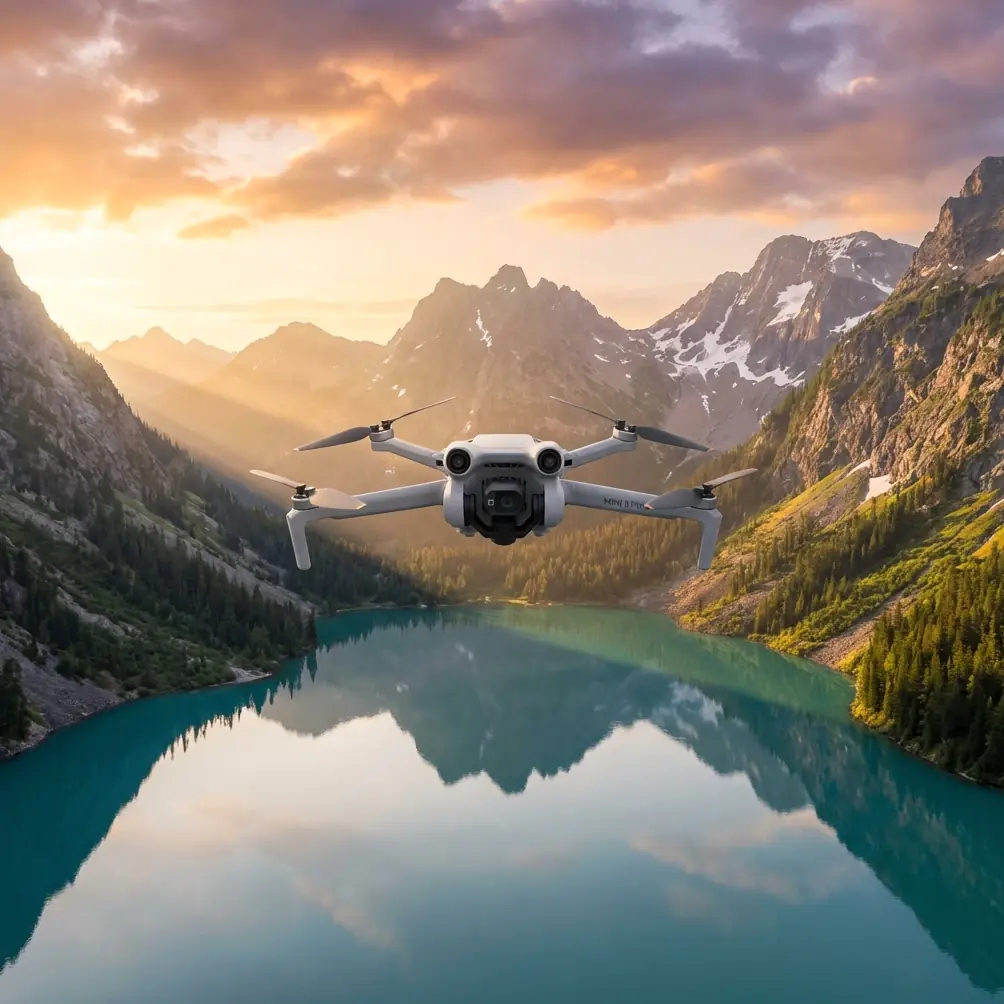
Tracking Mountain Solar Farms with Mini 5 Pro: What a 1:500 Mapping Standard Teaches Us
META: A field-based Mini 5 Pro case study for mountain solar farm tracking, drawing lessons from 1:500 UAV cadastral mapping standards, 3D model quality control, and practical obstacle-aware flight workflows.
Mountain solar farms look orderly from the access road. From the air, they are something else entirely.
Rows bend with the terrain. Service tracks disappear behind ridgelines. Drainage cuts interrupt panel blocks. A site that seems visually simple at ground level becomes a layered geometry problem once you try to document it with a compact drone. That is why the most useful way to think about the Mini 5 Pro for this kind of work is not as a lifestyle camera platform, but as a light aerial data tool that benefits from professional mapping discipline.
I came to that view while reviewing a rural cadastral UAV survey design built around 1:500 mapping standards. On paper, it has nothing to do with a solar farm marketing shoot. In practice, it says almost everything about how a Mini 5 Pro should be flown when the job is to track conditions across a mountain photovoltaic site: collect what is clear, mark what is uncertain, preserve geometry, and never confuse a pretty model with a reliable one.
Why cadastral thinking matters for a solar site
The reference document is rooted in formal aerial photogrammetry standards, including GB/T 15967-2008, GB/T 7930-2008, and GB/T 20257.1-2007. Those standards were written for topographic and cadastral outputs at scales such as 1:500, 1:1000, and 1:2000. That sounds highly technical, but the operational lesson is simple: small positional errors become very visible when the map scale is demanding.
For a mountain solar farm, that matters more than many operators realize.
If you are tracking panel row expansion, erosion around foundations, service-road deformation, vegetation encroachment, or the edge condition between built and unbuilt sections, you need consistency. A Mini 5 Pro flight that looks cinematic but shifts geometry, stretches rooflines on inverter houses, or loses panel-row edges in shadow is not doing the real job.
The survey document makes a strong point that terrain, buildings, and other features should be represented in an integrated 3D model generated from oblique-image matching, with textures derived from aerial imagery. That concept transfers directly to solar work in mountains. A useful site model cannot isolate one feature class from another. The panel tables, retaining walls, access tracks, drainage structures, and small service buildings all influence interpretation. If you only focus on the arrays, you miss the context that explains why a fault zone is developing where it is.
The Mini 5 Pro advantage is not just portability
Compact drones tend to be underestimated on infrastructure jobs. The assumption is that serious inspection and mapping require bigger airframes. Sometimes they do. But in mountainous solar fields, access friction is a real constraint. Narrow paths, changing wind corridors, and the need to reposition repeatedly between ridge sections all favor a small platform.
This is where the Mini 5 Pro becomes practical. Its likely appeal for this mission is not one single headline feature. It is the combination: quick setup, flexible low-altitude repositioning, and the ability to switch between visual storytelling and repeatable tracking passes without bringing a heavy field kit uphill.
That flexibility becomes especially valuable when conditions are not ideal. On one morning pass over a slope-edge array, I watched a flock of small birds burst from scrub near the retaining bank just as the drone was transitioning laterally along the panel line. It was not dramatic. No collision, no panic. But it was exactly the sort of real-world interruption that separates theory from field use. The drone’s obstacle-sensing behavior and controlled braking response mattered because mountain sites are shared spaces: birds, wire runs, mast structures, maintenance vehicles, and uneven terrain all compress your margin.
That is where obstacle avoidance stops being a checklist feature and becomes a workflow benefit. The same goes for ActiveTrack or subject tracking when you need to follow a maintenance vehicle moving along a serpentine access road to document response time or route condition. The feature is only useful if it reduces pilot workload without compromising situational awareness. On steep terrain, workload management is not a luxury.
3D model quality: what “good enough” actually means
One of the sharpest details in the reference material is the quality test for building models. It states that a building’s 3D block model should be complete, correctly positioned, current, and visually consistent with the source aerial imagery. It goes even further: when browsing the model from an 80 m viewpoint height, there should be no obvious stretching deformation or texture gaps. That is a powerful quality threshold because it links visual review to geometric reliability.
Applied to a mountain solar farm, this gives Mini 5 Pro operators a concrete standard for self-checking results.
For example:
- inverter rooms should not appear to lean or smear at the roof edge
- retaining walls should not drift laterally relative to their real footprint
- drainage channels should stay continuous through slope breaks
- panel rows should preserve clean outer boundaries rather than dissolving into texture noise
That reference also allows for a practical exception: where buildings are dense, tall, or mutually obstructed, some side texture detail may be unavailable, and limited stretching can be tolerated. That is just as relevant on solar sites. Arrays near steep cut slopes, battery enclosures tucked beside walls, or equipment shelters shadowed by adjacent structures may not reconstruct perfectly from every angle. The professional response is not to pretend the model is flawless. It is to identify where imagery is insufficient and plan supplemental capture.
This is one of the best habits a Mini 5 Pro user can borrow from formal survey work.
Clear features, unclear features, and the discipline of marking uncertainty
The document repeatedly emphasizes that clear terrain and feature elements should be captured without omission, deformation, or displacement. Where features are not clear enough in the model, they should still be collected as far as possible, flagged, and later checked through field verification and supplemental measurement.
That is the operational backbone of serious solar farm tracking.
A mountain PV site is full of partial-visibility problems:
- cable trenches softened by regrowth
- drainage damage hidden by shadow at the base of a slope
- fence-line shifts obscured by brush
- panel-row gaps that look like maintenance corridors from one angle and washout zones from another
- structure edges hidden under overhangs or glare
A Mini 5 Pro workflow becomes much more credible when the pilot adopts a “capture, annotate, verify” mentality rather than trying to force certainty from weak imagery. This is especially important if the drone is being used by asset managers, EPC teams, or O&M contractors who need a record they can act on.
The reference text also notes that when a structure cannot be accurately located because the model is unclear, the operator should mark the corresponding position for field补测, meaning a later field check or supplemental survey. In plain terms: if the drone cannot resolve it, do not guess. Tag it for ground truth. That single habit can prevent bad maintenance decisions.
Why oblique imagery still matters on a solar farm
The source describes a 3D model formed through oblique image matching, not just straight-down imagery. That distinction is easy to overlook, but it matters.
For mountain solar tracking, nadir views are excellent for row counts, layout context, and broad condition review. They are less effective when the task includes understanding side conditions: embankment stability, retaining-wall faces, shelter exteriors, cable route exposure near edges, or the relationship between arrays and terrain cuts. Oblique passes help recover those surfaces and make the model more interpretable.
They also improve communication. A vegetation issue that looks minor in a flat orthographic view may become obviously problematic when seen obliquely against the panel tilt and slope gradient. For site managers and non-pilot stakeholders, that difference is not cosmetic. It changes how quickly the issue is understood.
This is where the Mini 5 Pro’s lighter footprint is useful again. You can run a structured mapping pass, then add targeted oblique orbits around trouble spots without major redeployment. For documentation, D-Log can also help preserve highlight and shadow detail when the mountain sun creates high-contrast scenes across reflective panel surfaces and dark cut slopes. That does not make D-Log a mapping requirement, but for hybrid workflows that blend inspection evidence with stakeholder reporting, it gives more grading latitude.
Subject tracking is not just for content creators
The reader scenario here is “tracking solar farms in mountain,” and that phrase can be interpreted two ways: tracking the site itself over time, and tracking movement within the site.
The Mini 5 Pro becomes more interesting when you use both.
For repeat site monitoring, you want consistent flight paths, stable framing, and enough geometric discipline to compare conditions over time. For movement tracking, ActiveTrack can help follow a utility cart or technician route through switchback access roads to document route usability after heavy rain, landslip cleanup, or vegetation maintenance.
That is also where short-format automated capture tools such as QuickShots and Hyperlapse can become unexpectedly useful if used with restraint. Not as gimmicks, but as communication layers.
A Hyperlapse from a fixed overlook can reveal shadow migration across a troublesome section of arrays during a weather transition. A controlled QuickShot-style reveal can help a project manager quickly grasp how an isolated erosion scar relates spatially to the nearest service road and panel block. The key is that the cinematic tool should serve the site narrative, not replace evidence gathering.
Software and deliverables still matter, even with a small drone
The reference notes that DLG data collection is based on aerial triangulation results and produced in SV360, with outputs generated as .DWG topographic files named by map sheet. Most Mini 5 Pro users will not be building a cadastral deliverable stack that formal. Still, the lesson is valuable: field capture is only half the chain.
For solar farm work, ask early what the output needs to become.
Is the flight supporting:
- a visual condition report
- a 3D site context model
- a terrain change review
- a vegetation-management map
- a construction progress archive
- a route-access verification package
If the final consumer needs CAD-compatible geometry or spatially organized issue layers, you should capture with that downstream use in mind. Casual flying creates casual outputs. The disciplined approach in the survey document reminds us that image collection, triangulation, feature extraction, and verification all belong to one system.
Even if your Mini 5 Pro mission is lighter-weight than a formal 1:500 rural cadastral project, the same hierarchy applies.
Instrument integrity is not a bureaucratic footnote
Another detail from the source deserves more attention than it usually gets: measuring instruments must be checked by an approved metrology body, used within their valid verification period, and rechecked if abnormalities appear. Many drone operators skim past statements like that. They should not.
On mountain solar projects, repeatability is everything. If your drone, controller behavior, or supporting ground equipment is acting strangely, the cost is not just a rough-looking flight. It can ripple into bad comparisons over time, false issue flags, and unnecessary revisits to difficult terrain.
So yes, preflight discipline matters. Sensor cleanliness matters. Firmware stability matters. Compass and IMU confidence matter. A compact aircraft does not get an exemption from measurement culture simply because it is easy to carry.
What I would prioritize on a Mini 5 Pro mountain solar mission
If I were building a repeatable Mini 5 Pro workflow for this environment, I would center it on five habits drawn directly from the survey logic in the reference:
Capture the whole terrain relationship, not just the panels. Integrated modeling of landform and structures tells you why issues develop.
Use oblique imagery strategically. It improves interpretation of slope edges, shelters, retaining elements, and hidden side conditions.
Review for deformation, not just aesthetics. The source’s 80 m viewpoint rule is a smart mindset: inspect the model from a practical browsing height and look for stretch, blur, and texture failure.
Mark uncertainty instead of inventing certainty. If glare, shadow, overlap, or obstruction weakens interpretation, flag the location and verify it later.
Treat small-drone outputs as part of a real data chain. Whether you end in a report, map layer, or CAD handoff, plan from the deliverable backward.
For teams trying to refine that workflow in the field, I’d rather share practical mission notes than pitch theory. If that would help, you can send a site layout or a sample capture question through this field workflow chat link: https://wa.me/85255379740.
The bigger lesson
The most interesting thing about that rural mapping design is not the standards citation by itself. It is the attitude behind it. Precision is not a switch you turn on with better hardware. It is a method.
That is why the Mini 5 Pro can be genuinely useful on mountain solar farms. Not because it magically replaces larger survey platforms, and not because every flight needs to become a cadastral exercise. It is useful because, in the hands of an operator who respects geometry, visibility limits, and verification, a compact drone can document a surprisingly complex site with real decision value.
A mountain array is never just rows of panels. It is terrain, access, drainage, structures, shadows, wildlife, and weather, all interacting. The best Mini 5 Pro workflows acknowledge that complexity instead of flattening it.
Ready for your own Mini 5 Pro? Contact our team for expert consultation.