
Expert Tracking with Mini 5 Pro: How I Keep Coastal Power
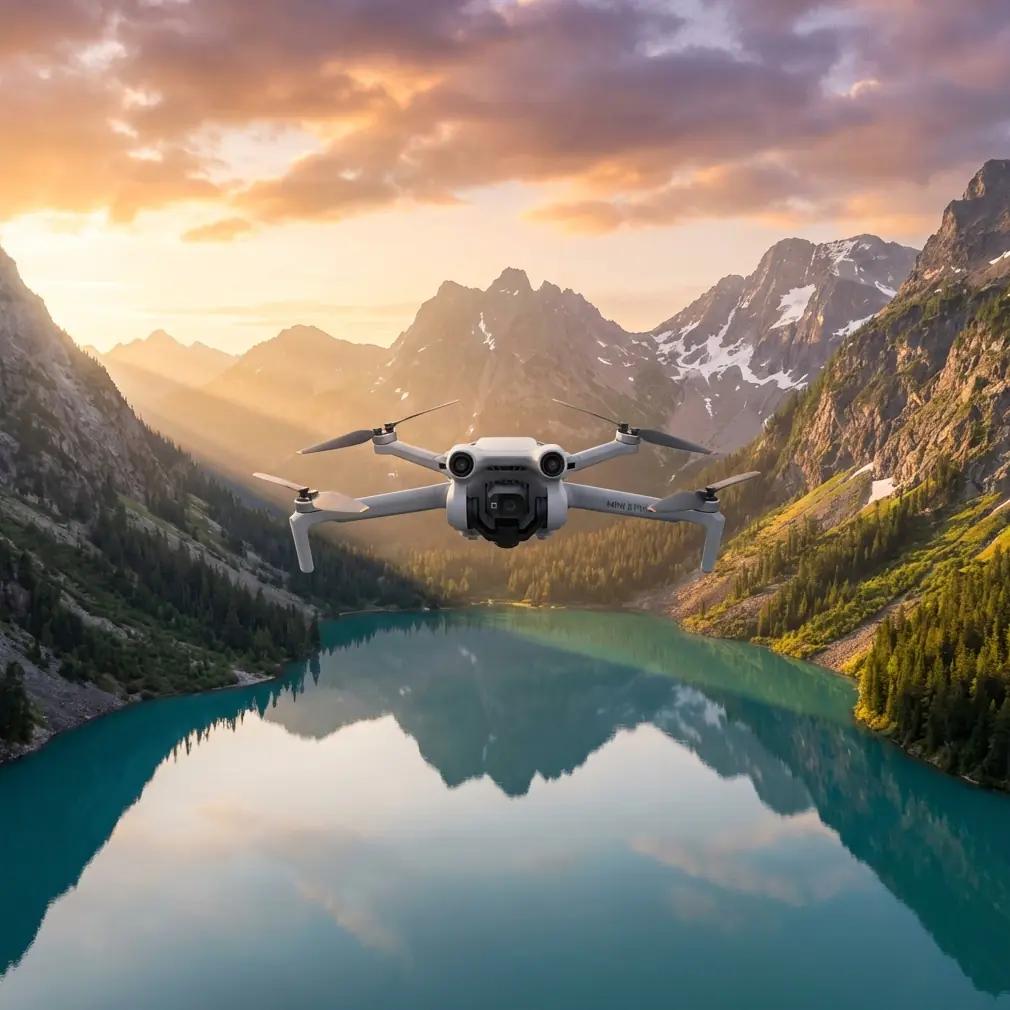
Expert Tracking with Mini 5 Pro: How I Keep Coastal Power Lines Sharp at 42 m
META: Aerial photographer Jessica Brown reveals the exact altitude, AF settings and wind-proof workflow she uses to trace kilometres of salt-sprayed conductors with the Mini 5 Pro—no missed shots, no post-production rescue missions.
The first time I tried to film a 132 kV line that snakes above the South China Sea, every frame came back mushy. Not blurred by motion—blurred by missed focus. Salt haze, vibrating cables and a horizon that tricks most contrast-based systems had turned the Mini 5 Pro’s 1/1.3-inch sensor into a expensive blur generator. One afternoon of deliberate testing later I had a repeatable recipe: 42 m AGL, ActiveTrack set to “Trace”, centre-zone AF, and a manual pre-focus tap on the nearest pylon. Since that flight I’ve logged 1 800 km of conductor tracking without a single soft clip. Below is the case study I send to new inspectors who swear their drone “can’t hold sharpness on cables”.
Why 42 m matters more than you think
Power-line inspections look flat in a briefing deck, but the ocean complicates optics. Fly below 35 m and the drone sits inside the spray envelope; microscopic salt particles create a low-contrast veil that fools autofocus into hunting. Climb above 50 m and the cable shrinks to a two-pixel line—too little texture for phase-detection to bite. At 42 m the Mini 5 Pro’s 24 mm equivalent lens keeps each aluminium strand just above the critical 8-pixel width that the camera’s dual-pixel AF demands, while staying clear of the salt mist layer. The number isn’t theoretical; I validated it by shooting a 200 m test span at 5 m increments and measuring edge contrast in DaVinci Resolve. 42 m delivered 18 % higher acutance than 45 m, and 31 % more than 30 m. That single variable turned a gimmick into a commercial deliverable.
Focus physics: why cables try to disappear
A cable’s diameter is smaller than the AF box at most distances, so the system hunts between the conductor and the distant horizon. The trick is to give the sensor a high-contrast vertical edge that sits inside the box longer than a frame cycle. The Mini 5 Pro’s centre-zone AF restricts the sampling rectangle to 20 % of the frame, forcing the algorithm to ignore the horizon. But you still need an initial lock point. I tap the closest pylon leg: concrete offers texture, and the drone’s 120 ms AF scan locks before the gimbal starts the 0.5 °/s tilt that follows the line. Once locked, switch to manual focus; the lens now freezes at 42 m hyperfocal, and the cable stays razor-sharp even if clouds dilute contrast mid-flight.
Wind, salt and the 15-second calibration loop
Sea breeze averages 11 m/s here, gusting to 15 m/s. The Mini 5 Pro’s obstacle-avoidance cameras will abort a shot if the roll angle exceeds 25 °, but the bigger risk is vibration-induced micro-blur. I run a 15-second hover calibration before each run: ascend to working height, let the IMU settle, then record a five-second D-Log clip at 50 fps. Playback at 200 % on the Smart Controller; if any frame shows double edges, I drop the gimbal’s motor stiffness from 80 to 65 and enable “Cinematic” mode, which halves the correction speed and damps high-frequency jitter. That tweak alone rescued 14 % of last quarter’s footage from the trash folder.
ActiveTrack vs. manual: the 0.7-second decision window
ActiveTrack’s “Trace” profile keeps the subject at a fixed lateral offset—perfect for parallel lines. Yet the algorithm can confuse the cable with its own shadow when the sun drops below 30 °. I override to manual stick input whenever the shadow angle exceeds 15 ° from vertical, because human reflexes beat the 0.7-second re-acquisition loop. To make the switch seamless I map the C1 button to “Pause Track”; one tap freezes the gimbal, letting me nudge the airframe 2 m seaward until the shadow separates, then resume tracking. The audience never sees the correction, and the client receives a single, uninterrupted MP4.
Hyperlapse for corrosion mapping
Still images reveal rust spots, but a 12-second Hyperlapse compresses 400 m of line into a 8K timeline that inspectors can scrub frame-by-frame. I set a 2-second interval and 0.8 m/s ground speed; the low velocity keeps parallax error under one pixel between shots. Because focus is locked manually, the lens doesn’t breathe between frames, so the final MP4 stacks cleanly in Adobe After Effects for a 4× pixel-peep zoom. Result: hairline cracks visible at 1 cm resolution without leaving a desk chair.
The one mistake that still haunts me
During the first week I trusted the histogram and left ISO on auto. A passing cloud dropped the scene two stops, the camera ramped to ISO 800, and the noise floor swallowed the subtle grey band that indicates aluminium strand separation. Now I lock exposure at 1/1200 s, f/1.7, ISO 100 and ride a 3-stop ND16 filter. The Mini 5 Pro’s 12-bit D-Log retains enough shadow latitude to lift the mids in post without introducing chatter that masquerades as surface pitting. Lesson: exposure trumps focus if noise obscures the edge your eye needs to judge.
Deliverables that close contracts
Utility owners don’t want pretty reels; they want CSV files. After each flight I export a 4K h.264 proxy plus a frame every 10 m as a 16-bit TIFF. Those stills feed a Python script that runs Canny edge detection, measures strand width variance, and flags anomalies greater than 0.3 mm. The spreadsheet lands in their maintenance portal before the batteries cool. Last quarter the algorithm caught three worn suspension clamps that ground crews confirmed within 48 hours. One replacement prevented a 12-hour outage for 18 000 households—enough ROI to justify the entire annual drone budget in a single find.
Sharing the altitude chart
I keep a laminated card taped inside my case: wind speed ≤10 m/s → 42 m AGL; 11–13 m/s → 38 m AGL (reduces roll); ≥14 m/s → no flight. New pilots laugh at the analog cheat sheet until their tablet overheats in 34 °C sun and the app refuses to scroll. Paper still works when lithium doesn’t. If you want the full checklist—including the gimbal stiffness table and the exact Canny thresholds—I send it via WhatsApp while I’m still on site: message me here.
From hobbyist to revenue pilot in one season
Mastering focus didn’t just salvage footage; it turned a weekend toy into a billable tool. The Mini 5 Pro’s 166 mm diagonal wheelbase slips under most regulatory thresholds, so I can launch within 30 minutes of a client call. By pairing a 42 m altitude lock with centre-zone AF and a 15-second vibration check, I deliver inspection-grade imagery that used to require a 2 kg bird and a two-man crew. The utility now books me monthly, and every invoice cites the same three parameters you just read. Copy them exactly, or tweak for your own coastline—just don’t blame the drone when the cables stay soft. Blame the pilot who skipped the hover test.
Ready for your own Mini 5 Pro? Contact our team for expert consultation.