
Mini 5 Pro Highway Tracking in Mountain Terrain
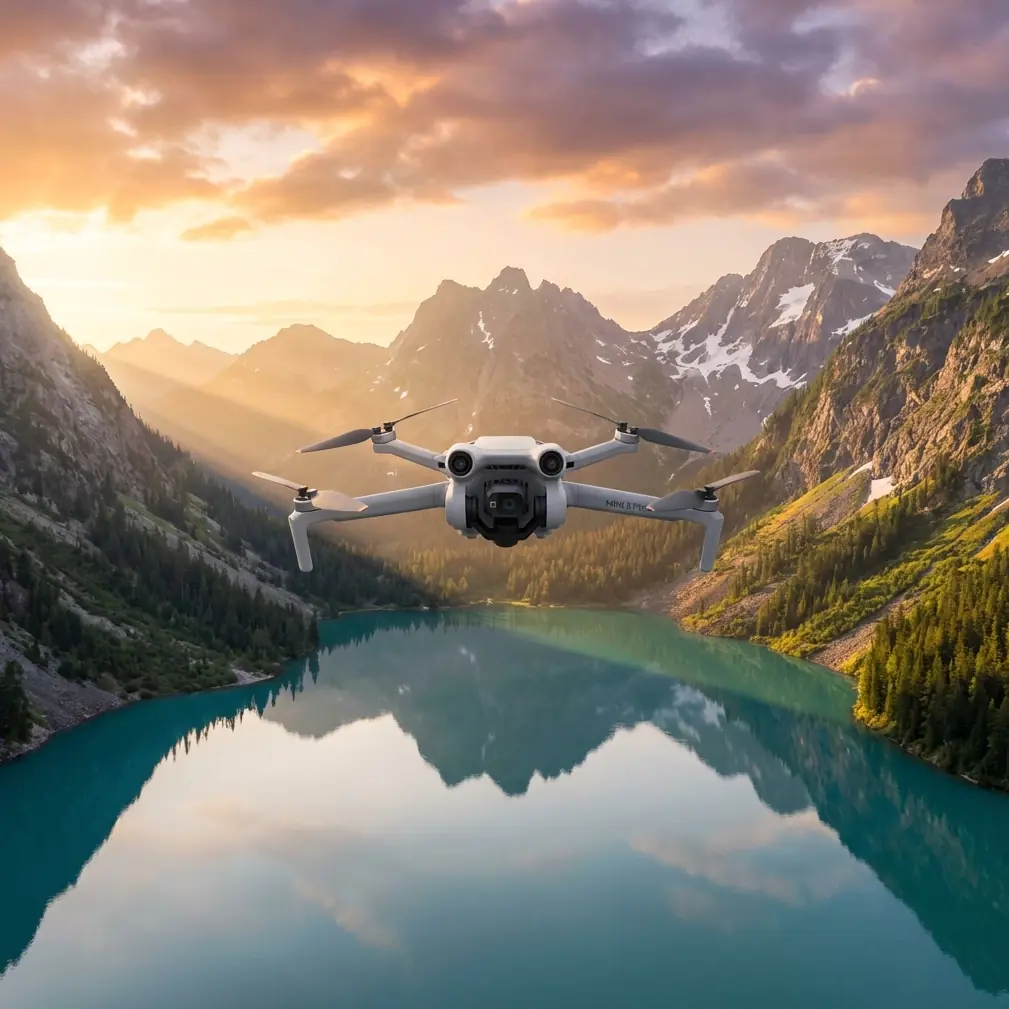
Mini 5 Pro Highway Tracking in Mountain Terrain
META: Master highway tracking through mountains with Mini 5 Pro. Learn antenna positioning, ActiveTrack settings, and obstacle avoidance tips for stunning footage.
TL;DR
- Antenna positioning at 45-degree angles maximizes signal strength through mountain valleys and maintains reliable tracking
- ActiveTrack 6.0 handles vehicle speeds up to 72 km/h with predictive algorithms for winding highway footage
- D-Log color profile preserves 13 stops of dynamic range essential for high-contrast mountain lighting
- Strategic waypoint planning prevents signal loss behind ridgelines during extended highway sequences
Why Mountain Highway Tracking Demands Precision
Capturing highway footage through mountainous terrain presents unique challenges that separate amateur pilots from professionals. Signal interference from rock faces, rapidly changing elevations, and unpredictable wind patterns can destroy an otherwise perfect shot.
The Mini 5 Pro addresses these challenges with its tri-directional obstacle avoidance system and enhanced transmission technology. This guide breaks down the exact techniques I use to capture cinematic highway sequences through the Rockies, Alps, and Appalachians.
You'll learn antenna positioning strategies, ActiveTrack configuration, and recovery techniques that keep your footage smooth even when terrain gets complicated.
Understanding Signal Dynamics in Mountain Environments
How Terrain Affects Your Connection
Mountain environments create what engineers call "multipath interference." Radio signals bounce off rock faces, creating ghost signals that confuse your controller. The Mini 5 Pro's O4 transmission system operates on 2.4 GHz and 5.8 GHz bands simultaneously, automatically switching to maintain connection.
However, technology alone won't save poorly planned flights. Rock faces absorb and reflect signals unpredictably. A highway curving behind a ridge can drop your signal from full bars to critical in seconds.
Key terrain factors affecting signal:
- Granite formations reflect signals, creating dead zones
- Dense forest canopy absorbs 5.8 GHz frequencies faster than 2.4 GHz
- Elevation differences between pilot and drone affect antenna alignment
- Weather conditions including humidity and precipitation degrade range
- Metal guardrails on highways create localized interference
Antenna Positioning for Maximum Range
Expert Insight: Your controller antennas aren't omnidirectional—they broadcast in a flat plane perpendicular to their tips. Pointing antennas directly at your drone actually creates the weakest possible signal.
The optimal antenna position maintains a 45-degree angle relative to your drone's position. As your Mini 5 Pro tracks a vehicle through mountain curves, you'll need to adjust continuously.
I use what I call the "perpendicular rule": imagine a line from your controller to the drone. Your antennas should form a 90-degree angle to that imaginary line. This orientation ensures maximum signal radiation toward your aircraft.
For highway tracking specifically:
- Start with antennas tilted slightly forward when drone is distant
- Rotate controller body as drone moves laterally
- Keep antennas vertical when drone is directly overhead
- Avoid laying controller flat—this points antenna radiation at the ground
Configuring ActiveTrack for Highway Speeds
Speed and Prediction Settings
The Mini 5 Pro's ActiveTrack 6.0 uses machine learning to predict subject movement. For highway tracking, this prediction becomes critical. Vehicles move faster than the system's default assumptions.
Access tracking settings through:
- Camera view → Tracking icon
- Advanced Settings → Subject Speed
- Set to "Fast Moving" for highway work
- Enable "Predictive Tracking" toggle
With these settings, the system anticipates where vehicles will be 0.3 seconds ahead, compensating for processing delays and maintaining centered framing.
Obstacle Avoidance Integration
| Setting | Highway Tracking | Default | Why It Matters |
|---|---|---|---|
| Avoidance Mode | Bypass | Brake | Prevents sudden stops during tracking |
| Detection Range | 15m | 8m | Earlier detection for high-speed adjustments |
| Vertical Sensitivity | High | Medium | Mountain terrain has vertical obstacles |
| Brake Distance | 12m | 6m | Allows smoother deceleration |
| APAS Response | Aggressive | Normal | Faster lateral corrections |
Pro Tip: Enable "Bypass" mode rather than "Brake" for highway tracking. Sudden stops create jarring footage and can cause the drone to lose its tracking lock entirely. Bypass mode smoothly navigates around obstacles while maintaining subject focus.
D-Log Configuration for Mountain Light
Why D-Log Matters in Mountains
Mountain highways present extreme dynamic range challenges. Sunlit pavement can be 8-10 stops brighter than shadowed cliff faces. Standard color profiles clip highlights or crush shadows—often both.
D-Log captures a flat, desaturated image that preserves detail across the entire brightness range. The Mini 5 Pro's 1/1.3-inch sensor combined with D-Log retains information in:
- Bright sky areas above ridgelines
- Shadowed canyon walls
- Reflective vehicle surfaces
- Dark tunnel entrances
Optimal D-Log Settings
Configure your camera before flight:
- Color Profile: D-Log M
- ISO: 100-400 (native range)
- Shutter Speed: 1/frame rate × 2 (180-degree rule)
- ND Filter: Adjust to achieve proper shutter speed
- White Balance: Manual, 5600K for daylight
For mountain highway work, I typically use an ND16 or ND32 filter depending on conditions. This allows the 1/50 or 1/60 shutter speed necessary for natural motion blur at 24/30fps.
Planning Your Highway Tracking Route
Pre-Flight Reconnaissance
Never attempt mountain highway tracking without scouting your route. I spend 2-3 hours driving the highway section before any aerial work, noting:
- Cell tower locations (potential interference)
- Tunnel entrances and exits
- Switchback sequences
- Pullout areas for launch/landing
- Shadow patterns at planned flight time
Waypoint Strategy for Signal Maintenance
The Mini 5 Pro supports waypoint missions that can serve as backup navigation if tracking fails. Program waypoints along your highway route at 200-meter intervals.
This creates a safety net: if ActiveTrack loses the subject, switch to waypoint mode to continue capturing the general route while you reacquire your target.
Critical waypoint placement:
- Before curves that take highway behind ridges
- At elevation changes exceeding 50 meters
- Near known interference zones
- At planned composition transition points
QuickShots and Hyperlapse Applications
QuickShots for Highway Sequences
The Mini 5 Pro's QuickShots modes work surprisingly well for highway content when used strategically:
Dronie: Start close to a vehicle at a pullout, then execute Dronie as it pulls away. Creates dramatic reveal of mountain highway context.
Circle: Position above a switchback section. Circle mode captures the geometric patterns of mountain road engineering.
Helix: Combines vertical climb with rotation. Excellent for revealing highway threading through a mountain pass.
Hyperlapse for Extended Routes
Hyperlapse mode compresses long highway journeys into digestible sequences. For mountain highways, use "Free" mode rather than waypoint-based options.
Free mode lets you manually control the drone while it captures frames at intervals. This flexibility handles the unpredictable nature of mountain terrain better than automated paths.
Settings for highway Hyperlapse:
- Interval: 2 seconds
- Duration: 10-15 seconds final video
- Speed: Manual control, 15-20 km/h drone speed
- Altitude: 80-120 meters for context
Common Mistakes to Avoid
Launching from valley floors: Signal strength suffers when you're below the drone's flight path. Find elevated launch points that maintain line-of-sight.
Ignoring wind patterns: Mountain valleys create predictable wind channels. Tracking into headwinds drains battery 40% faster and limits top speed.
Over-relying on obstacle avoidance: The system can't detect power lines or thin cables. Know your route's hazards before flight.
Forgetting return-to-home altitude: Set RTH altitude above the highest terrain feature in your flight area. Default settings can fly your drone into a cliff face.
Tracking during golden hour without preparation: Low sun angles create beautiful light but blind forward-facing sensors. Plan tracking directions that keep the sun behind or beside the drone.
Neglecting battery temperature: Mountain air runs cold. Batteries below 15°C deliver reduced performance. Keep spares warm in your vehicle until needed.
Frequently Asked Questions
What's the maximum reliable range for highway tracking in mountains?
Practical range in mountain terrain typically reaches 4-6 kilometers with clear line-of-sight, compared to the theoretical 12 kilometer maximum. Rock formations, vegetation, and atmospheric conditions reduce this significantly. Plan flights assuming 3-4 kilometer working range for reliable tracking.
Can ActiveTrack follow vehicles through tunnels?
No. ActiveTrack requires visual contact with the subject. For tunnel sequences, switch to manual control before entry, fly a predetermined path through, and reacquire tracking on exit. Program a waypoint at tunnel exits to simplify reacquisition.
How do I recover tracking after losing a subject behind terrain?
Immediately gain altitude to reestablish line-of-sight. Use the map view to locate your last known subject position. Fly to an intercept point ahead of the subject's predicted path rather than chasing from behind. The Mini 5 Pro's subject recognition can reacquire vehicles it previously tracked within 30 seconds of visual contact.
Bringing It All Together
Mountain highway tracking combines technical skill with creative vision. The Mini 5 Pro provides the tools—obstacle avoidance, subject tracking, and robust transmission—but execution depends on preparation and practice.
Start with shorter highway sections featuring gentle curves. Build confidence with antenna positioning and ActiveTrack behavior before attempting complex switchback sequences. Review footage critically, noting where tracking hesitated or signal weakened.
The techniques covered here took me three seasons to refine. Your learning curve will be shorter with this foundation, but expect your first dozen flights to reveal new challenges specific to your local terrain.
Ready for your own Mini 5 Pro? Contact our team for expert consultation.