
Mini 5 Pro Tracking Tips for Dusty Forest Work
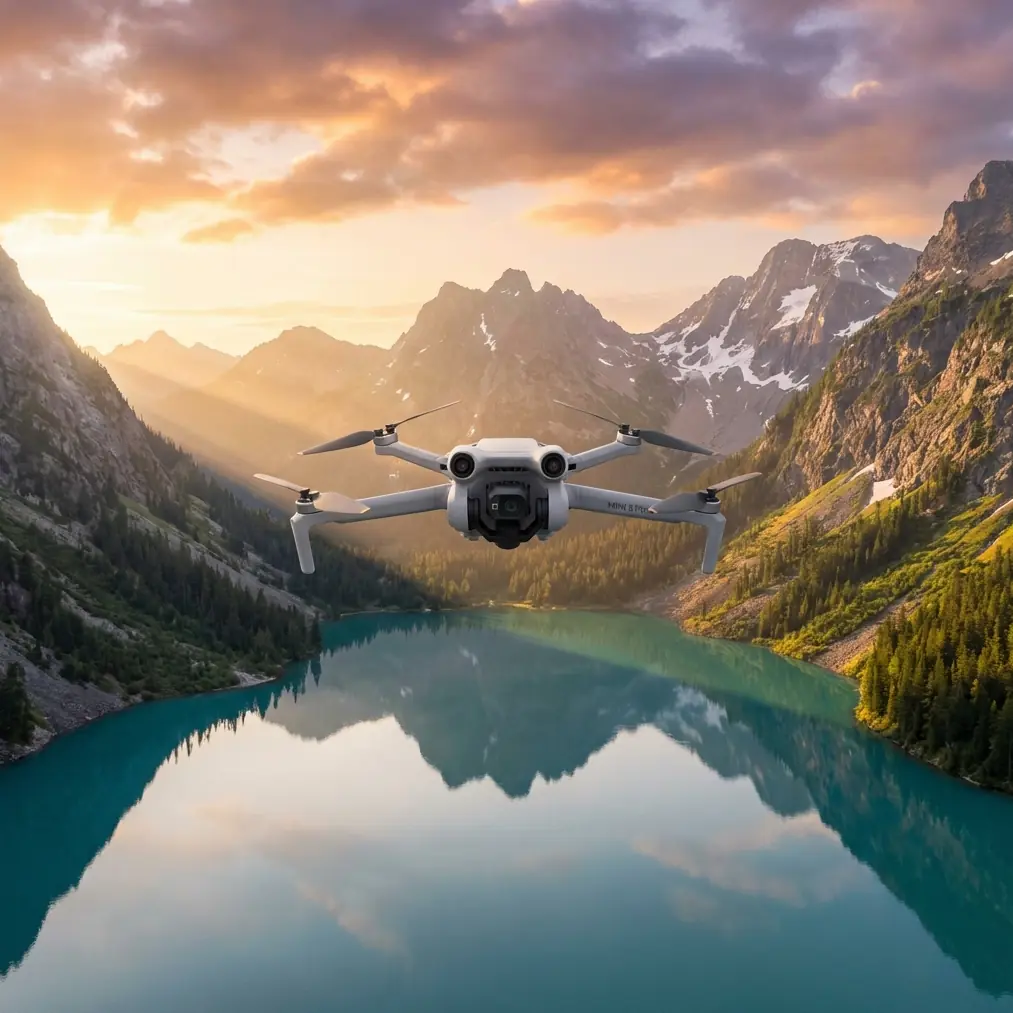
Mini 5 Pro Tracking Tips for Dusty Forest Work: What Stable Response Really Means in the Field
META: Learn how Mini 5 Pro-style tracking performance, fast attitude response, and tight altitude control matter for dusty forest operations, subject tracking, obstacle avoidance, and reliable aerial footage.
Forest tracking is where drone spec sheets stop being useful.
On paper, almost every modern compact UAV claims strong subject tracking, obstacle avoidance, smooth video, and intelligent flight modes. In a dusty forest, those claims get filtered through branches, uneven light, drifting particles, broken sightlines, and sudden direction changes. What matters then is not the marketing label on a feature like ActiveTrack. What matters is control behavior: how quickly the aircraft reacts, how tightly it holds height, and whether the tracking loop remains usable when visual conditions are less forgiving.
That is the lens I’d use when thinking about the Mini 5 Pro for forest tracking work.
The most useful reference point here comes from a university hexacopter control and visual tracking experiment. Even though the platform in the source material is not a Mini 5 Pro, the operational lessons transfer directly because the underlying question is the same: when a drone receives target-following commands from a vision system, can its flight controller respond quickly enough to keep the target framed and the aircraft stable?
The answer from that research is encouraging in two specific ways. First, pitch and roll tracking under a command signal of about ±10° were able to complete response in roughly 0.5 seconds, with some delay but not enough to significantly degrade control effectiveness. Second, during altitude control, when the commanded height was 132 cm, the actual output stayed within an approximately 10 cm band around that setpoint. Those are not abstract lab curiosities. In dusty forest work, they map directly to what your footage looks like and how much intervention you need from the pilot.
Why this matters for Mini 5 Pro tracking in forests
A Mini 5 Pro operating in wooded terrain has to solve two problems at once.
One is visual: identifying and holding a subject despite dust, partial occlusion, and changing contrast.
The other is dynamic: physically repositioning the aircraft fast enough and smoothly enough once the tracking system decides to move.
A lot of pilots focus almost entirely on the first half. They want to know whether the drone can lock onto a walker, trail bike, utility vehicle, or survey lead moving under tree cover. That is fair. But if the aircraft’s pitch and roll response lag too much, the target can drift off-center or disappear behind trunks even if the vision system itself is doing the right thing.
That’s why the ±10° command response detail is so relevant. In practical forest tracking, many of the corrections the drone needs to make are not huge cinematic sweeps. They are repeated small-to-moderate attitude adjustments—nudging forward, checking sideways drift, correcting line after a subject shifts course around a stand of trees. A response time around 0.5 seconds for that class of command is the difference between tracking that feels composed and tracking that constantly looks late.
If Mini 5 Pro excels against competitors in this category, it won’t be because of one flashy intelligent mode. It will be because its control stack turns visual tracking decisions into useful aircraft motion without hesitation.
The hidden value of altitude discipline under canopy edges
The second number from the source deserves more attention than it usually gets: a target height of 132 cm with actual altitude holding within about 10 cm.
For forest operators, altitude control is not just about hovering. It is about predictable clearance.
Dusty woodland routes often involve low brush, roots, exposed rocks, stumps, and irregular ground contours. When you are following a subject at low level to preserve detail and maintain cinematic proximity, every small altitude variation changes both safety margin and framing. If the drone surges vertically too much, it can ruin the smoothness of a tracking sequence, misjudge obstacle spacing, or force the pilot to climb higher than desired and lose the immersive perspective.
A 10 cm band around a commanded height tells us something important: the control system can keep vertical motion bounded tightly enough to support reliable close-range work. Again, this came from a different aircraft in the reference material, but it is exactly the benchmark mindset I’d use when evaluating the Mini 5 Pro. In a forest, good altitude behavior means:
- cleaner tracking of people moving through uneven terrain
- more consistent obstacle avoidance decisions
- steadier subject scale in frame
- less pilot workload during low-level follow sequences
That last point matters most in dust. Dust clouds and floating debris reduce visual confidence. When the aircraft is already managing vertical position cleanly, the pilot can focus attention where it belongs: route choice, subject spacing, and maintaining line of sight.
How the visual tracking experiment translates to Mini 5 Pro use
The source experiment used an onboard camera to capture video, transmitted that feed to a ground station, ran image recognition there, and sent control commands back to the UAV so it could follow the moving target. The test subjects included a small remote-control vehicle and a pedestrian. After outdoor trials, the aircraft was able to successfully track both.
That architecture is more cumbersome than what most Mini 5 Pro users expect today, because current compact drones integrate much more of the tracking logic onboard. But the field lesson remains the same: successful tracking is a chain, not a single feature.
Camera sees the subject.
Recognition decides what to follow.
Controller issues corrections.
Aircraft responds.
The loop repeats fast enough to remain stable.
In forest environments, every weak link becomes obvious. Dust can soften contrast. Trees interrupt visibility. Sun patches and shadow bands can confuse detection. If the drone loses the subject for even a moment, the recovery behavior matters. A Mini 5 Pro with competent subject tracking and obstacle avoidance can outperform rivals not simply by detecting better, but by resuming cleaner and safer pursuit after partial loss.
This is where ActiveTrack-style behavior should be judged. Not by whether the drone can follow someone jogging across an open field, but by whether it can stay useful when a hiker passes behind trunks, when a utility cart throws up dust, or when a rider cuts diagonally across mottled ground cover.
A practical Mini 5 Pro setup for dusty forest tracking
If your mission is tracking in forests rather than shooting open scenic reveals, configure the aircraft for control confidence first and creative modes second.
1. Favor tracking stability over maximum speed
Dense terrain punishes aggressive settings. A drone that races to reacquire a subject can create abrupt attitude changes and reduce obstacle margin. The control data from the reference shows that even with some delay, stable response still produced effective tracking. That is the model to follow: smooth and fast enough, not reckless.
2. Use obstacle avoidance as a spacing tool, not a crutch
Obstacle avoidance is vital in woodland corridors, but it works best when you give it room to make decisions. If the Mini 5 Pro is known for strong all-direction sensing, that is an advantage over weaker competitors in cluttered spaces. Still, avoid flying so tight that every branch becomes a last-second event. Better tracking footage usually comes from a wider lateral buffer and steadier pace.
3. Keep altitude conservative when dust is active
The 132 cm test point from the source highlights how much low-altitude control quality affects mission confidence. In dusty forests, going too low increases the chance of prop wash stirring particulate back into the camera view while narrowing your obstacle margin. Start higher than your ideal artistic frame, confirm stable hold, then step down carefully.
4. Treat subject tracking as a cooperative workflow
People expect the drone to do all the work. In real forest operations, the subject should help the aircraft succeed. Ask walkers, riders, or field teams to maintain smoother lines when possible, avoid sudden under-branch cuts, and preserve a bit of separation from dense cover. Good tracking is often a choreography between subject and pilot.
5. Save QuickShots and Hyperlapse for cleaner air windows
QuickShots and Hyperlapse can be useful, but they are not the first tools I’d deploy in active dust. Automated pathing in variable visibility can produce inconsistent results, and Hyperlapse especially amplifies small tracking or stabilization issues. Use them when the air is calmer or when you move to a more open forest edge.
Video settings that hold up better in this environment
If the Mini 5 Pro offers D-Log, use it when the light range is extreme—which is common in forests where bright openings and dark canopy can coexist in the same shot. D-Log gives you more room to balance those transitions later. It won’t fix poor tracking, but it will preserve more of the scene when the subject moves through alternating bands of shade and sun.
That said, log footage in a dusty environment benefits from discipline:
- avoid underexposure in shadow-heavy sections
- watch fine detail in airborne dust, which can turn muddy if pushed too hard in grading
- keep movement smooth so compression has less work to do
This is where stable flight control and image quality stop being separate topics. Better pitch, roll, and altitude behavior means cleaner footage for the codec and more usable material in post.
Where Mini 5 Pro can genuinely stand out from competitors
Many compact drones look similar until the route gets difficult.
The Mini 5 Pro’s advantage, if it delivers as expected, should show up in the overlap between three systems: subject tracking, obstacle avoidance, and fine motion control. Competitors often do one of these well and treat the others as supporting features. Forest work exposes that imbalance quickly.
A drone with decent tracking but hesitant lateral response will feel behind the subject.
A drone with strong speed but weak altitude discipline will produce nervous footage.
A drone with obstacle sensing but poor recovery logic will stop too often or abandon the shot.
The reference material points toward the right benchmark: quick response around moderate attitude commands, stable yaw convergence to command, and altitude hold constrained within a narrow band. Those are exactly the ingredients that make intelligent tracking usable in messy, real-world civilian operations like forestry documentation, trail inspection, environmental monitoring, and site progress capture.
If you are comparing Mini 5 Pro to rivals, this is the real question to ask: when the aircraft has to follow a moving subject through a dusty, visually broken scene, does it continue behaving like a controlled camera platform—or does it start behaving like a feature demo that only works in open space?
A field workflow that reduces failed tracking shots
Here is the process I recommend for dusty forest missions:
- Walk the route first. Identify branch tunnels, light gaps, and dust-heavy turns.
- Launch into a safe hover and verify height stability before engaging tracking.
- Start with a slow, predictable subject path to let the system build a clean lock.
- Use ActiveTrack or equivalent only after confirming the drone is not overcorrecting laterally.
- Monitor vertical consistency closely during low-level segments.
- Break the shot before the environment forces the drone into reactive avoidance.
- Review footage immediately for framing drift, dust haze, and altitude oscillation.
That workflow sounds simple. It is. But it mirrors the logic behind the source experiment: stable control first, then tracking performance on top of it.
Final thought
The best way to judge Mini 5 Pro for forest tracking is not by asking whether it has subject tracking. Plenty of drones do. Ask whether its tracking loop can survive real environmental friction: dust, interrupted visibility, moderate attitude corrections, and low-altitude precision.
The reference data gives us a useful standard. A platform that can answer a ±10° pitch or roll command in about 0.5 seconds and hold around a 132 cm altitude target within roughly 10 cm is demonstrating the kind of control discipline that makes visual tracking practical, not just possible. Add dependable obstacle avoidance, sensible ActiveTrack behavior, and careful use of D-Log, and the Mini 5 Pro becomes much more than a small drone with smart modes. It becomes a workable tool for civilian forest documentation.
If you’re building a specific tracking setup for dusty woodland work and want a more tailored recommendation, you can message our flight team directly.
Ready for your own Mini 5 Pro? Contact our team for expert consultation.