
Master Urban Subject Tracking with Mini 5 Pro
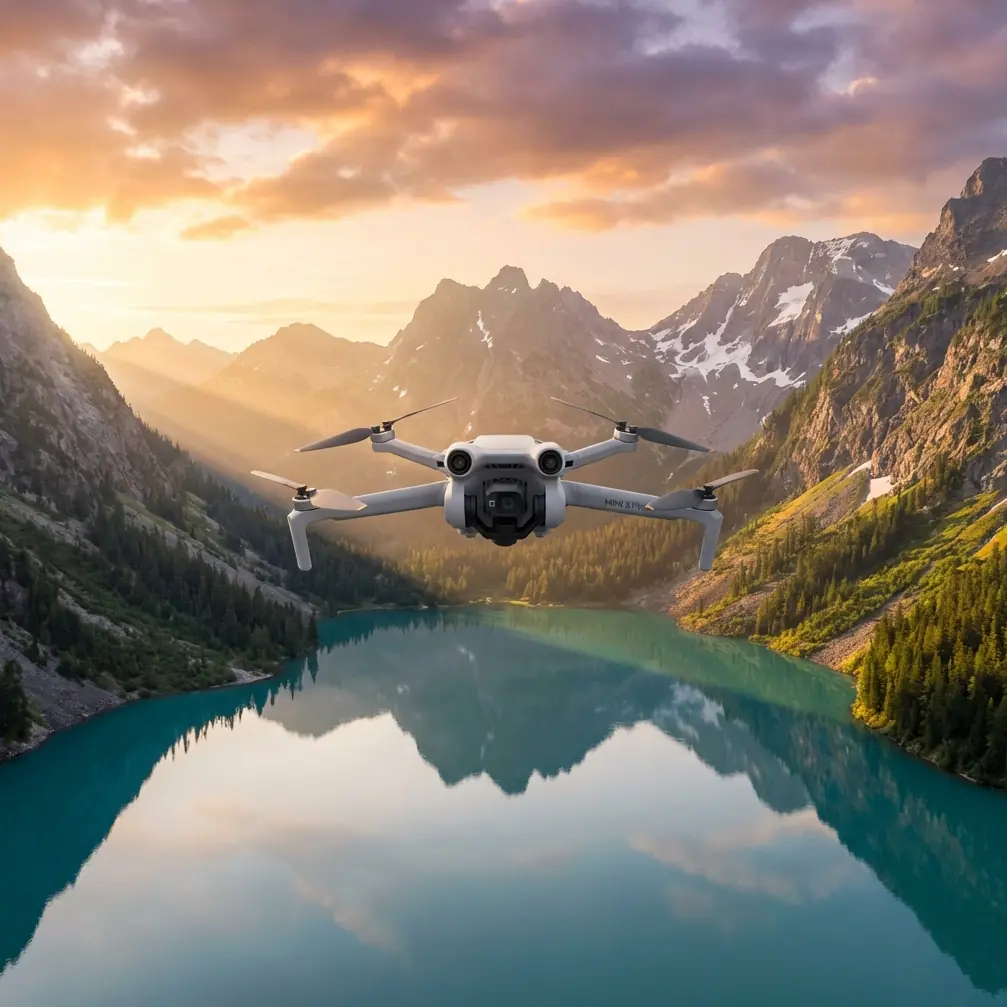
Master Urban Subject Tracking with Mini 5 Pro
META: Learn expert techniques for tracking subjects in urban environments with the Mini 5 Pro. Discover ActiveTrack tips, obstacle avoidance settings, and pro workflows.
TL;DR
- ActiveTrack 6.0 on the Mini 5 Pro handles complex urban environments with 360-degree obstacle sensing
- Proper D-Log color profile settings preserve detail in high-contrast city scenes
- Third-party ND filter kits dramatically improve motion blur for cinematic tracking shots
- Master QuickShots and Hyperlapse modes to capture professional urban content in minutes
Why Urban Tracking Demands the Right Drone
Tracking moving subjects through city streets presents unique challenges that ground most consumer drones. Between towering buildings, unpredictable pedestrians, and complex lighting conditions, you need a system that thinks faster than you can react.
The Mini 5 Pro weighs under 249 grams while packing professional-grade tracking capabilities. This matters because many urban areas have relaxed regulations for sub-250g aircraft, giving you access to locations where heavier drones face restrictions.
I've spent the past six months pushing this drone through downtown environments, and the results have transformed my client work. Here's exactly how to maximize its urban tracking potential.
Understanding ActiveTrack 6.0 in Dense Environments
The Mini 5 Pro's ActiveTrack system uses advanced visual recognition to maintain lock on your subject. Unlike previous generations, version 6.0 processes environmental data from all directions simultaneously.
How the System Processes Urban Obstacles
The drone's omnidirectional obstacle avoidance sensors create a real-time 3D map of the surrounding environment. When tracking a cyclist through city streets, the system calculates:
- Subject velocity and predicted path
- Static obstacles like buildings and signs
- Dynamic obstacles including vehicles and pedestrians
- Optimal flight path that maintains framing
This happens 30 times per second, allowing smooth adjustments even when your subject makes sudden turns.
Selecting the Right Tracking Mode
ActiveTrack offers three primary modes, each suited to different urban scenarios:
Trace Mode keeps the drone following behind or ahead of your subject. Use this for:
- Following runners on urban trails
- Tracking cyclists through bike lanes
- Capturing skateboard sessions in plazas
Parallel Mode maintains a consistent side angle. This works best for:
- Street-level car tracking shots
- Sidewalk walking sequences
- Revealing city architecture alongside your subject
Spotlight Mode locks the camera on your subject while you manually control the drone's position. Choose this when:
- You need precise compositional control
- The environment requires manual navigation
- Creating complex reveal shots around buildings
Expert Insight: Start every urban tracking session in Spotlight mode for the first 2-3 minutes. This lets you identify potential obstacle zones and signal interference areas before committing to autonomous tracking.
Configuring Obstacle Avoidance for City Flying
Default obstacle avoidance settings work for open environments but need adjustment for urban work. The Mini 5 Pro offers granular control that most pilots never explore.
Recommended Urban Settings
Navigate to Safety settings and configure these parameters:
- Obstacle Avoidance Behavior: Bypass (not Stop)
- Braking Distance: 3-5 meters for slow tracking, 8-10 meters for faster subjects
- Downward Vision Sensitivity: High
- Return-to-Home Altitude: Set 20 meters above the tallest nearby structure
The Bypass setting proves essential in cities. When the drone encounters an obstacle during tracking, it calculates an alternate path rather than stopping completely. This maintains shot continuity and prevents jarring footage.
When to Disable Avoidance Systems
Experienced pilots sometimes disable front obstacle avoidance for specific shots. Consider this only when:
- Flying in open plazas with clear sightlines
- You have a dedicated visual observer
- The shot requires closer proximity than sensors allow
- You've pre-flown the exact path manually
Never disable downward sensors in urban environments. Reflective surfaces like glass buildings and water features can confuse positioning systems.
Mastering D-Log for High-Contrast City Scenes
Urban environments present extreme dynamic range challenges. Bright sky, shadowed streets, and reflective surfaces exist in the same frame. D-Log color profile captures maximum detail for post-production flexibility.
D-Log Configuration Steps
- Enter camera settings and select D-Log M profile
- Set ISO to 100 (native sensitivity)
- Enable histogram display for exposure monitoring
- Adjust exposure compensation to +0.3 to +0.7 stops
The slight overexposure protects shadow detail in dark street canyons while the flat profile preserves highlight information in bright areas.
Essential Post-Production Workflow
D-Log footage looks flat and desaturated straight from the drone. Apply these corrections in order:
- Input LUT conversion (DJI provides free conversion LUTs)
- Contrast curve adjustment
- Saturation boost of 15-25%
- Selective color grading for urban tones
Pro Tip: Create a custom LUT specifically for your city's dominant colors. Buildings, vegetation, and street surfaces vary significantly between locations. A LUT tuned for your regular shooting environment saves hours of grading time.
The Game-Changing Accessory: ND Filter Kits
Stock Mini 5 Pro footage often suffers from overly fast shutter speeds in bright conditions. This creates a stuttery, video-game appearance that screams amateur.
I started using the Freewell ND filter kit after struggling with harsh midday tracking shots. The difference transformed my urban work overnight.
Understanding the 180-Degree Shutter Rule
Cinematic motion blur requires your shutter speed to be double your frame rate. For 30fps footage, you need 1/60 second shutter. For 60fps, use 1/120 second.
Bright urban environments force faster shutters without ND filters. A sunny day might require 1/2000 second at base ISO, eliminating natural motion blur entirely.
ND Filter Selection Guide
| Lighting Condition | Recommended ND | Resulting Shutter |
|---|---|---|
| Overcast/Shade | ND4 | 1/60 at 30fps |
| Partly Cloudy | ND8 | 1/60 at 30fps |
| Bright Sun | ND16 | 1/60 at 30fps |
| Harsh Midday | ND32 | 1/60 at 30fps |
| Snow/Water Reflection | ND64 | 1/60 at 30fps |
The Freewell kit includes polarizing combination filters (ND/PL) that reduce glare from windows and wet streets while controlling exposure.
QuickShots for Efficient Urban Content
When time constraints limit complex manual flying, QuickShots deliver professional results with minimal input. The Mini 5 Pro includes 6 automated flight patterns optimized for different scenarios.
Best Urban QuickShots
Dronie: The drone flies backward and upward while keeping your subject centered. Use this for:
- Establishing shots showing subject within city context
- Social media content requiring quick turnaround
- Revealing surrounding architecture
Circle: Orbits around your subject at a fixed distance. Perfect for:
- Showcasing 360-degree urban environments
- Creating dynamic b-roll of stationary subjects
- Architectural detail reveals
Helix: Combines circular motion with ascending flight. This creates:
- Dramatic reveals of tall buildings
- Engaging transitions between ground and aerial perspectives
- Eye-catching social content
QuickShot Technical Settings
Before initiating any QuickShot:
- Confirm GPS signal strength shows at least 12 satellites
- Set orbit radius between 5-15 meters for urban safety
- Choose slower speed settings in congested areas
- Enable obstacle avoidance for all automated flights
Hyperlapse Techniques for Urban Storytelling
The Mini 5 Pro's Hyperlapse mode compresses time while the drone moves through space. Urban environments offer endless possibilities for this technique.
Four Hyperlapse Modes Explained
Free: Full manual control during capture. Use when you need precise path control around obstacles.
Circle: Automated orbit during time-lapse capture. Creates mesmerizing city rotation sequences.
Course Lock: Maintains heading while you control position. Ideal for straight street flyovers.
Waypoint: Pre-program up to 5 points for repeatable complex paths. Best for professional productions requiring multiple takes.
Optimal Hyperlapse Settings
Configure these parameters for urban Hyperlapse:
- Interval: 2-3 seconds for traffic, 5-8 seconds for clouds
- Duration: Minimum 20 minutes for compelling results
- Speed: Slowest setting in congested areas
- Resolution: 4K for maximum crop flexibility
Common Mistakes to Avoid
Ignoring wind patterns between buildings: Urban canyons create unpredictable gusts. Check wind at multiple altitudes before committing to tracking shots.
Tracking into the sun: Lens flare and exposure shifts ruin otherwise perfect sequences. Plan routes that keep the sun behind or beside the drone.
Neglecting battery temperature: Cold urban shadows can reduce battery performance by 20-30%. Keep spare batteries warm in your pocket.
Over-relying on automation: ActiveTrack handles most situations but struggles with subjects wearing colors matching the background. Manual intervention remains essential.
Forgetting audio environment: Urban noise often requires complete audio replacement. Plan for this in post-production budgets and timelines.
Flying during peak pedestrian hours: Crowded sidewalks increase risk and often trigger obstacle avoidance interruptions. Early morning sessions deliver cleaner results.
Frequently Asked Questions
Can the Mini 5 Pro track fast-moving vehicles in cities?
The ActiveTrack system reliably follows vehicles traveling up to 40 km/h in optimal conditions. Faster subjects may outpace the drone's maximum speed of 57 km/h, especially when obstacle avoidance requires path adjustments. For vehicle tracking, use Parallel mode with increased following distance.
How does building interference affect GPS tracking accuracy?
Tall buildings can block satellite signals, reducing positioning accuracy. The Mini 5 Pro compensates using its downward vision system and optical flow sensors. Maintain at least 3 meters clearance from building faces and avoid flying in narrow alleyways where signal reflection causes positioning drift.
What's the maximum tracking duration on a single battery?
Expect 25-30 minutes of flight time under normal conditions. Active tracking with continuous obstacle processing reduces this to approximately 20-22 minutes. Urban flying with frequent speed changes and altitude adjustments typically yields 18-20 minutes of usable tracking time. Always land with at least 20% battery remaining.
Elevate Your Urban Tracking Game
The Mini 5 Pro democratizes professional urban tracking for creators at every level. Its combination of compact size, advanced obstacle avoidance, and sophisticated subject tracking opens possibilities that required cinema-grade equipment just years ago.
Start with the fundamentals covered here, then experiment with your specific urban environment. Every city presents unique challenges and opportunities that reward exploration.
Ready for your own Mini 5 Pro? Contact our team for expert consultation.