
Mini 5 Pro Field Report: What Coastal Wildlife Survey Work
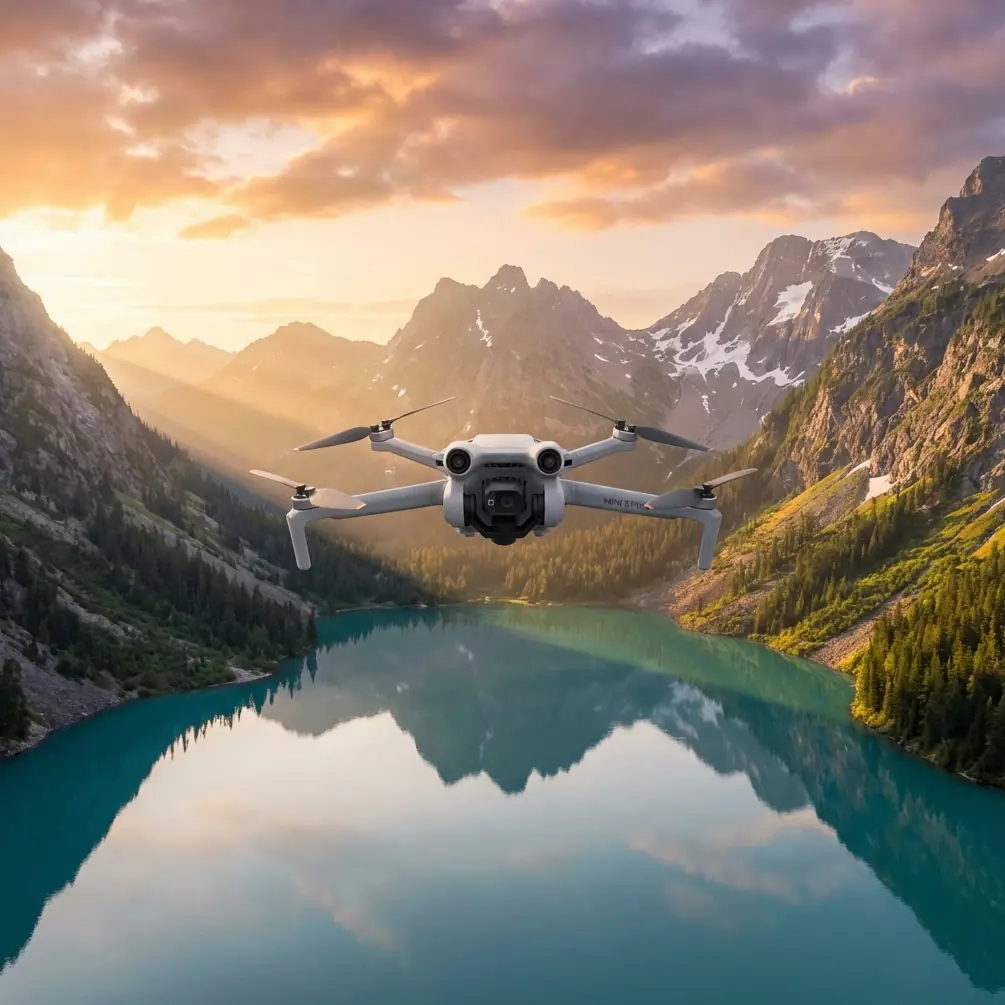
Mini 5 Pro Field Report: What Coastal Wildlife Survey Work Really Demands
META: A field-tested look at using Mini 5 Pro for coastal wildlife survey missions, with lessons drawn from fixed-wing mapping workflows, sensor logic, battery planning, and post-processing needs.
I spend a lot of time around shorelines with a camera in my hands and salt in the air. Coastal wildlife work looks tranquil from a distance. It rarely is. Wind shifts fast, light bounces off wet sand and water, bird colonies react unpredictably, and access points are often awkward. That is exactly why the Mini 5 Pro conversation matters. People tend to frame it as a compact flying camera. For survey work, that misses the point.
The more useful question is this: can a small multirotor fit into a discipline that has traditionally depended on larger mapping systems with heavier sensors, dedicated launch hardware, and formal processing pipelines?
A technical reference for the iFly U5 fixed-wing system offers a revealing benchmark. It describes a much more infrastructure-heavy survey stack: a Sony A7R payload with 36 million effective pixels, a 7360 × 4912 image format, a 35 mm Zeiss prime lens, a 6S intelligent battery, a 25.2V 7A charger, a ground radio setup, and even a catapult launcher with a pedal release. On the software side, it pairs with Pix4Dmapper for orthomosaics, DEM output, point clouds, and automated accuracy reports.
At first glance, that sounds far removed from a Mini 5 Pro. In practice, it tells us exactly how to think about one.
Coastal wildlife surveying is not just “flying low and filming birds”
If you are documenting nesting zones, shoreline erosion around habitats, seal haul-out patterns, or the movement corridors between marsh and beach, your aircraft choice affects much more than image quality. It affects setup time, launch safety, repeatability, and how quietly you can gather usable data.
The iFly U5 package is a reminder of what traditional aerial survey logistics can look like. A fixed-wing platform with a launch frame, tension cord, ground stake, and field maintenance kit makes sense when the mission is long linear mapping over highways or broad tracts of land. The same reference even cites a highway route planning application at 1:2000 scale. That is classic corridor mapping territory.
Coastal wildlife work often isn’t corridor mapping. It is fragmented. You may need to document one tidal pool, then shift 400 meters to a dune edge, then hold position offshore to observe bird flushing distance without crossing a behavioral threshold. That is where a Mini 5 Pro-style aircraft earns its place. You are trading runway independence and slower operational friction for a more agile, lower-footprint workflow.
That matters in sensitive habitats. Less equipment on the ground usually means fewer disturbances before takeoff even begins.
Why the fixed-wing reference still matters for Mini 5 Pro users
Some readers may wonder why a fixed-wing survey specification belongs in a Mini 5 Pro discussion at all. Because it clarifies the standards serious field work must meet.
The iFly U5 reference does not treat flying as the product. The deliverable is the product. Its workflow is built around outputs such as:
- orthomosaics in GeoTIFF
- DEM files in GeoTIFF and TXT
- point clouds in PLY and TXT
- 3D models in OBJ
- ground control point editing
- automated accuracy reports
That is the real lesson for a Mini 5 Pro operator surveying coastal wildlife. Beautiful footage is useful, but it is not enough if your goal is repeatable habitat documentation. The question becomes whether your flight can support interpretation later: species counts, nest spacing, vegetation edge change, intertidal condition, access route impact, or seasonal comparison.
A compact drone can do meaningful work here, but only if you fly and process with mapping discipline rather than content-creator habits.
Sensor thinking: what 36 MP on a Sony A7R teaches us
The iFly U5 sensor package uses a Sony A7R with a full-frame body and 4.87 µm pixel size. That tells you something important. Professional survey systems prioritize detail capture not because bigger numbers look impressive on paper, but because downstream analysis depends on preserving fine spatial information across large coverage areas.
A Mini 5 Pro operator working in coastal environments should borrow that mindset. Even if the aircraft is smaller and the camera system different, the field logic remains the same:
- fly with overlap in mind, not just composition
- maintain consistent altitude over uneven coastal terrain
- avoid abrupt yaw during record-critical passes
- plan around glare, tidal timing, and shadow direction
- preserve grading flexibility where possible, especially if shooting in D-Log
D-Log is often discussed as a cinematic feature. For survey-adjacent work, its operational value is different. In harsh reflective environments like mudflats, tidal channels, and bright sand, a flatter profile can help retain tonal information that would otherwise clip. That does not automatically make imagery “mapping grade,” but it can make habitat boundaries and surface texture easier to interpret in review.
Obstacle avoidance is more than convenience on the coast
The usual consumer conversation around obstacle avoidance is simplistic. It is framed as crash prevention for casual pilots. In coastal wildlife work, obstacle awareness has a more practical role.
Think about driftwood outcrops, bluff edges, old fencing near dunes, mooring posts, and the sudden vertical clutter that appears around observation points and access paths. Add wind. Add the fact that you may be hand-launching from uneven surfaces while trying to keep your presence brief around wildlife.
A Mini 5 Pro with dependable obstacle avoidance can reduce workload during low-altitude repositioning and return segments. That does not replace pilot judgment. It does help preserve focus for the things that matter more in this environment: keeping standoff distance, monitoring bird behavior, and maintaining a clean exit route if animals begin reacting.
Operationally, that is a real advantage over workflows built around bulkier systems that assume more open launch geometry and more equipment handling on the ground.
ActiveTrack and subject tracking: useful, but only under discipline
I am cautious about automated tracking in wildlife contexts. ActiveTrack and subject tracking can be excellent tools for documenting movement corridors or marine mammal surfacing patterns from a respectful distance, but only if used conservatively.
The benefit is not that the drone “does the work for you.” The benefit is that you can maintain smoother framing and more consistent lateral spacing while devoting more attention to behavior. In coastal environments, that can help when documenting repeat transit lines, such as birds moving between feeding and roosting zones.
The risk is obvious: any tracking feature can tempt the operator to follow too aggressively or remain over animals too long. That is poor field practice. The drone should support observation, not drive it.
So yes, ActiveTrack belongs in the Mini 5 Pro toolkit for certain civilian survey situations. But it works best when your mission plan already defines distance limits, pass duration, and abort criteria.
QuickShots and Hyperlapse are not toys if you use them intelligently
I know those two features often get dismissed in serious circles. That is lazy thinking.
QuickShots can help capture standardized contextual reveals of a survey site. A controlled pullback from a nesting margin, for example, can create a repeatable visual record of how a habitat sits within adjacent terrain. Hyperlapse can condense tidal movement or human access patterns near a buffer zone into a short analytical sequence. Neither replaces orthomosaic workflow. Both can add interpretive value when used with intent.
The trap is letting automated camera movement substitute for actual survey planning. The right order is the opposite: collect your core documentation first, then use these modes only where they provide context that stills or conventional flight paths do not.
The hidden lesson in the launcher, charger, and field kit
One of the most revealing parts of the iFly U5 reference is not the camera or software. It is the support gear list.
A 25.2V 7A charger. A dedicated 6S intelligent battery. Ground radio battery. Antenna. USB link. Catapult frame. Hammer. Spirit level. Carry scale. Spares.
That list captures the reality of serious field operations: the mission succeeds or fails on logistics as much as flight performance.
Mini 5 Pro pilots doing coastal wildlife work should take that seriously. A compact platform lowers the equipment burden, but it does not eliminate the need for system thinking. My own kit improved noticeably after I added a third-party landing pad with weighted corners and a bright wind-readable surface. It sounds minor. On salt marsh edges and shell beaches, it was not. It gave me a cleaner launch zone, reduced sand ingestion risk, and made battery swaps faster when the tide window was tight.
That is the kind of accessory upgrade that actually changes field performance. Not because it is flashy, but because it reduces avoidable friction.
If you are sorting out a practical coastal setup and want a second opinion on field accessories, payload handling, or workflow fit, I’d suggest using this direct WhatsApp line for drone setup questions.
Post-processing is where Mini 5 Pro operators separate hobby results from usable survey records
The iFly U5 reference leans heavily on Pix4Dmapper, and for good reason. It emphasizes automated aerial triangulation, regional bundle adjustment, dense point cloud generation, orthomosaics, DEM production, and accuracy reporting. Those are the building blocks of defensible geospatial outputs.
A Mini 5 Pro is not automatically part of that class of workflow. But if your coastal wildlife project involves habitat comparison, shoreline condition tracking, or visual baseline documentation over time, you should still think in those terms.
Ask yourself:
- Can I repeat this flight path next month?
- Did I capture enough overlap for stitched review?
- Are my images exposed consistently enough for interpretation?
- Did I note tide state, wind direction, cloud cover, and species sensitivity?
- Can a stakeholder understand what changed from one mission to the next?
That is where many small-drone users fall short. They fly successfully and document poorly.
Even if you are not producing formal DEMs or point clouds, the mindset behind those outputs is valuable. It pushes you toward consistency. Consistency is what turns isolated flights into evidence.
What I would prioritize on a Mini 5 Pro mission over a coastal reserve
If I were building a Mini 5 Pro workflow specifically for shoreline wildlife documentation, I would center it around five priorities.
First, quiet and efficient deployment. The less time spent staging gear near the habitat, the better.
Second, controlled standoff distances supported by obstacle avoidance and disciplined manual flying. Safety features should reduce pilot burden, not encourage proximity.
Third, image consistency. That means stable passes, mindful light management, and using D-Log where the scene contrast justifies it.
Fourth, selective use of automation. ActiveTrack only when movement documentation benefits from it and animal response remains neutral. QuickShots and Hyperlapse only for contextual layers after primary capture is complete.
Fifth, post-flight structure. Name files correctly. Record conditions. Archive by site and tide cycle. If a survey can’t be compared later, half its value disappears.
The bigger point: Mini 5 Pro earns respect when treated like a field instrument
The iFly U5 system reference comes from a very different aircraft category, but it carries a useful message for Mini 5 Pro users: professional aerial work is built from the entire chain, not just the airframe.
A fixed-wing mapping platform may rely on a 36 MP full-frame sensor, a launcher, and formal geospatial software outputs. A Mini 5 Pro relies more on agility, quick deployment, and close-range precision. Different tools. Same requirement: the operator must know what the data is for before takeoff.
That is especially true in coastal wildlife settings. You are not just making aerial images. You are creating records of living systems that change with season, tide, weather, and human pressure. The drone has to fit that reality. Sometimes the most capable platform is not the largest one. It is the one you can launch safely, fly gently, recover quickly, and process consistently.
That is the frame I would use for the Mini 5 Pro. Not a pocket camera with propellers. A compact field instrument whose value depends entirely on the rigor behind it.
Ready for your own Mini 5 Pro? Contact our team for expert consultation.