
How I’d Set Up a Mini 5 Pro for Coastal Vineyard Survey Work
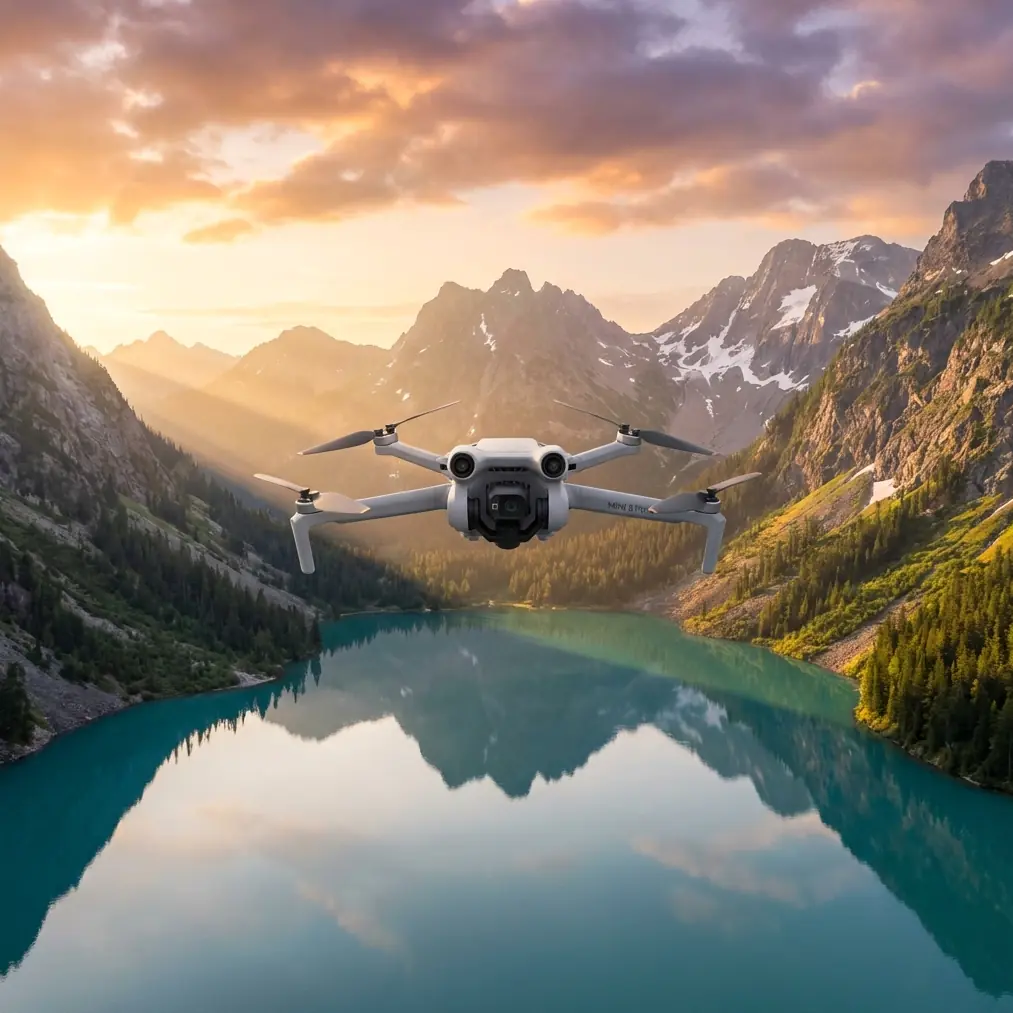
How I’d Set Up a Mini 5 Pro for Coastal Vineyard Survey Work
META: A practical Mini 5 Pro field tutorial for coastal vineyard surveying, focused on height stability, sensor bias, wind, battery habits, and reliable image capture.
Coastal vineyards are beautiful until you try to survey them with a small drone.
You get slope changes between rows. Wind rolling in from the water. Temperature shifts between the first and last block of the morning. And if you are trying to build a repeatable inspection routine with a Mini 5 Pro, the real challenge is not just getting footage. It is getting usable, consistent data from flight to flight.
That is why one technical idea matters more here than most pilots realize: height and orientation are related, but they do not fail in the same way.
A reference paper on multirotor design discussed this very clearly. The author separated orientation estimation from height estimation to make error analysis easier, then pointed out that the two could later be merged in a tightly coupled system. Just as important, the paper highlighted two practical error sources that every vineyard operator should care about: atmospheric-pressure-driven height drift and time-varying MEMS accelerometer bias. Those sound academic. In the field, they are the difference between a clean repeat survey and a dataset that looks fine on screen but falls apart when you compare rows week over week.
This article is about how I would apply those lessons to Mini 5 Pro operations in coastal vineyard surveying.
Why coastal vineyard mapping exposes weak flight habits
A vineyard near the coast creates a messy sensor environment.
The aircraft may launch in calm air by the access road, then meet a crosswind over the upper rows. The morning can start cool and damp, then warm quickly once the sun clears the ridge. If you are flying a compact drone repeatedly across long vine corridors, tiny estimation errors accumulate. A few feet of vertical inconsistency may not ruin a casual photo flight, but it can absolutely affect overlap, repeatability, and the confidence you place in comparative crop imagery.
The reference material mentions an altimeter as a viable option to reduce height drift caused by atmospheric pressure changes. That single detail is operationally significant. In coastal work, pressure and temperature can shift enough over a session to make purely pressure-based height assumptions less trustworthy, especially if you are trying to keep a consistent clearance above canopy.
For a vineyard manager, “height drift” is not an engineering phrase. It shows up as changing image scale, inconsistent angle on the fruiting zone, and reduced comparability across passes.
The Mini 5 Pro mindset: trust the aircraft, but verify the mission design
A lot of people approach a lightweight platform like Mini 5 Pro as if the aircraft should solve everything automatically. That is the wrong starting point for survey work.
Features like obstacle avoidance, ActiveTrack, subject tracking, QuickShots, Hyperlapse, and D-Log all have value, but not all value is equal in a vineyard survey. For this kind of job, the priority is disciplined capture and stable geometry. Cinematic automation comes second.
Here is how I structure a practical workflow.
Step 1: Build the route around canopy clearance, not around convenience
In vineyards, the temptation is to set one height and run the block. That works only if the terrain is forgiving.
Coastal vineyards often are not. You may have rows stepping down a slope, localized wind funnels between breaks in vegetation, and trellis height variations depending on block age. If the drone’s height estimate drifts even modestly, the effect becomes amplified when you are already operating with narrow canopy clearance margins.
The reference document’s discussion of atmospheric pressure drift should influence your route planning. If the aircraft’s vertical estimation is affected by ambient change during the mission, then long uninterrupted segments flown close to the canopy become riskier than they appear.
My preference is to break larger vineyard surveys into shorter logical sections:
- lower block
- mid-slope block
- upper block
- exposed edge rows near the coast
That gives you natural checkpoints to reassess live altitude behavior, wind response, and image consistency. It also reduces the chance that one unnoticed drift issue contaminates the entire job.
Step 2: Use obstacle avoidance as a buffer, not as your primary plan
Obstacle avoidance is useful in vineyard work, especially near windbreak trees, utility poles, and edge fencing. But rows themselves can create a false sense of order. They look uniform. They are not.
Support wires, end posts, netting, irrigation hardware, and seasonal vegetation changes all complicate low-altitude flight. If your height estimate is drifting while the aircraft is also making subtle attitude corrections in crosswind, obstacle avoidance becomes a safety net rather than a magic shield.
This is where the reference note about inclination error becomes relevant. The paper states that inclination error played a minor role in height error compared with gain and bias errors, but it also warns that inclination error depends heavily on the type of movement the sensors experience and can become significant during certain motions.
Operationally, that matters in two vineyard scenarios:
Crosswind row transitions
The aircraft banks and corrects more aggressively than it would in still air. Sensor movement becomes less benign.Short acceleration bursts at row ends
Pilots often accelerate after a turn to save time. That can produce the kind of movement that stresses orientation estimation.
So yes, use obstacle avoidance. But leave enough vertical and lateral margin that you are not asking the system to rescue a poorly spaced mission.
Step 3: Treat repeatability as the real product
Surveying vineyards is rarely about one dramatic flight. It is about comparison.
You want to revisit the same block and judge canopy vigor, drainage issues, missing vines, stress patterns, and growth changes with confidence. That means similar framing, similar timing, similar pathing, and similar aircraft behavior.
This is where decoupling orientation and height, as described in the reference, becomes a useful mental model. Even if the drone’s internal flight stack handles these systems together in practice, the pilot should evaluate them separately in the field:
- Is the aircraft holding the intended track cleanly?
- Is the camera angle staying consistent across passes?
- Is the drone maintaining believable vertical separation from the canopy?
- Are passes later in the mission matching the first passes in scale and spacing?
When one of those answers starts drifting, do not keep flying just because the drone is still airborne.
Step 4: My battery management habit for coastal jobs
Here is the field tip I give newer operators, and it sounds almost too simple: do not use your last third of battery on the most exposed rows.
On coastal sites, the aircraft often burns more energy on the return leg than pilots expect because the wind profile changes with elevation and direction. Add the small but real effects of temperature variation, and you get flights that start efficiently and end with more compensation, more attitude correction, and more uncertainty.
My practical habit is this:
- use the freshest battery on the farthest or most wind-exposed section
- reserve a second battery for any block where consistency matters more than coverage
- avoid “squeezing in one more pass” once you are into the lower remaining charge band
This is not just about endurance. It is about data quality. As the drone works harder late in a pack, you may notice more speed variation, more braking correction, and a less relaxed margin for re-flying a segment if something looks off.
If you are organizing a larger coastal vineyard routine and want a clean preflight checklist I use with crews, I usually share it through this quick field contact link: message me here before your next survey day.
Step 5: Watch temperature because MEMS bias does not sit still
One of the most valuable lines in the reference material is the note that MEMS accelerometer bias changes over time due to bias instability, temperature, and other effects, and that estimating it as a Kalman state is highly desirable.
That is not theory for theory’s sake. It is exactly the kind of hidden variable that explains why a drone may feel excellent on one pass and slightly “off” later without any obvious pilot error.
In coastal vineyard work, temperature can move enough during a morning session to matter. A compact aircraft sitting in a case, then launching into cool air, then hovering over sunlit rows in a warming environment, is not operating in a static condition.
What should you do with that knowledge?
- Give the aircraft a brief stabilization window before the first critical pass.
- Avoid judging precision based only on the first twenty seconds after takeoff.
- If the day is warming quickly, compare late-mission behavior with your initial reference pass instead of assuming the system is unchanged.
- Re-fly a control segment when conditions shift noticeably.
You are not recalibrating Kalman states manually, of course. But you are flying with respect for the fact that sensor bias drifts over time.
That mindset alone improves decisions.
Step 6: Choose capture modes that support analysis, not distraction
Mini-series drones often attract users through creative modes. And some of them do belong in vineyard work.
D-Log
D-Log is useful when lighting across the block is uneven, especially in coastal haze or strong side light. It can help preserve tonal detail that is valuable during visual review of canopy condition. The catch is consistency. If your team cannot maintain a reliable post workflow, a flatter profile may create more confusion than insight.
Hyperlapse
Hyperlapse is not a primary survey tool, but it can be effective for documenting macro changes in a property over time—growth progression, labor movement patterns, or seasonal context around a block. Use it as supplemental visual reporting, not the core dataset.
QuickShots
For inspection storytelling, QuickShots can help capture the relationship between a problem block and surrounding terrain. They are not a substitute for disciplined row coverage.
ActiveTrack and subject tracking
These are less central for crop survey itself, but can support training demonstrations, vehicle follow-ins on estate roads, or documenting support operations. I would not rely on them for the analytical part of vineyard assessment.
The pattern here is simple. For surveying, stable repeatable imaging wins. Everything else is optional.
Step 7: Fly smoother than you think you need to
That earlier reference warning about movement-dependent inclination error deserves one more application. Aggressive control inputs create sensor conditions that are less predictable than gentle ones. Even if the aircraft remains safe and the footage looks acceptable, the hidden cost is inconsistency.
So in vineyards:
- accelerate gradually
- slow before the row end
- make turns with room
- avoid abrupt climb corrections unless necessary
- keep gimbal behavior deliberate and repeatable
When operators complain that one pass “just feels different,” it is often not one dramatic failure. It is the accumulation of small differences in motion, wind, battery state, and sensor behavior.
Step 8: Build one repeatable reference pass into every mission
This is the closest thing I have to a universal quality-control trick.
Pick one short row segment or edge line and fly it early in the mission. Then, if conditions shift or a battery swap changes the feel of the aircraft, fly that exact segment again. Compare altitude behavior, framing, speed stability, and canopy spacing in the image.
This gives you a field reference anchored to the same property, not to a generic assumption about how the drone should behave.
That matters because the reference paper’s core message is really about estimation error. You may not see that error directly. But you can detect its consequences by comparing like with like.
What this means for Mini 5 Pro vineyard operators
If you are serious about using a Mini 5 Pro in coastal vineyard surveying, the best upgrade is not a more elaborate flight vocabulary. It is a sharper understanding of what causes inconsistency.
Two details from the technical reference stand out:
- Atmospheric pressure changes can produce height drift, which directly affects canopy clearance, image scale, and pass-to-pass repeatability.
- MEMS accelerometer bias changes over time and with temperature, which can alter estimation quality during a real survey session, especially as environmental conditions evolve.
Those are not obscure engineering footnotes. They explain real field behavior.
The practical answer is equally clear:
- break missions into logical sections
- preserve altitude margin
- fly smoothly
- monitor changing conditions
- use fresh batteries strategically
- recheck a reference segment during the session
- prioritize repeatability over flashy automation
Mini 5 Pro can be a very capable tool in this role if the operator treats it like a survey platform first and a content machine second. In coastal vineyards, that distinction is everything.
Ready for your own Mini 5 Pro? Contact our team for expert consultation.