
Mini 5 Pro: Master Vineyard Surveys in Wind
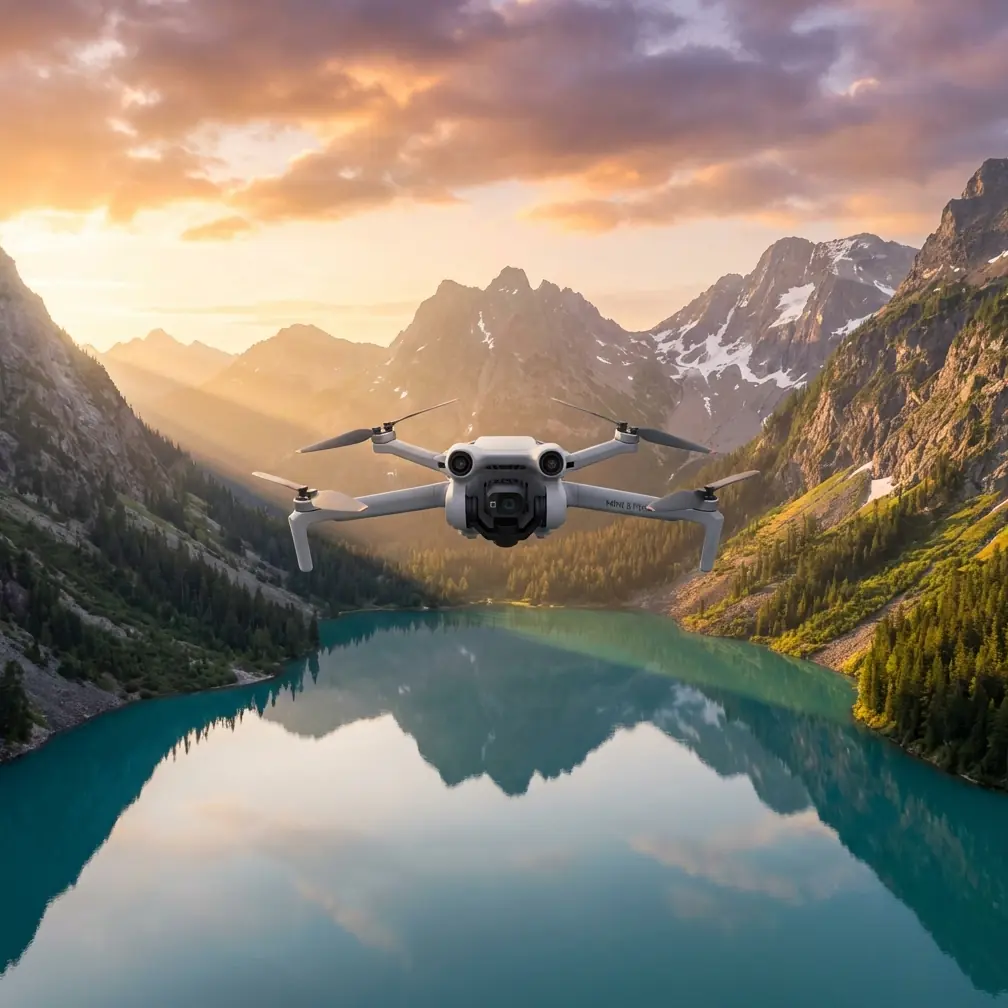
Mini 5 Pro: Master Vineyard Surveys in Wind
META: Learn how the Mini 5 Pro handles windy vineyard surveys with precision. Expert tips on pre-flight prep, flight settings, and capturing usable mapping data.
TL;DR
- Clean obstacle sensors before every flight—dust and pollen cause false readings in vineyard environments
- The Mini 5 Pro maintains stable hover in winds up to 10.7 m/s, making it reliable for exposed hillside vineyards
- D-Log color profile preserves detail in high-contrast grape canopy shots essential for health analysis
- Pre-programmed survey patterns using QuickShots reduce pilot workload during challenging wind conditions
Vineyard surveys fail in wind for one predictable reason: dirty sensors triggering phantom obstacles. The Mini 5 Pro's obstacle avoidance system becomes your biggest liability when pollen, dust, and pesticide residue coat those critical sensor lenses. This guide walks you through the exact pre-flight cleaning protocol and flight settings that professional vineyard surveyors use to capture usable data in winds that ground lesser drones.
Why Pre-Flight Sensor Cleaning Determines Survey Success
The Mini 5 Pro packs omnidirectional obstacle sensing into a body weighing just 249 grams. That compact design means sensor lenses sit closer to prop wash turbulence, accumulating debris faster than larger platforms.
In vineyard environments, you're dealing with:
- Sulfur dust from fungicide applications
- Pollen during flowering season
- Fine soil particles kicked up by wind across bare rows
- Pesticide film that creates a hazy coating
A contaminated forward vision sensor doesn't just risk collision—it triggers constant flight interruptions. The drone stops, hovers, recalculates. Your survey grid becomes a patchwork of inconsistent altitude holds and missed capture points.
Expert Insight: Carry lens-safe microfiber cloths and isopropyl alcohol wipes in your field kit. Clean all six sensor faces before every flight, not just when you notice issues. Prevention takes 90 seconds; recovering corrupted survey data takes hours.
The Cleaning Protocol That Prevents False Obstacle Detection
Step 1: Visual Inspection
Hold the Mini 5 Pro at eye level under direct sunlight. Angle each sensor face to catch light reflection. Film residue shows as rainbow patterns; dust appears as discrete particles.
Step 2: Dry Wipe First
Use a clean microfiber cloth to remove loose particles. Circular motions push debris into lens edges—use straight strokes moving away from the lens center.
Step 3: Solvent Application
For film or stubborn residue:
- Apply 70% isopropyl alcohol to the cloth, never directly to the sensor
- Single pass across the lens face
- Allow 15 seconds for complete evaporation before flight
Step 4: Gimbal Glass
The camera's protective glass requires the same attention. Vineyard haze shows up as reduced contrast in your survey imagery, making vegetation index calculations unreliable.
Configuring the Mini 5 Pro for Windy Vineyard Conditions
Wind creates two problems for vineyard surveys: positional drift and gimbal shake. The Mini 5 Pro handles both through specific settings most pilots overlook.
Flight Mode Selection
Switch to Sport Mode for transit between survey areas—the increased motor responsiveness fights wind drift more effectively. Return to Normal Mode for actual data capture, where the stabilization algorithms prioritize smooth footage over aggressive correction.
Gimbal Settings for Stable Imagery
| Setting | Calm Conditions | Windy Conditions |
|---|---|---|
| Gimbal Pitch Speed | 30 | 15 |
| Gimbal Pitch Smoothness | 20 | 30 |
| Gimbal Roll | Follow | FPV |
| D-Log | Off | On |
The reduced pitch speed prevents the gimbal from overcompensating for wind-induced body roll. Increasing smoothness adds latency but eliminates micro-jitters that destroy photogrammetry alignment.
Pro Tip: Enable D-Log even for mapping missions. The flattened color profile preserves shadow and highlight detail in the high-contrast environment where bright soil meets dark canopy. You can always add contrast in post—you can't recover clipped data.
Building Wind-Resistant Survey Patterns
Using QuickShots as Survey Building Blocks
The Mini 5 Pro's QuickShots aren't just for cinematic content. Dronie and Circle modes execute mathematically precise movements that maintain consistent ground sample distance (GSD) even when manual flying would introduce drift.
For vineyard rows:
- Position at row end, 30 meters altitude
- Engage Dronie mode with subject tracking locked on row center
- The automated pullback creates a nadir-to-oblique transition perfect for 3D modeling
Hyperlapse for Time-Series Documentation
Vineyard managers need growth progression data. Configure Hyperlapse in waypoint mode to capture the same angles across multiple flights throughout the season. The Mini 5 Pro stores GPS coordinates for precise repeatability.
ActiveTrack Limitations
Subject tracking works poorly on vineyard rows—the uniform texture confuses the recognition algorithm. Use it only for tracking vehicles or personnel, never for autonomous row-following.
Technical Comparison: Mini 5 Pro vs. Field Conditions
| Specification | Mini 5 Pro Rating | Vineyard Survey Requirement | Verdict |
|---|---|---|---|
| Max Wind Resistance | 10.7 m/s | 8-12 m/s typical valley winds | Adequate with technique |
| Flight Time | 34 minutes | 25 min minimum for 10-acre block | Exceeds requirement |
| Obstacle Sensing | Omnidirectional | Trellis wires, posts, trees | Requires clean sensors |
| Image Sensor | 1/1.3-inch CMOS | 2 cm/pixel GSD | Professional quality |
| Transmission Range | 20 km | 500m typical survey distance | Overkill |
| Weight | 249 grams | <250g for simplified regulations | Registration-exempt |
The 249-gram weight class eliminates registration requirements in most jurisdictions, reducing operational friction for commercial vineyard services.
Flight Execution: Row-by-Row Methodology
Altitude Determination
Calculate your altitude based on required ground sample distance:
- 2 cm GSD (individual leaf identification): 35 meters
- 5 cm GSD (canopy coverage mapping): 80 meters
- 10 cm GSD (block overview): 150 meters
Overlap Requirements
For photogrammetry stitching in windy conditions, increase overlap beyond calm-weather minimums:
- Front overlap: 80% (up from 75%)
- Side overlap: 70% (up from 65%)
The extra redundancy compensates for frames where wind-induced roll slightly shifts coverage.
Battery Management
Wind fighting drains batteries 15-20% faster than calm conditions. Plan for 25-minute effective flight time, not the rated 34 minutes. Swap batteries at 30% remaining—the voltage curve drops sharply in the final reserve.
Common Mistakes to Avoid
Launching from the vineyard floor: Ground-level prop wash kicks up debris that immediately coats your freshly cleaned sensors. Launch from vehicle roofs, equipment trailers, or portable landing pads elevated above row height.
Ignoring wind direction relative to rows: Flying perpendicular to wind direction while parallel to rows maximizes drift. Rotate your survey pattern so flight lines align with wind vectors when possible.
Trusting battery percentage in gusty conditions: Gusts create momentary current spikes the percentage display doesn't reflect. Monitor voltage directly in the DJI Fly app's telemetry readout.
Skipping the compass calibration: Vineyard trellis wires contain steel. If you've driven across the property with the drone in your vehicle, recalibrate the compass before flight. Magnetic interference causes toilet-bowl hovering that ruins survey precision.
Post-processing without GPS verification: Before committing to full photogrammetry processing, spot-check image EXIF data for GPS accuracy. Wind drift sometimes causes logging errors that misplace images by several meters.
Frequently Asked Questions
Can the Mini 5 Pro complete surveys in winds above its rated maximum?
The 10.7 m/s specification represents sustained wind, not gusts. In vineyard terrain, topography creates localized acceleration zones where gusts exceed averages. The Mini 5 Pro can handle brief gusts to 12-13 m/s but will struggle to maintain heading accuracy. If your wind meter shows sustained speeds above 9 m/s, postpone the mission.
How does D-Log improve vineyard health analysis compared to standard color?
Standard color profiles apply contrast curves that clip data in shadows (under-canopy) and highlights (exposed soil). D-Log preserves 2-3 additional stops of dynamic range, capturing the subtle color variations between healthy and stressed vines that would otherwise compress into identical values. This matters most for NDVI-style analysis where small reflectance differences indicate early disease.
What maintenance schedule keeps obstacle avoidance reliable across a season?
Beyond pre-flight cleaning, schedule monthly firmware updates—DJI frequently patches sensor processing algorithms. Every 50 flight hours, inspect sensor faces for micro-scratches that scatter light. Replacement sensor modules cost less than a single corrupted survey dataset.
The Mini 5 Pro transforms vineyard surveying from weather-dependent guesswork into a reliable data collection operation. The pre-flight cleaning discipline separates professionals who deliver consistent results from hobbyists who blame equipment for preventable failures.
Ready for your own Mini 5 Pro? Contact our team for expert consultation.