
Mini 5 Pro in Windy Field Surveys: What a Digital
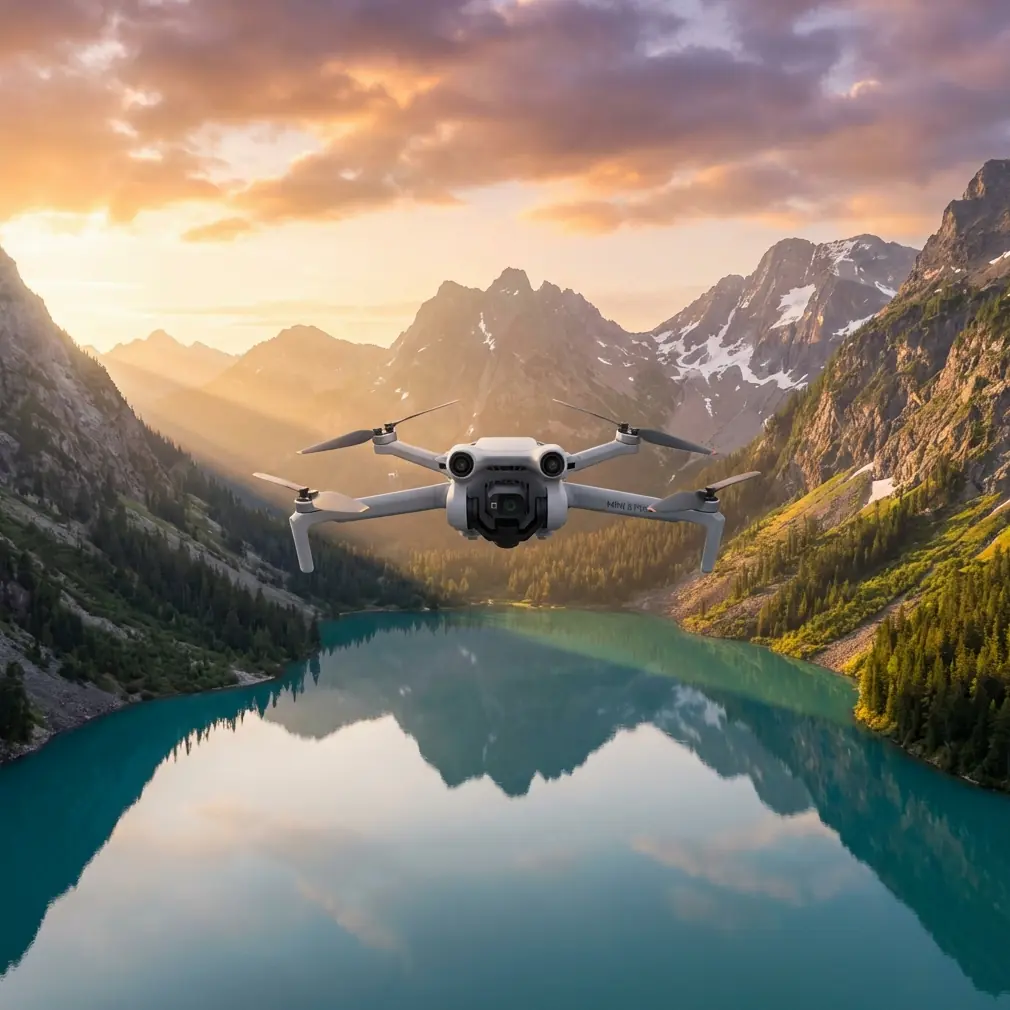
Mini 5 Pro in Windy Field Surveys: What a Digital Construction Team Teaches Us About Flying Smarter
META: A field-focused case study on Mini 5 Pro use in windy surveying work, drawing lessons from a drone engineering team with BIM, AI, IoT, and construction workflow expertise.
Wind changes everything in field surveying.
Not in the abstract. In practice. It affects line consistency, image overlap, obstacle sensing confidence, battery planning, and even the usefulness of your final map set. If you are flying a Mini 5 Pro over open agricultural land or exposed project parcels, wind is rarely just an inconvenience. It is a workflow variable that has to be managed before takeoff, during the mission, and again when you review the data.
That is why the most useful way to think about the Mini 5 Pro is not as a consumer camera drone with extra features bolted on, but as part of a digital field documentation system. A good clue comes from an older but still revealing industry reference: Qizhi Technology’s drone-based digital engineering management solution from 2019. The product in that document is not the Mini 5 Pro, of course. But the team profile behind it matters because it shows what serious drone operations look like when construction, BIM, AI, mobile software, and field data all meet in one workflow.
One co-founder had worked in a building design institute and was responsible for urban planning and BIM applications. Another had focused on drone and IoT technology R&D and deployment from 2015 onward. The AI lead had experience at Microsoft’s Dynamics 365 enterprise services division and specialized in front-end and back-end development, data analysis, machine learning, and computer vision. That mix is unusually relevant to a Mini 5 Pro operator surveying in wind, because windy flights are not won by stick skill alone. They are won by process design.
A real-world scenario: edge-of-field mapping in gusty conditions
Picture a morning survey on a broad agricultural site. The terrain is flat, but the wind is not. Gusts roll through at irregular intervals because the field borders a drainage corridor and a line of low structures that create turbulence. You are using the Mini 5 Pro to document crop boundaries, access tracks, drainage condition, and elevation-visible surface changes for later comparison.
This is exactly the kind of mission where small mistakes stack up.
If the aircraft yaws unexpectedly in a gust, your image geometry can become inconsistent. If the obstacle sensors are dusty, their reliability around trees, poles, or equipment staging areas can drop when you need them most. If ActiveTrack or subject tracking is used to follow a moving utility vehicle during a site documentation pass, wind can exaggerate trajectory corrections and create less stable framing. If you jump into QuickShots or Hyperlapse without understanding the air movement, the result may look dramatic but provide weak survey value.
The answer is not to avoid automation. It is to use automation with discipline.
The pre-flight cleaning step that matters more in wind
Before any windy survey, I do one small thing that too many pilots skip: I clean the vision sensors and obstacle avoidance windows before I even power on.
That sounds basic, but in a field environment it becomes operationally significant. Dust, pollen, dried moisture spots, or finger smears can reduce the confidence of obstacle sensing systems. In still conditions you may never notice. In wind, the drone is already making more aggressive stabilization inputs. A sensor suite working with compromised clarity has less margin when the aircraft drifts slightly during braking or side correction.
For a Mini 5 Pro operator, this matters because obstacle avoidance is not just about not hitting something. It affects how confidently the aircraft can respond near field-edge hazards such as irrigation assemblies, fencing, lone trees, utility poles, and parked machinery. Clean sensors improve the odds that the system reads its environment correctly when the aircraft is already dealing with lateral air movement.
I also wipe the camera lens and check the gimbal for free motion. Wind reveals every weakness in your setup. A perfectly good camera profile can still produce unusable survey imagery if the lens has haze or if the gimbal fights extra resistance.
Why the Qizhi team profile is relevant to Mini 5 Pro users
The 2019 Qizhi reference is easy to dismiss as just a corporate bio section, but it actually reveals a practical model for how drone work becomes reliable. Their team had more than 20 members across Hangzhou, Shenzhen, and Guangzhou. That alone tells you they were not treating unmanned flight as a one-person gadget hobby. They were building repeatable operational capacity across multiple locations.
The stronger detail is the founders’ background mix.
The executive side included experience in urban planning and BIM. That matters because surveying is not really about flying; it is about converting what the drone sees into decisions. If your field images feed a land management report, drainage improvement plan, crop pattern review, or construction progress model, then a BIM-style mindset is valuable. It pushes you to ask: what data do I need, how consistent does it need to be, and what downstream user will rely on it?
Another founder had launched a mobile app with more than 20 million users. On the surface, that seems unrelated to windy field surveys. It is not. At that scale, you learn something essential: interfaces and workflows have to be simple enough to survive real users in imperfect conditions. The Mini 5 Pro is at its best when the operator builds similarly robust routines. Checklists, repeatable camera settings, preplanned route logic, and conservative wind thresholds beat improvisation every time.
The AI lead’s background is just as relevant. Machine learning and computer vision are not buzzwords here. They are the logic behind scene interpretation, tracking behavior, and data extraction. If you use ActiveTrack to document moving farm equipment along a boundary road, or if you rely on automated subject handling for repeat inspection framing, then you are already depending on computer vision. In wind, the difference between “works” and “works reliably” is how well the system can maintain lock while the aircraft is absorbing environmental disturbance.
Flying the Mini 5 Pro in wind: what actually changes
Windy surveying with a compact drone calls for a different mindset than cinematic flying.
First, prioritize repeatability over creativity. D-Log can be useful if your survey package includes interpretive visual reporting and you want more latitude in post, especially for preserving highlight detail under harsh midday sun. But if the primary mission is mapping consistency, exposure stability and overlap discipline matter more than artistic flexibility. Use the camera mode that serves the deliverable, not your ego.
Second, altitude selection becomes strategic. A slightly higher pass may smooth out local turbulence near crop rows, berms, and edge structures. On the other hand, climbing too high can expose the Mini 5 Pro to stronger, cleaner wind with less shielding. There is no universal answer. The key is to test with a short evaluation leg before committing to the full route.
Third, accept that subject tracking tools are not magic. ActiveTrack and related subject tracking modes can help when documenting moving tractors, support vehicles, or inspection teams crossing a field. But wind changes how smoothly the aircraft can maintain lateral offset and heading discipline. Use tracking when it adds documentation value, not because it is available. In some gusty situations, a manually controlled offset orbit or straight follow pass will give you cleaner and more predictable results.
Fourth, QuickShots and Hyperlapse should be treated as supplemental assets. In a survey context, they are best used for stakeholder communication rather than primary measurement work. A Hyperlapse showing cloud shadow movement across a drainage basin can be useful in a report or presentation. A QuickShot can illustrate the relationship between field access and surrounding infrastructure. But if the wind is active, verify stability and framing before relying on those modes. Automated paths in changing gusts may produce less precise framing than you expect.
The hidden value of an IoT and AI mindset in field surveys
One of the most useful details in the source material is that the product and engineering leadership had been focused on drone and IoT application development since 2015. That date matters because it suggests sustained exposure to real deployments, not just theoretical interest.
IoT thinking improves drone operations because it forces you to see the aircraft as one node in a larger information system. Your Mini 5 Pro is collecting visual evidence, positional data, and environmental context. The real value comes later, when that information is tied to historical records, mobile reporting, field crew notes, or planning systems.
For windy agricultural surveying, this has practical consequences:
- You should log wind behavior, not just note “windy.”
- You should document which passes were flown before gusts increased.
- You should mark any sections where the aircraft made visible stabilizing corrections.
- You should separate high-confidence imagery from marginal captures.
That kind of structured recordkeeping makes later review far more useful. It also protects against false certainty. A pretty aerial dataset is not automatically a reliable one.
The Qizhi team’s combination of construction, software, and AI backgrounds points to a broader lesson: drone operations mature when they are treated as information management, not just flight activity.
A field case approach for the Mini 5 Pro
If I were building a Mini 5 Pro survey routine for windy field conditions based on the lessons implied by this reference, it would look like this:
1. Clean before calibrate
Start with the lens, obstacle sensors, and airframe surfaces. This is the easiest reliability gain you will ever get.
2. Fly a short wind test segment
Do not launch into a full route immediately. Check hover behavior, yaw corrections, and gimbal stability over a 1- to 2-minute evaluation pass.
3. Define the survey objective clearly
Boundary review? Drainage observation? Crop condition documentation? Access route change detection? Each one may justify a different altitude, angle, and camera profile.
4. Use obstacle avoidance with judgment
Obstacle sensing is a safety layer, not a substitute for route planning. In wind, give the drone more room around edge hazards than you would on a calm day.
5. Reserve ActiveTrack for specific documentation tasks
Tracking can work well for moving ground assets, but verify that the wind is not forcing constant correction that degrades framing.
6. Capture a communication layer separately
After the primary survey, use QuickShots, Hyperlapse, or a D-Log visual pass if stakeholders need an easier-to-read overview of the field.
7. Tag environmental confidence in your notes
This is where professional workflow starts to separate itself from casual flying.
What this means for Mini 5 Pro buyers and operators
The strongest takeaway from the source document is not about hardware specifications. It is about operational maturity. A team spread across three cities, built from engineering, AI, software, and construction talent, was already framing drone work as a digital management discipline back in 2019. That perspective is exactly what Mini 5 Pro users need today, especially in wind-sensitive survey work.
A compact drone can absolutely support serious civilian field surveying. But only if the operator respects the chain from sensor cleanliness to flight stability to data usability. Wind exposes weak links fast.
If you are setting up a Mini 5 Pro workflow for agricultural documentation, site progress records, or land-condition surveys, it helps to think like that kind of multidisciplinary team. Fly carefully, yes. But also define the output, protect the sensing system, record environmental conditions, and review every automated feature through the lens of mission value.
If you want to compare field workflow ideas or sensor-prep habits before your next survey, you can message a drone workflow specialist here.
That may sound like a small operational note. It is not. In windy field work, the difference between “the drone flew” and “the survey delivered usable data” often comes down to details that happen before the first waypoint.
Ready for your own Mini 5 Pro? Contact our team for expert consultation.