
How to Survey Construction Sites with Mini 5 Pro
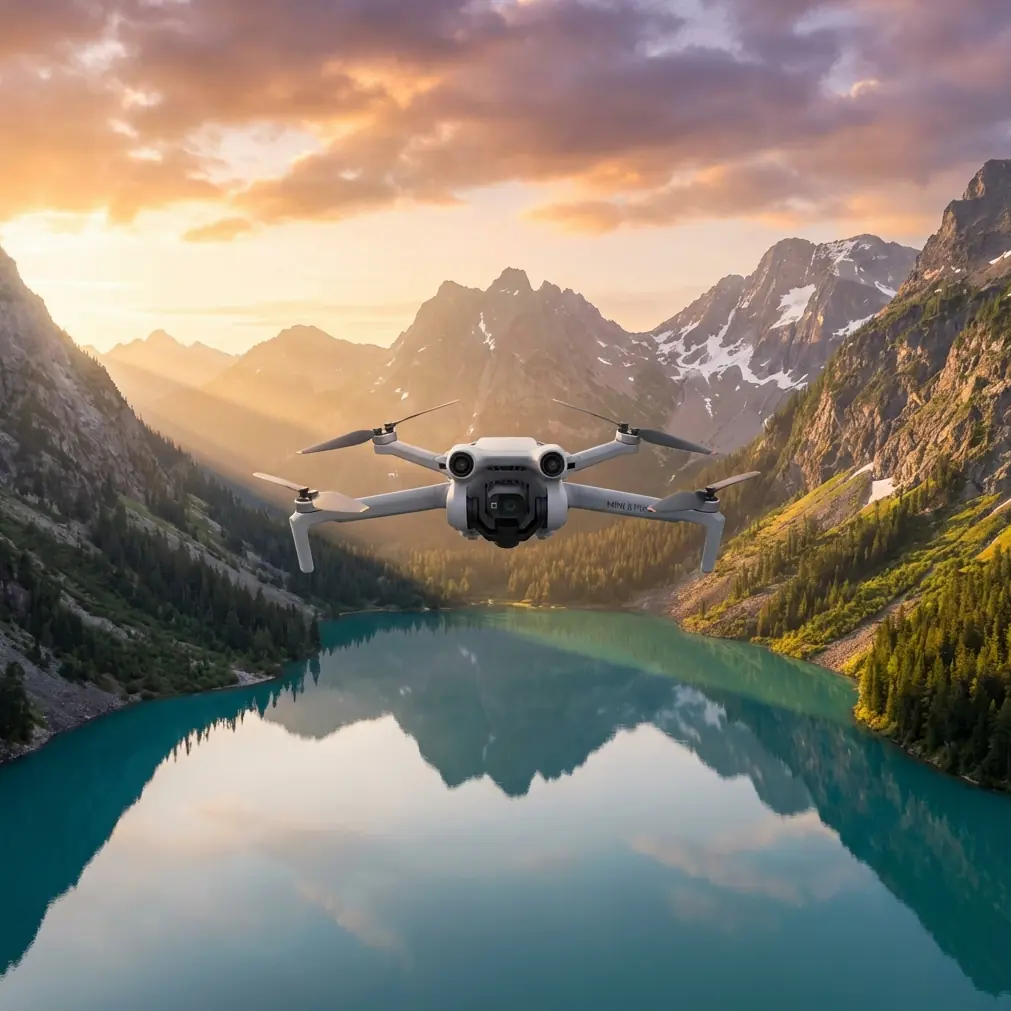
How to Survey Construction Sites with Mini 5 Pro
META: Master remote construction site surveying with the Mini 5 Pro drone. Learn expert techniques for obstacle avoidance, mapping workflows, and capturing precise aerial data.
TL;DR
- Mini 5 Pro's obstacle avoidance sensors enable safe autonomous flights in complex construction environments with scaffolding, cranes, and debris
- D-Log color profile preserves maximum dynamic range for accurate site documentation and progress tracking
- ActiveTrack and Subject tracking allow hands-free monitoring of equipment movement and worker safety zones
- Hyperlapse capabilities create compelling time-lapse documentation of project milestones for stakeholders
Remote construction site surveying used to mean hauling heavy equipment up mountainsides and hoping weather cooperated. The Mini 5 Pro changed my entire workflow—what once took three days of ground-based measurements now happens in a single morning flight session. This guide breaks down exactly how I use this compact powerhouse to deliver professional-grade site surveys, even in the most challenging terrain.
Why the Mini 5 Pro Excels at Construction Surveying
The construction industry demands precision. Every measurement matters. Every angle needs documentation. Traditional surveying methods struggle with remote sites where access roads don't exist and cellular coverage drops to zero.
The Mini 5 Pro weighs under 249 grams, which means simplified regulatory requirements in most jurisdictions. But don't let the compact size fool you—this drone packs serious surveying capabilities.
Key Specifications for Site Work
| Feature | Mini 5 Pro Spec | Surveying Benefit |
|---|---|---|
| Sensor Size | 1/1.3-inch CMOS | Captures fine detail in shadows and highlights |
| Video Resolution | 4K/60fps | Smooth documentation of equipment movement |
| Flight Time | Up to 34 minutes | Complete large sites in single battery cycles |
| Wind Resistance | Level 5 (10.7 m/s) | Stable footage in exposed mountain locations |
| Transmission Range | Up to 12 km | Maintains connection across sprawling sites |
| Obstacle Sensing | Tri-directional | Autonomous navigation around structures |
Pre-Flight Planning for Remote Sites
Before propellers spin, proper planning prevents disasters. Remote construction sites present unique challenges that urban environments don't.
Site Assessment Checklist
- Map all vertical obstacles: Cranes, scaffolding, temporary structures, and material stockpiles
- Identify electromagnetic interference sources: Generators, heavy machinery, and communication equipment
- Check weather windows: Mountain sites experience rapid weather changes
- Establish emergency landing zones: Clear areas for quick retrieval if issues arise
- Confirm airspace restrictions: Construction near airports or military installations requires additional clearance
Expert Insight: I always arrive at remote sites 45 minutes before planned flight time. This buffer allows compass calibration away from metal structures and gives time to walk the perimeter identifying hazards that satellite imagery missed.
Battery Management in Remote Locations
Remote sites mean no charging opportunities. My standard loadout includes:
- Six fully charged batteries for comprehensive coverage
- Portable power station for emergency top-ups
- Insulated battery case to maintain optimal temperature in cold mountain environments
The Mini 5 Pro's intelligent battery system displays remaining flight time accurately, but I never push below 25% charge on remote sites. Getting stranded with a dead drone miles from the truck creates expensive problems.
Mastering Obstacle Avoidance for Construction Environments
Construction sites are obstacle courses. Cranes swing. Scaffolding creates complex geometric patterns. Workers move unpredictably. The Mini 5 Pro's obstacle avoidance system handles these challenges remarkably well—when configured correctly.
Optimal Sensor Settings
The tri-directional sensing system covers forward, backward, and downward directions. For construction surveying, I configure settings as follows:
- Obstacle avoidance action: Set to "Brake" rather than "Bypass" near active work zones
- Sensing distance: Maximum setting for early warning
- Return-to-home altitude: 15 meters above the tallest structure on site
When to Disable Obstacle Avoidance
Sometimes sensors create problems. Reflective surfaces, fine cables, and certain lighting conditions can trigger false positives. I disable obstacle avoidance only when:
- Flying established, pre-scouted routes
- Capturing close-proximity detail shots of specific structures
- Operating in areas with thin cables the sensors might miss anyway
Pro Tip: Create a test flight pattern on your first visit to any new site. Fly the perimeter at 50 meters altitude with all sensors active. This reveals how the drone responds to the specific obstacles present before you attempt complex maneuvers.
Capturing Professional Survey Documentation
The Mini 5 Pro offers multiple shooting modes that serve different surveying purposes. Understanding when to use each transforms raw footage into actionable construction intelligence.
D-Log for Maximum Flexibility
Construction sites present extreme dynamic range challenges. Bright sky, dark shadows under structures, reflective metal surfaces—all in the same frame. D-Log color profile captures up to 12.5 stops of dynamic range, preserving detail that standard profiles clip.
Post-processing D-Log footage requires color grading, but the flexibility proves invaluable when clients request specific measurements from shadowed areas weeks after the flight.
QuickShots for Stakeholder Presentations
Not every deliverable needs raw technical data. Project managers and investors want compelling visual updates. QuickShots automated flight patterns create polished content without complex piloting:
- Dronie: Reveals site context by pulling back and up from a focal point
- Circle: Orbits structures to show three-dimensional progress
- Helix: Combines ascending spiral for dramatic reveals
- Rocket: Straight vertical ascent showing site layout
Hyperlapse for Progress Documentation
Monthly site visits become powerful progress narratives with Hyperlapse mode. The Mini 5 Pro captures images at set intervals while flying predetermined paths, then stitches them into smooth time-lapse sequences.
For construction documentation, I use:
- Free mode: Manual control for custom paths around specific structures
- Circle mode: Consistent orbital shots that match month-to-month
- Course Lock mode: Straight passes across the site for comparison sequences
Subject Tracking for Equipment Monitoring
ActiveTrack and Subject tracking capabilities extend beyond creative applications. On construction sites, these features document equipment operation and workflow efficiency.
Practical Tracking Applications
- Excavator movement patterns: Identify inefficient material handling routes
- Concrete pour sequences: Document timing and coverage for quality assurance
- Delivery vehicle access: Analyze traffic flow for logistics optimization
- Safety zone compliance: Monitor worker proximity to hazardous operations
The Mini 5 Pro maintains Subject tracking even when targets temporarily disappear behind obstacles. This persistence proves essential on busy sites where equipment constantly moves behind structures.
Common Mistakes to Avoid
Years of construction site surveying revealed patterns in what goes wrong. These errors cost time, damage equipment, and compromise deliverables.
Flying Too Close to Active Operations
Crane operators can't see drones. Excavator buckets swing unpredictably. Maintain minimum 30-meter horizontal distance from any active equipment, regardless of how stable your hover appears.
Ignoring Magnetic Interference
Construction sites concentrate metal. Rebar stockpiles, steel beams, and heavy machinery create magnetic anomalies that confuse compass calibration. Always calibrate in clear areas at least 20 meters from metal concentrations.
Underestimating Wind Acceleration
Structures create wind tunnels. A calm day at ground level might mean turbulent gusts between buildings or around crane towers. The Mini 5 Pro handles wind well, but sudden gusts near obstacles leave little recovery margin.
Skipping Redundant Documentation
Memory cards fail. Batteries die mid-recording. Files corrupt. I capture every critical angle twice from different altitudes. The extra flight time costs far less than returning to remote sites for missed shots.
Neglecting Ground Control Points
Aerial imagery without ground reference points limits accuracy. Place visible markers at surveyed coordinates before flying. These enable precise georeferencing during post-processing.
Frequently Asked Questions
Can the Mini 5 Pro create accurate topographic maps of construction sites?
The Mini 5 Pro captures excellent imagery for photogrammetry workflows. When combined with ground control points and proper overlap settings (70% front, 60% side), third-party software generates topographic maps with centimeter-level accuracy. The camera's resolution and low-distortion lens produce reliable data for volume calculations and progress tracking.
How does obstacle avoidance perform around scaffolding and temporary structures?
Tri-directional sensors detect solid scaffolding structures reliably at distances up to 12 meters. However, thin poles, safety netting, and cables under 10mm diameter may not trigger avoidance responses. For scaffolding-heavy environments, reduce flight speed to 3 m/s and maintain manual override readiness.
What's the best approach for surveying sites with no GPS signal?
Remote canyon or heavily forested sites sometimes lose GPS lock. The Mini 5 Pro's vision positioning system maintains stability at low altitudes using downward cameras. For GPS-denied environments, fly below 10 meters, avoid rapid movements, and use manual mode with attitude stabilization. Consider postponing flights if GPS shows fewer than 8 satellites.
The Mini 5 Pro transformed how I approach remote construction documentation. Its combination of portability, intelligent flight systems, and professional imaging capabilities delivers results that previously required much larger aircraft and bigger budgets. Master these techniques, respect the limitations, and this compact drone becomes an indispensable surveying tool.
Ready for your own Mini 5 Pro? Contact our team for expert consultation.