
Mini 5 Pro Guide: Surveying Coastlines in Mountains
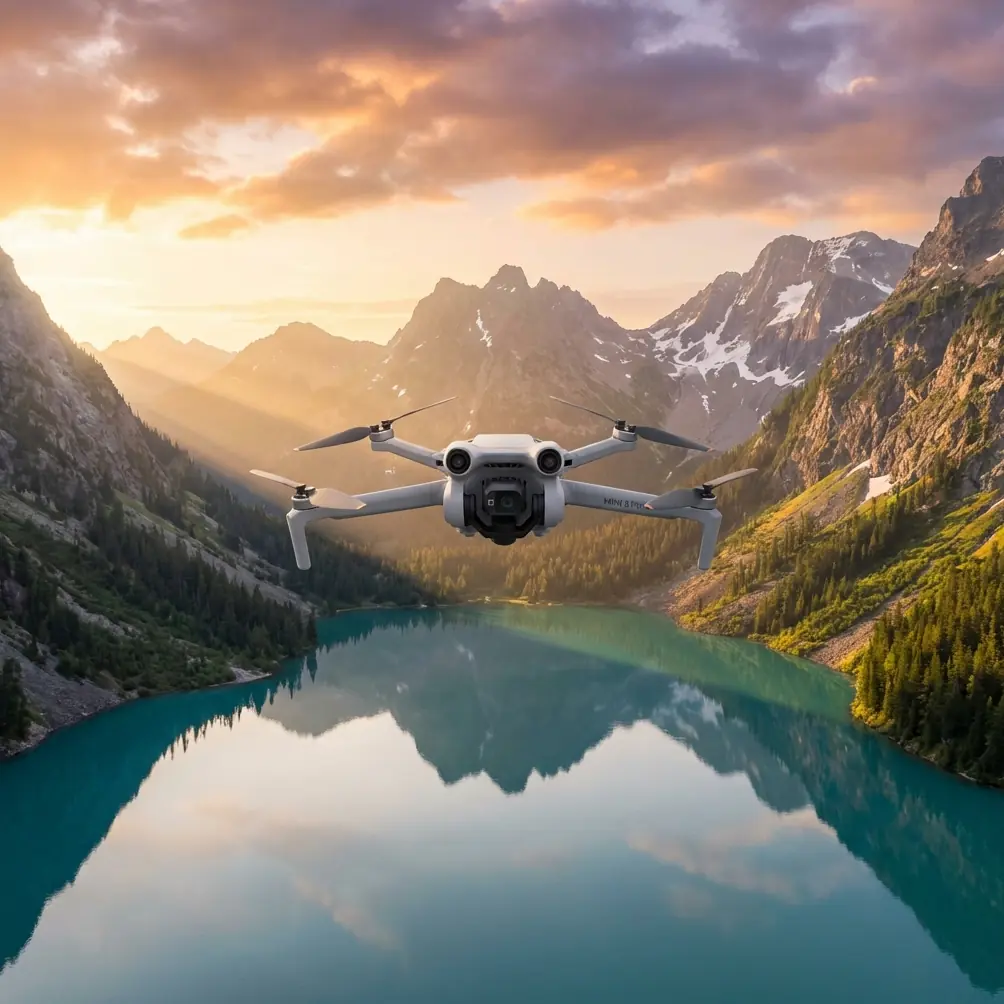
Mini 5 Pro Guide: Surveying Coastlines in Mountains
META: Master coastal mountain surveying with Mini 5 Pro. Learn essential pre-flight cleaning, obstacle avoidance setup, and pro techniques for stunning aerial data.
TL;DR
- Pre-flight sensor cleaning is critical for reliable obstacle avoidance in dusty, salt-spray mountain coastal environments
- The Mini 5 Pro's sub-249g weight allows legal flight in restricted coastal zones where heavier drones require permits
- D-Log color profile captures 13+ stops of dynamic range, essential for high-contrast coastline-to-mountain transitions
- ActiveTrack and QuickShots modes enable solo operators to capture professional survey footage without a dedicated camera operator
Why Coastal Mountain Surveying Demands the Right Drone
Coastal mountain environments present unique challenges that separate professional survey work from amateur attempts. Salt spray corrodes electronics. Unpredictable updrafts from cliff faces destabilize flight. Harsh lighting contrasts between dark volcanic rock and reflective ocean surfaces overwhelm inferior sensors.
The Mini 5 Pro addresses each challenge with purpose-built features. This guide walks you through my tested workflow for surveying rugged coastlines where mountains meet the sea—from pre-flight preparation to post-processing delivery.
The Pre-Flight Cleaning Protocol That Saves Your Survey
Here's what most pilots skip: cleaning your obstacle avoidance sensors before every coastal flight. This single step has saved my surveys more times than I can count.
Why Sensor Cleaning Matters
The Mini 5 Pro relies on omnidirectional obstacle sensing using vision sensors positioned around the aircraft body. In coastal mountain environments, these sensors face constant assault:
- Salt crystallization from ocean spray creates a film that degrades sensor accuracy
- Fine volcanic dust common in mountainous coastal regions scratches and obscures lenses
- Moisture condensation from rapid altitude changes fogs sensor surfaces
- Sand particles carried by coastal winds embed in sensor housings
A dirty forward-facing sensor doesn't just reduce obstacle detection range—it can cause false positive alerts that interrupt automated survey patterns or, worse, false negatives that lead to collisions with cliff faces.
My 5-Minute Sensor Cleaning Checklist
Before every coastal mountain survey, I complete this sequence:
- Visual inspection of all six sensor surfaces under bright light
- Compressed air blast (held 10 inches away to prevent moisture damage)
- Microfiber wipe with lens-safe cleaning solution for salt residue
- Gimbal glass cleaning using the same solution
- Sensor test flight at 3 meters altitude to verify obstacle avoidance response
Pro Tip: Carry a dedicated sensor cleaning kit in a sealed waterproof pouch. I use a hard-shell case with silica gel packets to prevent moisture contamination of cleaning supplies.
Configuring Obstacle Avoidance for Mountain Terrain
The Mini 5 Pro's obstacle avoidance system requires specific configuration for coastal mountain work. Default settings optimize for general flying—not the complex terrain you'll encounter surveying cliff faces and rocky outcrops.
Recommended Obstacle Avoidance Settings
| Setting | Default Value | Coastal Mountain Setting | Reason |
|---|---|---|---|
| Obstacle Avoidance | Bypass | Brake | Prevents unpredictable path changes near cliffs |
| Detection Range | Standard | Far | Earlier warning for sudden terrain features |
| Downward Sensing | On | On | Critical for landing on uneven coastal rocks |
| Return-to-Home Altitude | 30m | 120m | Clears mountain ridgelines during emergencies |
| Max Altitude | 120m | 500m (where legal) | Enables full mountain face coverage |
When to Disable Obstacle Avoidance
Certain survey patterns require temporarily disabling obstacle avoidance:
- Cliff face parallel passes where sensors misread rock walls as obstacles
- Cave entrance documentation where darkness defeats vision-based sensing
- Tight coastal stack navigation requiring precise manual control
Always re-enable obstacle avoidance immediately after completing these specialized maneuvers.
Mastering Subject Tracking for Dynamic Coastal Features
Subject tracking transforms the Mini 5 Pro from a flying camera into an intelligent survey tool. ActiveTrack technology locks onto moving subjects—but creative pilots use it for stationary feature documentation too.
ActiveTrack Applications for Coastal Surveys
The system excels at maintaining consistent framing while you focus on flight path:
- Tracking yourself walking a coastal trail to document accessibility
- Following boat traffic to assess maritime activity patterns
- Orbiting sea stacks while maintaining centered framing
- Documenting wildlife movement along migration corridors
Subject Tracking Limitations in Mountain Environments
ActiveTrack struggles in specific conditions common to coastal mountains:
- Low contrast subjects against similarly-colored backgrounds (gray seals on gray rocks)
- Subjects entering shadow zones cast by cliff overhangs
- Fast-moving subjects exceeding 8 meters per second
- Subjects smaller than 1 meter at distances beyond 30 meters
Expert Insight: For reliable subject tracking in challenging coastal light, I set exposure compensation to +0.7 EV to prevent the algorithm from losing subjects that enter shadow zones. This slight overexposure is easily corrected in post-processing while maintaining tracking lock.
QuickShots and Hyperlapse for Efficient Survey Documentation
Manual flying captures data. QuickShots and Hyperlapse capture context. These automated flight modes produce professional-grade establishing shots that transform raw survey data into compelling deliverables.
QuickShots Modes Ranked for Coastal Mountain Work
Dronie: Pull-back reveal showing subject-to-environment relationship. Ideal for documenting access points and scale.
Circle: Orbital path around a point of interest. Perfect for sea stack documentation and lighthouse surveys.
Helix: Ascending spiral combining altitude gain with orbital movement. Excellent for cliff face overview shots.
Rocket: Vertical ascent with downward camera angle. Best for revealing hidden coves and beach access points.
Boomerang: Oval flight path. Limited coastal application but useful for resort property documentation.
Hyperlapse for Environmental Change Documentation
Hyperlapse mode captures time-compressed footage ideal for:
- Tidal pattern documentation showing water level changes
- Weather system movement across coastal mountain ranges
- Shadow progression revealing terrain features
- Tourist traffic flow at coastal access points
Set Hyperlapse interval to 2 seconds for tidal documentation and 5 seconds for weather patterns. Longer intervals produce smoother final footage but require extended flight times.
D-Log Configuration for Maximum Dynamic Range
Coastal mountain environments present extreme dynamic range challenges. Bright sky, dark cliff shadows, and reflective water surfaces often exceed 14 stops of contrast in a single frame.
D-Log Settings for Coastal Work
D-Log color profile captures flat, unprocessed footage that preserves highlight and shadow detail for post-processing flexibility.
Essential D-Log parameters:
- Color Profile: D-Log
- ISO: 100-400 (never exceed 800)
- Shutter Speed: Double your frame rate (1/60 for 30fps)
- White Balance: Manual at 5600K for consistency
- ND Filter: ND16 or ND32 for bright coastal conditions
When to Skip D-Log
D-Log adds post-processing time. For quick-turnaround deliverables, shoot in Normal color profile with these adjustments:
- Sharpness: -1
- Contrast: -2
- Saturation: -1
This produces footage requiring minimal color correction while retaining more dynamic range than default settings.
Technical Specifications Comparison
| Feature | Mini 5 Pro | Previous Generation | Professional Survey Drones |
|---|---|---|---|
| Weight | 249g | 249g | 800g+ |
| Obstacle Sensing | Omnidirectional | Tri-directional | Omnidirectional |
| Max Flight Time | 34 minutes | 31 minutes | 25-40 minutes |
| Video Resolution | 4K/60fps | 4K/30fps | 4K-8K variable |
| Dynamic Range | 13+ stops | 12 stops | 14+ stops |
| Wind Resistance | Level 5 | Level 5 | Level 5-6 |
| Transmission Range | 12km | 10km | 15km+ |
Common Mistakes to Avoid
Ignoring wind patterns at cliff edges: Coastal cliffs create unpredictable updrafts and downdrafts. Always approach cliff faces from above, never below.
Trusting battery estimates in cold conditions: Mountain temperatures drain batteries faster than sea-level estimates suggest. Land with 30% battery minimum in cold coastal conditions.
Forgetting compass calibration after travel: Coastal mountains often contain iron-rich volcanic rock that affects compass accuracy. Calibrate before every survey session.
Shooting only in automatic exposure: Auto exposure constantly adjusts as you pan across high-contrast scenes, creating unusable footage. Lock exposure manually before beginning survey passes.
Neglecting backup home points: Set multiple home points throughout extended surveys. A single home point across a mountain ridge becomes useless if weather closes in.
Frequently Asked Questions
Can the Mini 5 Pro handle salt air exposure during extended coastal surveys?
The Mini 5 Pro lacks official IP rating for water or salt resistance. Extended coastal exposure accelerates corrosion of motor bearings and electronic contacts. I recommend limiting individual coastal sessions to 2 hours maximum and performing thorough cleaning with compressed air and electronic-safe contact cleaner after every coastal flight day.
What's the minimum safe distance from cliff faces when using obstacle avoidance?
Maintain minimum 5 meters from vertical cliff faces when relying on obstacle avoidance. The vision-based system struggles with uniform rock surfaces lacking distinct features for depth perception. In low-light conditions or against dark volcanic rock, increase this buffer to 10 meters.
How do I maintain GPS lock in deep coastal canyons surrounded by mountains?
GPS signal degrades significantly in steep-walled coastal canyons. Before entering canyon environments, hover at altitude to establish strong satellite lock (minimum 12 satellites). Enable all available positioning systems including GPS, GLONASS, and Galileo. If satellite count drops below 8, immediately gain altitude or exit the canyon to prevent flyaway incidents.
Ready for your own Mini 5 Pro? Contact our team for expert consultation.