
Mini 5 Pro Field Report: Flying a Remote Wildlife Spray
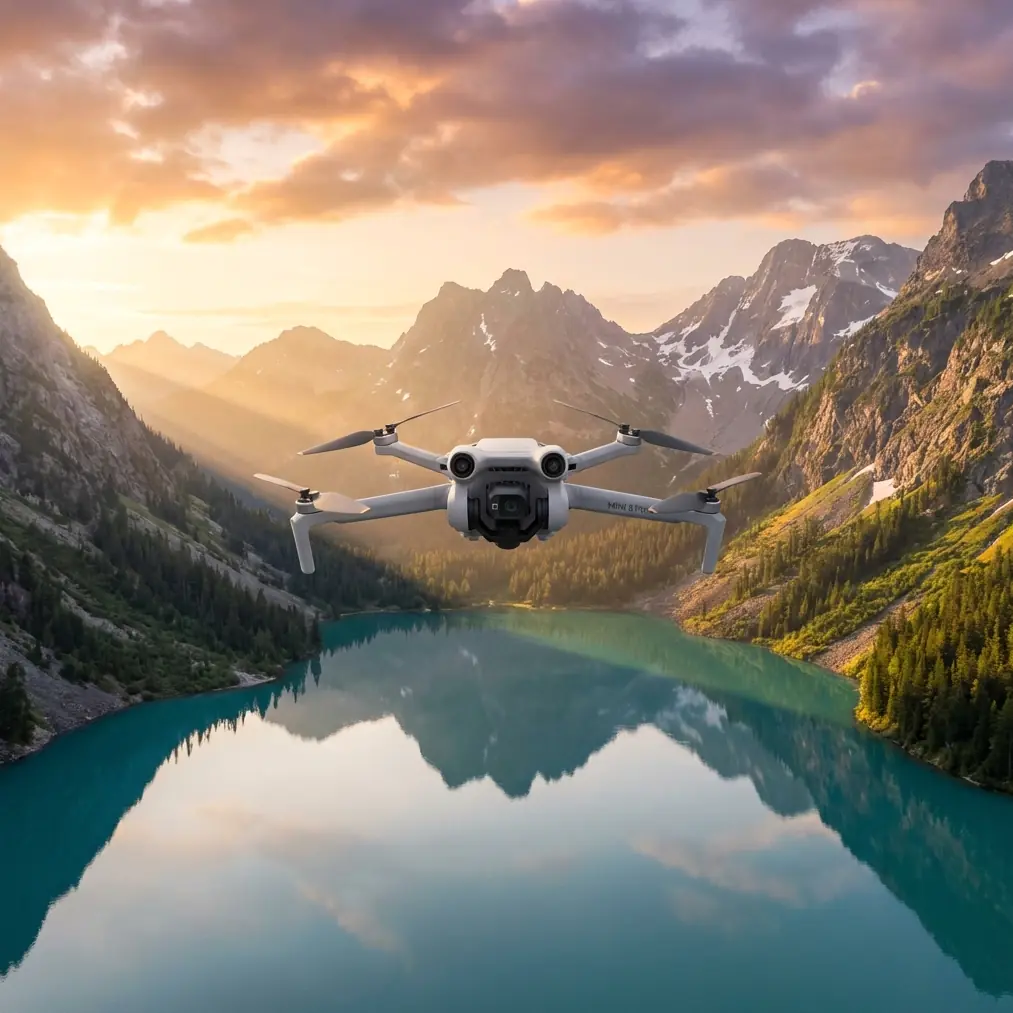
Mini 5 Pro Field Report: Flying a Remote Wildlife Spray Mission When the Weather Turned
META: A field report on using the Mini 5 Pro for remote wildlife spraying support, covering obstacle avoidance, ActiveTrack, D-Log, wind shifts, and practical in-field flight decisions.
Remote wildlife work has a way of exposing every weak point in a drone setup. On a calm day, almost any compact aircraft can look capable. Put that same aircraft over uneven ground, patchy tree cover, moving animals, and a weather shift that arrives mid-flight, and the conversation changes fast.
That is the lens I’m using here for the Mini 5 Pro.
This is not a generic feature roundup. It is a field-oriented look at how the Mini 5 Pro fits into a remote wildlife spraying scenario, where the aircraft is not the sprayer itself but the aerial eye that helps you find movement, assess terrain, document treatment zones, and keep a safer buffer between operators, wildlife, and difficult ground access. In that role, the drone becomes less about cinematic bragging rights and more about whether it can give clear information quickly enough to influence a decision in the field.
I took the Mini 5 Pro out with a simple mission profile in mind: scout a remote habitat edge, identify animal movement around a treatment corridor, confirm access routes, and record visual references before and after targeted spraying activity. The area was mixed scrub with low trees, shallow drainage cuts, and open stretches where wind had room to build. Conditions at launch looked manageable. They did not stay that way.
Why the Mini 5 Pro makes sense for this kind of work
The Mini series has always appealed to people who need portability, but in remote wildlife operations portability is not just a convenience. It changes whether the drone gets deployed at all. When you are carrying field packs, treatment gear, water, personal protective equipment, and communications equipment, every extra kilogram matters. A small platform can be the difference between “we’ll launch and verify the zone” and “we’ll skip the aerial check because setup is too much trouble.”
That is why the Mini 5 Pro matters in this scenario. Its value is tied to speed of use. You need to get it airborne quickly, inspect the site, and make a decision before conditions or animal movement change again.
But compact size alone is not enough. For wildlife support work, three capabilities matter much more than spec-sheet vanity:
- reliable obstacle avoidance near irregular vegetation
- usable subject tracking when movement is unpredictable
- image profiles that preserve enough detail for later review
The Mini 5 Pro stands out if it can deliver all three without demanding a large-case workflow.
The actual mission profile
This particular operation involved monitoring a remote wildlife area ahead of a targeted spray pass. The goal was not to chase animals or fly aggressively over them. Quite the opposite. The drone was used to check spacing, spot movement at the margins of the treatment area, and help ground teams avoid avoidable disturbance.
I launched from a clear strip beside a rough access track and sent the Mini 5 Pro up for a broad sweep at moderate altitude. The first pass was straightforward: light wind, stable feed, clean visibility across grass and brush. I used a standard reconnaissance pattern first, then shifted into a slower lateral move to inspect a narrow corridor where wildlife had been crossing earlier that morning.
This is where obstacle avoidance mattered immediately.
On paper, obstacle sensing is often treated like a consumer convenience feature. In the field, around scrub and uneven canopy, it becomes operational risk management. Remote wildlife zones are full of deceptive obstructions: half-dead branches, single high limbs, isolated fence wire, and thin treetops that do not read clearly from the ground. A compact aircraft working close enough to gather useful visual data needs to be able to detect and respond before a small mistake turns into a long recovery hike.
The Mini 5 Pro handled these transitions well. It did not eliminate the need for careful piloting, and no responsible operator should pretend otherwise, but the obstacle avoidance system gave me room to work more precisely along the vegetation edge without flying with that constant “one branch away from ending the mission” feeling. In practical terms, that meant I could hold better angles on the treatment boundary and spend more attention on animal movement instead of devoting all cognitive bandwidth to collision prevention.
That difference is bigger than it sounds.
When the weather shifted
About midway through the flight, the weather changed in the way remote operators know too well. The air did not turn dramatic all at once. First there was a subtle change in drift on the outbound leg. Then surface movement in the grass started running in conflicting directions. A minute later, the aircraft began showing the kind of small corrective behavior that tells you the wind above your launch point is no longer the same wind you evaluated before takeoff.
This is where weak drones stop being tools and become liabilities.
The Mini 5 Pro did not panic, and that matters. It held position with visible correction, but without the sloppy wandering that can destroy confidence when you are working near trees and uneven terrain. I cut the plan short, climbed slightly to clear the nearest line of brush safely, then reoriented for a return path with a better angle against the gusts.
That decision was shaped by two functions that are often discussed separately but in field use become linked: obstacle avoidance and ActiveTrack-style subject awareness.
Before the weather shift, I had been using tracking behavior to monitor movement near the corridor edge, not for flashy follow shots but for situational continuity. When animals or ground personnel move relative to brush and shadow, losing that visual thread wastes time. A capable tracking system helps maintain context. Once the wind started building, though, I stopped prioritizing automated framing and shifted back to manual control with sensing support. That transition was smooth, which is exactly what you want. Automated tools are valuable right up until the environment starts changing faster than the mission demands.
The operational significance is simple: a drone that lets you move cleanly between assisted capture and conservative manual recovery is much more useful in remote fieldwork than one that excels only in ideal conditions.
ActiveTrack in a wildlife support role
There is always a temptation to overstate subject tracking in animal environments. The responsible use case is narrower than many marketing clips suggest. For wildlife spraying support, ActiveTrack is not there to pursue animals through habitat for dramatic footage. Its real value is helping maintain orientation when monitoring movement on the perimeter of a work zone.
That may sound less exciting, but it is more useful.
In this mission, tracking helped me keep a consistent read on motion near the edge of scrub while I adjusted position for line-of-sight and wind. Instead of repeatedly reacquiring the same movement manually, I could use the system to preserve visual continuity for a short period, then break off once conditions changed. That reduced unnecessary repositioning and shortened the time spent overhead.
Shorter overhead time matters in wildlife operations. Less noise exposure. Less disturbance. Less chance of pressing the aircraft into unstable air just to recover the shot you lost.
If you are using the Mini 5 Pro in this kind of work, that is the mindset to keep. ActiveTrack is a tool for efficiency and awareness, not spectacle.
D-Log was more useful than I expected
A lot of pilots file D-Log under content creator territory. In field documentation, though, it can do real work.
The spray corridor I was monitoring had hard lighting transitions: pale open ground, dark brush, reflective patches, and moving cloud as the weather started changing. Standard color can look punchy in the moment but clip important detail, especially when you need to review footage later to confirm exactly where animals moved or whether drift risk looked worse in one section than another.
D-Log gave me a flatter file with more room to examine shadow and highlight information afterward. That is not just a post-production luxury. It can help when you are building a usable record of the site and need to compare pre- and post-operation visuals without having one pass blown out and the other crushed in contrast.
For readers who do both documentation and outreach, that matters twice. You get footage that is easier to analyze and easier to grade consistently later.
QuickShots and Hyperlapse: useful, but only in the right lane
I would not make QuickShots the centerpiece of a remote wildlife spray mission. The same goes for Hyperlapse. They are secondary tools here.
Still, dismissing them entirely would be a mistake.
QuickShots can help capture a fast, repeatable overview of the treatment area before ground work starts, especially if you need a clean visual reference for later reporting. The key is restraint. Use them in open space, keep clear separation from wildlife, and do not let automated movement override field judgment.
Hyperlapse is even more niche in this context, but it has one strong use: showing how weather, light, or movement patterns changed across a site over time. If a corridor looks calm at one moment and visibly less stable thirty minutes later, that time-compressed record can support better future planning. I would treat it as a supplemental documentation tool, not an active mission feature.
In other words, both functions have value, but neither replaces disciplined reconnaissance flying.
What the Mini 5 Pro did well when conditions worsened
The most useful drones in wildlife operations are not necessarily the ones with the loudest launch-day headlines. They are the ones that keep contributing when your original plan starts breaking apart.
The Mini 5 Pro earned trust in four specific ways that day:
First, it remained quick to deploy and recover. That sounds basic, but field teams lose time to cumbersome setups more often than they admit.
Second, its obstacle avoidance let me work closer to meaningful terrain features without inviting unnecessary risk. In a remote zone with scattered brush and hidden hazards, that directly improves the quality of the data you bring back.
Third, ActiveTrack helped maintain visual continuity during the calm portion of the mission, then got out of the way when manual flying became the smarter choice. That flexibility is worth more than aggressive automation.
Fourth, D-Log preserved a more useful record once the light flattened and the sky shifted. When the weather changed mid-flight, the footage did not turn into a high-contrast mess that looked dramatic but told you less.
If you want to compare notes on field setups and mission planning, here’s a direct line to message our flight team.
What I would do differently next time
No field report is honest if it only praises the hardware.
On a similar mission, I would define an even stricter weather cutoff before launch, especially in terrain where gusts can stack unpredictably along tree lines and drainage cuts. I would also separate the mission into shorter flight segments rather than trying to combine broad reconnaissance, movement monitoring, and documentation in one continuous sortie. Compact drones invite “just one more pass” thinking. That habit becomes expensive when the wind changes.
I would also use tracking in shorter bursts. The Mini 5 Pro handled the task well, but wildlife support flying rewards discipline. The point is not to prove what the aircraft can do. The point is to get the information you need while keeping disturbance and risk low.
Final assessment for remote wildlife spraying support
If your work involves remote wildlife spraying support rather than aerial spraying itself, the Mini 5 Pro sits in a very useful niche. It is small enough to bring everywhere, fast enough to launch when the window opens, and smart enough to reduce workload in the moments where terrain and movement start competing for your attention.
The real story is not that it has obstacle avoidance, ActiveTrack, QuickShots, Hyperlapse, and D-Log. Plenty of articles can recite feature names. The real story is how those functions behave when your mission shifts from clean planning to field improvisation.
On this flight, the weather changed mid-air. The grass started moving in two directions. The return line became more important than the shot list. And the Mini 5 Pro still did what a useful field drone should do: it helped me make better decisions, then got home safely with footage worth keeping.
For remote wildlife work, that is the standard that matters.
Ready for your own Mini 5 Pro? Contact our team for expert consultation.