
Mini 5 Pro for Power Line Spray Planning in Complex Terrain
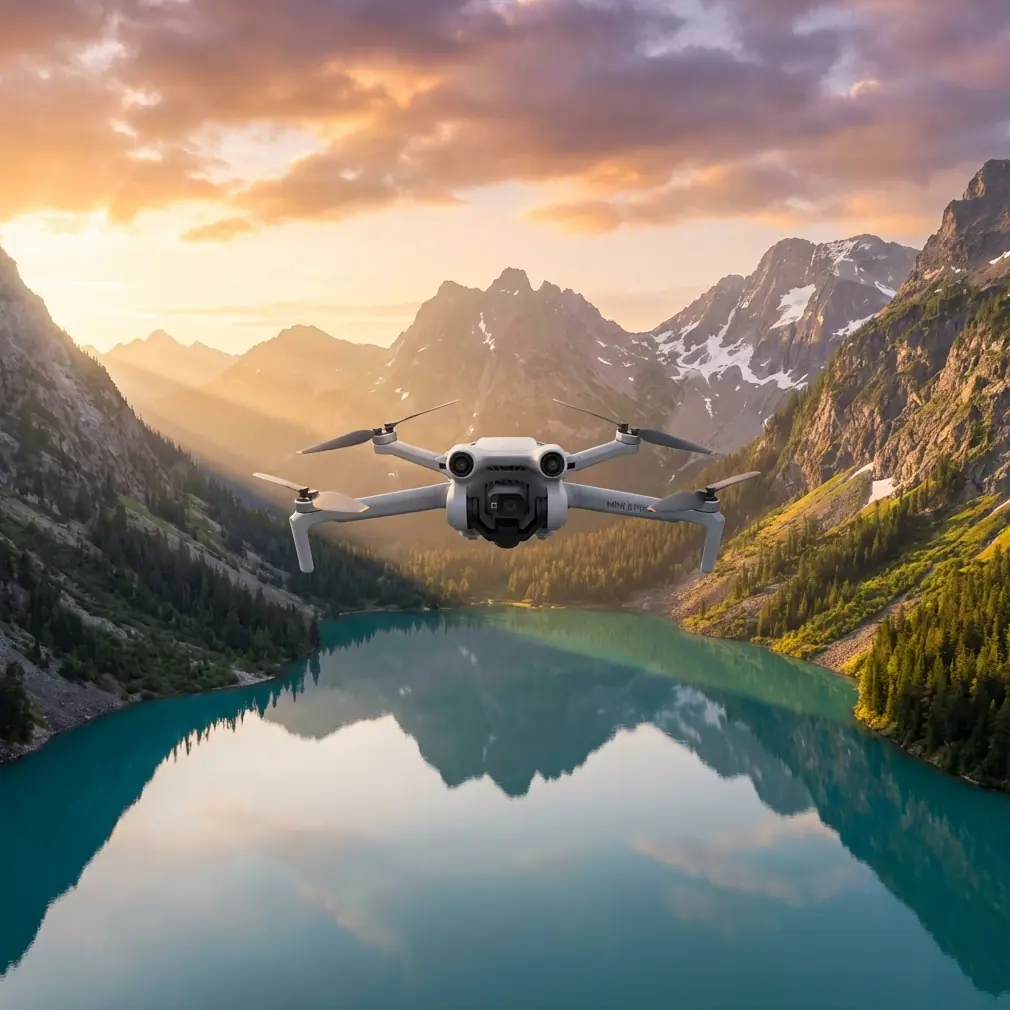
Mini 5 Pro for Power Line Spray Planning in Complex Terrain: What Actually Matters
META: A practical expert take on using Mini 5 Pro features like obstacle avoidance, ActiveTrack, QuickShots, Hyperlapse, and D-Log for safer planning, documentation, and terrain-aware support around power line spraying workflows.
Power line work in steep, broken terrain creates a strange contradiction. The corridor is narrow, the surroundings are cluttered, and the margin for error gets tighter the moment hillsides, trees, towers, and shifting wind all stack into one job. Yet teams still need fast visual intelligence. They need to see access routes, identify vegetation encroachment, understand slope transitions, and document spray conditions without dragging in a heavier aircraft every time.
That is where the Mini 5 Pro becomes interesting.
Not because a sub-250 g style platform is going to replace specialized spray aircraft. It will not. And it should not. The real value is upstream and alongside the spraying workflow: reconnaissance, route visualization, terrain awareness, obstacle review, crew briefing material, and post-task documentation. When the site is complex, those support tasks stop being administrative extras. They become operational controls.
For readers looking specifically at spraying power lines in complex terrain, the Mini 5 Pro makes sense when used as a compact eyes-in-the-air tool that reduces uncertainty before a larger mission starts. That distinction matters, because too many discussions around small drones drift into generic camera talk. In this context, the useful question is simpler: does this aircraft help a civilian utility or vegetation-management team understand the corridor better, faster, and with less friction than competing compact drones?
Often, yes.
The real problem in complex terrain is not just visibility
Spraying around power infrastructure in hilly or forested terrain is rarely defeated by one big obstacle. It is defeated by layers of small ones.
A ridgeline hides the next span. Tree growth rises unevenly near a tower base. Light shifts across a valley and flattens contrast. Wind behaves one way on the access road and another way along the corridor. A crew sees part of the picture from the ground, but not the whole thing. A conventional walk-through can verify details, though it is slower and usually less effective at showing how terrain, line geometry, and vegetation interact across distance.
This is where obstacle avoidance and subject tracking features stop sounding like marketing terms and start becoming practical tools.
A Mini 5 Pro equipped with strong obstacle avoidance is useful in exactly the kind of cluttered environment that makes line-side aerial support difficult. Trees, poles, guy wires, slope edges, and isolated obstacles can force abrupt flight corrections. Better sensing does not make the drone invincible, and no one should fly casually near utility infrastructure, but it does add a layer of margin when the pilot is working in variable topography and trying to maintain a stable visual record of the corridor.
That operational significance is straightforward: fewer abrupt manual recoveries, steadier route reviews, and more confidence when flying low-speed reconnaissance passes in visually busy terrain.
Why Mini 5 Pro fits the support role better than bulkier options
For this kind of work, the best drone is not always the most powerful. Sometimes it is the one that gets launched.
A larger enterprise aircraft may offer superior endurance, payload flexibility, or weather resistance. Those benefits are real. But in field conditions, especially when crews are moving between access points or climbing into irregular terrain, setup burden matters. The Mini 5 Pro’s biggest edge over many heavier competitors is not a single spec line. It is the combination of portability and advanced flight assistance in a package that can be deployed with very little ceremony.
That changes behavior. Teams are more likely to fly a quick pre-task terrain scan if the aircraft is easy to carry, fast to launch, and simple to position near a corridor access point. When the drone is cumbersome, those short support flights often get skipped. The result is avoidable uncertainty.
This is also where competitor comparisons become more interesting. Many compact drones can capture decent footage. Fewer are genuinely effective in difficult terrain where the pilot needs both mobility and confidence systems. The Mini 5 Pro stands out when it combines lightweight field practicality with obstacle avoidance and intelligent tracking robust enough to support corridor review. For utility-adjacent civilian workflows, that balance often matters more than raw size or headline camera hype.
ActiveTrack is not just for creators here
ActiveTrack tends to be discussed as a feature for filming bikes, hikers, or moving vehicles. That undersells it.
In a power line spray planning context, subject tracking can help the pilot maintain a cleaner visual relationship with a moving ground vehicle, a walking inspection lead, or a defined corridor edge during site familiarization. Used carefully and within safe separation rules, this can produce more coherent footage for operational briefings. Instead of random clips stitched together later, the team gets a sustained view that shows how access and obstacles evolve along the route.
Its significance is not cinematic. It is interpretive.
A supervisor looking at that footage can spot where terrain pinch points may complicate line-side work, where vegetation density shifts suddenly, or where a tower approach looks more constrained from above than it does on the ground. That kind of understanding helps crews decide staging positions, access timing, and visual lookout placement before the spray operation begins.
Compared with compact rivals that either lack mature tracking or deliver it inconsistently near clutter, a stronger ActiveTrack implementation gives the Mini 5 Pro an edge for practical corridor documentation. The pilot spends less effort manually framing every second and more effort monitoring the environment.
QuickShots and Hyperlapse are more useful than they sound
These modes are easy to dismiss because they are associated with social media clips. That is a mistake.
QuickShots can produce standardized overhead and pull-away perspectives that are surprisingly valuable for repeatable documentation. If a team needs to compare line access, vegetation growth, or site conditions across multiple visits, consistent auto-generated shot patterns help create visual continuity. Not every job needs a dramatic reveal. Sometimes what matters is having the same angle every time.
Hyperlapse has a different kind of value. In terrain-driven utility work, conditions change across time as well as space. Clouds move. Shadows travel over slopes. Crew and vehicle movement alter access patterns. A compressed time-sequence can reveal practical site dynamics that are easy to miss during a short live flight. For planning and debriefing, that can be more informative than a single static image.
Operationally, these modes reduce pilot workload while producing footage that is easier to review. That is the key point. They are not there to make the mission look stylish. They help turn field observation into a clearer record.
D-Log matters because line-side terrain is visually deceptive
If you have ever flown around utility corridors in mixed light, you know the issue. Bright sky, reflective conductors, dark tree cover, and shaded slopes all compete in one frame. Standard color profiles often force a compromise: save the shadows and lose the highlights, or preserve the sky and bury the terrain detail.
D-Log changes that equation by preserving more grading flexibility in post-production. For a civilian inspection-support or vegetation-management workflow, that matters because the footage needs to be legible, not just attractive. You want to see the corridor edge, distinguish vegetation layers, and understand where terrain folds start to conceal access or infrastructure.
That extra image latitude can be especially useful when producing materials for crew briefings or client reporting. If one clip needs exposure balancing to show both a tower approach and the darker vegetation around it, D-Log gives the editor more room to work without the image falling apart.
Against competitors that may produce punchier footage straight out of the aircraft but offer less grading flexibility, the Mini 5 Pro’s D-Log capability is a serious operational advantage. It supports evidence-quality documentation rather than merely good-looking video.
Obstacle avoidance is the feature that earns trust
Any discussion of a drone for complex terrain should come back to obstacle avoidance, because that is the feature that shapes pilot behavior most directly.
A compact aircraft used near trees, uneven slopes, and corridor-side structures must do more than hold position in open air. It needs to help the pilot avoid the kind of creeping risk that builds during close visual work. Better obstacle sensing does not authorize reckless flying near conductors or infrastructure, but it does improve situational resilience when the pilot is maneuvering through terrain complexity to capture planning footage.
Here is why that matters for power line spraying support. The drone is often being used to answer specific questions in a compressed time window:
- Where does the terrain rise fastest under the line?
- Which spans have the most encroaching vegetation?
- Where are the safe access points for ground crews?
- Which sections need a different visual approach because the corridor narrows?
The pilot cannot answer those questions well if all attention is consumed by basic collision management. The more confidently the aircraft handles obstacle-rich conditions, the more mental bandwidth remains for observation and decision support.
That is why the Mini 5 Pro often outperforms simpler compact competitors in the field, even when on-paper differences look modest. In clutter, flight assistance quality is not cosmetic. It changes the usefulness of the platform.
A smart workflow for this drone around spraying operations
For civilian and utility-adjacent teams, the Mini 5 Pro works best when it is treated as a planning and documentation layer around the spray task, not the spray platform itself.
A practical workflow looks like this:
First, run a short reconnaissance pass along the target section of corridor. Keep the flight conservative and use obstacle avoidance to help maintain safe standoff from terrain-side clutter. The goal is not proximity. The goal is perspective.
Second, use ActiveTrack or a controlled follow sequence where appropriate to capture how access routes and working positions relate to the line. This helps the crew visualize movement and spacing.
Third, use QuickShots for repeatable overview angles at towers, crossings, and corridor transitions. Those clips become useful reference points later.
Fourth, if the site has changing light or coordinated ground activity, run a Hyperlapse from a stable vantage. Time-compressed footage can reveal patterns that single passes miss.
Fifth, record in D-Log when the visual conditions are harsh enough to require post-flight tonal recovery. Mixed light around valleys and ridges is a common trigger.
Finally, review the footage with the operations lead before the main work begins. That is where the drone pays for itself—by converting a complicated hillside corridor into a shared visual map.
If your team is trying to standardize that kind of workflow across difficult utility corridors, it can help to discuss the setup with someone who understands compact UAV deployment in the field. A direct line like this WhatsApp contact for operational questions is often faster than sorting through generic advice.
Where competitors still push back
To keep this honest, the Mini 5 Pro is not the answer to every corridor support scenario.
If your environment demands heavier wind tolerance, longer-duration stand-off observation, or dedicated enterprise payloads, larger systems retain an advantage. If the site is extremely congested with infrastructure and electromagnetic complexity, the pilot’s judgment and mission limits matter more than any automated feature. No compact drone erases that.
But within the realistic support envelope for a portable civilian aircraft, the Mini 5 Pro is unusually well matched to complex-terrain utility workflows because its useful features line up with real field problems.
Obstacle avoidance helps when the corridor is cluttered. ActiveTrack helps when the team needs coherent route visualization. QuickShots and Hyperlapse help turn observations into repeatable documentation. D-Log helps preserve legibility in difficult light.
That is a stronger package than many competing small drones that lean heavily toward casual content creation or, at the other extreme, demand too much setup to be convenient for quick corridor intelligence.
The bottom line for line-side spray support
For teams dealing with power line spraying in complex terrain, the Mini 5 Pro is at its best before and around the main task. It helps crews see the corridor the way the terrain actually behaves, not the way it looks from one access point on the ground.
That difference is operationally meaningful.
A slope that seems manageable on foot may reveal hidden vegetation density from above. A tower approach that looks open can prove visually compressed once the broader tree line is visible. A route that seems obvious on a map may show poor vehicle staging options once terrain and corridor geometry are viewed together. This drone helps expose those mismatches early.
And that is why it excels against many competitors in this niche role. Not because it does one flashy thing no one else can do, but because it combines the right set of capabilities in a form crews are actually willing to carry and fly: obstacle avoidance for clutter, ActiveTrack for coherent movement-based review, QuickShots and Hyperlapse for structured documentation, and D-Log for footage that remains useful after the flight.
For complex terrain around utility vegetation-management planning, that is not a luxury feature stack. It is practical risk reduction wrapped in a compact airframe.
Ready for your own Mini 5 Pro? Contact our team for expert consultation.