
Mini 5 Pro for Forest Spraying in Complex Terrain
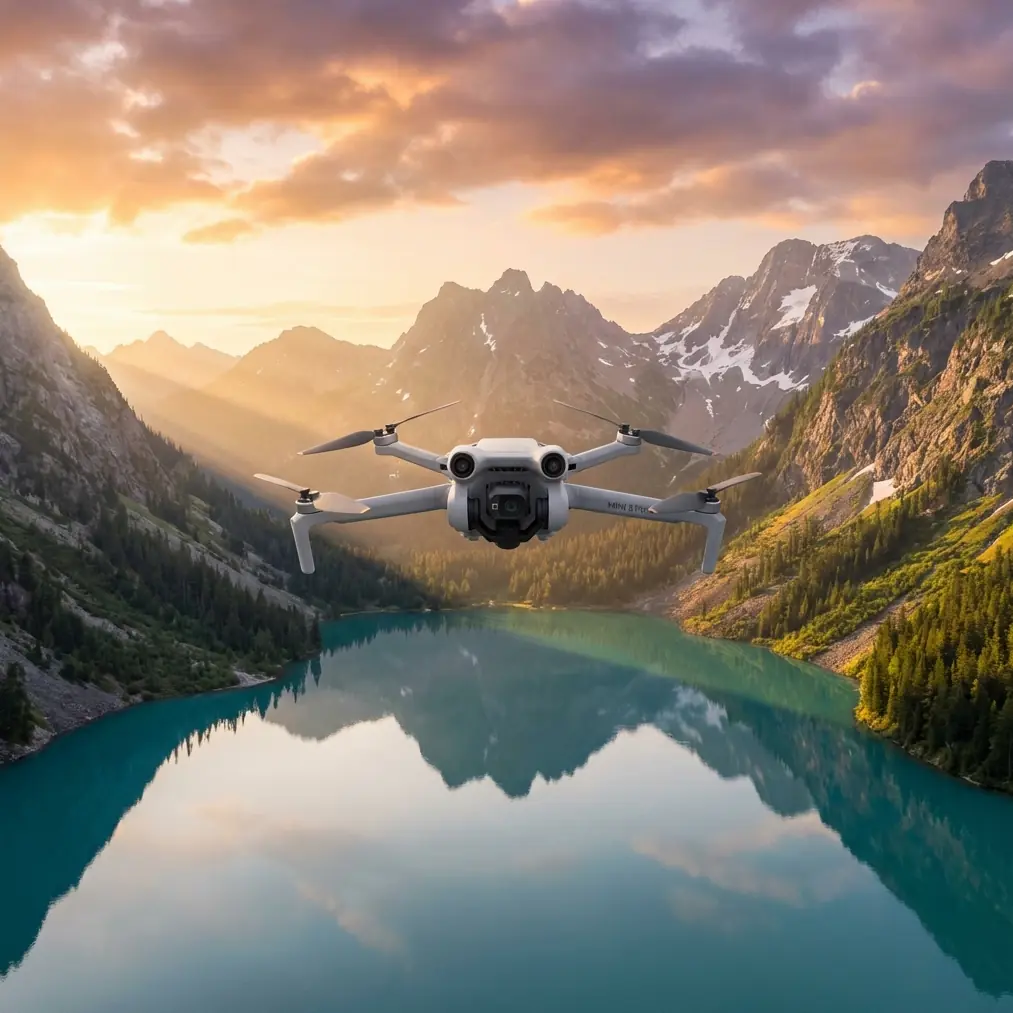
Mini 5 Pro for Forest Spraying in Complex Terrain: A Technical Review of What Actually Matters
META: A technical, field-focused review of how the Mini 5 Pro’s obstacle avoidance, tracking, color profile, and flight automation matter when operating around forests and uneven terrain.
The Mini 5 Pro sits in an unusual position in the small-UAV conversation. It is often discussed as a compact camera drone, yet many operators looking at forest work and complex terrain missions care less about cinematic bragging rights and more about whether a platform can hold its line near tree edges, keep orientation when the ground falls away beneath it, and deliver footage that is useful for planning, mapping, and documenting spray routes.
That distinction matters. Forest spraying is not a clean, open-field problem. It is a terrain-management problem. Dense canopy, irregular clearings, changing elevation, and narrow approach corridors all expose the limits of lightweight aircraft. In that environment, the Mini 5 Pro becomes interesting not because it promises miracles, but because several of its core features line up with the real decision points operators face in wooded areas.
This is not a buying pitch. It is a technical review built around one question: if you are surveying or planning spray activity in forested, broken ground, where does the Mini 5 Pro genuinely help, and where do you need to stay realistic?
Why the Mini 5 Pro Matters in a Forest Spraying Workflow
Let’s be precise. A Mini-series aircraft is not a dedicated agricultural spraying drone. It is not the platform carrying liquid payloads into timber stands. The practical role here is different: pre-spray route scouting, line-of-sight hazard identification, canopy-gap inspection, boundary verification, documentation, and post-operation visual review.
In those roles, size changes the equation.
A small airframe can be launched from awkward positions at forest margins where a larger system feels cumbersome. When your working area involves rough access roads, embankments, or partial clearings, that portability is not a lifestyle feature. It affects whether a reconnaissance flight happens at the right moment or gets skipped because deployment is a hassle.
The Mini 5 Pro’s edge, compared with heavier or less automated compact drones, comes from combining that portability with advanced assistance features such as obstacle avoidance and ActiveTrack-style subject tracking. Those are not flashy extras in complex terrain. They are workload reducers. And workload, in forest operations, is usually the first thing that breaks safety margins.
Obstacle Avoidance Is Not a Checkbox Here
If you strip away the marketing vocabulary, obstacle avoidance is really about time. Time to react. Time to stop. Time to rethink a line before bark and branches do the decision-making for you.
In forest-adjacent flight, that matters more than raw speed or dramatic camera specs. Tree lines are rarely uniform. One dead branch extending into a flight path can be harder to judge on-site than it looks later on a monitor. In sloped terrain, the drone’s relationship to the ground also changes quickly. A line that seems generous over low brush can tighten fast as the hillside rises.
This is why obstacle sensing on the Mini 5 Pro is one of the most operationally meaningful features in this use case. Compared with compact rivals that still lean heavily on pilot judgment alone or offer weaker directional sensing, the Mini 5 Pro gives the operator another layer of protection when contour-following visually around treetops, trunks, and irregular edges.
That does not make it autonomous in a forestry setting. Branches, thin twigs, and visually confusing backgrounds can still challenge any avoidance system. But in practical terms, a capable sensing package reduces the number of moments where your full concentration is spent simply preventing impact. That frees attention for the mission itself: identifying spray access routes, checking vegetation density, spotting drift-sensitive edges, and confirming whether a clearing is actually usable as a staging point.
If your alternative is a lightweight drone with less robust obstacle logic, the Mini 5 Pro is the more forgiving tool in tight visual environments. That is a meaningful distinction when every pass near a tree line carries consequence.
ActiveTrack and Subject Tracking Have a Real Use Beyond Cinematics
Subject tracking is often dismissed as a content-creator feature. That is a mistake.
In forest spraying support work, tracking functions can help when documenting the movement of ground crews, support vehicles, or route-entry points across uneven ground. If an operations manager wants repeated visual references of how personnel or equipment move through a corridor, ActiveTrack can remove a lot of manual yaw-and-stick workload.
The significance is not that the drone can “follow” something. The significance is that the operator can maintain better situational awareness while the aircraft handles part of the framing burden. In cluttered environments, this matters because manually tracking a moving subject while also managing altitude, lateral clearance, and signal awareness is exactly how attention gets overloaded.
Against some competitors in the same compact class, this is where the Mini 5 Pro tends to stand out: it is not only about having tracking, but about how confidently that tracking pairs with obstacle awareness. A tracking system without credible environmental sensing is of limited value near mixed canopy and rising ground. Pair the two together, and the drone becomes more useful for repeatable observation work.
That combination also helps during route rehearsal. Before any spraying aircraft enters a complicated section, a compact drone can be used to simulate visual lines, identify choke points, and record areas where pilot sightlines from the ground may be poor. Subject tracking is not the whole solution, but it adds efficiency to that recon loop.
QuickShots and Hyperlapse Are More Useful Than They Sound
QuickShots and Hyperlapse are easy to write off as social-media tools. In a technical workflow, they can still earn their place.
QuickShots can help generate consistent orbiting or reveal-style visual passes around treatment zones, access roads, or terrain breaks. The value is standardization. When a site supervisor wants comparable visual references over multiple visits, semi-automated shot patterns can create repeatable angles without depending on perfect manual control every time.
Hyperlapse has an even more practical role. In forestry or hilly spraying environments, conditions change over time in ways a static image misses: shifting mist, moving cloud shadow, changing light under canopy edges, vehicle movement, or crew staging patterns. A time-compressed sequence can reveal how a work area behaves across an hour, not just a moment. That can influence decisions about visibility windows, launch timing, and whether a route that looked open in stills remains practical once actual activity begins.
Used carelessly, these tools are gimmicks. Used deliberately, they become documentation shortcuts.
D-Log Is a Working Tool, Not Just a Colorist’s Luxury
One of the more underrated details for field operators is D-Log. People often associate it with cinematic flexibility, but in this context the benefit is analytical as much as aesthetic.
Forests are difficult exposure environments. You often have bright sky overhead, dark understory below, and reflective gaps where water, rock, or pale soil kick light back into the lens. Standard color profiles can clip highlights or crush shadow detail in ways that hide useful information. D-Log gives more room to recover tonal detail later.
Why does that matter for spraying support? Because post-flight review is not always about producing attractive footage. Sometimes it is about confirming where vegetation density changes, checking whether a boundary line was visually obvious from altitude, or examining whether a route passed too close to non-target areas. More retained highlight and shadow information can improve interpretability.
This is one area where the Mini 5 Pro can outclass simpler competitors that produce punchy footage straight out of camera but leave less room for serious post-analysis. In mixed lighting over forest terrain, that extra grading latitude is operationally useful. A drone that preserves better information gives you more reliable footage when making planning calls after the flight.
Terrain Complexity Exposes the Difference Between “Can Fly” and “Can Work”
A lot of drones can technically fly near forested land. That is not the same as being useful in a structured workflow.
For spraying support around complex terrain, the Mini 5 Pro’s value comes from stacking several small advantages: portability, obstacle avoidance, tracking, and flexible imaging modes. None of those alone solves the problem. Together, they make the aircraft more workable.
This is where it compares favorably with competitor models that may offer strong image quality but weaker automation, or robust automation but less refined imaging flexibility. In forest-edge operations, compromise shows up quickly. If you lose confidence in obstacle handling, you fly more conservatively and gather less information. If tracking is unreliable, you spend too much attention on framing. If color handling is limited, your review footage becomes less useful. The Mini 5 Pro excels because it balances these factors in a compact form rather than dominating just one spec category.
That balance is the whole point.
What Operators Should Watch Closely
There are still limits, and they deserve plain language.
First, obstacle avoidance in wooded environments is a mitigation layer, not permission to fly recklessly under canopy or thread through branches. Fine limbs, low contrast, and changing light can confuse any sensing system. The safer assumption is that the system helps you avoid simple mistakes, not impossible geometry.
Second, subject tracking is best treated as assisted observation, not hands-free mission management. In forest work, sudden occlusion is common. Vehicles disappear behind trees. Personnel move in and out of shadow. Tracking is useful when you expect interruption and plan for it.
Third, automated camera modes should serve the site record, not dominate the mission. It is easy to collect visually pleasing footage that tells you almost nothing about actual route risk. For spraying operations, every automated pass should answer a concrete question: where are the tree intrusions, where does slope steepen, where is access restricted, where are the drift-sensitive boundaries?
Fourth, compact drones remain wind-sensitive compared with larger enterprise or ag platforms. Forest edges can create tricky air movement, especially near ridgelines and breaks in canopy. A small drone may be ideal for a quick reconnaissance hop, but that does not mean conditions are stable. Good planning still beats good software.
A Practical Field Approach
If I were structuring a Mini 5 Pro workflow for a forest spraying team, I would keep it disciplined.
Start with a wide perimeter pass to map obvious vertical hazards and identify any rising terrain that compresses your margin above ground. Then use controlled closer-in flights at reduced speed near key entry corridors, relying on obstacle avoidance as backup rather than the primary strategy. Use tracking only where a moving vehicle or crew path genuinely needs documentation. Capture key segments in D-Log if later review will influence route or boundary decisions. Add a Hyperlapse only when time-behavior at the site is relevant.
That sequence produces material you can actually use.
If your team wants to discuss how compact drones fit into a broader terrain-recon process, this direct field contact link is the most practical place to start: message the operations desk.
Final Assessment
The Mini 5 Pro makes sense for forest spraying support work not because it replaces specialized agricultural aircraft, but because it improves the quality and speed of reconnaissance in places where terrain and vegetation create genuine operational friction.
Its obstacle avoidance has direct safety value around tree lines and rising ground. Its ActiveTrack and subject-tracking functions reduce pilot workload when documenting movement through uneven access routes. Its QuickShots and Hyperlapse modes can produce repeatable records rather than throwaway visuals when used with purpose. Its D-Log profile holds onto image information that matters during post-flight review in high-contrast woodland scenes.
That is the real story. Not hype. Not a feature sheet.
For operators working around forests, the Mini 5 Pro is at its best when treated as a compact technical observer: small enough to deploy fast, smart enough to reduce workload, and capable enough to produce footage that supports better decisions in difficult terrain.
Ready for your own Mini 5 Pro? Contact our team for expert consultation.