
Mini 5 Pro in Mountain Forest Work: The Right Flight
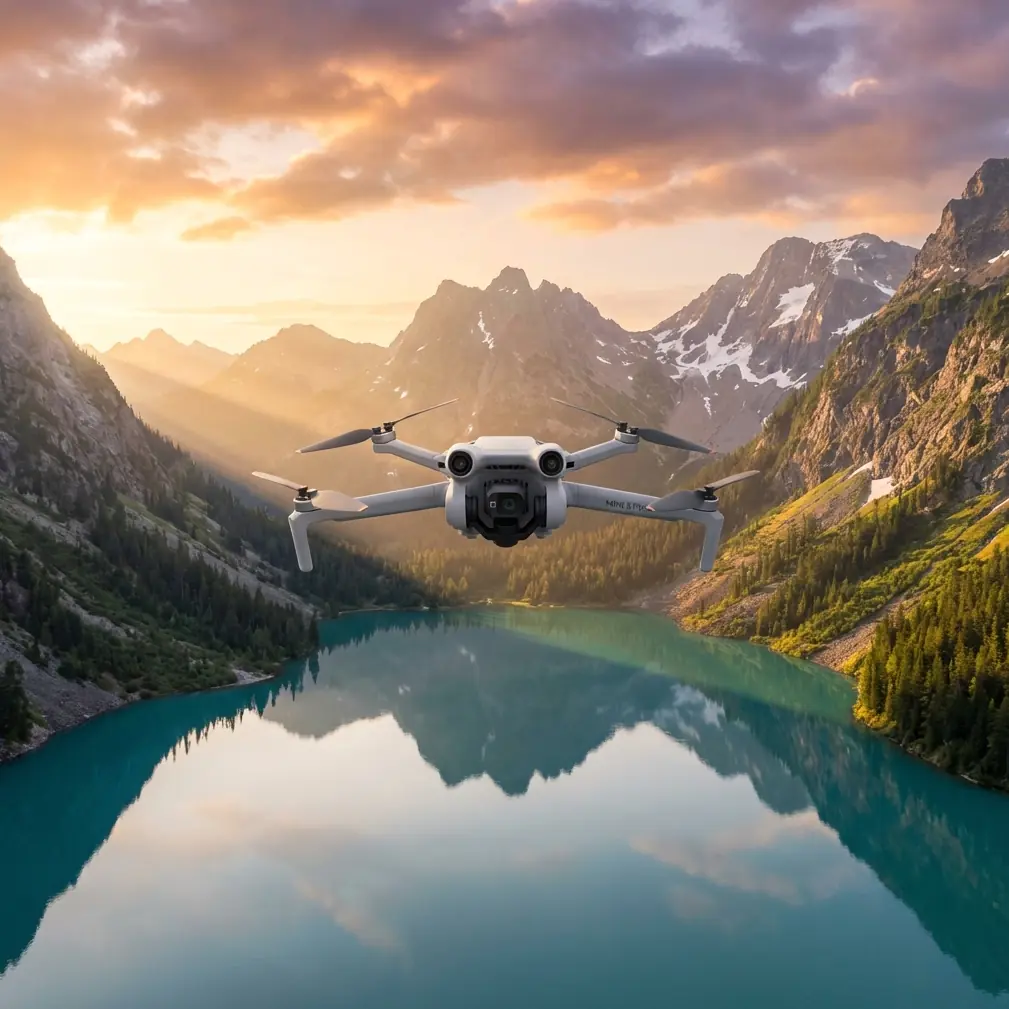
Mini 5 Pro in Mountain Forest Work: The Right Flight Altitude for Safer, Cleaner Coverage
META: A practical Mini 5 Pro tutorial for mountain forest spraying support, with flight altitude tips, obstacle avoidance strategy, ActiveTrack use, D-Log planning, and terrain-aware workflow advice.
Mountain forest work punishes lazy flight planning.
The slope changes under you every few seconds. Tree crowns rise unexpectedly. Wind slips along ridgelines, then drops into still pockets. If you are using a Mini 5 Pro as a scouting and visual support platform around forest spraying operations, the biggest mistake is thinking altitude is just a compliance number or a camera preference. In steep terrain, altitude is your safety margin, your image quality control, and your decision-making tool.
I’m writing this from the perspective of a photographer, but also as someone who has spent enough time around UAV fieldwork to know that pretty footage means nothing if the aircraft is poorly positioned for the job. In a mountain forest spraying scenario, the Mini 5 Pro is not the spray aircraft. Its value is different. It helps you read terrain, inspect canopy gaps, verify access routes, document treatment areas, and observe drift conditions before and after a mission. To do that well, you need a disciplined approach to flight height.
This tutorial focuses on one question that matters more than most pilots realize: what is the best flight altitude for a Mini 5 Pro when supporting spraying work in mountain forests?
Start with the real objective
In this setting, you are usually trying to do one or more of four things:
- map the treatment corridor visually
- identify terrain hazards and tree-height changes
- observe spray zone boundaries and drift-sensitive edges
- capture usable footage for review after the operation
Those goals do not all require the same height. That is why “fly high for safety” is incomplete advice. Too high, and you lose detail in the understory margins, trail entries, and canopy transitions that actually determine whether a spray plan is practical. Too low, and you reduce reaction time while increasing the chance of conflict with branches, rising terrain, and unstable airflow.
The better rule is simple: fly according to canopy clearance, not launch-point altitude alone.
In mountain forests, the ground can climb so quickly that an aircraft holding a fixed height relative to takeoff can accidentally end up much closer to the trees than the pilot expects. A Mini 5 Pro equipped with obstacle avoidance helps, but that system is support, not permission. Sensors do not eliminate the need for terrain discipline, especially when branches, needles, irregular trunks, changing light, and side approaches complicate detection.
The most practical altitude band
For visual reconnaissance over forested mountain slopes, a useful starting band is 20 to 40 meters above the local canopy, not above the takeoff point.
That distinction is operationally significant.
At roughly 20 meters above canopy, you can still read crown spacing, spot dead tops, see edge transitions, and inspect whether a corridor is truly open or only looks open from a distance. This lower end is often best when you are moving slowly along a defined treatment line and need sharper understanding of tree height variability.
At around 30 to 40 meters above canopy, you gain a broader view of slope geometry and drift pathways. This higher band is often better when you need to understand how a ridge, saddle, or drainage line affects the area. It also provides more reaction time if wind starts shifting.
Below that range, the Mini 5 Pro may produce dramatic footage, but the flight becomes less forgiving. Above that range, you often start losing the detail that matters for forest spraying support, especially in mixed-height stands where the real problem is not the tallest tree, but the isolated tree that rises where you did not expect it.
If you remember one thing, remember this: in mountain forest work, safe altitude is dynamic. You are constantly recalculating from the canopy beneath the aircraft, not just from your home point.
Why obstacle avoidance matters, but not in the way many pilots think
Obstacle avoidance is one of the most useful features in this kind of terrain, yet it is also one of the most misunderstood.
Pilots sometimes assume obstacle sensing is most valuable during obvious close-quarters flying. In reality, its greatest benefit in mountain forest operations is often as a backup during subtle misjudgments: a slope that rises faster than it appeared on screen, a lateral drift toward a branch line, or a return path that now approaches the canopy from a different angle.
That matters because mountain flying creates deceptive geometry. Trees on an uphill slope can look lower than they are when viewed from a flatter section. Shadows also reduce contrast, which can make crown separation harder to judge from the live feed.
So yes, obstacle avoidance is critical here. But its operational significance is this: it gives you a margin while you maintain disciplined standoff distance. It is not a substitute for choosing a safer altitude band in the first place.
If the route requires you to depend on obstacle warnings every minute, your flight plan is too aggressive for this environment.
How ActiveTrack and subject tracking actually fit this workflow
The Mini 5 Pro’s subject tracking tools, including ActiveTrack-style following behavior, can help in mountain operations, but only when used with restraint.
For example, if a ground crew vehicle or walking team is moving toward a forest access point, tracking can simplify documentation of route conditions and improve continuity in your footage. That can be genuinely useful during pre-spray inspection. But in dense or uneven tree environments, automated tracking has to compete with occlusions, changing elevation, and sudden contrast shifts.
This is where altitude again becomes the stabilizer. Tracking is more reliable when the aircraft has enough vertical separation from trees and enough lateral freedom to make smooth adjustments. A pilot trying to track low over rising terrain is stacking risk on top of automation.
My advice: if you use subject tracking in mountain forest support, do it from the upper part of the working band, often closer to 30 to 40 meters above local canopy, and only after you have already flown the route manually once. Let automation repeat a path you understand. Do not let it discover the terrain for you.
The smartest use of QuickShots and Hyperlapse here
QuickShots and Hyperlapse sound like creative features, and they are, but they can also serve operational review when used correctly.
A short automated reveal from a stable hover can show how a treatment block sits relative to a ridge line or drainage. A controlled Hyperlapse sequence can help visualize cloud movement, shifting valley wind, or changing light over a target zone. That is not just visual polish. In spraying support, timing and airflow matter.
Still, these modes should never lead the mission. They are add-ons after you have completed the essential observation work. In mountain forest scenarios, the pilot should first answer practical questions: Where does the slope tighten? Where are the tallest crowns? Which boundary lines are visually clear from the air? Only then does it make sense to collect polished overview sequences.
The Mini 5 Pro is at its best here when creativity follows reconnaissance, not the other way around.
Camera settings that help you make better operational decisions
A lot of pilots think about image settings only in terms of looks. That misses the point.
If your footage is going to be reviewed later by a crew lead, land manager, or another pilot, clarity and consistency matter more than drama. D-Log can be useful because it preserves tonal information in difficult lighting, especially in forests where bright sky openings sit beside very dark canopy. That extra flexibility helps when you need to recover shadow detail and confirm what was actually present at the edge of the stand.
The operational significance of D-Log is not that it looks cinematic. It is that mountain forest scenes often exceed the comfort zone of standard profiles. If you are documenting treatment boundaries, access lanes, or drift-sensitive edges, preserving detail can make the footage more useful after the flight.
That said, if your team needs immediate review on-site and no one will grade footage later, a standard profile may be more practical. The best setting is the one that supports decisions in the field.
A field-tested altitude workflow
Here is the workflow I recommend for Mini 5 Pro support flights around mountain forest spraying operations.
1. Begin higher than you think you need
Launch and establish a wide situational view first. Do not rush down toward the trees. Use the first pass to understand slope direction, ridge shape, and any abrupt changes in canopy height. This is where the upper part of the 30 to 40 meter above-canopy range is especially useful.
2. Fly a reconnaissance pass before detailed inspection
A slow manual pass tells you more than a rushed automated one. Watch for isolated emergent trees, side branches reaching into open lines, and terrain that climbs beneath your path. Those are the classic threats.
3. Drop only when the route is visually understood
If you need more detail, descend carefully toward the 20 to 30 meter above-canopy range. This is often the best height for identifying true openings, stand edges, and crown variability without sacrificing too much safety margin.
4. Recalculate on every slope transition
This is the part pilots skip. In mountains, your safe height on one segment can become a bad height ten seconds later. Watch the relationship between the aircraft and the canopy, not just the altitude number on the screen.
5. Reserve low passes for limited, high-value checks
There may be moments when you need a closer look at a specific edge, tree line gap, or access route. Fine. Make it brief, controlled, and deliberate. Then climb back into a more forgiving band.
Wind and mountain airflow change the altitude answer
One reason there is no single perfect height is that mountains distort air.
Near ridges, wind can accelerate. On leeward slopes, it can break into erratic movement. In gullies and drainages, you may find the opposite: deceptively calm air that changes as soon as you climb. This means the “best” altitude is not just a visibility question. It is also an aircraft behavior question.
If the Mini 5 Pro is getting bumped around at your chosen height, your footage will suffer and your safety margin will shrink. Sometimes the answer is to climb above a turbulent layer. Sometimes it is to come slightly lower while maintaining canopy clearance. The point is to observe the air, not stubbornly hold a preplanned number.
This is one place where post-flight review becomes valuable. If you want to compare route choices or talk through terrain-specific setup with an experienced operator, it can help to message a flight planning specialist with screenshots or clips from your survey pass.
Mistakes I see most often
The first mistake is using home-point altitude as the main reference in steep terrain. It is convenient, but it is not enough.
The second is trusting obstacle avoidance to rescue a low, fast line through inconsistent canopy. Sensors help, yet the forest is full of imperfect surfaces and awkward angles.
The third is chasing cinematic shots before completing the inspection mission. QuickShots, Hyperlapse, and dramatic low passes can wait.
The fourth is forgetting that subject tracking needs room to work. ActiveTrack is useful, but only when altitude, terrain, and path predictability are already under control.
My rule of thumb for this scenario
If I were flying a Mini 5 Pro to support mountain forest spraying decisions, I would treat 30 meters above local canopy as the default starting point, then adjust from there.
- move closer to 20 meters when detail is essential and the path is already understood
- stay near 40 meters when terrain is complex, wind is unstable, or the route is unfamiliar
- climb sooner than you think when approaching uphill sections or blind crown transitions
That is not glamorous advice. It is the kind that keeps your footage usable and your aircraft out of the trees.
The Mini 5 Pro’s appeal in this environment is not just portability. It is the combination of small-aircraft flexibility with tools that genuinely help in difficult terrain: obstacle avoidance for margin, tracking tools for controlled follow work, QuickShots and Hyperlapse for contextual review, and D-Log for preserving difficult mountain-forest contrast. None of those features matter, though, if the altitude choice is wrong.
In mountain forest spraying support, altitude is the first decision that shapes every other one. Get that right, and the rest of the mission becomes clearer.
Ready for your own Mini 5 Pro? Contact our team for expert consultation.