
Mini 5 Pro Field Report: Working Around Terraces
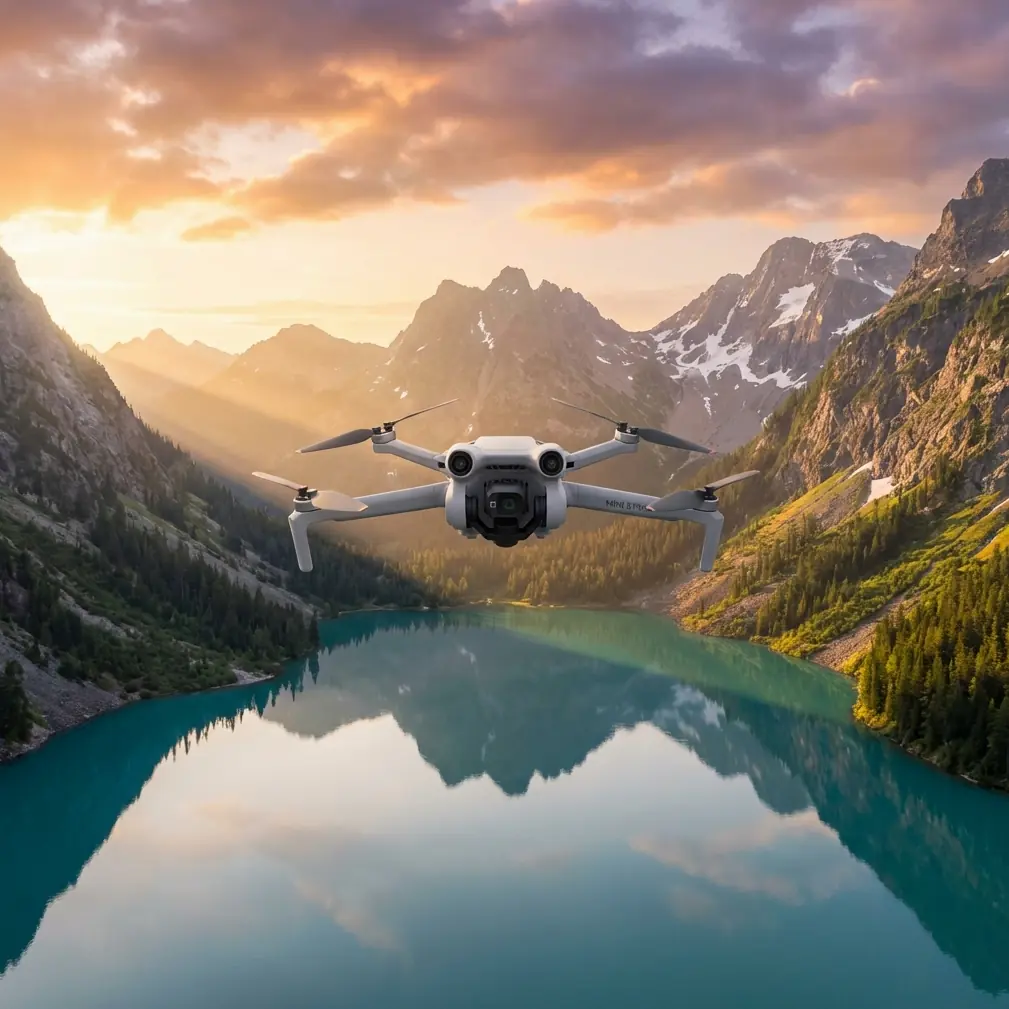
Mini 5 Pro Field Report: Working Around Terraces, Tree Lines, and Tight Field Edges
META: A field-based look at how Mini 5 Pro features like obstacle avoidance, ActiveTrack, QuickShots, Hyperlapse, and D-Log can help survey complex farmland before spraying decisions are made.
I’ve spent enough time around fragmented farmland to know that “spraying fields” sounds simpler than it is. Flat, open acreage is one thing. Terraced slopes, broken boundaries, scattered trees, utility lines, irrigation hardware, and narrow access roads are another. That kind of terrain punishes assumptions. It also exposes the difference between a drone that looks good on paper and one that actually reduces friction in the field.
That’s where the Mini 5 Pro conversation gets interesting.
Let me be precise from the start: a sub-250-gram camera drone is not a crop sprayer. Nobody running a serious application workflow should confuse reconnaissance with payload work. But for growers, field managers, and contractors dealing with difficult terrain, a compact aircraft like the Mini 5 Pro can be the tool that makes spraying smarter, safer, and more deliberate. It helps answer the questions that matter before the spraying rig moves in: Where are the access gaps? Which edges are blocked by branches? Which rows are too wet? Where does slope change the risk profile? What route will let a team cover ground without wasting chemical, time, or daylight?
That is the practical lane where this aircraft matters.
The challenge that used to slow everything down
A few seasons ago, I worked around a patchwork farm layout that looked manageable from the ground road and deeply annoying once you tried to plan treatment. The fields were split by elevation changes and hemmed in by mixed vegetation. One block had a clean edge on the western side and a messy, irregular tree line on the east. Another section dropped into a shallow basin where standing moisture hung around longer than expected. We had operators ready, product ready, and a weather window that was narrow enough to make everyone impatient.
The old method was familiar: walk, stop, point, guess, repeat. You can gather useful information that way, but it takes longer than people admit, and it’s easy to miss details when your perspective never rises above the crop edge.
A compact drone changes that workflow immediately. Not because it turns one person into a magician, but because it compresses reconnaissance time while improving the quality of what you see.
That’s the lens I’d use for the Mini 5 Pro.
Why Mini 5 Pro fits complex terrain better than people expect
The usual mistake is judging a small drone only by its size. In field work, size is not the whole story. Mobility matters. Launch convenience matters. The ability to move from one block to the next without a bulky deployment routine matters. If you’re checking multiple spray zones across uneven topography, a lightweight aircraft can be in the air while a larger system is still becoming a conversation.
The Mini 5 Pro is especially relevant when terrain complexity creates uncertainty at the margins. Those margins are where plans break down. The center of the field is rarely the problem. The perimeter is.
This is where obstacle avoidance has operational significance beyond the spec sheet. Around orchards, field-edge timber, poles, and uneven approach paths, obstacle sensing is not just a comfort feature. It allows the pilot to inspect edges more confidently and at lower stress, especially when trying to evaluate whether equipment can work a boundary without clipping vegetation or losing line of sight. In complex terrain, you’re often flying laterally along boundaries rather than simply crossing open space. A drone that can better recognize obstacles reduces the cognitive load in exactly the places where fatigue and rushed decisions create mistakes.
That doesn’t mean you fly carelessly. It means the aircraft supports disciplined flying in environments that punish sloppy positioning.
ActiveTrack and subject tracking are more useful on farms than they first appear
People hear “subject tracking” or “ActiveTrack” and often think of lifestyle footage. On agricultural sites, I think about moving reference points.
If you are coordinating with a utility vehicle, tractor, or field scout moving along a terrace road or perimeter lane, tracking features can help maintain visual context while the operator focuses on terrain interpretation. That’s valuable when documenting access paths before spraying. You’re not just making pretty clips. You’re building a visual record of how crews, vehicles, and field edges relate to one another.
For example, imagine a steep access lane cut between two treatment blocks. From the ground, it may look passable. From the air, tracking a vehicle along that lane can reveal overhanging branches, pinch points, erosion damage, or muddy sections that change how support equipment should enter and exit. A tracking mode helps preserve a clean, readable perspective during that pass.
The significance is simple: better movement documentation means fewer surprises once the spray workflow begins.
QuickShots are not fluff if you use them with discipline
I’m usually skeptical when automated cinematic modes are treated as field tools. But QuickShots have a place if you understand what they are good for.
In fragmented agricultural terrain, repeatable short flight patterns can be useful for rapid site familiarization. A controlled orbit or pull-away shot can capture the relationship between terraces, drainage lines, tree barriers, and adjacent access tracks far faster than assembling that mental map from the ground. If you revisit the same site across different treatment cycles, these quick automated patterns can create consistent visual references for comparing crop height, edge encroachment, and route accessibility.
That consistency is the key. Used casually, QuickShots are decoration. Used methodically, they become shorthand for site documentation.
Hyperlapse helps when time, moisture, and light are all changing at once
This is one of the more underrated tools for field planning.
In complex terrain, conditions are dynamic. Low pockets hold moisture. Slopes dry unevenly. Shadows from tree lines and ridges shift across the field. A Hyperlapse sequence can compress an hour or two of environmental change into something a manager can actually review. That makes it easier to decide whether a section should be treated now, later, or not at all under current conditions.
Say you have a basin field where morning dampness lingers. A standard still image tells you what it looked like at one moment. A Hyperlapse can show the pattern of change. That’s operationally significant because timing affects spray quality, drift risk, and wheel traffic decisions for support vehicles. You are no longer judging from a single snapshot; you’re seeing the field behave over time.
That kind of temporal visibility is often the difference between a smooth treatment day and one where crews spend hours reacting.
D-Log matters if you report to someone other than yourself
A lot of drone content talks about color profiles as if every operator is trying to make a short film. In agricultural documentation, the reason D-Log matters is more practical. It gives you a flatter image profile that preserves more flexibility in post-processing. If you are inspecting crop zones with strong contrast, such as bright exposed rows against deep shadows near tree lines or embankments, that extra grading latitude can help recover detail and make the footage easier to interpret.
That matters when the footage is being reviewed by an agronomist, a farm owner, a spray contractor, and a site manager who may not all be on location at the same time. Clearer visual evidence supports better decisions. You can isolate drainage marks, vegetation density changes, and edge obstructions more effectively when the footage holds together under adjustment.
A lot of expensive field mistakes begin with muddy visual information. Better source footage reduces argument.
The real value: reducing pre-spray uncertainty
When I think about the Mini 5 Pro in this scenario, I don’t think first about image quality or portability, though both matter. I think about uncertainty.
Spraying in complex terrain is an exercise in managing variables:
- obstacle density
- uneven ground access
- changing moisture conditions
- field-edge obstructions
- route inefficiency
- communication gaps between scouting and execution
A compact drone with obstacle avoidance, ActiveTrack, Hyperlapse, QuickShots, and D-Log addresses several of those variables before the first treatment pass begins. Not by replacing agronomy. Not by replacing dedicated application equipment. By giving the team better reconnaissance.
That distinction is worth holding onto. The best drone workflows in agriculture are often the least glamorous. They save trouble upstream.
A practical field routine I’d use with Mini 5 Pro
If I were deploying the Mini 5 Pro specifically around spray planning in difficult farmland, my routine would be straightforward.
First, I’d do a perimeter recon flight at conservative speed, keeping special attention on tree lines, poles, irrigation hardware, and any abrupt slope transitions. Obstacle avoidance is most valuable here because this is where pilots are tempted to push too close for a better angle.
Second, I’d capture a set of repeatable edge views using a combination of manual passes and selected QuickShots. The goal would be consistency, not creativity.
Third, if support vehicles or scouts are moving access roads, I’d use ActiveTrack or subject tracking selectively to document route viability and reveal clearance problems from above.
Fourth, on fields where drying conditions are unclear, I’d run a Hyperlapse from a stable vantage to study shadow movement, moisture retention patterns, and traffic suitability.
Fifth, I’d record in D-Log if I knew the footage would be reviewed later in detail or integrated into a broader reporting workflow.
This is not a complicated process. That’s why it works.
What made my past field challenge easier
Looking back at that earlier site with terraces and broken boundaries, the real frustration wasn’t the flying. It was the uncertainty between what we thought we knew and what the ground actually allowed.
A drone in the Mini 5 Pro class closes that gap fast. It lets you inspect the eastern tree line without sending someone crashing through brush. It shows that the lower basin still holds moisture even though the access road looks dry. It reveals that one corner has enough clearance for equipment turning and another doesn’t. It provides footage that others can review later without relying on memory or rushed verbal notes.
And because it is small and easy to move, you’re more likely to actually use it at every block instead of leaving it in the truck until the “big jobs.” That habit change is where a lot of value shows up. Frequent reconnaissance beats occasional perfect reconnaissance.
A note on expectations
The smartest way to view the Mini 5 Pro for agricultural work is as a planning and documentation aircraft. It strengthens site awareness. It improves communication. It can help teams work around obstacle-heavy terrain more intelligently. Those are meaningful benefits in spraying operations, especially where topography and edge clutter create complexity that ground inspection alone does not resolve well.
If your fields are simple rectangles with wide-open access, the gains may feel incremental. If your land is irregular, layered, sloped, bordered by vegetation, or operationally messy, the gains add up quickly.
That’s the pattern I trust more than marketing language: tools that remove friction where real work actually gets slowed down.
If you’re comparing workflows for field scouting or want to discuss how this kind of setup fits your terrain, you can message here on WhatsApp and keep the discussion specific to your site conditions.
The Mini 5 Pro makes the most sense when you stop asking, “Can this drone fly?” and start asking, “Does this drone help me see the field well enough to make fewer bad decisions?” On complex farmland, that is the only question that really survives contact with the day.
Ready for your own Mini 5 Pro? Contact our team for expert consultation.