
Scouting Wildlife at High Altitude with Mini 5 Pro
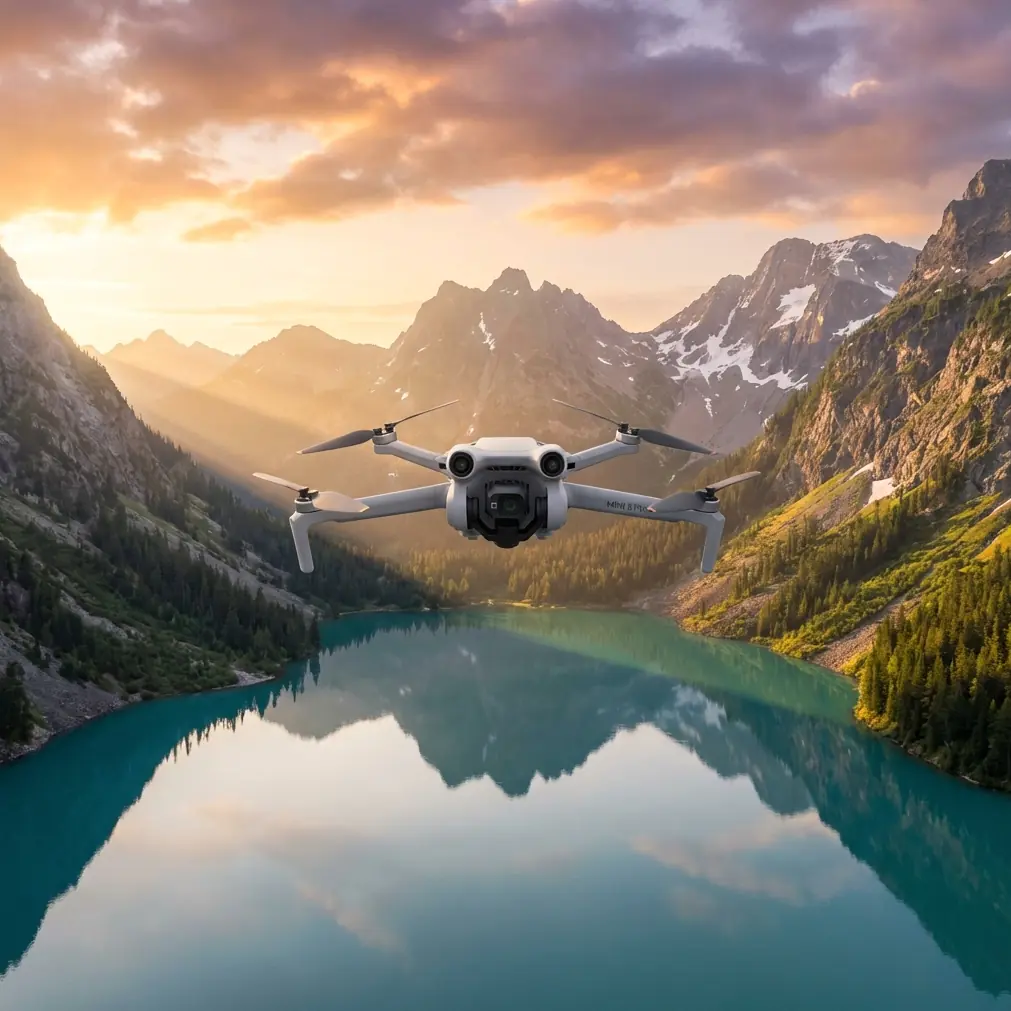
Scouting Wildlife at High Altitude with Mini 5 Pro: Field Tips That Actually Matter
META: A practical tutorial for using Mini 5 Pro to scout wildlife in high-altitude terrain, with real-world tips on obstacle avoidance, ActiveTrack, D-Log, QuickShots, Hyperlapse, and battery management.
High-altitude wildlife scouting looks easy on a screen. In the field, it rarely is.
Thin air changes how a small drone feels in the sky. Wind spills over ridgelines without warning. Light swings from flat haze to hard contrast in minutes. Animals that seem obvious through binoculars vanish into rock, scrub, and snow-shadow the moment you put a camera in the air. That is exactly where a compact platform like the Mini 5 Pro earns its place—if you fly it with a plan rather than relying on automation to save the day.
This tutorial is built around that reality. Not specs for the sake of specs. Practical use. If your goal is to scout wildlife in high country without overflying too aggressively, burning through batteries, or coming home with unusable footage, the Mini 5 Pro workflow needs to be deliberate from takeoff.
Why the Mini 5 Pro makes sense for wildlife scouting
For mountain scouting, smaller is not just more convenient. It changes how you operate.
A compact airframe is easier to hike with, easier to deploy from awkward terrain, and less intrusive when you need to work at a respectful stand-off distance. That matters with wildlife. In alpine and subalpine environments, the best drone is often the one you can get airborne quickly, hold stable long enough to assess a hillside, and bring back down before conditions shift.
The Mini 5 Pro discussion usually circles around familiar terms like obstacle avoidance, subject tracking, ActiveTrack, QuickShots, Hyperlapse, and D-Log. Those features are useful, but only when you understand where each one helps and where it can work against you in steep terrain.
For high-altitude scouting, the drone is not there to “chase” animals. It is there to help you read terrain, scan feeding zones, identify movement corridors, and document behavior with as little disturbance as possible.
That difference in mindset improves both safety and results.
Start with the terrain, not the animal
The biggest mistake I see from newer pilots is launching only after they’ve spotted wildlife.
That sounds logical, but it creates rushed flights. You launch excited. You lock onto the animal. You fly reactively. In mountains, reactive flying burns battery fast and increases your odds of clipping a branch, boulder edge, or unseen rise in the slope.
A better approach is to treat the first flight as a terrain survey.
Before attempting any close visual work, fly a high, conservative reconnaissance pass. Use the Mini 5 Pro to answer four questions:
- Where is the wind actually coming from?
- Which ridgelines and gullies create turbulence?
- Are there vertical obstacles hidden by your launch angle?
- What return path gives you the least elevation conflict?
Obstacle avoidance helps here, but it should not become a crutch. In high country, sensors can be limited by low-angle sunlight, bare rock with weak texture, thin branches, and sudden terrain drop-offs. Operationally, that means obstacle avoidance is best treated as a backup layer—not your primary navigation method.
I tell pilots to imagine obstacle sensing as a co-pilot who sometimes blinks at the wrong moment. Useful, yes. Infallible, no.
ActiveTrack and subject tracking: use restraint
Subject tracking is one of the most misunderstood features for wildlife work.
ActiveTrack can be excellent when you are documenting movement across a predictable background—say, a herd crossing a grassy saddle or an animal traversing an open slope with plenty of separation from terrain. In those cases, tracking can smooth out small control inputs and let you concentrate on framing and situational awareness.
But in high-altitude environments, animals often move near cliffs, scrub pockets, rock outcrops, or uneven elevation. That is where blind trust in subject tracking becomes a problem. The drone is trying to keep the subject in frame. The mountain is not cooperating.
Operationally, this means you should only use ActiveTrack when:
- the animal is already visible against a clean background,
- your lateral escape route is obvious,
- the terrain ahead of the subject is readable,
- and you are not depending on the system to interpret steep elevation changes for you.
If any of those conditions fail, switch back to manual control.
For wildlife scouting, tracking is best used in short windows. Ten or twenty seconds of stable subject-following can be more valuable than a long automated pursuit that stresses the animal and forces the drone into a poor position.
Obstacle avoidance in mountain environments
Obstacle avoidance is one of the most relevant features for this kind of mission, but its value changes with altitude, lighting, and terrain geometry.
Here’s the operational significance: on a wooded slope or broken ridgeline, obstacle sensing can buy you extra reaction time when you are panning, adjusting camera angle, or moving laterally while watching the screen. That little bit of margin matters with a small drone. It can prevent the kind of slow, embarrassing side-impact that happens when your attention shifts to the animal instead of the landscape.
But there is another side to it. In tight terrain, obstacle avoidance can also slow the aircraft unexpectedly or alter its path in a way that ruins your intended line. If you are flying near uneven rock faces, that hesitation can put you in rotor wash or side gusts longer than expected.
So the rule is simple: leave obstacle avoidance on when scouting broad mountain terrain, but do not fly lines that require the system to solve terrain for you.
If a route feels too tight to trust manually, it is too tight for a wildlife mission.
Camera settings that preserve decision-making later
Scouting is not just about spotting animals in real time. Very often, the useful insights come afterward, when you review footage on a larger screen and catch movement you missed in the field.
That is where D-Log has a real place.
D-Log gives you more flexibility in handling scenes with bright sky and dark ground, which is common above treeline. A sunlit snow patch, pale rock face, and shaded animal trail can all exist in the same frame. Shooting in D-Log can preserve more usable tonal information, making it easier to pull detail from shadows and control highlights later.
The operational value is straightforward: better retained detail improves post-flight analysis. You are not just making footage look cinematic. You are protecting information.
That said, not every flight needs D-Log. If you need quick review on location with minimal editing, a standard color profile may be more practical. My own rule is this:
- Use D-Log for planned scouting flights where terrain contrast is severe and footage may need detailed review later.
- Use a standard profile for short visual checks, training flights, or rapid documentation where speed matters more than grading latitude.
QuickShots and Hyperlapse can also be useful, but not in the way many pilots assume.
QuickShots are handy for creating repeatable visual overviews of a ridge, meadow, or basin. They can help document habitat layout from a consistent motion pattern, which is useful if you are comparing multiple locations over time. Hyperlapse works well when the goal is to show weather movement, cloud buildup, or changing light over a feeding area rather than track animals directly.
Neither mode should be your default while active wildlife is nearby. These are documentation tools, not scouting essentials.
The battery management tip I learned the hard way
Here’s the field lesson that matters most: at altitude, never judge your return on battery percentage alone.
I learned this on a cold morning above the tree line while scanning a long, open slope. The drone had enough battery on paper. The outbound leg was easy with a tailwind and a slight descending line over the terrain. Everything looked comfortable until I turned back. Now I was climbing, working into a headwind, and watching the battery drop faster than the first half of the flight suggested.
That is a classic mountain trap.
Your battery plan has to be based on effort, not just remaining percentage. Thin air, temperature, elevation changes, and wind direction all distort the confidence that pilots get from a clean battery readout.
My field routine now is simple:
- Warm the battery before launch whenever conditions are cold.
- Assume the return leg will cost more than the outbound leg.
- Turn earlier than feels necessary if you flew out with a tailwind.
- Finish high-altitude scouting flights with a larger reserve than you would use on flat ground.
A specific number helps here: if I hit roughly 50% while farther out than I’d like in mountain wind, I stop treating the mission as “still in progress” and start shaping the return immediately. That does not mean panic-landing at half charge. It means ending exploration mode early enough that I still have choices.
Choices are what battery reserve buys you.
That reserve gives you room to climb over a ridge instead of forcing a low shortcut, room to reject a poor landing zone, and room to slow down for a careful descent if turbulence builds near the ground.
If you want a practical pre-trip checklist for this kind of flying, I usually share one directly here: message me before your next mountain scouting session.
How to approach wildlife without stressing it
The drone should extend your eyes, not impose on the scene.
At high altitude, sound can carry strangely across basins and rock faces. A drone that seems distant from your launch position may be much more noticeable near an animal depending on wind and topography. So instead of flying directly toward wildlife, use an offset approach.
That means approaching from the side, staying above obvious lines of movement, and letting the camera do the work rather than closing distance aggressively. If the animal changes behavior, pauses unnaturally, bunches up, or shifts from feeding to alert observation, back off.
This is one reason the Mini 5 Pro’s compact format helps. You can often gather useful visual information from farther away than pilots expect, especially if your composition is stable and your exposure is controlled.
The mission is not to get the closest image. The mission is to collect clean, interpretable observations without altering what you came to observe.
A practical flight workflow
Here is the workflow I recommend for a real high-altitude wildlife scouting session:
1. Build the mission around one objective
Choose one priority: locate, document movement, assess terrain use, or capture broad habitat context. Trying to do all four in one battery usually leads to rushed decisions.
2. Launch for a terrain read
Climb to a safe overview height and evaluate wind, sun angle, and hidden obstacles before hunting for subjects.
3. Use manual flight first
Fly your initial search manually. This keeps your attention on the environment instead of on automation settings.
4. Use ActiveTrack selectively
If an animal moves across open terrain and you have clear separation from obstacles, use short tracking windows only.
5. Record in D-Log when dynamic range is harsh
If snow, bright rock, and shadow share the frame, D-Log is often worth it for post-flight review.
6. Treat QuickShots and Hyperlapse as secondary tools
Use them to document habitat structure, weather movement, or visual context—not as your main mode around active wildlife.
7. Turn back early
If the wind assisted your outbound leg, assume the aircraft will charge a higher “energy tax” coming home.
8. Land while you still have options
The best mountain landings happen before the pilot starts negotiating with the battery.
What good results actually look like
Success with the Mini 5 Pro in this setting is rarely a dramatic low pass or a perfectly centered tracking shot.
It looks more like this:
- stable footage of a distant traverse line,
- enough dynamic range to inspect shadowed movement later,
- safe clearance from terrain,
- no obvious disturbance to the animal,
- and a landing with reserve left in the pack.
That may sound modest. It isn’t. It is disciplined flying, and disciplined flying is what gives you repeatable results in the mountains.
The Mini 5 Pro is at its best in high-altitude wildlife scouting when you use its smart features as tools rather than as decision-makers. Obstacle avoidance can add margin. ActiveTrack can help in clean terrain. D-Log can preserve critical detail for later review. QuickShots and Hyperlapse can build useful habitat context. None of them replace planning, restraint, and battery discipline.
That last part is the one most pilots remember after a few mountain flights. You do not manage a high-altitude mission by watching the battery icon and hoping the drone agrees. You manage it by reading the terrain, reading the wind, and leaving yourself enough reserve to adapt.
That is how the Mini 5 Pro becomes genuinely useful for wildlife scouting instead of just airborne.
Ready for your own Mini 5 Pro? Contact our team for expert consultation.