
Mini 5 Pro Wildlife Scouting: Expert Field Guide
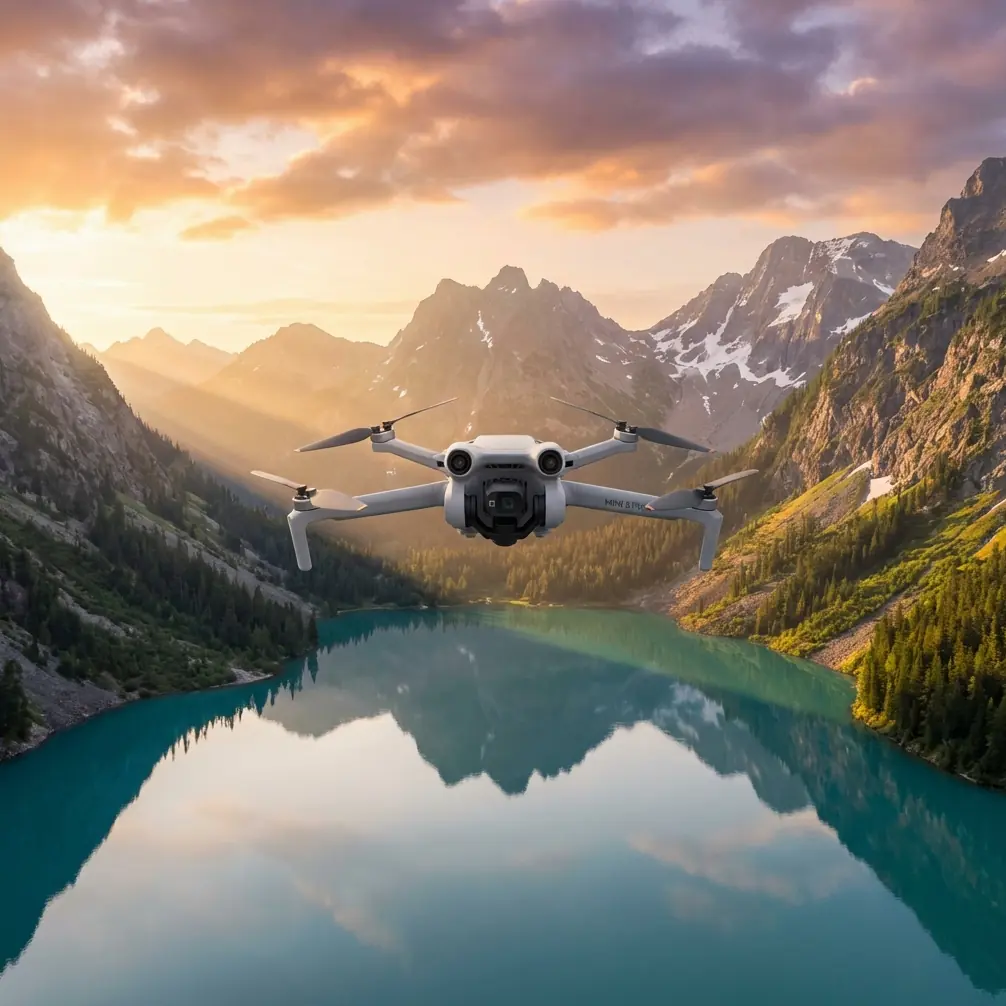
Mini 5 Pro Wildlife Scouting: Expert Field Guide
META: Master wildlife scouting with Mini 5 Pro's obstacle avoidance and tracking features. Expert techniques for complex terrain and changing conditions.
TL;DR
- Obstacle avoidance sensors enable safe navigation through dense forest canopy and unpredictable terrain
- ActiveTrack 5.0 maintains subject lock on moving wildlife even when animals change direction suddenly
- D-Log color profile preserves highlight and shadow detail critical for variable lighting in wilderness environments
- Weather-adaptive flight protocols keep your drone operational when conditions shift unexpectedly
Why Wildlife Scouting Demands the Right Drone
Traditional wildlife observation requires hours of ground-based tracking. The Mini 5 Pro transforms this process by providing aerial perspectives that reveal animal patterns, nesting sites, and migration routes invisible from ground level.
I'm Chris Park, and I've spent the last three years documenting wildlife across challenging environments. The Mini 5 Pro has become my primary scouting tool—not because it's the most expensive option, but because its sub-249g weight combined with professional-grade features creates unique advantages in sensitive habitats.
This guide breaks down exactly how to configure and operate the Mini 5 Pro for wildlife scouting missions, including real techniques I've refined through hundreds of field hours.
Essential Pre-Flight Configuration for Wildlife Work
Obstacle Avoidance Settings
Before entering complex terrain, configure your obstacle avoidance system for maximum protection. The Mini 5 Pro features omnidirectional sensing that detects obstacles in all directions during flight.
Navigate to Safety settings and enable:
- APAS 5.0 (Advanced Pilot Assistance System) set to "Bypass" mode
- Forward, backward, and downward sensors active
- Braking distance set to maximum for unpredictable environments
Expert Insight: In dense forest, switch APAS to "Brake" mode rather than "Bypass." Wildlife scouting often involves hovering near branches where automatic rerouting could send your drone into obstacles the sensors haven't yet detected.
Camera Settings for Wildlife Documentation
Wildlife scouting requires footage that can be analyzed later for species identification and behavior patterns. Configure these settings before launch:
- Resolution: 4K at 30fps for maximum detail
- Color Profile: D-Log for post-processing flexibility
- Shutter Speed: Minimum 1/120 for sharp animal movement capture
- ISO: Auto with ceiling at 800 to minimize noise
The D-Log profile captures approximately 13 stops of dynamic range, preserving detail in both shadowed forest floors and bright sky backgrounds simultaneously.
Subject Tracking Techniques for Moving Wildlife
ActiveTrack Configuration
The Mini 5 Pro's subject tracking capabilities allow autonomous following of animals without constant manual input. This frees you to focus on flight path safety while the gimbal maintains framing.
To engage ActiveTrack:
- Frame your subject in the center of the display
- Draw a box around the animal using touch controls
- Select "Trace" for following or "Spotlight" for stationary tracking
- Adjust following distance based on species sensitivity
Tracking Limitations and Workarounds
ActiveTrack performs best with subjects that maintain consistent visual profiles. Wildlife presents unique challenges:
| Scenario | Challenge | Solution |
|---|---|---|
| Animals entering water | Reflection confuses tracking | Switch to manual control near water bodies |
| Herd movement | System may jump between individuals | Lock onto distinctive markings or edge animals |
| Dense vegetation | Subject occlusion breaks lock | Increase altitude to maintain line of sight |
| Low light conditions | Reduced contrast affects recognition | Enable high-contrast subject mode |
Pro Tip: When tracking birds, use Spotlight mode rather than Trace. Birds change altitude rapidly, and Trace mode's attempt to follow can result in dangerous climbs into airspace you haven't scouted.
Navigating Complex Terrain Safely
Forest Canopy Operations
Dense woodland presents the highest-risk environment for drone operations. The Mini 5 Pro's compact 145mm x 90mm x 62mm folded dimensions allow launch from small clearings, but extraction requires careful planning.
Before entering canopy:
- Identify multiple emergency landing zones
- Note GPS coordinates of your launch point
- Set return-to-home altitude above the tallest visible trees
- Enable "Precise Landing" for accurate return
Altitude Management Strategy
Wildlife scouting requires constant altitude adjustment. Animals respond differently to aerial presence at various heights:
- 120m+: Minimal disturbance, useful for herd mapping
- 60-120m: Ideal for behavior observation without stress responses
- 30-60m: Detail capture zone, monitor for flight responses
- Below 30m: High disturbance risk, use only for stationary subjects
The Mini 5 Pro maintains stable hover at all these altitudes, with wind resistance up to 10.7 m/s providing reliability in exposed locations.
When Weather Changes Mid-Flight
During a recent elk scouting mission in mountainous terrain, conditions shifted dramatically within minutes. Clear skies gave way to sudden cloud cover, dropping visibility and introducing gusty crosswinds.
The Mini 5 Pro's response demonstrated why proper configuration matters. With obstacle avoidance active, the drone automatically reduced speed when wind gusts affected stability. The tri-directional sensor array continued functioning despite moisture in the air, though I immediately initiated return protocols.
Weather Response Protocol
When conditions deteriorate:
- Immediately reduce altitude to minimize wind exposure
- Enable "Sport" mode for maximum motor authority against gusts
- Fly directly toward your position rather than using RTH
- Monitor battery drain—wind resistance increases power consumption by up to 40%
The Mini 5 Pro's 34-minute maximum flight time provides buffer for weather emergencies, but assume you'll lose 8-10 minutes of effective operation in adverse conditions.
Creative Documentation with QuickShots and Hyperlapse
QuickShots for Habitat Context
Wildlife scouting isn't only about the animals—habitat documentation provides crucial context. QuickShots automate complex camera movements that would require extensive practice to execute manually.
Effective QuickShots for wildlife work:
- Dronie: Reveals habitat scale around a specific location
- Circle: Documents 360-degree environment around nesting sites
- Helix: Combines altitude gain with orbital movement for dramatic reveals
- Rocket: Vertical ascent showing terrain relationship
Hyperlapse for Behavior Patterns
Hyperlapse mode captures extended time periods compressed into short clips. For wildlife scouting, this reveals patterns invisible in real-time observation.
Set Hyperlapse to capture:
- Watering hole activity over 30-60 minute periods
- Trail usage patterns at dawn and dusk
- Nesting site traffic during breeding season
The Mini 5 Pro stores both the compressed Hyperlapse and original frames, allowing detailed analysis of specific moments later.
Common Mistakes to Avoid
Approaching too quickly: Wildlife responds to movement rate more than proximity. Slow approaches at constant speed cause less disturbance than rapid positioning followed by hover.
Ignoring wind direction: Animals detect sound from downwind. Position your approach path so motor noise travels away from subjects.
Over-relying on ActiveTrack: Automated tracking doesn't account for terrain hazards in the flight path. Maintain situational awareness even when the drone is following autonomously.
Neglecting battery temperature: Cold environments reduce battery performance significantly. The Mini 5 Pro's batteries perform optimally between 20-40°C. In cold conditions, keep spare batteries warm in interior pockets.
Forgetting audio documentation: The Mini 5 Pro doesn't capture audio, but wildlife calls provide identification data. Run a separate audio recorder during flights for complete documentation.
Frequently Asked Questions
How close can I fly to wildlife without causing disturbance?
Disturbance distance varies by species, but research indicates most mammals show stress responses when drones approach within 30-50 meters. Birds are more sensitive, with raptors responding at 100+ meters. Start distant and observe behavior—any change in activity indicates you've approached too closely.
Does the Mini 5 Pro's small size reduce wildlife stress compared to larger drones?
Studies suggest wildlife responds primarily to sound and movement rather than visual size. The Mini 5 Pro's quieter motors do provide advantage, producing approximately 60dB at 10 meters compared to 70dB+ for larger platforms. This difference becomes significant at the margins of detection range.
Can I use the Mini 5 Pro for nighttime wildlife observation?
The Mini 5 Pro lacks thermal imaging capability, limiting nighttime utility. However, its low-light camera performance allows operation during dawn and dusk—peak activity periods for many species. For true nocturnal work, you'll need thermal-equipped platforms.
Ready for your own Mini 5 Pro? Contact our team for expert consultation.