
Expert Scouting with Mini 5 Pro in Low-Light Vineyards
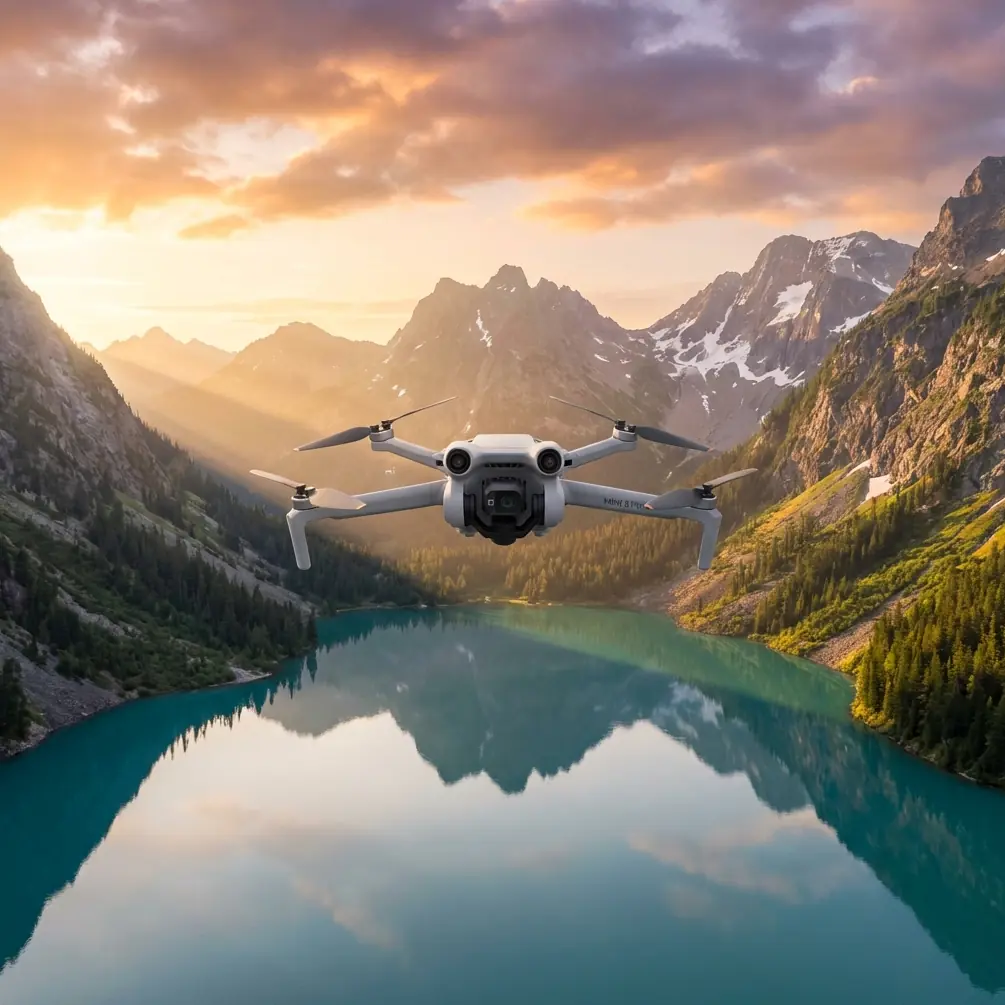
Expert Scouting with Mini 5 Pro in Low-Light Vineyards
META: A field-tested look at how Mini 5 Pro-style scouting can handle low-light vineyard work, wind, terrain, and signal challenges with lessons drawn from professional rail-monitoring UAV specs.
Low-light vineyard scouting exposes every weakness in a drone workflow.
Rows are repetitive. Terrain rolls away just enough to hide trouble spots. Moisture can build before sunrise. Signal quality can become erratic near pumps, utility lines, metal trellis systems, or service buildings. And if you are trying to capture usable imagery rather than pretty footage, the drone has to do more than stay in the air. It has to remain stable, predictable, and precise.
That is why the most useful way to think about the Mini 5 Pro is not as a lifestyle camera drone, but as a compact field tool. The strongest clues for how to use it well actually come from a much heavier professional monitoring platform documented in a railway safety solution from Zhonghaida’s subsidiary Tianjin Tengyun Zhihang. On paper, that aircraft is a different class entirely: up to 70 minutes of endurance, 10km ground-station control radius, optional RTK with ±8mm + 1ppm planar accuracy, wind resistance rated to level 6, and operation from -20°C to 60°C. It also emphasizes something vineyard operators and photographers often overlook: resilience in difficult environments, including electromagnetic interference, rain tolerance, fast setup, and autonomous takeoff and landing.
Mini 5 Pro users can borrow that mindset.
The real problem in vineyard scouting isn’t darkness alone
Most people frame low-light work as a camera problem. That is only half true.
Yes, sensor performance matters. D-Log matters if you are trying to preserve subtle tonal separation across shaded canopies, dark soil, and pale morning haze. Exposure discipline matters. So does noise control. But the first operational failure usually happens before image quality collapses. It happens when the aircraft struggles to hold a reliable line over repetitive rows, hesitates near obstacles, or loses consistency because the pilot is fighting signal behavior rather than observing the site.
In vineyards, that cost shows up quickly. You miss weak-growth patches between rows. You fail to document drainage patterns before the light changes. You waste battery repositioning because the drone drifted off the intended path. Or you come back with beautiful cinematic clips and no repeatable scouting record.
The railway-monitoring reference offers a more practical standard. Its aircraft was designed for route inspection, where linear corridors demand stable tracking, accurate positioning, and reliable operation in imperfect conditions. Those priorities map surprisingly well to vineyards. A vine block is also a corridor problem: long lanes, repeated geometry, potential wind channels, and the need to compare one pass against another.
What the railway platform teaches us about Mini 5 Pro field use
The iFly-D1 multirotor in the source material supports manual, stabilized, and autonomous modes, with strong wind performance and solid electromagnetic compatibility. The larger fixed-wing system in the same reference adds details like 10-minute setup time, small-rain takeoff capability, and autonomous launch and recovery.
Those facts matter because they reveal what professionals optimize for:
- minimal time between arrival and data capture
- repeatable flight behavior
- tolerance for environmental friction
- confidence near infrastructure
- useful outputs under less-than-ideal conditions
A Mini 5 Pro obviously does not mimic an 8kg industrial aircraft with a 3kg payload and a 36MP Sony A7R. But for a photographer scouting vineyards in dim light, the operational logic translates directly.
You want a light platform that can be airborne fast, map a block cleanly, avoid collisions around trellis ends or trees, and keep video and stills coherent enough for comparison. That is where obstacle avoidance, ActiveTrack, subject tracking, QuickShots, and Hyperlapse stop being marketing features and become workflow tools.
Low-light scouting demands route discipline, not just camera confidence
When I scout vineyards, the first question is not “How cinematic can this look?” It is “What must be visible before the light changes?”
That usually means three tiers of capture.
First, a high-level establishing pass to understand moisture patterns, row consistency, access roads, and edge conditions. Second, a lower directional pass across suspect sections. Third, a short sequence that can be shown to growers, managers, or crews without extra explanation.
Mini 5 Pro is well suited to this sequence if you use its smart modes selectively.
QuickShots are often dismissed as social-media templates, but in scouting they can create fast orientation clips for non-pilot stakeholders. A brief pullback or reveal over a block entrance helps ground teams understand where an observed issue sits in the larger layout.
Hyperlapse can also become a practical survey aid. If fog is lifting or shadows are moving across sloped rows, a controlled hyperlapse can make microclimate behavior visible in a way static stills cannot.
ActiveTrack and subject tracking are useful too, but not for dramatic action. In a vineyard, they can help maintain smooth relative framing on a utility vehicle, a worker route, or a row-side inspection movement, especially when you are documenting access and workflow rather than just crop appearance.
The key is to use automation to reduce pilot workload, not to replace judgment.
Obstacle avoidance matters more in vineyards than many pilots expect
People associate obstacle avoidance with urban flying or forest trails. Vineyards create a subtler challenge.
There are trellis wires, poles, end posts, wind machines, irrigation hardware, boundary trees, netting, service sheds, and occasional uneven rises that don’t read clearly at dawn. In low light, depth cues flatten. A row that looks open from one angle can become a trap when you yaw and side-slip.
That is where obstacle avoidance earns its keep. Not because it makes the flight carefree, but because it preserves margin when visibility and contrast drop. In a scouting session, every avoided interruption protects continuity. You can hold your line, keep your altitude consistent, and gather comparable imagery over multiple passes.
This is one of the clearest practical links to the reference material. The industrial platform highlights operation in complex geography and strong environmental adaptability. Vineyards are not dramatic landscapes, but they are full of small complications. A drone that can sense and react cleanly around them helps turn a short low-light window into usable field intelligence.
Handling electromagnetic interference: the detail most vineyard pilots ignore
The source document specifically notes strong resistance to electromagnetic interference and good electromagnetic compatibility. That kind of language usually gets skipped by casual readers. It should not.
In a vineyard, interference may come from power infrastructure, pump systems, communications equipment, metal structures, or simply awkward geometry between aircraft and controller. The symptom is often subtle at first: inconsistent image transmission, delayed response, or a signal warning that appears only when the drone crosses a certain section of the block.
My rule with a compact platform like Mini 5 Pro is simple: if transmission becomes unstable, do not chase the drone with frantic stick inputs. Fix the link first.
That starts with antenna adjustment. Reorient the controller antennas to maintain proper alignment with the aircraft rather than pointing the tips directly at it. Small changes in body position help too. Step clear of vehicles, metal fences, or structures that may be blocking or reflecting signal. Gain a bit of elevation if possible. If the block layout forces an awkward path behind treelines or buildings, reposition yourself before repeating the pass.
That single habit can salvage a session.
It also aligns with the industrial reference in spirit. A professional monitoring aircraft is expected to operate near infrastructure without becoming unreliable. Mini 5 Pro users may not have the same hardened system architecture, but they can still apply disciplined radio practice. In low-light scouting, stable control and clean transmission are worth more than squeezing out one extra dramatic angle.
If you need a second opinion on setting up your field workflow, this direct WhatsApp channel is a practical place to compare notes before you head into the rows.
Why wind tolerance and setup speed matter before sunrise
The source material cites level 6 wind resistance, small-rain capability, and 10-minute setup time. Those are industrial-grade expectations, yet the principles are highly relevant to vineyard mornings.
Pre-sunrise and early-morning conditions often look calm from the parking area and behave differently over the vines. Air can funnel through rows, break unevenly over a slope, or shift as temperature changes. A compact aircraft with good stabilization and smart flight control has a real advantage here, especially when the operator is trying to capture clean, low-noise footage at slower movements.
Setup speed matters just as much. In low light, your best visual information may last only a short period: enough ambient light to separate vine structure, but still early enough to reveal moisture, cool spots, or uneven canopy behavior. If your workflow is slow, the scouting value disappears while you are still checking settings.
The industrial benchmark of a 10-minute deployment is useful because it forces the right question: how quickly can you get from vehicle to first usable pass? With Mini 5 Pro, the answer should be very fast, but only if your process is standardized. Pre-plan your route. Decide whether your priority is stills, D-Log video, or both. Set your return-to-home logic carefully. Confirm obstacle sensing status. Then launch.
D-Log is not just for grading; it helps preserve scouting information
Low-light vineyard imagery tends to compress quickly. Dark under-canopy areas merge together. Bright patches near the horizon clip early. White row markers or reflective irrigation parts can spike in the frame.
That is why D-Log deserves a place in serious scouting. Not because every grower wants a color-managed deliverable, but because flatter capture can preserve information that standard looks may throw away. If you later need to compare shadow density, assess edge contrast between healthy and stressed sections, or produce a clearer review clip for a client, having that tonal headroom helps.
This is another place where the reference material quietly sharpens expectations. The professional platform pairs its airframe with a Sony A7R delivering 7360 × 4912 resolution and 36 million effective pixels. That is a reminder that field imaging is only as useful as the detail it preserves. Mini 5 Pro operators do not need a full-frame industrial payload to learn the same lesson. Expose with care, keep movement smooth, and capture in a format that gives you room to interpret the scene after the flight.
The smarter way to use Mini 5 Pro for vineyard decisions
If your only goal is to make the vineyard look beautiful, almost any modern drone can manage that.
If your goal is to make decisions, the workflow changes.
You need repeatable lane coverage. Consistent altitude. Reliable obstacle handling. Stable transmission in awkward signal zones. Enough dynamic range to read shaded foliage. And flight discipline that respects short weather windows.
That is why the railway-monitoring source is so useful as a thinking tool. Its headline specs—70-minute endurance, 10km control radius, ±8mm + 1ppm RTK precision, 4000m operating altitude, -20°C to 60°C working range—describe a machine built for mission reliability rather than spectacle. Mini 5 Pro lives in a smaller, more accessible category, but the professional lesson remains: the aircraft should disappear into the task.
For a photographer like Jessica Brown scouting vineyards in low light, that means using Mini 5 Pro as a precision notebook in the sky. Let obstacle avoidance protect your margins. Let ActiveTrack reduce workload where movement needs to stay consistent. Use QuickShots only when they clarify location. Use Hyperlapse when time behavior matters. Switch to D-Log when tonal detail will influence later interpretation. And when interference creeps in, trust disciplined antenna adjustment before blaming the site or the drone.
The best scouting flights are rarely the most dramatic. They are the ones that come back with answers.
Ready for your own Mini 5 Pro? Contact our team for expert consultation.