
Mini 5 Pro for Vineyard Scouting: Altitude Guide
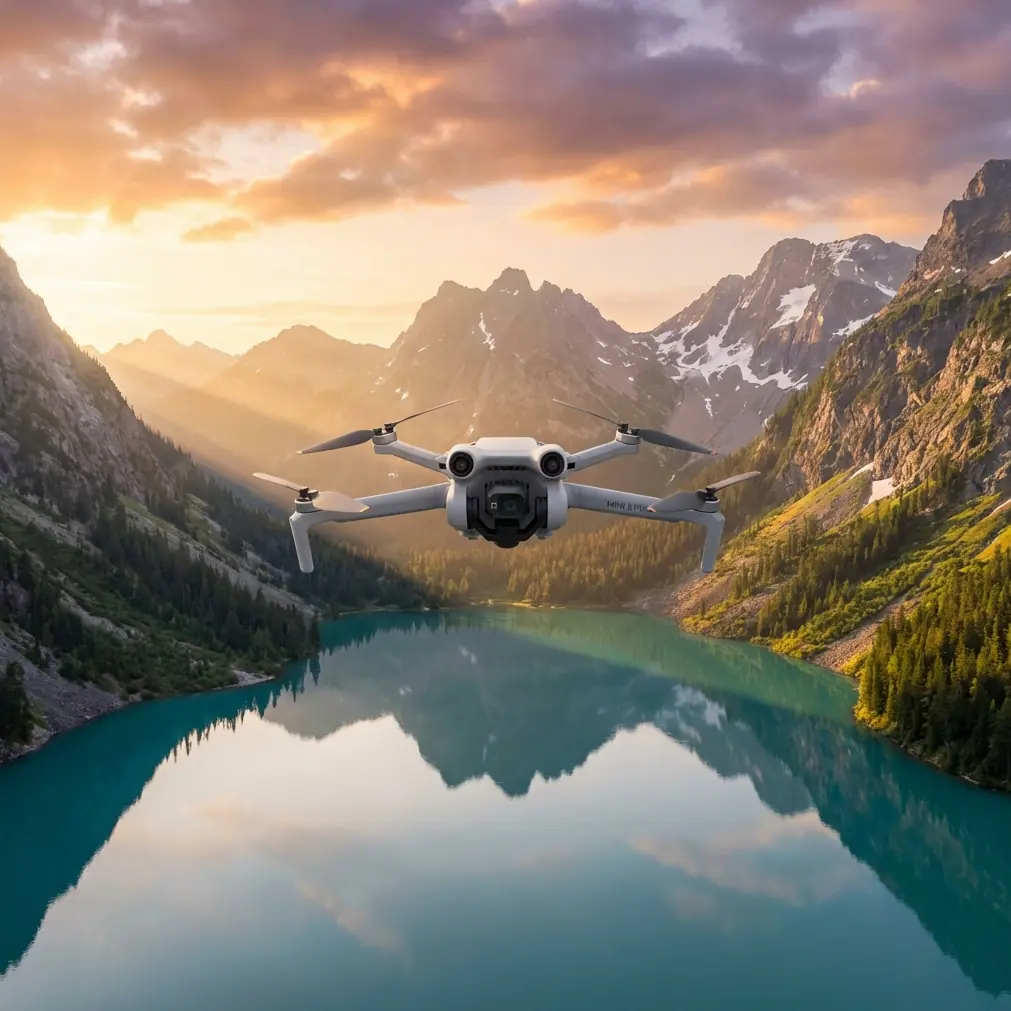
Mini 5 Pro for Vineyard Scouting: Altitude Guide
META: Master vineyard scouting at high altitude with the Mini 5 Pro. Expert tutorial covering pre-flight prep, obstacle avoidance, and aerial mapping techniques.
TL;DR
- Pre-flight sensor cleaning is critical for reliable obstacle avoidance at dusty vineyard sites above 1,500 meters
- ActiveTrack and Subject tracking maintain lock on irrigation lines and vine rows despite terrain undulation
- D-Log color profile captures 13+ stops of dynamic range for accurate crop health assessment
- Hyperlapse modes create compelling seasonal comparison footage for vineyard management reports
Why Vineyard Managers Trust Aerial Scouting
Spotting vine stress from ground level wastes hours. The Mini 5 Pro transforms vineyard reconnaissance into a 45-minute operation that covers terrain you'd spend an entire day walking.
High-altitude vineyards—think Mendoza at 1,500 meters or Oregon's Applegate Valley pushing 600 meters—present unique challenges. Thinner air affects flight dynamics. Dust coats sensors. Temperature swings between morning and afternoon alter battery performance.
This tutorial walks through my exact workflow for scouting elevated vineyard sites, starting with the step most pilots skip: preparing your drone's safety systems for reliable performance.
Pre-Flight Cleaning: Your First Line of Defense
Here's what I learned after a close call in Napa's Atlas Peak region: dirty obstacle avoidance sensors fail quietly.
The Mini 5 Pro relies on binocular vision sensors positioned around its body. At vineyard sites, fine particulate matter from soil, pollen, and agricultural sprays accumulates on these lenses. The drone doesn't alert you to degraded sensor performance—it simply becomes less reliable at detecting obstacles.
My 5-Minute Sensor Cleaning Protocol
Before every vineyard flight, I complete this sequence:
- Forward sensors: Microfiber wipe with 70% isopropyl alcohol, circular motion
- Backward sensors: Same process, check for spider web residue (common after vehicle transport)
- Downward sensors: Critical for landing—remove any dirt buildup affecting positioning
- Lateral sensors: Often neglected, essential for side-flying along vine rows
- Camera lens: Lens pen first, then microfiber for final polish
Pro Tip: Carry a dedicated cleaning kit in a sealed bag. Vineyard dust is surprisingly abrasive—using your shirt sleeve creates micro-scratches that compound over time.
This ritual takes five minutes and has prevented more incidents than any flight setting adjustment.
Configuring Obstacle Avoidance for Row Flying
Standard obstacle avoidance settings assume you want maximum protection. Vineyard scouting demands a different approach.
The Mini 5 Pro's omnidirectional sensing creates a protective bubble around the aircraft. When flying between vine rows, this bubble triggers constant warnings and abrupt stops. You need controlled sensitivity, not maximum caution.
Recommended Settings for Vineyard Corridors
Navigate to Safety Settings within DJI Fly and adjust:
- Obstacle Avoidance Behavior: Set to "Bypass" rather than "Brake"
- Horizontal Obstacle Avoidance Distance: Reduce to 0.8 meters for tighter row flying
- Downward Obstacle Avoidance: Keep enabled at default for landing safety
- Enable APAS 5.0: Essential for smooth path planning around trellis posts
These adjustments let you fly 2-meter row spacing without constant interruption while maintaining genuine hazard protection.
Mastering Subject Tracking for Irrigation Assessment
ActiveTrack transforms how you document irrigation infrastructure across vineyard blocks.
Rather than manually piloting along drip lines, draw a box around the irrigation tubing visible on screen. The Mini 5 Pro locks onto this visual signature and follows autonomously while you monitor for leaks, breaks, or pressure issues.
Subject Tracking Best Practices
The system performs differently depending on conditions:
- Morning light (before 10 AM): Shadows create false edges—track the actual hardware, not shadow lines
- Midday (10 AM–3 PM): Optimal contrast for consistent tracking
- Golden hour: Beautiful footage, but low-angle light confuses tracking algorithms
For irrigation runs exceeding 200 meters, use Spotlight mode instead of ActiveTrack. This keeps the camera locked on your subject while you pilot manually, avoiding the autonomous system's tendency to anticipate turns that don't exist.
Expert Insight: Set your tracking subject size to "Small" for drip lines and "Medium" for trunk lines. The default "Auto" setting often loses lock on thin irrigation tubing against soil backgrounds.
D-Log Configuration for Crop Health Analysis
Vineyard managers increasingly request aerial footage that reveals vine stress invisible to casual observation. D-Log delivers this capability.
The Mini 5 Pro's D-Log color profile captures a flat, data-rich image with approximately 13.4 stops of dynamic range. This matters because chlorophyll changes—indicating water stress, nutrient deficiency, or disease—appear in subtle color shifts that standard video profiles crush.
D-Log Settings for Agricultural Assessment
| Parameter | Standard Setting | Vineyard Assessment Setting |
|---|---|---|
| Color Profile | D-Cinelike | D-Log M |
| ISO | Auto | Fixed 100-400 |
| Shutter Speed | Auto | 1/120 minimum |
| White Balance | Auto | 5600K fixed |
| Sharpness | 0 | -1 |
| Saturation | 0 | 0 (adjust in post) |
Fixed white balance prevents the camera from compensating for variations you're specifically trying to capture. A row showing yellowing leaves should look different from healthy green sections—auto white balance fights this.
QuickShots and Hyperlapse for Stakeholder Reporting
Technical data convinces agronomists. Visual storytelling convinces investors and property owners.
QuickShots modes produce cinematic sequences autonomously, letting you capture professional presentation footage without piloting expertise.
Most Effective QuickShots for Vineyard Content
- Dronie: Pulls back and up from a focal point—ideal for establishing block boundaries
- Circle: Orbits a central subject—perfect for showcasing a specific problem area
- Helix: Ascending spiral—demonstrates elevation changes across hillside plantings
- Rocket: Straight vertical climb—reveals row organization and spacing uniformity
For seasonal comparison projects, Hyperlapse delivers unmatched results. The Course Lock Hyperlapse mode maintains identical framing across multiple flights, creating time-lapse sequences showing growth stages, harvest progression, or cover crop establishment.
High Altitude Performance Adjustments
Thin air above 1,200 meters affects everything about drone flight.
Propellers generate less lift. Motors work harder to compensate. Batteries drain faster under increased load. The Mini 5 Pro handles these conditions well, but only if you adjust expectations.
Altitude Compensation Guidelines
| Elevation | Flight Time Reduction | Max Wind Resistance |
|---|---|---|
| Sea level | Baseline 34 min | 10.7 m/s |
| 500m | -4% (~33 min) | 10.2 m/s |
| 1,000m | -9% (~31 min) | 9.6 m/s |
| 1,500m | -14% (~29 min) | 9.1 m/s |
| 2,000m | -20% (~27 min) | 8.5 m/s |
Plan missions assuming 25% less flight time than rated specifications when operating above 1,500 meters. I've never regretted landing with extra battery—I've definitely regretted pushing limits.
Common Mistakes to Avoid
Ignoring wind gradients: Valley vineyards experience calm ground conditions while 50-meter altitude brings significant wind. Always test hover stability at planned survey height before committing to mission.
Over-relying on visual positioning: The downward sensors struggle over uniform soil coloring common between vine rows. Enable GPS positioning as primary, visual as backup.
Flying during spray operations: Even if you're upwind, agricultural chemical drift damages motor bearings and sensor coatings. Schedule flights 24 hours after any spray application.
Using default gimbal pitch speed: Standard settings create jerky footage when panning along rows. Reduce gimbal pitch speed to 15 degrees/second for smooth reveals.
Neglecting ND filters: Bright vineyard conditions require ND16 or ND32 filters to maintain proper shutter speed for natural motion blur. Flying without filtration produces jittery, amateur-looking footage.
Frequently Asked Questions
How does the Mini 5 Pro handle morning fog common in valley vineyards?
The obstacle avoidance sensors function normally in light fog, but visibility below 200 meters triggers warnings. More critically, moisture condensation on lenses degrades image quality. Wait until burn-off—typically 2 hours after sunrise in most wine regions—before flying.
Can I create accurate topographic maps for drainage planning?
Yes, with limitations. The Mini 5 Pro's camera captures excellent orthomosaic source material. Using DJI Fly's waypoint mission feature combined with software like DroneDeploy or Pix4D, you'll achieve 2-5 centimeter horizontal accuracy. Vertical accuracy requires ground control points for precision below 10 centimeters.
What's the most efficient pattern for full-block coverage?
Double-grid patterns at 70% overlap provide complete coverage with sufficient redundancy for processing. Fly your first grid parallel to row orientation, then rotate 90 degrees for the second pass. This approach requires approximately 12 minutes of flight time per hectare at 60-meter altitude.
Your Next Flight Starts Here
Vineyard scouting with the Mini 5 Pro combines technical precision with creative documentation. The workflow outlined here—from sensor cleaning through D-Log configuration to altitude compensation—transforms a capable drone into a genuine agricultural tool.
Start with the pre-flight cleaning protocol. Master it until it becomes automatic. Every other technique builds on the foundation of sensors that work when you need them.
Ready for your own Mini 5 Pro? Contact our team for expert consultation.