
Mini 5 Pro Field Report: Scouting Dusty Venues With Better
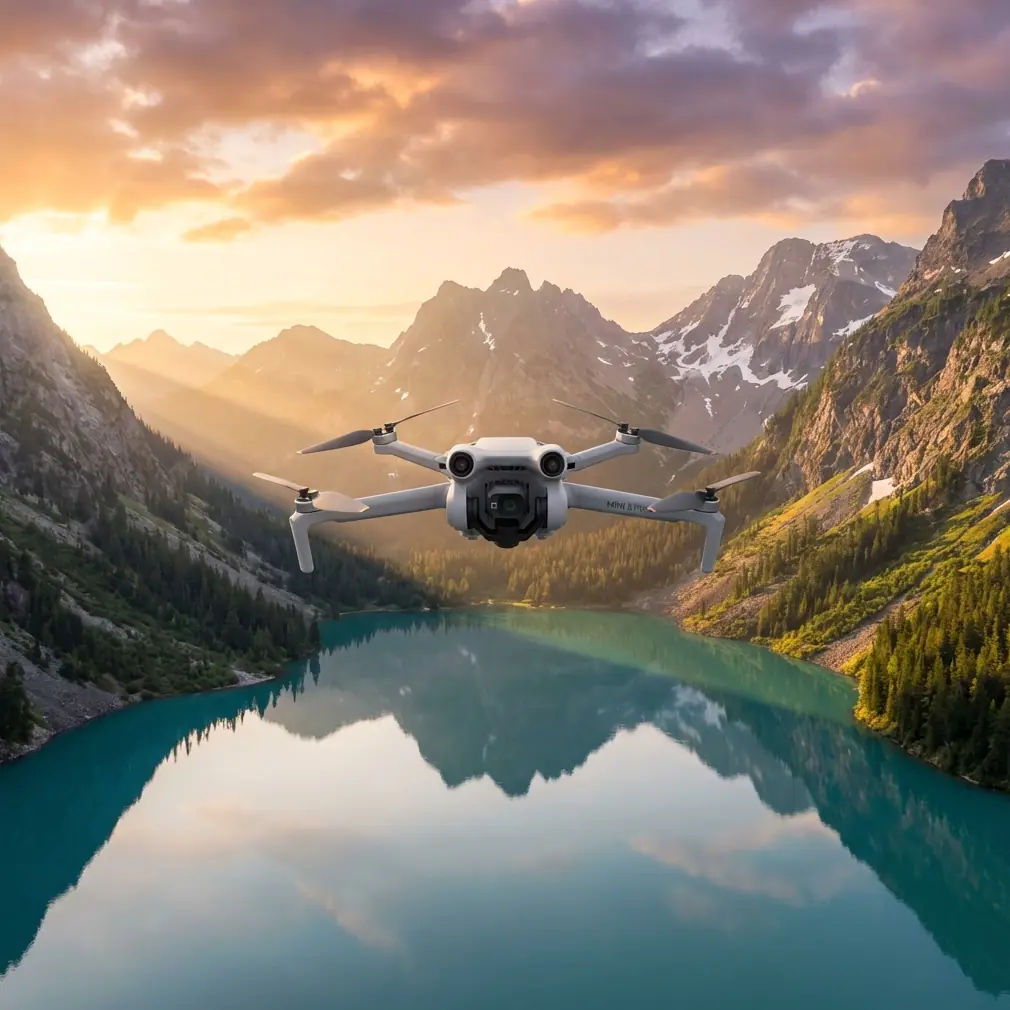
Mini 5 Pro Field Report: Scouting Dusty Venues With Better Positioning, Safer Routes, and a Manufacturing Lesson Worth Paying Attention To
META: A field-tested look at using the Mini 5 Pro for dusty venue scouting, with practical antenna positioning advice, flight planning tips, and what China’s new full-chain UAV manufacturing push signals for reliability-minded operators.
Dust changes everything.
A venue that looks simple from the parking area can become tricky the moment a drone lifts off. Fine dust softens surface contrast, hides wire lines against pale ground, reduces visual definition around temporary structures, and makes depth judgment less intuitive when you are trying to inspect access lanes, stage footprints, tent rows, or utility corridors. That is exactly where a compact aircraft like the Mini 5 Pro earns its keep. Not because it is small, but because small helps when the site is active, crowded with setup crews, or hemmed in by fencing, lighting towers, and unfinished works.
I have been thinking about that use case alongside a very different piece of industry news: China’s “Jiutian” UAV is reportedly set for a maiden flight by the end of June 2025, with a 25-meter wingspan and a maximum takeoff weight of 16 tons. On paper, that aircraft belongs to a completely different universe than a Mini 5 Pro. One is a heavy platform. The other is the sort of aircraft you carry in a shoulder bag while scouting a venue before sunrise.
Still, the Jiutian story matters to Mini 5 Pro users for one reason that gets overlooked: the manufacturing lesson.
According to the report, the program’s main manufacturer says it built a full-chain production system spanning process design, raw material supply, and final aircraft debugging, supported by PLM, CAXA, and DMPP digital systems. Strip away the scale difference, and this points to the same issue every serious drone operator cares about in the field: whether the aircraft behaves predictably, whether components and assembly quality support repeatable performance, and whether design and production are coordinated tightly enough to reduce unpleasant surprises. If you scout venues for clients, event planners, engineers, or production teams, predictability matters more than headline specs.
That is the real thread connecting a 16-ton UAV and a Mini 5 Pro on a dusty site. Reliability is rarely a single feature. It is the outcome of design discipline, manufacturing control, and good operational habits.
What dusty venue scouting actually demands from the Mini 5 Pro
Dusty venues create a specific kind of workload. You are usually not chasing cinematic hero shots. You are trying to answer practical questions fast.
Can trucks enter without clipping temporary barriers?
Is the generator zone too close to pedestrian circulation?
Are there low cables at the service edge?
How does the site slope toward drainage channels?
Will the stage back area create blind pockets for vehicle marshaling?
How much clear space really exists once fencing, equipment stacks, and parked machinery are factored in?
The Mini 5 Pro is well suited to this because scouting often rewards agility over brute endurance. You want fast launches, quick altitude changes, and the ability to move from a broad site overview to a tight inspection pass without hauling a larger platform across dirt and gravel. Obstacle avoidance becomes less of a marketing checkbox here and more of a workflow stabilizer. On dusty sites, contrast can flatten out visually, especially near ground level or during harsh midday light. Any added environmental awareness helps when you are orbiting around scaffolding, marquee frames, trees at the perimeter, or utility structures that do not stand out clearly from the background.
Subject tracking and ActiveTrack can also become unexpectedly useful, though not in the influencer sense. If the venue manager wants you to evaluate vehicle circulation or walking routes, tracking a lead cart, pickup, or site supervisor during a controlled pass gives you a quick spatial read on movement through the site. It helps reveal pinch points, dust plumes, hidden ruts, and unsafe merge zones. That operational context is often more valuable than a static overhead image.
QuickShots and Hyperlapse sound like creative extras, but on venue work they can serve a planning function. A short automated reveal can show how a service road connects to the main event footprint. A controlled hyperlapse over setup hours can document dust movement, traffic buildup, or shifting shadows across staging zones. If you deliver edited summaries to clients, these modes can compress a lot of information into something decision-makers will actually review.
D-Log matters for a more technical reason. Dusty environments are often bright, flat, and reflective in all the wrong places. Pale ground, temporary white roofing, aluminum truss, parked vehicles, and haze in the air can push footage toward clipped highlights while still leaving shaded areas under tents or trees too dark. If you are building scouting documentation that needs post-processing flexibility, D-Log gives you more room to recover detail and balance exposure across uneven site conditions.
The best antenna advice is simple, but most pilots still get it wrong
If you want maximum range and a cleaner signal while scouting a venue, the worst habit is pointing the controller antennas directly at the drone like laser pointers.
That feels intuitive. It is also usually wrong.
For most consumer drone controllers, the strongest transmission pattern projects outward from the broad faces of the antennas, not from the tips. So when flying the Mini 5 Pro across a venue, you generally want the flat sides of the antennas oriented toward the aircraft. In practical terms:
- If the drone is flying far ahead of you at similar altitude, keep the antennas vertical so their broad faces are directed toward the aircraft.
- If the drone is significantly above you, tilt them so the flats still “face” the drone’s position.
- Avoid collapsing your body posture around the screen. Your own torso, vehicles, steel structures, and container walls can interfere with signal quality.
- Take a few steps into the open before launching. Even moving away from a truck, fence, or scaffold stack can improve link consistency.
Dusty venues often have temporary infrastructure everywhere: steel truss, generators, metal barricades, comms trailers, and parked equipment. These are not just physical obstacles. They can also create reflections and signal issues. The easiest fix is often positional rather than technical. Stand somewhere with line of sight, keep the antenna faces aligned properly, and do not let the aircraft drift behind grandstands, roof edges, or dense structural elements.
If you want a direct opinion on setup choices before a site visit, I usually tell people to send a sketch or venue photo set first through this WhatsApp line for flight planning questions. A two-minute review can prevent a weak launch position and save you from chasing signal bars across a dusty field.
Flight profile: how I would scout a dusty venue with the Mini 5 Pro
My preferred approach is not one long flight. It is three shorter missions with different purposes.
1. The high overview pass
Start high enough to understand the whole footprint. This is where you identify site boundaries, access roads, parking spillover, neighboring hazards, and areas where dust is visibly concentrated by vehicle flow. Do not rush into low-level detail yet. First, build the mental map.
This pass is also where obstacle avoidance helps with confidence near perimeter trees, poles, and light masts while you establish orientation. Record wide footage in a format that leaves room for later review. If the light is hard, D-Log is worth using.
2. The circulation pass
Next, come lower and evaluate movement paths. Follow likely truck routes, pedestrian entries, emergency access lanes, and service approaches. If the site team has a lead vehicle or cart, subject tracking or ActiveTrack can be a practical tool to document a realistic path through the venue. You are not just filming motion. You are checking whether turning radii, bottlenecks, and visual obstructions make sense from above.
This is usually where dust patterns become obvious. Loose surface areas, dry shoulders, or construction debris can generate clouds that affect visibility for drivers and workers. A drone view makes that problem visible quickly.
3. The structure and hazard pass
Now inspect the details: overhead lines, temporary towers, roof edges, banner rigs, tents, scaffold interfaces, and loading zones. This is not the moment for speed. Keep inputs smooth. Let the sensors and obstacle awareness work in your favor, but do not fly as if they make the site risk-free. Dust can reduce scene clarity, and thin objects can remain hard to read depending on angle and light.
For client deliverables, QuickShots can help summarize a hazard area efficiently. A compact orbit around a stage support zone or utility corner can show spacing better than a still image. Hyperlapse is useful if the venue team needs to understand how activity and visibility evolve across setup hours.
Why the Jiutian manufacturing story matters even if you only fly subcompact drones
The Jiutian report is not relevant because Mini 5 Pro users are suddenly interested in a 25-meter aircraft. It matters because it highlights where the industry is heading: deeper integration between design, process planning, materials, assembly, and final debugging.
That full-chain manufacturing claim is operationally significant.
First, it suggests tighter traceability between what engineers design and what the factory actually builds. For drone operators, that usually translates into fewer inconsistencies between units, more stable airframe behavior, and better confidence when you repeat the same mission profile on different days.
Second, the use of PLM, CAXA, and DMPP-type digital systems points to something bigger than factory software. It implies that manufacturing is being treated as a data-linked process rather than a sequence of isolated manual steps. For the field operator, that matters because consistent assembly quality and process control are what make advanced features trustworthy. Obstacle avoidance, tracking, stabilized imaging, and transmission reliability all depend on hardware, calibration, and integration being handled with discipline upstream.
That is why I pay attention to industrial and national manufacturing news even when I am talking about a Mini 5 Pro. The high-end programs reveal where the production culture is moving. And production culture eventually shapes the expectations users can reasonably have from smaller aircraft.
Dust management is as much about habits as hardware
The Mini 5 Pro can handle venue scouting very effectively, but dusty sites punish lazy routines.
Do not launch from loose powder if you can avoid it. Use a pad or a clean hard surface.
Do not hover low behind moving vehicles unless the shot is worth the contamination risk.
Do not land near active service lanes where dust will swirl under the aircraft.
Do not assume sensors see every thin or low-contrast obstacle equally well in haze or glare.
After the flight, inspect the aircraft before folding it away. Dust loves hinge areas, motor housings, and the spaces around the gimbal. A short cleaning habit after each site visit protects image quality and helps prevent gradual wear that only becomes obvious later.
Also, think about your own visibility. On dusty venues, the human pilot loses clear visual tracking faster than expected, especially when the aircraft passes in front of a pale background or through a low dust plume. Good antenna orientation and line-of-sight positioning are not just about range. They support safer situational awareness.
The real value of the Mini 5 Pro for venue scouting
What makes the Mini 5 Pro useful on these jobs is not one hero feature. It is the combination.
Obstacle avoidance reduces stress in cluttered temporary environments.
ActiveTrack and subject tracking help analyze real circulation patterns.
QuickShots and Hyperlapse can turn raw site observation into client-friendly documentation.
D-Log gives more resilience in ugly lighting and dusty contrast conditions.
Compact size makes repeated repositioning practical during fast-moving scouting sessions.
And behind all of that sits a broader industry shift toward better integrated manufacturing, the kind reflected in the Jiutian story. When a major UAV project is defined not just by airframe size but by a full-chain system covering process design, raw materials, and final debugging, it reinforces an idea that small-drone users should care about: dependable field performance starts long before takeoff.
That is the mindset I would bring to scouting a dusty venue with the Mini 5 Pro. Fly it like a tool, not a toy. Choose your standing position carefully. Face the antenna flats toward the aircraft. Break the mission into passes. Use the smart modes only when they answer real site questions. And remember that the best scouting footage is not the prettiest footage. It is the footage that helps the next decision happen with fewer blind spots.
Ready for your own Mini 5 Pro? Contact our team for expert consultation.