
Mini 5 Pro for Dusty Solar Farm Work: A Technical Review
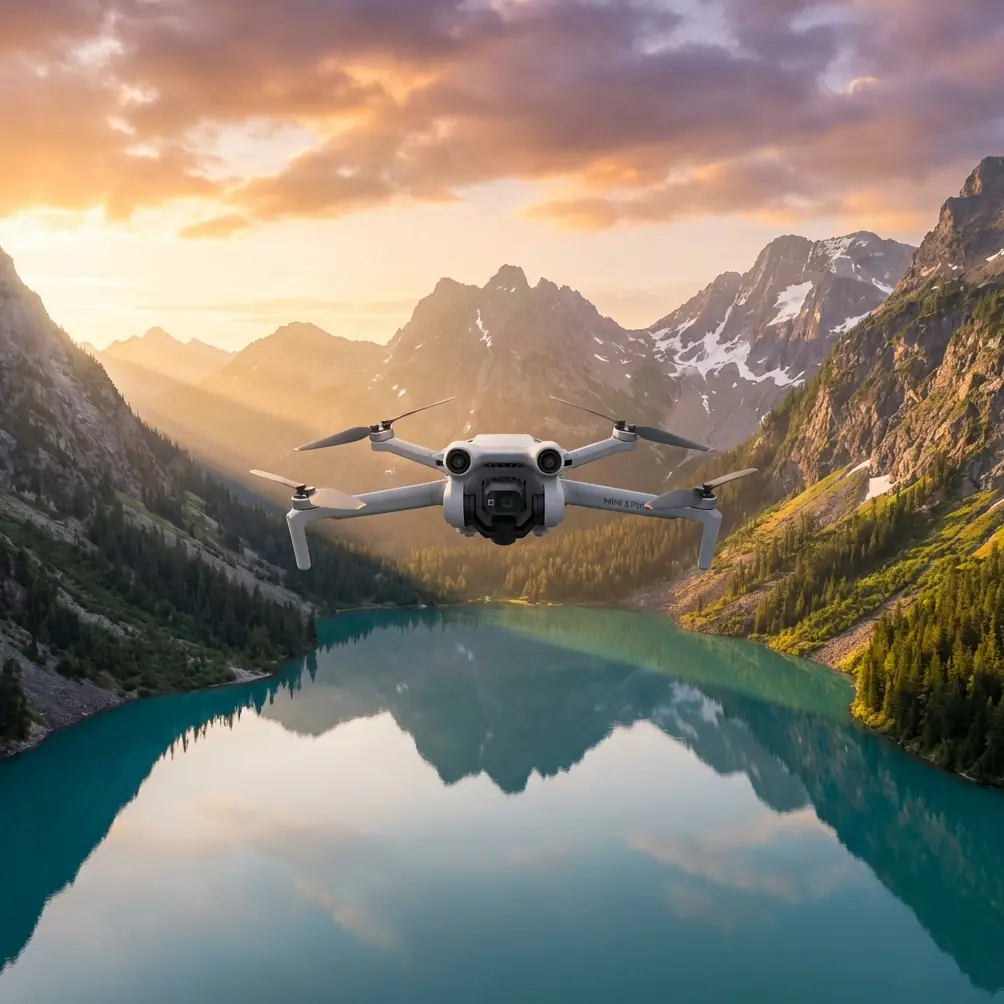
Mini 5 Pro for Dusty Solar Farm Work: A Technical Review from the Field
META: A technical Mini 5 Pro review for dusty solar farm scouting, covering obstacle avoidance, tracking, D-Log workflow, and the pre-flight cleaning steps that protect flight safety.
When people ask whether the Mini 5 Pro makes sense for solar farm scouting, I start with the environment, not the spec sheet. Solar sites look simple from a distance: long rows, open sky, predictable geometry. Up close, they are demanding places to fly. Dust gets everywhere. Glare can throw off your visual read of the aircraft. Repeating panel patterns make orientation harder than many pilots expect. And if you are inspecting in active wind corridors between array rows, the aircraft needs to stay stable while its vision systems keep making good decisions.
That is why my view of the Mini 5 Pro is less about whether it is “small but powerful” and more about whether its flight intelligence remains trustworthy when the site is dirty, reflective, and repetitive. For this kind of work, a drone is not judged by how it performs in perfect light over a green park. It is judged by whether its obstacle avoidance, tracking behavior, and imaging pipeline hold up after a dusty setup on the tailgate of a truck at 7 a.m.
The Mini 5 Pro, in that context, is best understood as a compact technical tool with very specific strengths and a few operational boundaries you need to manage deliberately.
Why solar farms are harder than they look
A solar farm gives pilots two conflicting conditions at once. First, there is usually abundant open space, which tempts people to assume the job is easy. Second, there are repeated structures, narrow service lanes, fence lines, inverter stations, cable runs, and occasional maintenance vehicles. That combination matters because compact drones rely heavily on stable visual information for safe automated flight behavior.
Repeated patterns are not just visually monotonous for the pilot. They can also complicate how you interpret distance and speed while framing inspection footage. Add airborne dust and harsh reflection off panel glass, and even experienced operators can find themselves flying more cautiously than expected.
This is exactly where modern obstacle avoidance becomes operationally significant. On a solar site, obstacle sensing is not only about avoiding a dramatic crash into a structure. It is also about reducing low-altitude risk while flying parallel to rows, crossing between equipment zones, or making incremental framing adjustments when documenting a string of arrays. A small drone that can read its surroundings intelligently buys you margin. In dusty conditions, though, that margin depends on maintenance.
The pre-flight cleaning step most pilots skip
If I were writing a single line on a whiteboard before every solar farm launch, it would be this: clean the vision system before you trust the vision system.
Dust on a drone does more than make it look neglected. It can directly reduce the reliability of safety features. If the Mini 5 Pro is using obstacle avoidance sensors and visual positioning to help maintain awareness, then a film of fine dust on those sensor windows is not cosmetic. It is a flight variable.
My standard pre-flight routine for dusty sites is simple and takes less than 2 minutes:
- Check the forward, rear, and downward vision surfaces for haze, fingerprints, and dust buildup.
- Wipe with a clean microfiber cloth, not a shirt hem or glove.
- Inspect the camera lens separately, because a clean sensor window does not mean a clean lens.
- Look at motor vents and arm joints for visible dust clumps that could interfere with smooth movement.
- Confirm the gimbal initializes cleanly before takeoff.
That short cleaning step matters because obstacle avoidance and stable low-altitude flight are only as good as the quality of what the aircraft can “see.” On solar farms, where you may be skimming along long rows or hovering near repetitive structures, degraded sensor clarity can turn a smart flight mode into a less predictable one.
This is not theory. It is one of the most practical differences between a smooth day of site documentation and a session where the aircraft starts behaving a little less confidently than expected. If the Mini 5 Pro is going to earn its place in a dusty field workflow, that pre-flight wipe-down is part of the system, not an optional extra.
Obstacle avoidance is useful here, but only if you use it correctly
Pilots sometimes talk about obstacle avoidance as if it replaces judgment. On a solar farm, that attitude creates sloppy flying. The better way to think about it is as a second layer of situational protection.
When I fly around panel rows, inverter pads, or perimeter structures, I use obstacle avoidance to support controlled movement, not aggressive automation. The main advantage is confidence during slow, deliberate repositioning. If I am offsetting laterally to inspect row spacing or adjusting altitude for a wider map-like establishing shot, the system can help catch a drift error before it becomes a contact event.
Its operational significance is biggest in three scenarios:
- Low-altitude passes over service lanes where depth perception gets compressed.
- Short reposition moves near fencing, utility boxes, or small structures.
- Windy conditions where the aircraft may need subtle corrections while maintaining framing.
That said, dust and glare are real constraints. Highly reflective panel surfaces can create visual complexity. Fine airborne dust can reduce clarity. Neither condition means the aircraft is unusable, but both argue for more conservative flight profiles. If the site is especially dirty, I reduce my dependence on automated proximity confidence and increase stand-off distance.
For solar work, obstacle avoidance is best treated as a risk reducer, not a license to fly tighter than the mission requires.
ActiveTrack and subject tracking: useful, but not the star of the show
The Mini 5 Pro becomes more interesting when people realize solar farm work is not only about static infrastructure. Maintenance teams, utility vehicles, cleaning crews, and field technicians are often part of the visual story. That is where subject tracking features such as ActiveTrack can be genuinely useful.
If I need a clean movement shot of a technician walking an inspection route or a service vehicle moving between rows, subject tracking can save time and deliver smoother results than fully manual stick inputs. But this is one area where site discipline matters. Solar farms are crowded with repeating lines and reflective surfaces, and the aircraft can only track as well as the scene allows.
Operationally, the best use case is not complex chase footage. It is controlled documentation. Think moderate-speed tracking with generous clearance, where the aircraft has an uncomplicated path and the subject is clearly separated from the background. Used that way, ActiveTrack becomes a practical production tool for site reporting, progress updates, and internal communications.
I would not make it the centerpiece of a technical inspection mission, but I would absolutely use it to supplement a broader scouting package.
QuickShots and Hyperlapse are not gimmicks on a solar site
Some pilots dismiss QuickShots and Hyperlapse as consumer-facing features. That misses the point. On a solar farm, these modes can produce useful context material when used with discipline.
A QuickShot-style reveal can establish scale fast. That matters when you need stakeholders to understand the physical relationship between panel blocks, access roads, substations, and surrounding terrain. A carefully chosen automated move can communicate layout better than a static overhead.
Hyperlapse has a different value. Solar farms are systems built around light, time, and environmental exposure. A Hyperlapse sequence can show cloud movement, maintenance activity, traffic patterns, or shifting reflections across panel fields in a way that standard clips cannot. For project managers, investors, or media teams, that kind of footage can help explain site dynamics without requiring a dense verbal walkthrough.
The key is restraint. These modes are useful when they serve documentation, not when they turn a work flight into a highlight reel.
D-Log is where the Mini 5 Pro starts to feel like a serious imaging tool
If your output from a solar farm needs to look polished, D-Log matters. Bright sky, dark ground elements, reflective surfaces, and metallic infrastructure can push any compact camera into a difficult dynamic range situation. A flatter profile gives you more room to shape that scene in post.
This is especially important when filming panel fields near sunrise, late afternoon, or under mixed cloud cover. Without a flexible profile, you often have to choose between preserving the sky and preserving shadow detail in access roads, equipment housings, or structural elements. D-Log gives you a better starting point.
That is not just a colorist’s concern. It affects operational storytelling. A scouting video needs to show condition, layout, and environment clearly. If glare wipes out texture or shadows crush detail around support infrastructure, the footage becomes less informative. D-Log helps retain nuance where bright reflections and dark industrial details share the same frame.
For photographers moving into drone video, this is one of the strongest reasons the Mini 5 Pro feels professionally relevant. You can capture a flexible image without stepping into a much larger aircraft class. On solar assignments, where light can shift brutally across reflective surfaces, that flexibility is not a luxury.
How I would configure the Mini 5 Pro for dusty scouting days
My general setup priorities are safety, clarity, and repeatability.
First, I keep takeoff and landing zones as clean as possible. A folding landing pad is not glamorous, but it reduces dust ingestion and gives the gimbal a cleaner start. Second, I keep flight paths conservative, especially when the site has active vehicles or stronger-than-expected crosswinds between array rows. Third, I separate mission goals: one flight for broad scouting, one for detailed pass-throughs, one for beauty/context footage if needed.
That division matters because it prevents feature overload. If you try to mix close obstacle-aware flying, subject tracking, QuickShots, and flat-profile cinematic capture into one rushed battery, you increase mistakes. The Mini 5 Pro works best when the pilot treats each flight as a specific assignment.
For dusty solar sites, I also recommend a quick sensor check between flights. Conditions change. Wind shifts. Dust settles. What was clean at launch may not be clean 20 minutes later.
If you are building a repeatable field workflow and want a second opinion on setup choices, mission profiles, or post workflow, you can message a drone specialist here.
Where the Mini 5 Pro fits best
The Mini 5 Pro makes the most sense for operators who need a compact aircraft that can handle mixed duties: scouting, documentation, light inspection support, and polished visual capture. It is particularly compelling for solo operators, photographers expanding into infrastructure work, and teams that want a more portable drone without giving up modern safety and imaging features.
Its strongest traits for solar farm use are clear:
- Obstacle avoidance adds practical safety margin during controlled low-altitude work.
- ActiveTrack and subject tracking help capture maintenance activity efficiently.
- QuickShots and Hyperlapse create strong contextual visuals when used with intent.
- D-Log improves footage quality in contrast-heavy, reflective environments.
Its limits are just as important:
- Dust can undermine sensor-dependent features if pre-flight cleaning is sloppy.
- Reflective panel surfaces demand more conservative expectations from automated modes.
- Compact size helps with portability, but it does not remove the need for disciplined flight planning.
That balance is why I would not describe the Mini 5 Pro as a magic solution for solar farm operations. I would describe it as a capable compact platform that rewards methodical use. In dusty environments, especially, the difference between a frustrating flight and a productive one is often not hidden in a menu setting. It is in the operator’s process.
My verdict
For dusty solar farm scouting, the Mini 5 Pro is at its best when treated like a precision field instrument rather than a casual camera drone. Its obstacle avoidance and subject tracking features are genuinely valuable, but only when the aircraft’s sensors are kept clean and the mission is flown with realistic stand-off distances. Its QuickShots and Hyperlapse modes can add operational context, not just style, and D-Log gives serious users a better image foundation in difficult reflective light.
If I were packing for a day on a solar site, I would bring the Mini 5 Pro with a microfiber cloth as confidently as I would bring spare batteries. That pairing says everything. The aircraft has the intelligence and imaging tools to do meaningful work here, but the dusty environment decides whether those tools perform at their best.
Ready for your own Mini 5 Pro? Contact our team for expert consultation.