
Mini 5 Pro for Remote Highway Scouting: What Actually
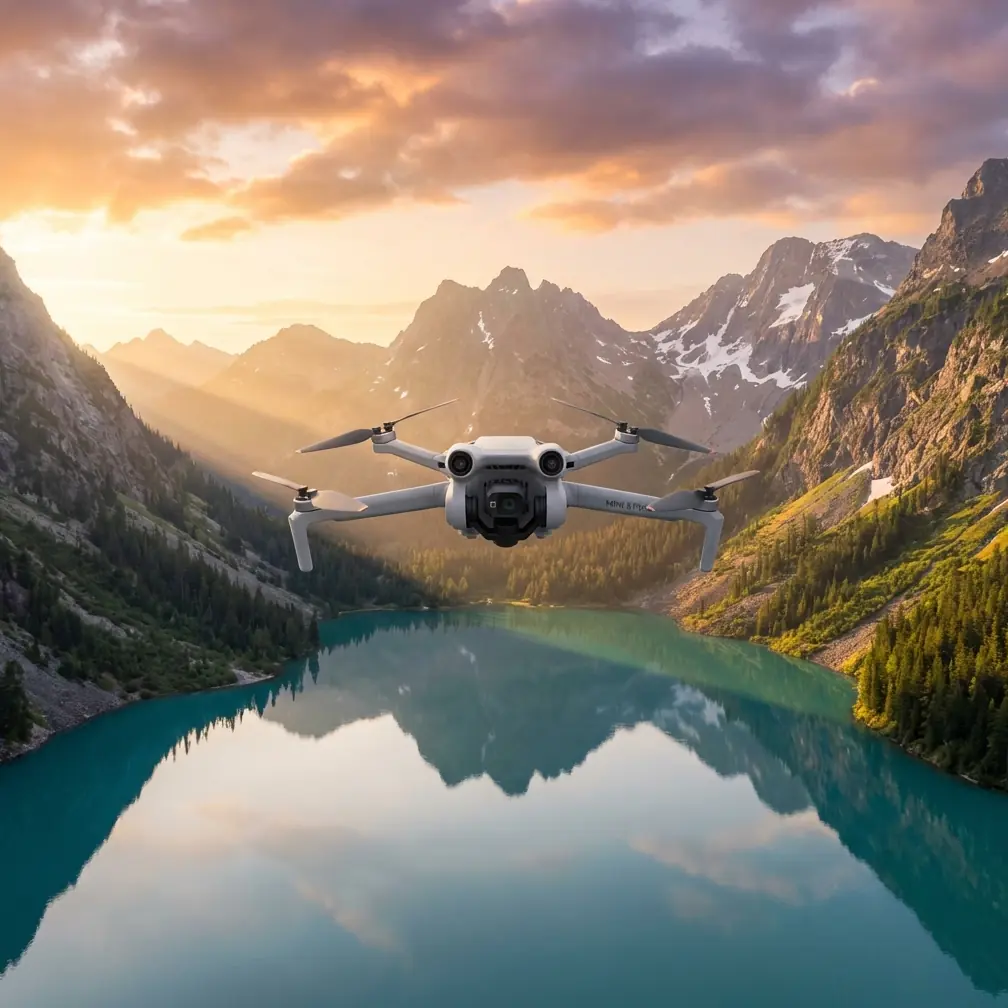
Mini 5 Pro for Remote Highway Scouting: What Actually Matters in the Field
META: A field-focused look at how Mini 5 Pro fits remote highway scouting, with practical insight on stabilized imaging, route consistency, structural durability, and mapping workflow.
I’ve spent enough time around roadside pull-offs, dusty shoulders, and long stretches of unfinished corridor to know that “good drone specs” on paper are not the same thing as a drone that makes highway scouting easier. Remote road work exposes every weakness. Wind shifts. Vibration. Repetitive capture runs. The need to come back with footage and map data that someone else can actually use.
That is the lens I’m using for the Mini 5 Pro.
Not as a toy. Not as a lifestyle camera. As a working tool for scouting highways in remote areas, where the real job is collecting stable visual information across distance, terrain variation, and repeatable flight paths.
What changed my mind on this class of aircraft was a simple frustration from an earlier project. We were documenting a rough highway segment with drainage crossings, shoulder erosion, and several utility conflicts. The aircraft we had at the time could fly the route, but the output was inconsistent. The video looked steady in some sections and nervous in others. The photos were usable, yet stitching them into a coherent corridor view took far longer than it should have. Worse, small changes in aircraft attitude during wind gusts made visual comparisons harder when reviewing the route later.
That’s where the Mini 5 Pro conversation gets interesting.
The real problem in highway scouting isn’t flight. It’s data consistency.
A lot of operators focus first on range, speed, or cinematic features. Those matter, but for highway scouting the harder question is this: can the aircraft help you produce repeatable, interpretable, operationally useful records over long linear assets?
Highway work is not a one-shot reveal. It often means flying similar routes again and again to compare shoulder degradation, drainage blockages, embankment settlement, vegetation encroachment, pavement edge condition, or staging progress near bridges and culverts. If your imagery drifts too much in framing or your route execution varies wildly, your inspection value drops.
This is why one reference detail stands out more than it might for a casual buyer: support for automatic area scan route generation, combined with payload triggering at specified intervals and detailed event logging to assist post-flight processing such as image stitching and editing.
That is not just a feature checklist item. Operationally, it changes the workload.
For a remote highway scouting team, repeatable route generation means less time improvising each pass. Specified trigger intervals matter because corridor documentation is only as good as its capture discipline. If the aircraft can maintain a structured image collection rhythm, you get cleaner overlap, more consistent reference points, and fewer gaps when building stitched views or progress records afterward. The event log matters just as much. When you’re back in the trailer or office trying to assemble a corridor survey or compare segments, knowing exactly when and where capture events occurred shortens the cleanup phase.
In other words, the Mini 5 Pro is most valuable when it reduces the friction between flight and analysis.
Why gimbal stability matters more on highways than in scenic flying
Remote highway scouting has a visual trap. People assume a road is easy to film because it is large, linear, and obvious. In practice, roads are difficult because subtle defects are what matter. A washout beginning along a shoulder edge. Drainage scarring on a slope. A culvert inlet partially obscured by debris. Fine visual cues vanish when the footage jitters, rolls unpredictably, or constantly reframes during gusts.
One of the strongest technical clues in the reference material is the support for a three-axis stabilized camera gimbal. There is a very practical statement attached to that: in stabilized operation, the line of sight remains locked in direction, so even when the aircraft attitude changes, the onboard camera image stays comparatively stable.
For highway scouting, that is huge.
An aircraft always reacts to the air around it. The question is whether your footage has to suffer for it. When the camera can hold direction despite aircraft attitude changes, the recorded image becomes easier to inspect. You can track pavement edges more reliably. You can compare roadside barriers without the horizon constantly shifting. You can review drainage channels frame by frame without the scene lurching every time the aircraft corrects itself.
This is one reason the Mini 5 Pro fits corridor work better than many people expect from a compact platform. Features such as ActiveTrack, subject tracking, and obstacle avoidance get the spotlight in mainstream coverage, but the less glamorous truth is that stable framing is often the bigger productivity win for infrastructure teams. You are not trying to impress anyone with a dramatic reveal shot. You are trying to preserve visual continuity so engineering, maintenance, or planning staff can trust what they’re seeing.
QuickShots and Hyperlapse can still help, but in this use case they are secondary tools. A Hyperlapse pass can be useful for showing traffic pattern shifts around temporary works or illustrating long linear context to stakeholders. But the baseline need is stable, legible capture. The Mini 5 Pro earns its keep there first.
Structural design matters when the road disappears and the environment gets rough
Remote highways are rarely kind to equipment. Dust gets everywhere. Wind funnels through cuttings and over embankments. Vehicles pass close by. Set-up locations are uneven. You may need to hike gear a short distance just to get a safe launch point.
This is why another reference detail deserves attention: the use of composite honeycomb material with a structure described as similar to continuously arranged I-beams, offering strong resistance to compression and bending.
That is not abstract engineering language. It points directly to field resilience.
A road scouting aircraft doesn’t live in studio conditions. It gets handled at the edge of work zones and on remote shoulders where every piece of gear absorbs more vibration and incidental stress than most recreational users realize. A structure with a high stiffness-to-weight advantage helps the aircraft stay portable without feeling fragile. Resistance to bending and compression matters during transport, setup, and repeated field deployment. The reference material also notes advantages such as reduced cracking tendency and vibration damping. Those qualities matter operationally because they support imaging consistency and long-term reliability.
A compact aircraft used for corridor work needs two things at once: low burden and low drama. If the platform is light enough to deploy quickly but structurally composed to cope with rough handling and environmental stress, your team is more likely to use it regularly instead of reserving it for “ideal” days that never come.
That’s an underrated advantage of the Mini 5 Pro approach.
Why output flexibility and control architecture matter for specialized teams
Another detail from the source that deserves translation into plain field language is the mention of multiple output ports to satisfy special application requirements, along with a control system architecture capable of real-time attitude control.
For a highway scouting team, output flexibility is not about complexity for its own sake. It’s about fitting into the rest of the workflow. Some crews need to move imagery into mapping software quickly. Others need to pair flight records with maintenance logs, GIS layers, or inspection reports. Flexible outputs make a drone more than a flying camera; they help it behave like part of a documentation system.
The reference also mentions an extended Kalman filter running in attitude mode, allowing the flight controller board to provide independent, real-time attitude control. In practical terms, that points to steadier control logic and better orientation awareness during flight. For remote road inspection, this matters because aircraft stability underpins data stability. If the platform manages attitude confidently, your capture plan has a better chance of staying coherent when environmental conditions are less than perfect.
There is also mention of operation with an external GPS module enabling autonomous flight modes across multiple aircraft categories. For the Mini 5 Pro audience, the key takeaway is not the broad aircraft taxonomy. It is the principle: robust navigation support is central to structured route work. Highway scouting benefits most when the aircraft isn’t merely flown, but directed through repeatable mission logic.
Imaging features are only useful when they support inspection decisions
The Mini 5 Pro discussion often drifts toward creative features, and fair enough. D-Log can be valuable, especially when you need more flexibility in grading footage shot across harsh midday contrast, concrete surfaces, dark drainage channels, and reflective vehicle roofs. If you’re producing stakeholder reports, permitting presentations, or contractor updates, that extra tonal control can help.
But for remote highway scouting, I would not start with D-Log or cinematic movement modes. I would start with clarity of mission.
Ask three questions:
- Can the aircraft hold a stable view over a corridor segment?
- Can it support structured capture along a repeatable route?
- Can the resulting data be processed without wasting hours fixing preventable inconsistencies?
The reference facts align unusually well with those needs. Automatic scan route generation, interval-triggered payload actions, event recording for post-processing, and direction-locked three-axis stabilization all support disciplined corridor documentation. The structural material story reinforces the field use case rather than merely decorating it with technical language.
That is the difference between a drone people enjoy flying and a drone people keep assigning to work.
A field scenario where Mini 5 Pro makes the day easier
Imagine you’re scouting a remote highway section after heavy rain. The goal is not a full engineering survey. You need a fast visual assessment of shoulder washout risk, blocked runoff paths, and any developing slope instability near the road edge.
You launch from a gravel turnout. Wind is pushing across open ground. Trucks pass intermittently. The aircraft needs to move down the corridor and return imagery that can be reviewed by a maintenance lead before crews are dispatched.
This is where the package comes together.
The stabilized three-axis gimbal helps maintain usable footage even as the aircraft corrects for gusts. Direction-locked viewing means drainage lines and pavement edges remain easier to interpret from frame to frame. If your mission uses structured route planning and interval-triggered capture, the resulting stills become much more useful for corridor comparison and image stitching. If the aircraft body benefits from a stiff, lightweight composite approach with strong anti-bending characteristics, field handling becomes less nerve-racking and repeated deployment feels more practical.
Add obstacle avoidance and subject tracking where appropriate, especially around changing terrain or when following work vehicles at a safe, lawful distance for progress documentation. Those tools are helpful, but they are best seen as support features around a stronger core: route discipline and image stability.
The hidden value: less post-flight cleanup
This may be the least glamorous point in the article, and probably the most important.
People tend to judge a drone by the flight experience. Teams judge it by what happens after landing.
If your highway scouting workflow ends with hours of sorting, stabilizing, stitching, renaming, matching timestamps, and trying to remember where the useful segment actually began, the aircraft did not save as much time as you thought. The reference’s emphasis on detailed trigger event records is easy to skip over, but it speaks directly to this issue. Better event traceability supports better post-flight organization.
That means faster handoff to analysts, planners, or asset managers. It means less ambiguity when comparing one corridor pass to the next. And it means the Mini 5 Pro can fit into a real inspection rhythm instead of becoming a source of extra admin.
For operators building a highway scouting program, that’s the sort of feature that quietly pays back every week.
My take as a photographer working around infrastructure jobs
I still care about how footage looks. That never goes away. But highway scouting taught me that “looking good” is not enough. The image has to hold up as evidence, reference, and decision support.
That’s why I find the Mini 5 Pro compelling in this context. Not because of hype. Because the underlying ideas reflected in the source material are practical:
- a three-axis stabilized gimbal that keeps the viewing direction steady even when the aircraft attitude changes,
- automatic scan route generation and interval-based triggering that improve repeatability,
- event records that make stitching and post-processing easier,
- and a composite honeycomb, I-beam-like structural design that supports durability without turning field deployment into a burden.
Those are not flashy talking points. They are the ingredients of less wasted motion.
If you’re evaluating the Mini 5 Pro specifically for remote highway scouting, that is where I would focus. Not on abstract promises, but on whether the aircraft can help your team capture cleaner visual data, more consistently, with less fatigue before and after the flight.
If you need to compare configurations or talk through a corridor-inspection setup, you can reach someone directly through this Mini 5 Pro field workflow chat.
The best drone for this kind of work is rarely the one with the loudest marketing. It’s the one that still feels useful after the fifth launch of the day, when the wind picks up, the road stretches on, and you need the output to make sense back at the desk.
Ready for your own Mini 5 Pro? Contact our team for expert consultation.