
Mini 5 Pro for High-Altitude Wildlife Monitoring
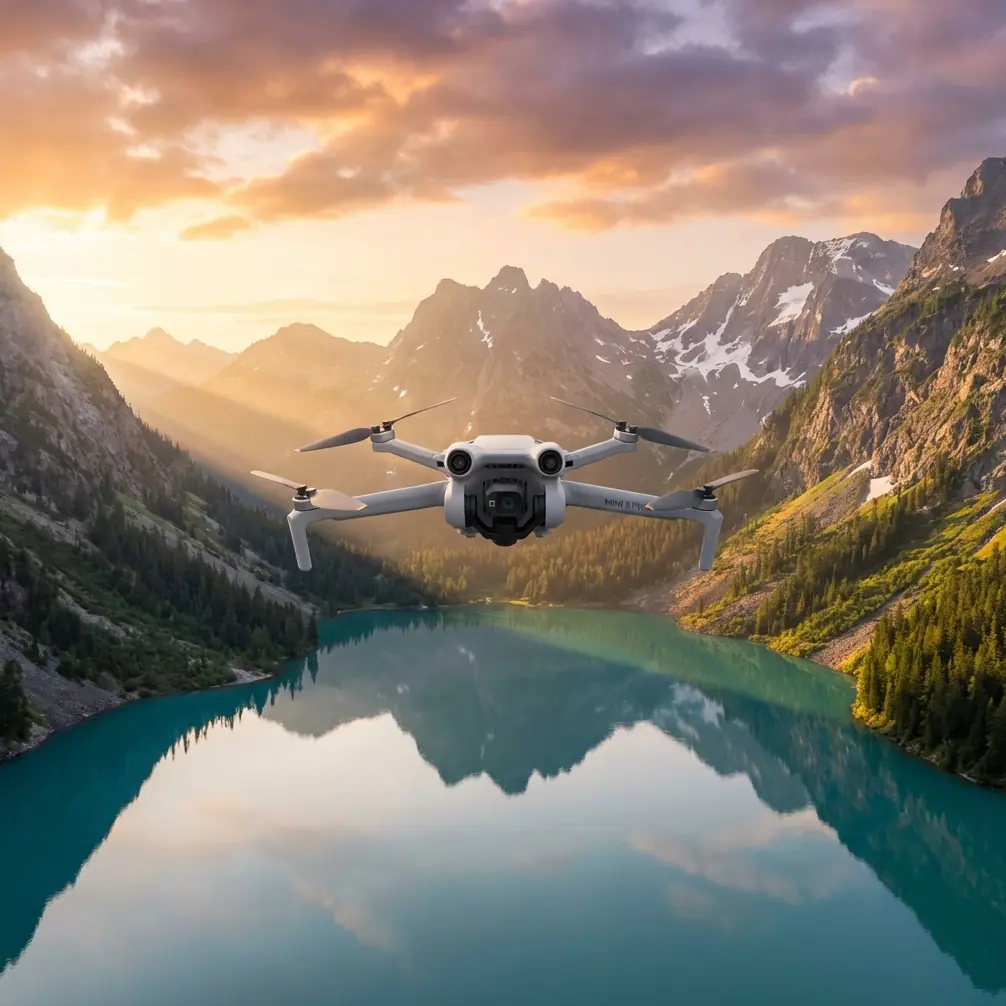
Mini 5 Pro for High-Altitude Wildlife Monitoring: What Accuracy Standards Reveal About Real Field Use
META: A technical review of Mini 5 Pro for high-altitude wildlife monitoring, with a practical look at mapping accuracy, terrain data needs, obstacle avoidance, ActiveTrack, D-Log, and mid-flight weather resilience.
I’ve spent enough time around mountain ridgelines to know that wildlife monitoring is rarely as simple as “get the drone up and start recording.” Thin air changes flight behavior. Light bounces harshly off rock and snow. Wind can swing from manageable to punishing in minutes. And if the mission includes habitat documentation, trail mapping, or boundary-sensitive conservation work, image quality alone is not enough. The data has to hold up.
That is why the Mini 5 Pro becomes interesting in a way that goes beyond headline features. For a photographer working in alpine environments, it can be a camera platform. For a field biologist or conservation contractor, it also has to behave like a disciplined data-collection tool.
The most useful way to evaluate it is not by marketing categories, but by asking a tougher question: can it support wildlife monitoring in places where visual storytelling, terrain awareness, and positional discipline all matter at once?
Why high-altitude wildlife work is different
Monitoring wildlife in elevated terrain sits somewhere between documentary filming and light geospatial survey. You may be counting animals in open slopes one hour, then documenting nesting edges, migration corridors, or grazing pressure the next. Often you need both contextual footage and repeatable views that can be compared over time.
That mix is where many small drones struggle. They may capture beautiful footage, but they are less convincing when the job shifts into measurement, terrain interpretation, or documentation standards.
The reference material behind this discussion comes from aerial photogrammetry and cadastral mapping practice, not from consumer drone brochures. That matters. It introduces a more serious benchmark for what “good enough” means when flights generate records used for land interpretation.
One detail stands out immediately: for digital elevation model outputs at scales such as 1:500, 1:1000, and 1:2000, elevation values should be recorded to 0.01 m. That level of granularity tells you something essential about professional expectations in terrain-based work. Even if your Mini 5 Pro mission is not a formal survey, the underlying principle remains: in steep wildlife habitats, small changes in elevation and slope interpretation can affect habitat reading, route planning, and repeatability.
A second detail is even more operationally useful. The source notes that cadastral mapping emphasizes land-related elements and can demand stricter planar accuracy than same-scale topographic mapping, while not requiring elevation in the same way. In plain terms, not every mission values the same kind of precision. If you are monitoring animal use around protected boundary edges, fenced restoration zones, or human-wildlife conflict perimeters, horizontal placement may matter more than a beautifully modeled hillshade. If you are documenting cliffside nesting or alpine meadow degradation, elevation consistency becomes more important.
That distinction helps define how a Mini 5 Pro should be flown.
A small drone, but not a trivial one
The Mini 5 Pro makes the most sense in wildlife monitoring when mobility is part of the mission design. At high altitude, every kilogram of field gear becomes a tax. A compact aircraft is easier to hike with, easier to redeploy from uneven ground, and less disruptive when operating near sensitive animal zones where a short setup window matters.
But compactness alone solves nothing. The real value comes from how the aircraft manages the tension between cinematic capture and structured documentation.
For example, ActiveTrack and subject tracking are often discussed as creative features. In wildlife work, they are useful only when used cautiously and ethically. You are not chasing animals with automation. That would be irresponsible. What you can do, though, is maintain a stable framing distance when documenting movement patterns in open, non-intrusive observation scenarios. The operational benefit is consistency. Instead of hand-correcting every drift in wind, the aircraft can maintain a more coherent visual record, which is far more useful when reviewing gait, spacing, or direction of travel later.
Obstacle avoidance matters even more in mountain work than in forests at lower elevations. High-altitude wildlife sites often include broken ridges, isolated trees, outcrops, cables near service tracks, and sudden terrain rise that can compress your margin for error. In these environments, obstacle sensing is not just insurance against pilot mistakes. It reduces the cognitive burden when your attention is split between aircraft position, animal behavior, and weather changes.
That becomes critical the moment conditions shift.
What happened when the weather turned
On one mountain assignment, the flight began in bright, stable light. The goal was straightforward: document a herd’s movement across a broad alpine shoulder, then capture wider habitat context for later comparison against previous imagery. Visibility was excellent at launch. Wind was present but predictable.
Halfway through the second pass, the weather changed with the speed only mountain weather seems capable of. A cloud bank rolled lower, contrast flattened, and the side wind strengthened enough to make manual framing noticeably less clean. The scene stopped being a photography exercise and became a risk-management exercise.
This is exactly where Mini 5 Pro-style features earn their keep.
First, the aircraft’s stabilization and tracking logic helped preserve usable footage during gustier segments. Not perfect, but steady enough to avoid abandoning the pass immediately. Second, obstacle awareness mattered because reduced contrast and shifting light made ridge detail harder to read by eye. Third, having D-Log available preserved more flexibility in the footage captured under inconsistent lighting. Once sun and shadow began alternating across the terrain, standard-looking footage became less valuable than footage with enough tonal latitude to recover details in post.
For wildlife monitoring, that is not a cosmetic issue. Shadow detail may determine whether a rock shelf is empty or occupied. Highlight retention can affect whether snow margins, paths, or animal silhouettes remain interpretable. In unstable light, D-Log is less about cinematic taste and more about protecting information.
The weather shift also reinforced an older lesson from photogrammetry practice: your output quality depends as much on disciplined collection as on aircraft capability. If conditions are changing, repeated lines, overlapping visual references, and stable geometry matter. A Mini 5 Pro can help, but it cannot rescue a poorly planned capture sequence.
Why mapping standards still matter for a wildlife pilot
At first glance, technical standards for cadastral points and topographic products may seem far removed from a small drone used in conservation work. They are not.
The reference material notes that when building coordinates for building corner points, those points should meet the same accuracy grade and tolerance used for boundary points if they need to be measured. That principle translates well into field conservation: if a feature becomes operationally significant, treat it with the discipline its role demands.
In wildlife monitoring, “operationally significant” features might include:
- seasonal observation blinds
- feeding deterrent structures
- erosion-control edges
- fenced recovery plots
- trail intersections near nesting areas
- small structures used as visual reference in repeat monitoring
If those features are part of year-over-year comparison, their positional consistency matters. You are no longer just filming scenery. You are building a visual record with spatial consequences.
Another useful standard from the source is the rule around spacing errors for adjacent boundary points when the interval exceeds 50 m. Even without reproducing formal survey workflow, this highlights an important field truth: once distances increase, small drift accumulations become more consequential. For a Mini 5 Pro operator monitoring wide alpine ranges, this means long transects should not be treated casually. Break missions into logical segments. Use recognizable control features. Maintain overlap. Cross-check perspective. The farther you stretch a single visual chain, the more fragile your interpretation becomes.
Topographic needs versus boundary-sensitive missions
The source makes a sharp distinction between two map types.
A topographic map must represent terrain elements in a balanced way, so both planimetric and elevation accuracy matter. A cadastral map, by contrast, concentrates on land parcel and rights-related features, so its horizontal precision is more demanding while height is less central.
That split is surprisingly helpful when planning Mini 5 Pro wildlife missions.
If your project is habitat modeling on slopes, stream channels, cliffs, and vegetation transitions, think like a topographic operator. Elevation-sensitive capture matters. Consistent altitude behavior, clean overlap, and terrain-reading imagery should take priority. Hyperlapse and QuickShots may still be useful, but only as supplementary visual tools.
If your project revolves around protected boundaries, grazing encroachment, access routes, or edge conditions between human land use and wildlife zones, think more like a cadastral operator. The mission is less about terrain sculpture and more about exact placement of visible features in plan view. Here, repeatable geometry and clear horizontal references are the heart of the job.
That is the operational significance of those source details. They tell us not all “drone wildlife monitoring” is one thing. The same Mini 5 Pro can support different mission types, but only if the pilot understands which accuracy logic is driving the flight.
Where creative features actually fit
I’m skeptical of turning every flight mode into a must-have. Still, several tools can be genuinely useful.
QuickShots are not central to data collection, but they can help establish site context fast. A clean reveal of a ridge basin or a circular perspective around a non-sensitive observation area can create a visual index for reports and stakeholder communication.
Hyperlapse can also be more practical than it sounds. In mountain wildlife work, time compression is useful for showing changing shadow patterns, fog ingress, snowmelt edge movement, or how animal-use zones relate to visitor traffic at different times. Used carefully, it becomes a pattern-visualization tool rather than a social media trick.
The key is restraint. These features should support interpretation, not distract from it.
The image pipeline matters as much as the flight
One line in the source says this stage of work is mainly divided into data collection and data editing. That sounds obvious, but it is where many small-drone workflows quietly fail. People obsess over the flight and underbuild the back end.
For wildlife monitoring, the Mini 5 Pro’s job does not end at landing. The real output may include:
- orthomosaic-style visual references
- DEM or terrain-context surfaces
- annotated habitat imagery
- repeat comparison frames
- edited clips for biologists, land managers, or environmental clients
- quality checks to confirm the data is reliable enough to use
That source emphasis on result inspection is not academic. If a flight captured beautiful footage but inconsistent geometry, weak overlap, or unusable shadow detail, the mission may fail its practical purpose.
This is also the right place to get technical support before a demanding project. If you need a field workflow tailored to mountain monitoring, route planning, or image settings, a direct setup discussion can save time later; I’d point people to this Mini 5 Pro field planning chat rather than guess their way through a critical assignment.
My verdict on Mini 5 Pro for high-altitude wildlife monitoring
The Mini 5 Pro is most convincing when you stop asking whether it is “good for wildlife” in the abstract and start asking whether it can support disciplined observation in difficult terrain.
For that, the answer is yes—with conditions.
It is well suited to operators who need a portable aircraft capable of gathering both compelling visuals and structured reference material in mountain environments. Obstacle avoidance and ActiveTrack are not magic, but they reduce workload when conditions become unstable. D-Log is especially valuable when weather changes mid-flight and the light turns uneven. Hyperlapse and QuickShots have legitimate supporting roles when used for context, not as substitutes for methodical capture.
The more serious point is this: the best way to use a Mini 5 Pro in high-altitude wildlife work is to borrow the mindset of photogrammetry standards even if the mission is not a formal survey. The source data reminds us that horizontal accuracy, elevation treatment, grid-based terrain logic, and tolerance awareness all exist for a reason. In the field, they translate into better planning, more reliable outputs, and fewer flights wasted on footage that looks impressive but says little.
A drone this small can do meaningful work. But only when the operator respects what the job is actually asking for.
Ready for your own Mini 5 Pro? Contact our team for expert consultation.