
Mini 5 Pro Wildlife Monitoring Tips for Urban Areas
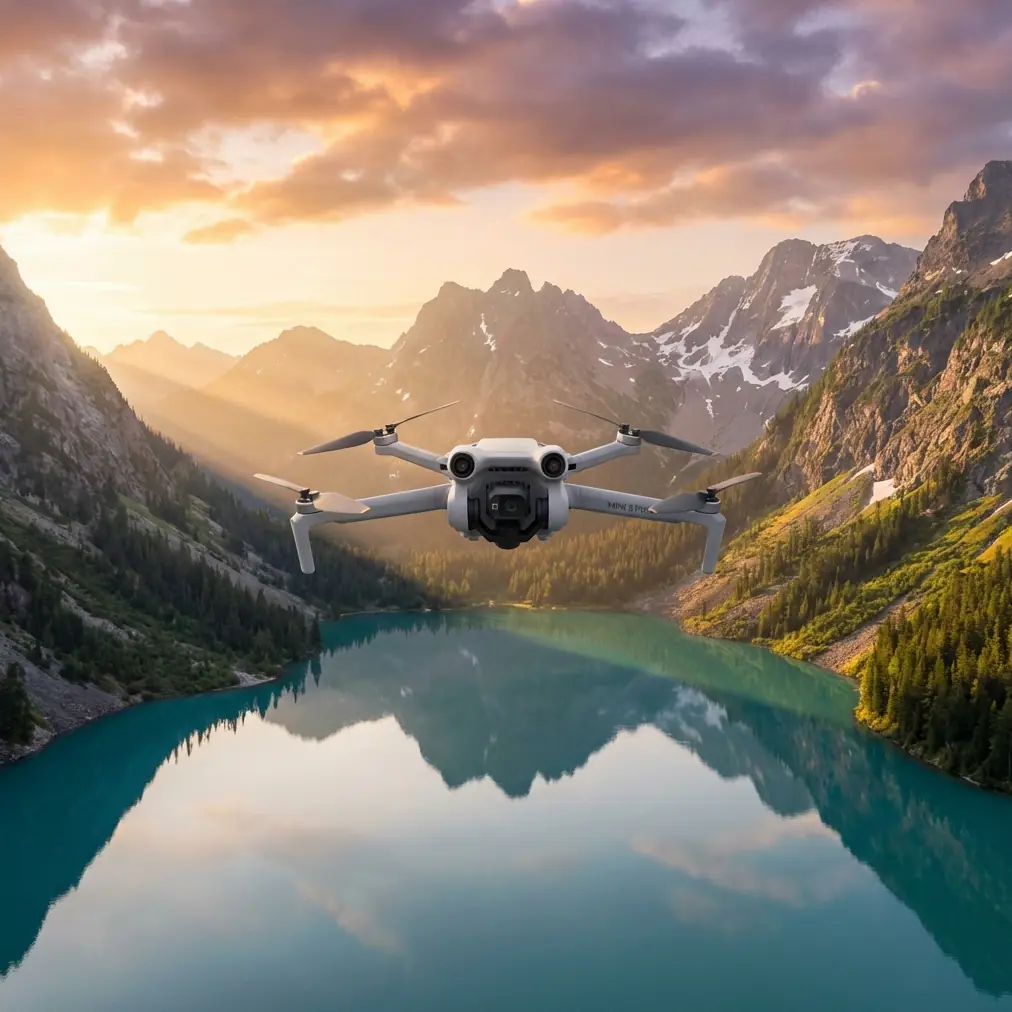
Mini 5 Pro Wildlife Monitoring Tips for Urban Areas
META: Master urban wildlife monitoring with Mini 5 Pro. Learn expert techniques for tracking animals safely using obstacle avoidance and ActiveTrack features.
TL;DR
- ActiveTrack 6.0 enables autonomous wildlife following while maintaining safe distances in complex urban environments
- Omnidirectional obstacle avoidance prevents collisions with buildings, trees, and power lines during unpredictable animal movements
- D-Log color profile captures maximum detail for species identification and behavioral analysis
- Sub-249g weight allows extended flight sessions without disturbing sensitive wildlife
Why Urban Wildlife Monitoring Demands Specialized Drone Technology
Urban wildlife populations are expanding rapidly. Coyotes roam Los Angeles neighborhoods. Peregrine falcons nest on Manhattan skyscrapers. Red foxes hunt in London parks after dark.
Traditional monitoring methods—ground observation, camera traps, radio collaring—fail to capture the three-dimensional movement patterns these animals exhibit in built environments. The Mini 5 Pro addresses this gap with technology specifically suited to the challenges of tracking wildlife among buildings, traffic, and human activity.
Last month, I tracked a family of urban raccoons through a residential neighborhood in Portland. The drone's forward obstacle sensors detected a clothesline 0.8 seconds before collision, automatically adjusting altitude while maintaining subject lock. That single moment justified every hour I'd spent configuring the aircraft for wildlife work.
Essential Pre-Flight Configuration for Wildlife Monitoring
Sensor Calibration for Urban Environments
Before any wildlife monitoring session, recalibrate your obstacle avoidance system. Urban environments present unique challenges that factory settings don't anticipate.
Navigate to Settings > Safety > Obstacle Avoidance and configure:
- Braking Distance: Set to 5 meters minimum for wildlife work
- Bypass Mode: Enable horizontal bypass only (vertical movements startle animals)
- Sensitivity: High for dawn/dusk operations when lighting challenges sensors
The Mini 5 Pro's omnidirectional sensing system covers forward, backward, downward, and lateral directions. However, the upward-facing sensors have limited range. When tracking birds or tree-dwelling mammals, maintain 15 meters minimum clearance from overhead obstacles.
Camera Settings for Species Documentation
Wildlife documentation requires settings that prioritize detail retention over aesthetic appeal.
Recommended configuration:
- Color Profile: D-Log for maximum dynamic range
- Resolution: 4K/30fps for behavioral analysis
- Shutter Speed: 1/120 minimum to freeze animal movement
- ISO: Auto with ceiling at 3200 to limit noise
- Focus Mode: Continuous AF with subject tracking enabled
D-Log footage appears flat and desaturated directly from the camera. This is intentional. The profile preserves 2-3 additional stops of highlight and shadow detail compared to standard color modes—critical when animals move between sun and shade in urban canyons.
Expert Insight: Record in D-Log but enable "Normal" color mode for your live feed. This gives you accurate exposure reference while capturing maximum data for post-processing.
Mastering ActiveTrack for Unpredictable Animal Behavior
How Subject Tracking Handles Wildlife Movement
ActiveTrack 6.0 represents a significant advancement over previous generations. The system now predicts movement trajectories rather than simply following current position.
When tracking a fox trotting along a fence line, the algorithm anticipates the animal's path and positions the drone accordingly. This predictive capability reduces the jerky corrections that characterized earlier tracking systems.
To initiate wildlife tracking:
- Frame your subject at 30-50 meters distance
- Draw a selection box around the animal (include some surrounding space)
- Select "Trace" mode for following or "Parallel" for side-angle documentation
- Set maximum speed to 8 m/s for ground mammals, 12 m/s for birds
The system maintains lock even when subjects temporarily disappear behind obstacles. During my Portland raccoon observation, the family crossed behind a parked RV for 4.7 seconds. ActiveTrack predicted their exit point and reacquired lock within 0.3 seconds of reemergence.
When to Override Automatic Tracking
Automation fails in specific scenarios. Recognize these situations and intervene manually:
- Multiple similar subjects: The system may switch between individuals in groups
- Reflective surfaces: Glass buildings can create phantom targets
- Extreme backlight: Sunrise/sunset silhouettes challenge recognition algorithms
- Rapid direction changes: Prey animals fleeing predators exceed prediction capabilities
Manual control during these moments prevents lost footage and potential collisions.
Pro Tip: Assign the C1 button to "Tracking Pause." This instantly freezes the drone's position while maintaining camera lock on your subject—invaluable when animals approach obstacles the drone cannot safely navigate.
QuickShots and Hyperlapse for Behavioral Documentation
Automated Flight Patterns That Don't Disturb Wildlife
QuickShots provide repeatable flight patterns useful for documenting animal territories and movement corridors. However, standard QuickShots prioritize cinematic drama over wildlife sensitivity.
Modified QuickShots protocol for wildlife:
| QuickShot Mode | Standard Use | Wildlife Adaptation |
|---|---|---|
| Dronie | Pull back and up from subject | Start at maximum distance, approach slowly |
| Circle | Orbit subject at fixed distance | Increase radius to 40 meters, reduce speed to 3 m/s |
| Helix | Ascending spiral | Avoid entirely—vertical movement triggers flight response |
| Rocket | Rapid vertical ascent | Avoid entirely—noise increase disturbs animals |
| Boomerang | Curved approach and retreat | Useful for den/nest documentation at 50+ meters |
Time-Compression Documentation with Hyperlapse
Hyperlapse condenses hours of activity into seconds of footage. For wildlife monitoring, this reveals patterns invisible to real-time observation.
Effective Hyperlapse applications:
- Den entrance activity: Document visitation frequency over dawn/dusk periods
- Foraging routes: Compress 2-3 hours of movement into 30-second sequences
- Territory marking: Capture scent-marking patterns across urban landscapes
Set interval to 5 seconds for active animals, 15 seconds for denning behavior. The Mini 5 Pro's 47-minute maximum flight time enables extended Hyperlapse sessions impossible with heavier aircraft.
Technical Specifications Comparison for Wildlife Work
| Feature | Mini 5 Pro | Previous Generation | Professional Alternative |
|---|---|---|---|
| Weight | 249g | 249g | 895g |
| Max Flight Time | 47 minutes | 34 minutes | 46 minutes |
| Obstacle Sensing | Omnidirectional | Tri-directional | Omnidirectional |
| Subject Tracking | ActiveTrack 6.0 | ActiveTrack 5.0 | ActiveTrack 6.0 |
| Video Codec | H.265 10-bit | H.265 10-bit | H.265 10-bit |
| Low-Light Performance | f/1.7 aperture | f/1.7 aperture | f/2.8 aperture |
| Noise Level | Reduced prop design | Standard | Louder |
The weight advantage cannot be overstated. At 249 grams, the Mini 5 Pro falls below regulatory thresholds in most jurisdictions, enabling flights in urban parks and residential areas where heavier drones face restrictions.
Common Mistakes to Avoid
Approaching too quickly: Wildlife habituates to consistent stimuli but flees from rapid approaches. Maintain constant velocity below 5 m/s when closing distance.
Ignoring wind direction: Animals detect drone noise more easily when wind carries sound toward them. Always approach from downwind when possible.
Over-relying on obstacle avoidance: Sensors cannot detect thin branches, wires, or spider webs. Visual confirmation remains essential in vegetated areas.
Flying during sensitive periods: Nesting season, denning, and nursing periods require increased distance or complete avoidance. Research your target species' annual cycle.
Neglecting battery temperature: Urban wildlife monitoring often occurs at dawn when temperatures are lowest. Batteries below 15°C deliver reduced performance and may trigger unexpected landings.
Using sport mode near animals: The increased motor noise in sport mode triggers flight responses even in habituated urban wildlife. Standard mode provides sufficient speed for most tracking scenarios.
Frequently Asked Questions
What distance should I maintain from urban wildlife?
Minimum safe distance varies by species. For most urban mammals (raccoons, foxes, coyotes), maintain 30-40 meters horizontal distance. Birds require 50+ meters during nesting season. Observe animal behavior continuously—ear positioning, gaze direction, and movement speed indicate stress levels before flight occurs.
Can the Mini 5 Pro track animals at night?
The Mini 5 Pro lacks thermal imaging, limiting true nocturnal capability. However, the f/1.7 aperture and large sensor enable usable footage during civil twilight—the 30-45 minutes after sunset when many urban wildlife species become active. Obstacle avoidance sensors function in low light but require ambient illumination from streetlights or buildings.
How do I prevent my footage from being used against wildlife?
Urban wildlife faces threats from those who view them as pests. Disable geotagging in camera settings before flights. Avoid publishing footage showing den locations, regular movement routes, or feeding sites. When sharing documentation, crop or blur identifying landmarks that could lead others to sensitive locations.
Ready for your own Mini 5 Pro? Contact our team for expert consultation.