
Mini 5 Pro in Remote Vineyards: A Field Report on Control
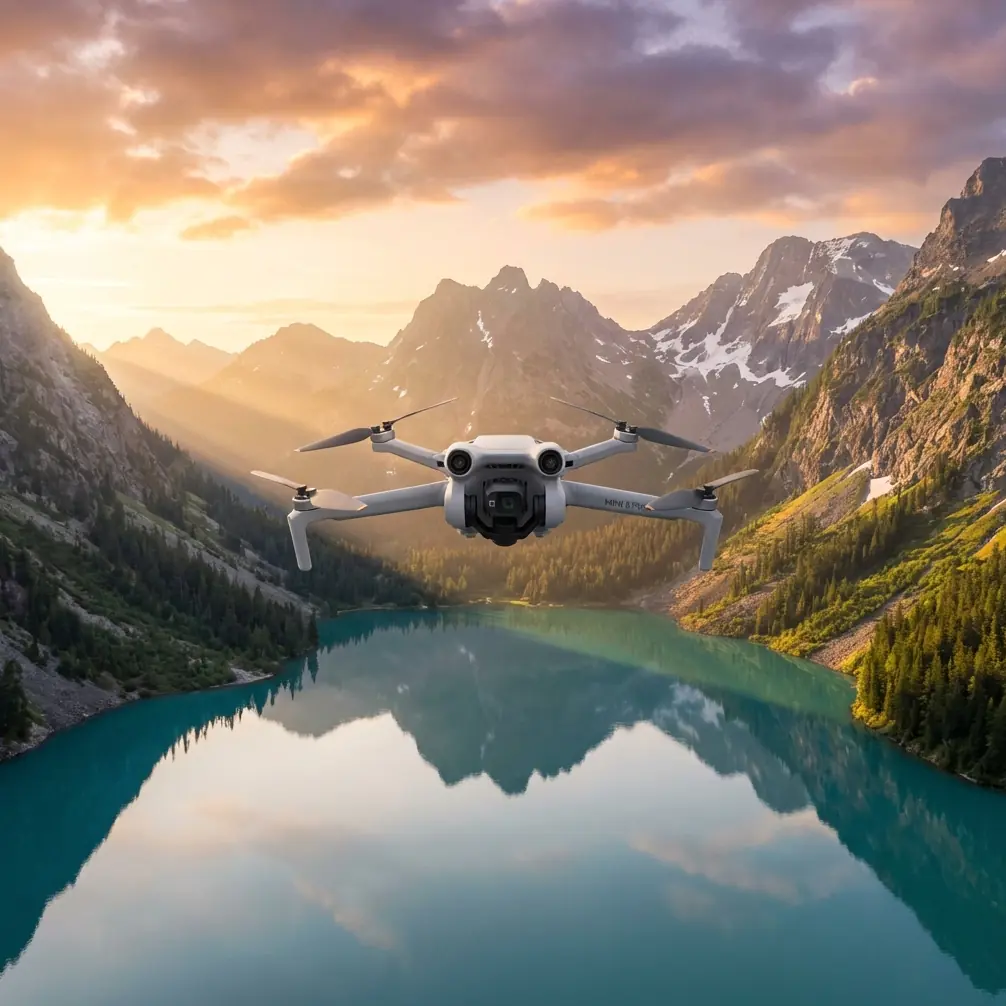
Mini 5 Pro in Remote Vineyards: A Field Report on Control, Telemetry, and Reliable Range
META: Expert field report on using Mini 5 Pro for remote vineyard monitoring, with practical range advice, mission planning insights, telemetry lessons, and workflow ideas grounded in proven autopilot concepts.
Remote vineyard work exposes the truth about small drones very quickly. Not in a studio. Not over a parking lot. Out where rows fold over hillsides, signal paths get messy, and every battery cycle has to count.
That is where the Mini 5 Pro becomes interesting.
Not because it is small. Plenty of drones are small. What matters is whether a compact aircraft can deliver repeatable aerial intelligence when you are checking irrigation drift, spotting weak blocks, watching canopy variation, or documenting access roads after weather shifts. In that setting, the best results usually come from combining modern flight convenience with older, proven discipline around telemetry, mission logic, and operator setup.
That is the lens I used in this field report.
What a remote vineyard actually demands from a Mini 5 Pro
A vineyard is a deceptively hard environment for light UAV operations. The distances may not look extreme on a map, yet the terrain can stretch a signal path in ways beginners do not expect. A single ridge line, a cluster of cypress trees, a metal shed, or the operator standing too low on a slope can reduce range long before the aircraft reaches the far block.
That is why range is rarely just a specification issue. It is a control-and-link issue.
One useful reminder comes from a much earlier autopilot ecosystem: APM 2.8.0. Even though it belongs to another generation of flight control hardware, its design philosophy still maps surprisingly well to Mini 5 Pro operations. APM emphasized a full-duplex wireless data link between the ground station and the aircraft, not just one-way control. Operationally, that matters because vineyard monitoring is not only about sending the drone out. It is about getting stable telemetry back, adjusting parameters when conditions shift, and maintaining confidence in the aircraft’s state while it is over a distant row.
That mindset is still relevant now. If you are flying a Mini 5 Pro over remote vines, you should think in terms of link quality, return path integrity, and live situational awareness—not simply “how far can it go.”
The range mistake I see most often: poor antenna geometry
Most range complaints in vineyard work start on the ground, in the pilot’s hands.
Here is the simplest advice I give crews: do not point the flat face or tips of the antennas directly at the drone if the antenna design expects side exposure for strongest radiation pattern. In practical terms, you want the controller oriented so the strongest part of its transmission pattern is facing the aircraft’s position, especially when the drone is flying low along rows or crossing behind terrain undulations.
Even small orientation errors matter more in vineyards because the aircraft often flies relatively low to capture useful crop detail. Low altitude increases the odds of partial blockage by vines, slope, outbuildings, tree lines, and utility structures. If you are standing downslope from the aircraft, your own body can also degrade the link.
My field routine is simple:
- Stand at the highest practical launch point with a clear forward view.
- Face the active flight sector before takeoff.
- Keep the controller stable rather than constantly twisting it.
- Reorient your body gradually as the drone changes sector so antenna alignment stays consistent.
- Avoid standing near vehicles, metal fencing, pump sheds, or large irrigation equipment during the outbound leg.
This sounds basic, but the difference can be dramatic. On remote agricultural properties, operators often blame the aircraft when the real issue is launching from a poor RF position.
Why old autopilot logic still improves a modern Mini 5 Pro workflow
The APM reference highlights something many casual pilots overlook: a drone system becomes much more useful when paired with a strong ground control workflow. In that older platform, operators could use software such as Mission Planner or HK GCS for mission planning, in-flight parameter changes, log review, and broader system oversight. There was even support for more than one hundred 3D waypoints in autonomous task planning.
That detail matters for vineyard monitoring because repeatability is everything.
A grower does not just want pretty imagery. They want comparisons:
- the same access road after rain,
- the same western slope during heat stress,
- the same drainage line after irrigation changes,
- the same perimeter row after animal intrusion or fence repairs.
Even if the Mini 5 Pro workflow differs from legacy APM mission design, the operational lesson is identical: build repeatable flight geometry. Use fixed launch points. Use consistent headings. Revisit the same altitude bands. Match time-of-day lighting when possible. Keep your camera profiles predictable if you want meaningful visual comparison across dates.
This is also where D-Log can be useful. Not because every vineyard manager wants to grade footage like a filmmaker, but because a flatter profile can preserve highlight and shadow detail during harsh midday conditions. If you are comparing canopy density across mixed light, preserving image latitude gives you more room in post to normalize scenes without crushing subtle detail.
Obstacle avoidance is helpful, but vineyard structure can confuse bad habits
Mini-class aircraft with obstacle sensing make pilots brave very quickly. Sometimes too quickly.
In vineyards, obstacle avoidance is genuinely useful around trellis ends, tree breaks, utility poles, wind machines, and scattered infrastructure. It can help during lateral repositioning between blocks, especially when your attention is split between framing and flight path.
But it should not become a substitute for route planning.
Rows create visual repetition. Repetition tricks depth judgment. A pilot threading along vines may feel clear while actually drifting toward wires, netting, or edge vegetation. In that context, obstacle avoidance is a backup layer, not your primary method.
The better approach is to map the block mentally before launch:
- identify elevated hazards,
- note the cross-slope direction,
- pick a clean emergency hover area,
- know where a return path remains line-of-sight.
That last point ties back to old APM discipline. The legacy system’s attraction was not only autonomy features like automatic return or waypoint flight. It was the broader concept of structured operation. Bring that same structure to the Mini 5 Pro and vineyard flights become calmer, safer, and more productive.
Subject tracking and ActiveTrack: useful, but selective
There are good reasons to use ActiveTrack or subject tracking in vineyard operations, just not in the way social media pilots usually do.
For example, if a worker is moving slowly along a damaged irrigation segment or driving a utility vehicle through a remote section, subject tracking can help document the path while allowing the pilot to focus more on terrain clearance and composition. That can be valuable for maintenance records or progress checks.
Where it gets less useful is in dense row environments with repeating patterns and periodic occlusions. A person or vehicle can disappear behind trellis structures, vegetation, or topographic folds. Tracking features may recover gracefully, or they may hunt.
My rule: use tracking in open service corridors, edge roads, and perimeter passes. Use manual control inside visually repetitive vine structure.
QuickShots and Hyperlapse also have a place, but not as gimmicks. A short orbit or timed sequence can help a grower visualize block shape, slope exposure, and access constraints in a way flat stills sometimes cannot. Hyperlapse from a stable overlook can show fog retreat, crew movement, or irrigation activity over time. Used sparingly, these modes can communicate site conditions more effectively than a stack of disconnected images.
What telemetry discipline looks like in the field
One of the strongest ideas in the APM material is support for two-way telemetry through MAVLink, with real-time command and status exchange. The modern Mini 5 Pro ecosystem is different, but the operating principle remains gold: the flight is only as good as your awareness of the aircraft’s condition and link status.
In a remote vineyard, telemetry discipline means watching trends, not just warnings.
I pay attention to:
- signal consistency, not only whether bars are present,
- wind effect on groundspeed across slope lines,
- battery consumption during outbound low-altitude inspection legs,
- return path visibility before committing to the farthest block,
- altitude margin when terrain rises toward the aircraft.
If you wait for a dramatic alert, you are already behind.
This is one reason I still respect the old APM mindset. Those systems taught operators to think like system managers, not just camera users. Even the hardware list tells a story. APM 2.8.0 used an ATMEGA2560 8-bit MCU, a six-axis MPU6000 IMU, an MS-5611 barometric sensor, and 16MB onboard storage. By today’s standards, that is modest. Yet it was enough to build a practical, data-aware aircraft workflow because the operator was expected to understand what the aircraft was doing, record it, and improve the mission from one flight to the next.
That attitude transfers beautifully to Mini 5 Pro vineyard work. The smartest operators review flights, compare patterns, and tighten procedures each visit.
Simulation matters more than people think
The APM reference also mentions full support for X-Plane and FlightGear semi-hardware simulation. That is not a nostalgic footnote. It points to a training philosophy the small-drone industry still undervalues.
If your vineyard site includes sloped launch zones, narrow road corridors, or intermittent visibility behind tree belts, training should happen before the real mission. Even if you are not using those exact simulation tools with a Mini 5 Pro setup, the principle is obvious: rehearse the route logic, camera tasks, return scenarios, and signal recovery decisions before the aircraft is over a live agricultural asset.
That matters for teams. A grower, agronomist, or operations manager may assume the drone flight is the easy part. It often is not. The camera task is easy. The disciplined repeat mission is hard.
A practical vineyard flight template for Mini 5 Pro
When I am using a compact drone for recurring vineyard checks, I build the mission around three passes.
1. The high reconnaissance pass
Start with a broad overview from a safe altitude. This verifies wind, checks the condition of perimeter roads, and reveals any unexpected obstacles or field activity. It also gives you a reference map for the lower passes.
2. The low structural pass
Fly along key rows, drainage lines, trellis edges, and known problem areas. This is where antenna positioning and line-of-sight discipline matter most. Keep the controller aligned with the aircraft’s sector and avoid letting terrain crest between you and the drone.
3. The repeatable documentation pass
This is the money pass. Same route, same approximate altitude, same camera logic each visit. If the aim is trend analysis, repeatability beats improvisation every time.
If you need help setting up a vineyard-friendly workflow or tightening your field range habits, this direct support line can save time: https://wa.me/85255379740
Why Mini 5 Pro makes sense for this job
The strongest case for Mini 5 Pro in remote vineyard monitoring is not that it replaces larger agricultural UAVs. It does not. Instead, it fills a very useful middle ground.
It is fast to deploy. It is less disruptive around crews. It can capture frequent visual checks without turning every inspection into a major operation. And with careful controller orientation, terrain awareness, and repeatable mission design, it can perform far beyond what many operators expect from a compact platform.
The real separator is pilot behavior.
If you fly it like a casual camera toy, vineyard results will be inconsistent. If you fly it with the discipline that older systems like APM demanded—structured planning, telemetry awareness, waypoint thinking, and respect for the data link—the Mini 5 Pro becomes a serious monitoring tool.
That is the lesson I keep coming back to in the field. New aircraft, yes. Better imaging, yes. Smarter avoidance and tracking, absolutely. But range, reliability, and operational value still come down to fundamentals: line of sight, antenna geometry, stable telemetry, and repeatable missions.
In remote vineyards, fundamentals always win.
Ready for your own Mini 5 Pro? Contact our team for expert consultation.