
Mini 5 Pro in Complex Vineyard Terrain: What Power
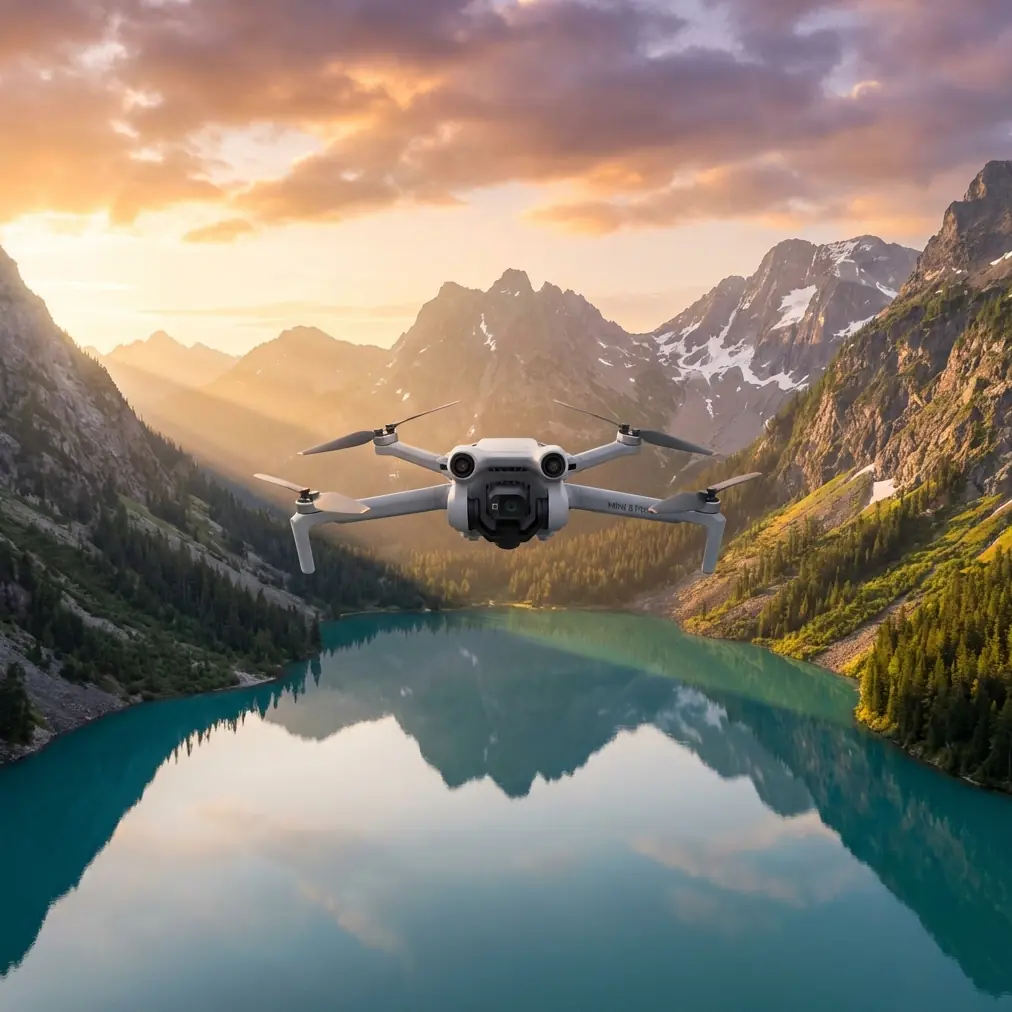
Mini 5 Pro in Complex Vineyard Terrain: What Power-Line LiDAR Work Teaches Us About Reliable Monitoring
META: A field-style case study on how Mini 5 Pro fits vineyard monitoring in steep, uneven terrain, using proven lessons from drone LiDAR post-processing, sensor alignment, and flight workflow discipline.
I’ve spent enough time around camera drones to know that most conversations about “terrain capability” stay shallow. People talk about obstacle avoidance, subject tracking, or color profiles like D-Log, then stop there. Useful features, yes. But when you’re monitoring vineyards spread across slopes, terraces, tree lines, and narrow service tracks, the real issue is not whether a drone can simply fly there. The issue is whether the data coming back is consistent enough to trust over time.
That’s where an unlikely reference point becomes valuable: a drone LiDAR solution built for power-line inspection. On paper, that sounds far removed from vineyard operations and far beyond what a Mini 5 Pro owner might care about. In practice, the underlying discipline is exactly the lesson.
The reference material lays out a very specific processing logic for aerial survey work. It describes a complete raw data acquisition sequence as:
initial alignment -> accuracy convergence -> survey area collection -> accuracy convergence -> initial alignment
It also specifies that post-processing software can perform forward and backward combined solutions, and that this dual-direction method improves final precision. For the backward pass to work correctly, the operator repeats the convergence and alignment steps after the survey segment. Another detail matters just as much: the base-station recording window must fully cover the mobile station’s recording window, with the mobile unit starting later and stopping earlier, and the shortest acquisition duration cited is half an hour.
If you only see that as technical GNSS housekeeping, you miss the bigger point. In rugged vineyard terrain, repeatability comes from workflow structure, not just aircraft specs.
Why this matters for a Mini 5 Pro user
The Mini 5 Pro, in the kind of scenario many growers and consultants actually face, is rarely being used as a pure cinematic toy. It becomes a lightweight observation platform. You fly rows cut into hillsides. You inspect canopy variability. You revisit problem blocks after irrigation events or heavy wind. You compare morning and late-afternoon flights for shadows, disease visibility, and access conditions. In those moments, the aircraft’s small size is an advantage, but only if the mission design is disciplined.
This is where the Mini 5 Pro can outperform larger or more complicated competitors for routine monitoring: not because it carries LiDAR, but because it lowers the friction of flying often. And frequent flights, if done consistently, can produce better operational insight than occasional “perfect” missions with heavier systems.
Still, frequency without method creates messy records. The power-line LiDAR workflow reminds us that entering and exiting a mission cleanly matters. Even on a camera-based aircraft, a rushed launch directly over the block and a random return path can make comparison flights less useful. A deliberate pre-pass, a stable acquisition segment, and a measured exit improve continuity. The idea is the same even if the hardware is different.
A vineyard case: steep rows, mixed lighting, uneven access
Picture a terraced vineyard on broken ground. The upper rows are exposed and dry faster. Lower sections hold moisture and can show denser growth, sometimes with greater fungal pressure. Wind behaves differently along each contour. A dirt service road cuts between blocks, with cypress windbreaks near one edge and utility lines in the distance.
This is a strong match for a Mini 5 Pro workflow because the aircraft can be deployed quickly and repeatedly without turning a simple monitoring task into a logistics event. Obstacle avoidance becomes more than a convenience here. In constrained terrain, especially where row ends meet trees, trellis structures, or rising ground, it reduces the mental load on the pilot and allows more attention to framing, consistency, and route discipline.
Subject tracking and ActiveTrack can also be useful, though not in the way lifestyle drone marketing usually frames them. In a vineyard, the “subject” is often a moving utility vehicle, an ATV checking irrigation, or a worker path that needs to be documented relative to terrain and vine condition. Tracking tools help maintain coherent visual context across slopes where manual framing can drift. That matters if the footage is being reviewed later by a farm manager, agronomist, or operations team rather than posted online.
QuickShots and Hyperlapse sound secondary in a serious monitoring conversation, but they have a place. A short programmed movement at the same vantage point every week can create a practical visual record of canopy development, road erosion, drainage changes, or the progress of a block under different treatments. Hyperlapse is especially effective when your goal is to show how shadow movement affects inspection visibility across a steep site. That is not decoration. It informs scheduling.
The hidden lesson from LiDAR360: one frame of reference
One of the strongest details in the source material is the requirement to unify GPS, IMU, and LiDAR sensor origins into a single reference coordinate system, while also placing the entire sensor suite on a common time basis. The document is explicit: without a unified spatial reference and unified time reference, integrated processing is compromised.
For a vineyard operator using a Mini 5 Pro, that principle translates into something surprisingly practical.
Your imaging, your flight path, your timing, and your ground notes need to line up. If a drone video shows weak vigor on a slope but your field notes are from a different row pass or a different time window with changed sun angle, interpretation becomes shaky. If one flight is done at 8:00 and the comparison flight a week later is done near sunset, you may confuse lighting variation with canopy change. The professional takeaway is not “buy LiDAR.” It is “treat every monitoring mission like a data-collection event with a stable frame of reference.”
That’s where Mini 5 Pro has an edge over some rivals in real farm use. Larger systems may offer more payload options, but they often reduce the willingness to fly short, repeatable checks. A compact platform that can be put in the air at the same overlook, at the same approximate height, along the same corridor, week after week, often delivers a better decision record. Reliability in agriculture is often behavioral before it is technical.
Borrowing survey discipline without overcomplicating the mission
The source outlines the POS processing chain in a clear sequence: raw data conversion, GNSS solution, GNSS/INS combined solution, smoothing, and output. It even mentions trajectory results overlaid with Google Earth. That progression is useful as a mindset for vineyard monitoring.
A Mini 5 Pro operator can adapt it in a simplified way:
Capture cleanly
Start from a repeatable launch point. Let the aircraft stabilize. Don’t begin the useful pass in a rush.Fly a defined observation corridor
Follow row edges, contour lines, or known block boundaries. Avoid wandering simply because the drone is easy to maneuver.Exit deliberately
Just as the power-line workflow repeats convergence and alignment after collection, a camera mission benefits from a stable outro segment. This gives you cleaner ending frames, better continuity, and more confidence if you are comparing motion and perspective later.Review and smooth the interpretation
You may not be smoothing GNSS/INS data in Inertial Explorer, but you are smoothing operational judgment. Compare with prior imagery, field notes, irrigation logs, and visible terrain effects.
That final step is where many small-drone users fall short. They think the flight is the job. It isn’t. The flight is only the acquisition layer.
Why D-Log matters more in vineyards than many expect
D-Log earns its reputation mostly among filmmakers, but vineyards in complex terrain are one of the best non-cinematic examples of why a flatter profile matters. On steep sites, you often have bright sky, reflective soil, dark canopy pockets, and shadowed access roads in the same frame. Standard profiles can clip highlights or crush the under-vine detail you actually need to examine.
With D-Log, the Mini 5 Pro can preserve more tonal information for later review. That becomes useful when trying to distinguish between true stress patterns and visual artifacts caused by contrasty midday conditions. It also helps when comparing footage from different weather windows. You’re not chasing “beautiful color.” You’re protecting interpretability.
Against competitors that may force more compromises in portability, setup speed, or routine deployment, the Mini 5 Pro’s practical advantage is that you’re more likely to fly the mission when conditions are right. In agriculture, the best aircraft is often the one that gets used at the correct moment.
Obstacle avoidance is not just about safety
On terraced or irregular land, obstacle avoidance contributes directly to data quality. If the aircraft can hold a smoother route near row ends, poles, trees, or elevation changes, your footage becomes easier to compare from one session to the next. Abrupt pilot corrections create irregular perspective shifts, which makes side-by-side analysis harder.
This is one of those places where the “consumer” label undersells the operational value of a compact drone. In vineyard monitoring, smooth and repeatable often beats complex and occasional.
A better use of automated modes
Many operators either over-trust automated modes or dismiss them entirely. The better approach is selective use.
- ActiveTrack can maintain consistent framing on a moving inspection vehicle crossing uneven terrain.
- QuickShots can standardize short reveal arcs from the same overlook, producing repeatable visual benchmarks.
- Hyperlapse can document changing light, fog movement, or work activity across a hillside block.
- Obstacle avoidance supports cleaner route integrity in tighter sections.
Used this way, automation is not a shortcut. It is a consistency tool.
The operational significance of timing
The source document’s insistence on a common time reference is not a niche survey concern. It has direct relevance in vineyards. Disease scouting, irrigation assessment, and canopy comparison all depend on timing discipline. A flight made after a moisture event is not directly comparable to one made before it. A route flown with long shadows can reveal structure and drainage differently than the same route at noon.
That is why I’d argue one of the smartest ways to use a Mini 5 Pro is to establish recurring windows: same day-part, similar weather, same launch point, same direction of travel. The aircraft’s lightweight portability makes that realistic. More elaborate drones often fail not in performance, but in repeatability of use.
If you’re building a practical workflow and want to sanity-check route design or repeatability standards for your site, a quick message through this vineyard drone planning channel can save a lot of trial and error.
What the power-line LiDAR workflow gets exactly right
The reference is built for a much more technical sensing stack, but its strongest idea is universal: good aerial decisions begin with disciplined alignment of motion, time, and reference.
For power-line LiDAR, that means:
- a defined acquisition order,
- forward and backward post-processing,
- base and mobile data overlap,
- unified spatial coordinates,
- unified time coordinates.
For Mini 5 Pro vineyard monitoring, the translation is:
- launch consistently,
- fly repeatable paths,
- preserve timing discipline,
- keep visual references stable,
- compare results in context rather than isolation.
That is how a small drone starts acting like a serious field tool.
The market tends to celebrate aircraft that add complexity. My view is different. In complex terrain, the Mini 5 Pro excels when it removes friction from disciplined observation. That is the real advantage. Not spectacle. Not feature-sheet inflation. Reliable monitoring that a grower, consultant, or content-focused estate manager can repeat often enough to matter.
And that, oddly enough, is the same principle sitting underneath a power-line LiDAR solution on pages 6 through 10 of a technical workflow document: precision is not only a hardware outcome. It is a process outcome.
Ready for your own Mini 5 Pro? Contact our team for expert consultation.