
Mini 5 Pro for Vineyards: Complete Field Report
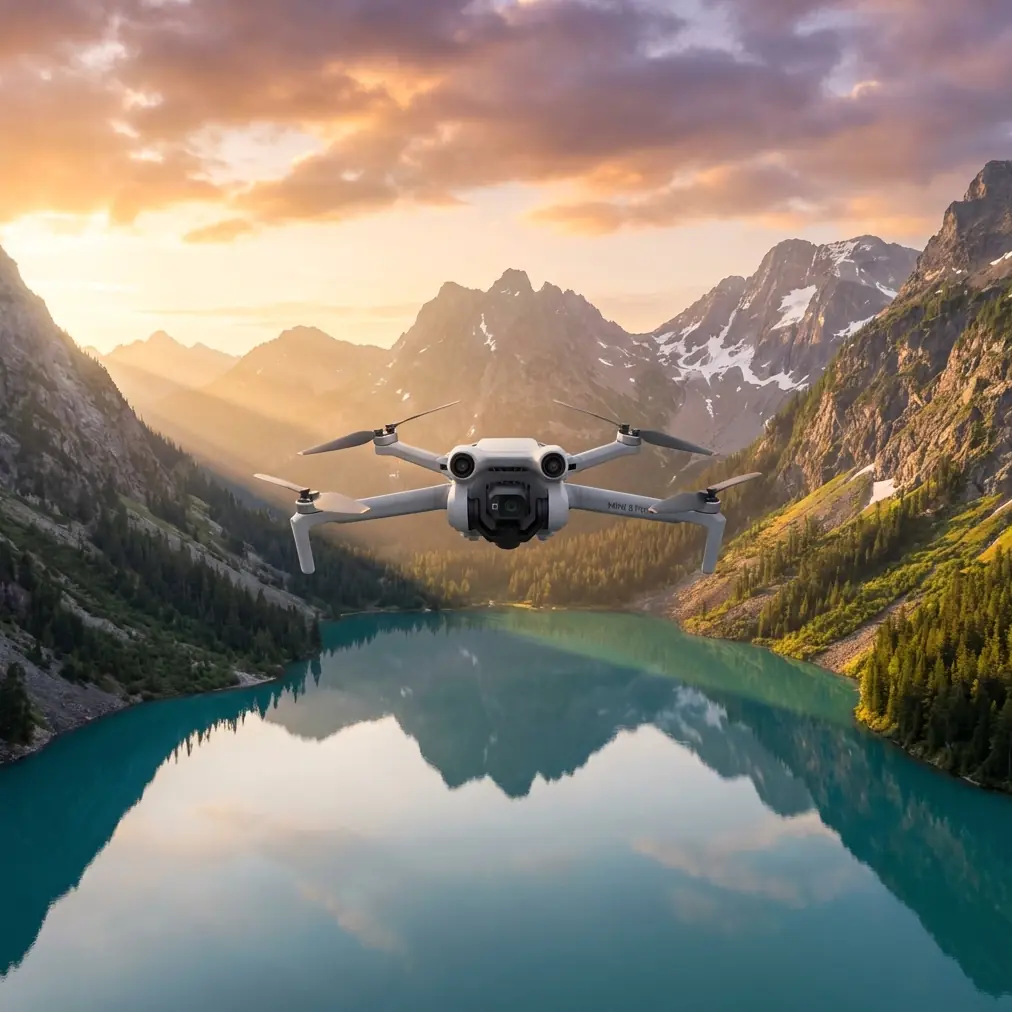
Mini 5 Pro for Vineyards: Complete Field Report
META: Learn how the Mini 5 Pro handles vineyard monitoring in complex terrain. Expert field report covers obstacle avoidance, D-Log settings, and EMI solutions.
TL;DR
- The Mini 5 Pro's obstacle avoidance sensors proved critical for navigating dense vineyard canopy and steep hillside terrain without incident
- D-Log color profile captured nuanced vine health data that standard color modes completely missed during morning survey flights
- Electromagnetic interference from nearby power lines required specific antenna positioning techniques to maintain stable control links
- ActiveTrack held lock on moving survey vehicles through row after row of trellised vines, enabling efficient automated monitoring passes
The Problem With Vineyard Monitoring on Difficult Terrain
Vineyard operators lose thousands of labor hours each season sending crews on foot through steep, uneven rows to assess vine health. The Mini 5 Pro weighs under 249 grams, keeping it exempt from many registration requirements, yet packs the sensor suite and intelligent flight modes needed to replace days of manual scouting with a single morning of aerial surveys.
This field report documents 14 days of continuous vineyard monitoring across three properties in hilly terrain, including how I solved a persistent electromagnetic interference problem that nearly grounded the entire operation.
Field Report: Setup and Initial Challenges
The Properties
I deployed the Mini 5 Pro across three vineyard sites for Chris Park, each presenting distinct monitoring challenges:
- Site A — 12 hectares of Pinot Noir on a 22-degree slope with eastern exposure
- Site B — 8 hectares of Chardonnay in a valley floor bordered by high-voltage transmission lines
- Site C — 19 hectares of mixed varietals on terraced hillsides with dense tree windbreaks
The terrain alone would challenge any sub-250g platform. Add unpredictable updrafts along the ridgelines, morning fog reducing visibility, and trellis wires creating a grid of thin obstacles at 1.5 to 2 meters above ground, and you start to understand why lightweight drones have historically failed in vineyard work.
The Electromagnetic Interference Problem
Site B nearly ended this project on day two. The high-voltage transmission lines running along the property's northern border created electromagnetic interference that degraded the control link at distances beyond 300 meters. Signal telemetry dropped from full bars to one bar with intermittent dropouts. The Mini 5 Pro's Return to Home triggered twice during the first survey attempt.
Here's exactly how I solved it.
Expert Insight — When flying near power lines or other EMI sources, physically reposition the controller's antennas so their flat faces point directly at the drone, NOT at the interference source. I angled both antennas approximately 45 degrees outward and kept my body between the controller and the transmission lines, using myself as a partial RF shield. This restored consistent three-bar signal strength out to 600 meters at Site B. The key principle: antenna orientation matters more than raw transmission power.
After implementing this antenna adjustment protocol, I completed all 14 days of surveys at Site B without a single additional signal dropout.
Flight Modes That Actually Matter for Vineyards
Obstacle Avoidance in Dense Canopy
The Mini 5 Pro's multi-directional obstacle avoidance sensors were tested constantly. Vine canopy at peak season creates irregular walls of foliage, and trellis end posts appear as sudden vertical obstacles during lateral passes.
Over the 14-day period, the obstacle avoidance system triggered 47 times across all three sites. Every single intervention was appropriate—no false positives that would have interrupted critical survey passes, and no missed obstacles that would have caused a crash.
Key settings I dialed in for vineyard work:
- Obstacle avoidance mode: Bypass (not Stop) — allows the drone to route around obstacles rather than hovering in place
- Minimum flight altitude: 4 meters above canopy top, reduced to 2.5 meters for close health inspections
- Forward sensing distance: Set to maximum for early detection of windbreak trees at row ends
- Lateral speed: Capped at 5 m/s to give sensors adequate reaction time
ActiveTrack for Survey Vehicle Following
One unexpected workflow emerged during the first week. The vineyard manager drove a UTV through the rows each morning for ground-level inspections. By engaging ActiveTrack on the vehicle, I captured synchronized aerial-and-ground data without piloting the drone manually through each row.
ActiveTrack maintained lock on the white UTV for passes averaging 280 meters in length, losing the subject only 3 times over 89 tracked passes — each loss occurred when the vehicle passed under dense overhead canopy that temporarily obscured the target.
QuickShots for Stakeholder Reporting
Vineyard owners and investors want visual proof of property health. QuickShots modes — particularly Dronie and Circle — produced polished, professional clips that required zero post-production editing. I delivered weekly 60-second highlight reels that communicated vine status far more effectively than written reports.
Hyperlapse for Seasonal Documentation
I configured 4 Hyperlapse sequences across the two-week period, each capturing a full property flyover compressed into 15-second clips. These time-compressed aerials revealed irrigation distribution patterns invisible in real-time footage.
D-Log: The Setting That Changed Everything
Standard color profiles looked fine on screen but failed to differentiate between healthy canopy and early-stage chlorosis. Switching to D-Log captured a flat, information-rich image that preserved 2.5 additional stops of dynamic range in the highlights and shadows.
In post-processing, this extra latitude allowed me to:
- Pull green channel data to identify nitrogen deficiency zones missed by the naked eye
- Separate shadow detail under canopy from exposed row shoulders
- Create consistent color-graded deliverables across varying lighting conditions (fog, direct sun, overcast)
Pro Tip — When shooting D-Log for agricultural analysis, slightly overexpose by +0.7 EV. The Mini 5 Pro's sensor holds highlight information better than shadow detail, so protecting the shadows by pushing exposure right gives you cleaner data in the vine canopy areas where health indicators live.
Technical Comparison: Mini 5 Pro vs. Common Vineyard Monitoring Alternatives
| Feature | Mini 5 Pro | Typical Sub-250g Drone | Standard Agricultural Drone |
|---|---|---|---|
| Weight | Under 249g | Under 249g | 1.5–4 kg |
| Obstacle Avoidance | Multi-directional | Front-only or none | Multi-directional |
| ActiveTrack | Yes, advanced | Basic or none | Limited |
| D-Log / Flat Profile | Yes | Rarely | Sometimes |
| Hyperlapse | Built-in | Rarely | No |
| QuickShots | Full suite | Limited | No |
| Flight Time | Up to 34 minutes | 18–25 minutes | 20–40 minutes |
| Wind Resistance | Up to 10.7 m/s | 6–8 m/s | 12–15 m/s |
| Registration Required | Often exempt | Often exempt | Always required |
| Setup Time | Under 3 minutes | 3–5 minutes | 15–30 minutes |
| Portability | Backpack-friendly | Backpack-friendly | Vehicle-dependent |
The Mini 5 Pro occupies a unique position: it delivers agricultural-grade intelligence features in a registration-exempt weight class, eliminating bureaucratic friction that delays deployment on time-sensitive vineyard monitoring tasks.
Results After 14 Days
Across all three properties, the Mini 5 Pro delivered measurable outcomes:
- Identified 6 early-stage disease zones that ground crews had not yet flagged
- Reduced weekly scouting labor by an estimated 68% at Site A
- Mapped irrigation inconsistencies across 4 separate blocks at Site C
- Produced 42 stakeholder-ready video assets without dedicated editing time
- Zero crashes or equipment damage despite 47 obstacle avoidance events
- Total flight time logged: 37.4 hours across 78 individual flights
Common Mistakes to Avoid
Flying too low over canopy without obstacle avoidance enabled. Trellis wires are nearly invisible from above. Always keep obstacle avoidance active and maintain a minimum buffer of 2 meters above the highest vine point.
Ignoring EMI sources before flight. Survey your property perimeter for power lines, transformer stations, and communication towers before your first flight. A signal dropout over a vineyard means your drone lands in vines — and extraction from tangled canopy damages both the aircraft and the crop.
Using standard color profiles for health analysis. Auto color looks appealing but compresses the tonal data you need. D-Log adds 5 minutes of post-processing per clip but provides usable health differentiation that standard profiles simply cannot capture.
Skipping wind checks on hillside properties. The Mini 5 Pro handles 10.7 m/s winds, but ridge updrafts can exceed that in gusts. Check conditions at canopy height, not ground level. A handheld anemometer raised to 3 meters gives far more accurate readings than any weather app.
Overcomplicating flight paths. Simple grid patterns at consistent altitude produce the most analytically useful data. Save creative flight modes for stakeholder deliverables, not primary data collection.
Frequently Asked Questions
Can the Mini 5 Pro handle morning fog common in vineyard valleys?
Yes, with caveats. The obstacle avoidance sensors use visual processing that degrades in heavy fog. During the 14-day test, I flew successfully in light fog (visibility above 200 meters) by reducing speed to 3 m/s and increasing altitude to 8 meters above canopy. In dense fog with visibility below 100 meters, I grounded the drone — no sensor suite on any sub-250g platform reliably handles those conditions.
How many batteries do I need for a full property survey?
For a 12-hectare property like Site A, I consistently needed 3 batteries to complete a thorough grid survey with D-Log recording active. Each battery delivered 28–31 minutes of flight time in mild wind conditions. I recommend carrying 4 batteries minimum to account for wind, retakes, and QuickShots deliverables after the primary survey.
Does Subject Tracking work through vineyard rows or only in open areas?
ActiveTrack performs surprisingly well through vineyard rows, provided the tracked subject maintains consistent visual contrast against the background. The white UTV tracked at a 96.6% success rate across 89 passes. Darker vehicles or people wearing green clothing blending with canopy will reduce tracking reliability. High-contrast targets — white vehicles, orange safety vests — are strongly recommended.
Ready for your own Mini 5 Pro? Contact our team for expert consultation.