
Mini 5 Pro Best Practices for Remote Venue Monitoring
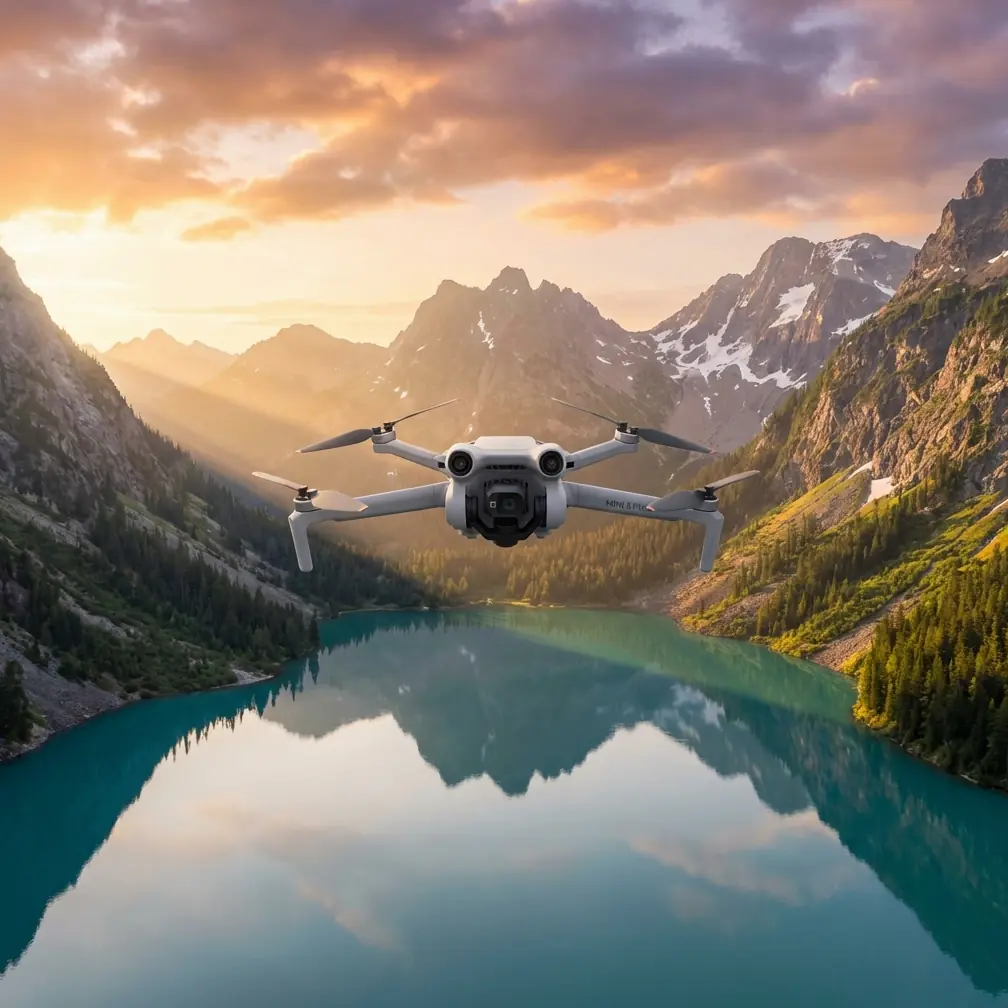
Mini 5 Pro Best Practices for Remote Venue Monitoring: What a 5G Coal Terminal Project Teaches Us
META: A practical Mini 5 Pro monitoring guide for remote venues, using lessons from a 5G-enabled coal terminal project with 3D pile modeling, centralized control, and layered collision protection.
Remote venue monitoring sounds simple until the site gets large, dusty, repetitive, and operationally expensive.
That is exactly why the most useful lessons for Mini 5 Pro users do not always come from filmmaking or hobby flying. Some of the sharpest insights come from industrial projects where a drone is only one part of a larger monitoring and control system. A strong example is the Zhuhai Port coal terminal project, where UAV data, 5G communications, 3D modeling, centralized visibility, and collision safeguards were combined to improve how a heavy-duty stockyard was managed.
If you are planning to use a Mini 5 Pro for monitoring remote venues—open yards, storage areas, event grounds, temporary worksites, utility staging zones, or large private facilities—this kind of case matters. Not because your operation is identical to a coal terminal, but because the operational logic transfers surprisingly well.
The terminal had 4 stacker-reclaimer rail beams and 10 major machines in the yard, including 8 stacker-reclaimers and 2 reclaimers. Their goal was not merely to “get drone footage.” They needed to automate oversight, centralize visibility, reduce labor strain, and make site activity easier to interpret from a control center. One of the key drone-driven functions was converting the shape of coal piles into 3D model data, then exchanging that data with servers over 5G. That single design choice tells us a lot about how to think about the Mini 5 Pro for remote monitoring today.
Start with the real job: turning visual data into operational decisions
Many Mini 5 Pro owners begin with camera features. That is understandable. But in remote venue monitoring, the camera is not the mission. Decision support is the mission.
In the Zhuhai terminal case, the bottleneck was not a lack of raw imagery. The site already had people, machines, and a process. The issue was inconsistency, fatigue, delayed awareness, and inefficient coordination. Operators had to constantly watch machine positions and working states. Auxiliary tasks like alignment, transfer steps, and returning equipment to position consumed time and extended vessel stays in port.
A Mini 5 Pro becomes far more valuable when you use it the same way: not as a flying observer, but as a fast data collector that helps someone act sooner and with better context.
For a remote venue, that usually means one of three things:
- Reconstructing the site in a way that reveals spatial changes
- Monitoring movement paths, congestion points, or access conditions
- Feeding a central dashboard or review workflow instead of trapping footage on a memory card
This is where the terminal’s 3D modeling approach becomes especially relevant. They used a combination of radar-based mathematical modeling, drone laser scanning, and drone stereo vision modeling to convert stockpile geometry into actionable data. Mini 5 Pro operators will not replicate that exact industrial stack on every job, but the principle holds: a drone flight should create a measurable output, not just a visual impression.
For remote venue work, that could be a repeatable orthographic pass, a structured perimeter scan, or a recurring elevated oblique route that lets you compare week-over-week change. If your Mini 5 Pro flights are not designed for comparison, they are much harder to use in management.
Why the Mini 5 Pro fits this kind of work
The Mini 5 Pro is attractive for remote monitoring because it lowers deployment friction. Smaller aircraft get into the air faster, are easier to pack into a field vehicle, and are far more realistic for routine site checks than heavier enterprise platforms. That matters when the venue is remote and the value of the operation lies in consistency.
A remote venue does not need a dramatic flight every month. It needs a reliable flight every Tuesday at 8:30 a.m.
This is where features often discussed in consumer terms—obstacle avoidance, ActiveTrack, subject tracking, QuickShots, Hyperlapse, and D-Log—need to be reinterpreted through an industrial lens.
- Obstacle avoidance matters less for cinematic confidence and more for reducing pilot workload near structures, masts, fencing, lighting poles, tree lines, or temporary installations.
- ActiveTrack and subject tracking can help document moving vehicles, maintenance teams, or logistics flow across a venue, especially when you need proof of pathing rather than an artistic clip.
- QuickShots are not the core of serious monitoring, but they can help produce consistent overview sequences for stakeholder updates when speed matters.
- Hyperlapse becomes useful when showing slow site transitions, queue buildup, crowd dispersal, weather changes, or construction progress over time.
- D-Log helps preserve tonal flexibility in mixed lighting, which matters when your footage may need post-analysis to distinguish surface conditions or activity zones.
The bigger point is this: the Mini 5 Pro can support remote venue monitoring best when its intelligent features reduce friction in recurring tasks.
Build your flights around centralized review, not pilot memory
One of the smartest elements in the Zhuhai project was the move toward a centralized control room. Operators were shifted from field exposure to remote monitoring in a concentrated environment. At the same time, control signals and operational data were carried back and forth over a 5G communication network. That architecture matters because it separates field collection from decision-making.
A Mini 5 Pro workflow for remote venues should mimic that structure even if your budget is much smaller.
Do not rely on the pilot to remember what happened. Build a central review habit:
- standard flight routes
- fixed camera angles for key zones
- recurring upload procedures
- named folders by date and area
- comparison screenshots
- short summary notes after each mission
The terminal project also emphasized visualization of operating, control, and equipment status data in one place. For a venue manager, the Mini 5 Pro should feed something similarly digestible. That may be as simple as a shared drive, a weekly annotated PDF, or a dashboard where stills, clips, and map references sit together.
If your site is truly remote and connectivity is unreliable, plan around delayed sync rather than trying to improvise every time. If you need a practical way to discuss setup options for field-to-office workflows, this Mini 5 Pro coordination channel is a clean starting point.
Use 3D thinking even when you are not doing full 3D modeling
The coal terminal’s use of drone-based 3D modeling was not cosmetic. Pile shape directly affected yard utilization and reclaim efficiency. Better geometry data meant better planning.
Remote venues have their own equivalent.
At a storage yard, material stacks change access and line of sight. At an event venue, temporary structures alter pedestrian flow. At a utility staging site, parked equipment can block routes or compress safe maneuvering space. At a rural worksite, erosion or drainage changes may only become obvious when the site is viewed as volume and contour rather than a flat image.
You do not need a specialized industrial stack on every job to benefit from this mindset. With the Mini 5 Pro, repeatable altitude, angle discipline, and consistent overlap can already make your records much more useful for later interpretation. Even if you are only creating before-and-after references, the goal is to capture shape, not just scene.
This is one of the clearest lessons from the Zhuhai case: once visual data becomes spatial data, management quality improves.
Collision prevention is not optional in remote monitoring
The reference project did not stop at drone-based modeling. It also upgraded site safety systems with video surveillance and a space anti-collision system, then added a triple protection approach for machine collision prevention: radar ranging, microwave switch anti-collision, and mechanical rope-pull protection. That layered design was intended to reduce false triggers while improving reliability.
For Mini 5 Pro operators, the lesson is simple and often ignored: one safety layer is never enough.
Obstacle avoidance is useful, but it should not be your only plan. In remote venues, especially those with intermittent staffing, you should build collision prevention in layers:
- preflight map review
- a defined takeoff/landing box
- route planning around fixed hazards
- conservative altitude floors
- visual line discipline
- obstacle avoidance enabled where appropriate
- manual fallback procedures
- a site observer if the environment is cluttered
If the venue includes repetitive structures—light poles, netting, gantries, scaffold, container rows, conveyors, roof edges, or telecom hardware—avoid assuming that onboard sensing will solve every problem. Industrial projects invest in layered protection because operations become safer when assumptions are reduced.
That same logic applies to a compact monitoring drone.
A third-party accessory that genuinely helps
Most accessory recommendations are fluff. For remote venue monitoring, I would make a practical case for a high-gain third-party antenna reflector or signal booster for the remote controller, provided it is legal and appropriate for your region and workflow.
Why this accessory? Because remote sites often present the worst combination of conditions: long visual corridors, patchy signal environments, metal structures, sparse support staff, and pressure to complete a flight quickly. A modest signal-enhancing accessory can improve controller link stability in fringe conditions, especially when the venue is broad and the pilot position is fixed.
This does not replace good flight discipline, and it certainly does not justify overextending range. But as a capability enhancer, it aligns with the same operational thinking seen in the 5G terminal project: communications resilience matters because monitoring only works when data gets back reliably.
A second useful add-on is a bright landing pad for dusty or uneven ground, but if I had to pick one accessory with the biggest operational effect for remote venue monitoring, stronger control-link support would be near the top.
Best-practice flight template for remote venues
Here is a field-tested structure that fits the Mini 5 Pro well:
1. Run an overview pass first
Fly a high-level perimeter or box route to establish site status. This becomes your fast situational baseline.
2. Capture repeatable key angles
Pick 5 to 8 fixed viewpoints covering entry points, storage zones, work faces, and congestion areas. Keep altitude and framing consistent.
3. Use tracking only when it adds evidence
ActiveTrack is useful for documenting vehicle paths, inspection movement, or managed access flow. If the target is unpredictable or the environment is cluttered, fly manually.
4. Reserve QuickShots for summaries
QuickShots can generate efficient stakeholder visuals, but they should support your record, not replace it.
5. Use Hyperlapse selectively
For long-duration setup, crowd movement, parking turnover, or weather-driven surface change, Hyperlapse can reveal patterns that standard clips miss.
6. Record in D-Log when lighting is difficult
If the venue has harsh contrast, reflective surfaces, haze, or mixed sun-shadow conditions, D-Log gives you more room in review and reporting.
7. End with low-altitude detail passes
After the macro overview, collect lower-elevation clips of any anomalies: blocked access, pooling water, unstable surfaces, material displacement, damaged fencing, or temporary structure shifts.
This sequence mirrors the broader industrial lesson from the Zhuhai deployment: collect data in layers, move it to a central review point, and use it to reduce uncertainty.
What remote venue operators should borrow from the coal terminal model
The reason the Zhuhai case deserves attention is not because most Mini 5 Pro users manage bulk material terminals. They do not. It matters because it shows how a drone becomes truly useful once it is tied to a wider operating system.
Three details stand out.
First, the site had 10 major yard machines that needed more coordinated oversight. That scale forced the team to treat visibility as an operational resource, not an afterthought. Remote venues with multiple zones should think the same way.
Second, the project built an all-weather modeling system using drone-based scanning and stereo vision, then linked the outputs through 5G. That reveals the real value chain: collect, transmit, process, visualize, act. Mini 5 Pro workflows become stronger when they respect that chain.
Third, the project added three layers of anti-collision protection. That is a useful reminder that field reliability comes from systems thinking. A good drone helps. A good operating method matters more.
The Mini 5 Pro can be an excellent platform for remote venue monitoring if you stop treating it like a standalone flying camera and start treating it like the front end of a repeatable information workflow.
That is where small drones start doing serious work.
Ready for your own Mini 5 Pro? Contact our team for expert consultation.