
Mini 5 Pro for Remote Solar Farm Monitoring
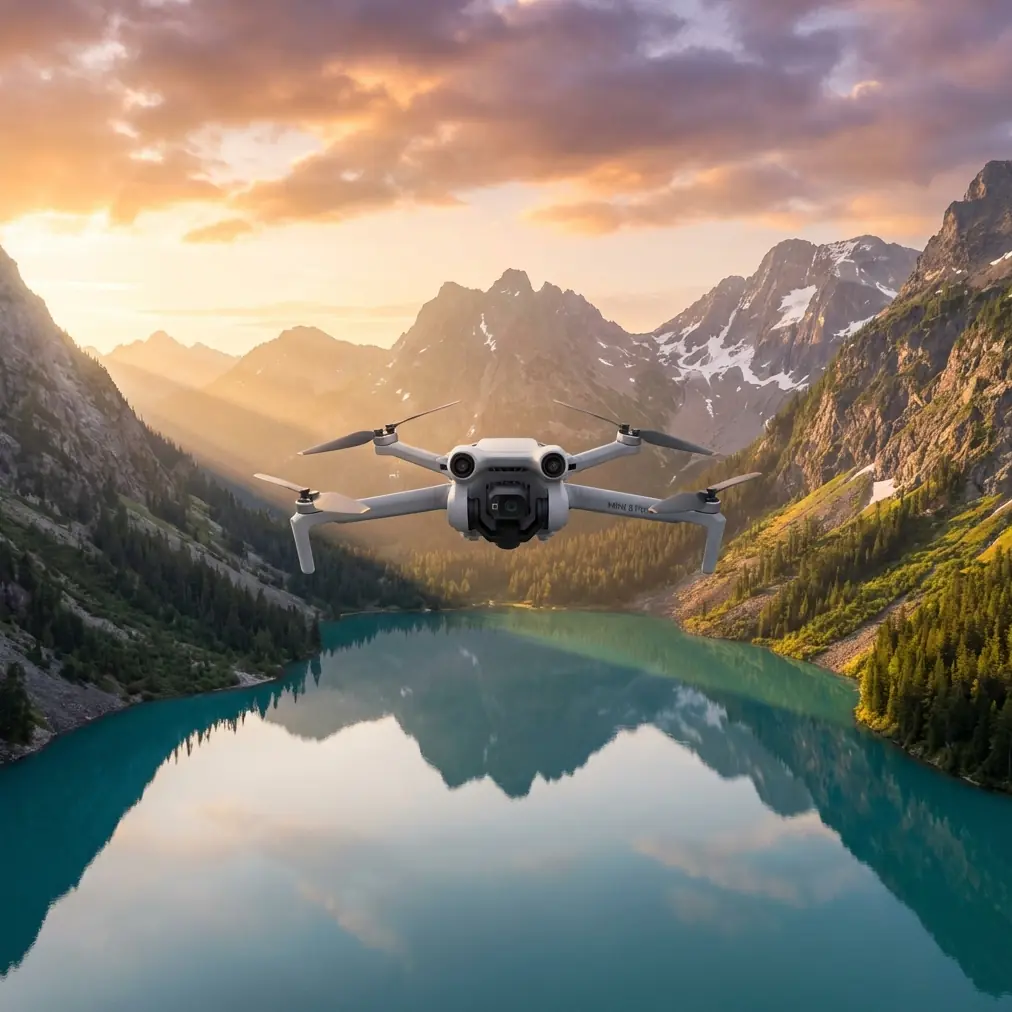
Mini 5 Pro for Remote Solar Farm Monitoring: Practical Field Tactics That Actually Matter
META: A field-focused tutorial on using Mini 5 Pro for remote solar farm monitoring, with workflow tips for stability, obstacle avoidance, tracking, D-Log capture, and efficient inspection planning.
If you monitor solar farms in remote areas, the drone matters less than the workflow you build around it. That sounds backward, especially when a new aircraft gets all the attention. But in real inspection work, what counts is whether the platform helps you hold position in uneven air, document repeatable visual evidence, and move across large arrays without creating friction for the pilot.
That is where the Mini 5 Pro conversation gets interesting.
I’m writing this from the perspective of a photographer who learned to respect industrial drone work the hard way: glare off panels, dusty access roads, sudden gusts over open land, and the constant need to produce footage that is not just pretty, but useful. Solar monitoring is visual work with operational consequences. If a row is underperforming, if mounting hardware looks compromised, if vegetation is creeping into the wrong zone, the aircraft needs to help you see clearly and fly precisely.
A useful way to think about the Mini 5 Pro is not as a tiny camera drone trying to act bigger than it is, but as a compact platform that benefits from lessons the industry learned long before sub-250-class aircraft became common. One of those lessons comes from older professional multirotor design. In a Harbin Institute of Technology design reference discussing the DJI S800 hexacopter, the aircraft’s rotors were arranged in a separated layout with the propellers tilted inward at a certain angle to improve system stability. That detail matters because it highlights a truth every solar operator understands in the field: stability is not a luxury feature. It is what determines whether you get usable inspection footage or a shaky guess.
The second lesson from that same reference is just as practical. Compared with a quadcopter of similar frame size, a hexacopter can use structural space more effectively, increase rotor count, improve payload capacity, and raise maximum thrust without a dramatic weight penalty. In simple terms, more available thrust improves thrust-to-weight ratio, and that directly affects how responsive and controlled the aircraft feels. The Mini 5 Pro is not a hexacopter, of course. But if you’re evaluating a compact quad for solar farm work, this older engineering logic gives you the right lens: look for behavior that preserves control precision when conditions are less than ideal.
That is the backbone of this guide.
Why remote solar monitoring rewards stability over spectacle
Remote solar farms create a deceptively tough flight environment. They look open and simple from a distance. In practice, they are full of repetitive geometry, reflective surfaces, narrow maintenance lanes, fencing, utility structures, and changing wind exposure across the site. A drone used here needs to do three things well:
- Hold a reliable hover for repeatable documentation
- Move predictably along rows and access paths
- Capture footage that can be reviewed later without ambiguity
This is why the old S800 design note still deserves attention. The source specifically ties stronger stability and high control precision to professional imaging. For solar work, that same logic translates directly into inspection reliability. If the aircraft drifts, oscillates, or struggles to settle after directional changes, visual comparison becomes harder. Small anomalies can hide inside motion blur or awkward framing.
With a Mini 5 Pro workflow, your aim should be to make each flight leg boring in the best possible way. Smooth rise. Deliberate transit. Short hover. Controlled pan. Clean return. Boring flights are productive flights.
Start with a site pattern, not a feature list
A common mistake is launching with the aircraft set to do “a bit of everything.” ActiveTrack here, QuickShots there, maybe a Hyperlapse pass because the sky looks good. That approach wastes battery cycles and often leaves you with media that is hard to organize for maintenance reporting.
For solar farm monitoring, build a repeatable route structure:
1. Perimeter pass
Begin with a medium-altitude perimeter flight to document fencing, access roads, drainage, and any visible encroachment. This gives site managers a broad context before you move into panel-level visual checks.
2. Row-aligned inspection passes
Fly parallel to panel rows at a consistent speed and height. Keep the camera angle repeatable. The value is not cinematic variety. The value is comparability from one inspection cycle to the next.
3. Structure and balance-of-plant checks
Use hover-based observation around inverters, combiner boxes, cable routes, and support infrastructure where safely accessible and appropriate under site rules.
4. Closing context shots
Capture a final overhead or oblique sequence that ties the detailed footage back to the whole site.
This is where the Mini 5 Pro’s compact footprint becomes useful. On remote sites, small setup friction matters. When the aircraft is easy to deploy, teams are more likely to perform shorter, more frequent checks instead of postponing flights until issues pile up.
Obstacle avoidance is not just about collisions
On solar sites, obstacle avoidance is often discussed like a safety checklist item. It is more than that. It supports continuity.
You may be flying near trackers, fencing, utility poles, low vegetation, service vehicles, or edge structures that interrupt otherwise clean flight lines. Good obstacle sensing helps the aircraft maintain composure when your path needs a quick adjustment. That matters operationally because every abrupt correction increases the chance of ruining a visual record.
I had one early-morning survey where a small group of birds lifted from vegetation between array sections just as I was crossing into the next inspection lane. One bird cut unexpectedly across my intended line, and the aircraft’s sensing response gave me enough margin to slow the move and slide away cleanly instead of overcorrecting into a fence-side approach. Wildlife encounters are easy to dismiss in theory; in remote solar environments, they are routine. Sensor awareness is not only about protecting the drone. It helps protect your workflow from turning chaotic.
If you are using obstacle avoidance well, you should hardly notice it. The best result is a flight that remains composed.
Subject tracking has a place in solar work—if you use it selectively
It may sound odd to mention subject tracking or ActiveTrack in an article about panel inspection, but there are valid use cases.
For example, during maintenance operations, you may want to document a technician vehicle’s route through a large site, follow a mowing or vegetation-management pass for progress records, or create visual logs of mobile cleaning operations. In these cases, tracking tools can produce consistent support footage without forcing the pilot to manually frame every second.
The warning is simple: don’t let tracking drive the mission. Let the mission decide when tracking is appropriate.
For routine panel-condition documentation, manual path discipline usually beats automation. For fleet movement, support operations, or site logistics visuals, ActiveTrack can save time and reduce pilot workload.
Camera settings that help maintenance teams, not just content creators
As a photographer, I love beautiful footage. Solar operators need useful footage first.
That means your capture settings should prioritize clarity, consistency, and post-flight review flexibility.
Use D-Log when lighting is harsh
Solar farms are full of contrast extremes: bright panel reflections, pale gravel roads, dark equipment housings, and strong sky separation. D-Log can preserve more highlight and shadow information, which helps when you need to inspect footage later without crushed detail or clipped reflections.
This does not mean every operator needs a complex grading workflow. It means you should protect image information when conditions are tough, especially around midday.
Reserve QuickShots for site reporting visuals
QuickShots are not inspection tools. They are communication tools. Use them to create clean, brief overview clips for investor updates, stakeholder summaries, or project documentation. A short orbit or reveal can provide context around the site footprint, but it should not replace methodical passes.
Use Hyperlapse for change documentation
Hyperlapse becomes valuable when you want to show progression over time: vegetation growth near array edges, construction development around new sections, road condition deterioration, or weather movement across the site. This is especially useful for remote assets where managers are not physically present often.
Used carefully, these modes can complement monitoring work without hijacking it.
Flying technique: what actually improves results on solar sites
The best inspection pilots are usually the least flashy. Here are the techniques that consistently improve Mini 5 Pro results in remote solar operations.
Keep your yaw movements slow
Fast yaw introduces visual confusion across repetitive panel geometry. Slow rotation makes it easier to evaluate alignment issues, debris presence, or visible structural irregularities.
Don’t fly too low too early
Start slightly higher than your final inspection height on unfamiliar sites. This gives obstacle sensors more context and gives you a wider read of layout interruptions before you commit to narrow lanes.
Pause intentionally
At the end of each pass, stop for two or three seconds before changing direction. Those brief stationary moments often produce the most reviewable frames.
Respect reflective deception
Panels can distort your depth perception. What looks like open spacing from one angle may tighten quickly as the line of sight changes. Keep your path conservative around row ends and support structures.
Fly when the site is visually readable
Golden hour looks nice, but extreme low-angle light can exaggerate glare and shadow. Midday is not always pleasant for photography, yet it can be useful for straightforward visual consistency if exposure is controlled well. Match your flight time to your reporting goal.
Why thrust-to-weight thinking still matters for a small drone
Let’s return to the engineering reference, because it offers a principle many buyers skip over. The source explains that increasing available thrust relative to weight improves the aircraft’s thrust-to-weight ratio, and that control system performance is significantly affected by this ratio.
For a remote solar operator, the takeaway is practical rather than academic. Any drone that feels underpowered when stopping, climbing, or correcting in wind creates extra pilot workload. That workload leads to uneven spacing, inconsistent framing, and more battery wasted recovering from small mistakes.
Even though the Mini 5 Pro is positioned as a compact aircraft, you should evaluate it through this professional lens: how confidently does it hold its line when the environment stops being ideal? That is a better buying question than asking whether it can produce dramatic footage.
A simple field workflow for repeat inspections
Here is the tutorial version I recommend for teams that want consistency:
Pre-flight
- Confirm weather, glare conditions, and maintenance activity zones
- Set your inspection route before takeoff
- Choose whether your session is for anomaly spotting, progress reporting, or stakeholder visuals
- Decide in advance if D-Log is needed
First lift
- Rise to a safe observation altitude
- Hover briefly and assess wind behavior
- Check panel reflections and adjust camera angle before entering your first row pass
Core inspection
- Fly straight, repeatable lines
- Use obstacle avoidance as a buffer, not an excuse for sloppy routing
- Capture short hover pauses at key infrastructure points
- Use ActiveTrack only if documenting moving operations
Supplemental documentation
- Capture one or two QuickShots only if a summary clip is needed
- Use Hyperlapse only when time-based change is part of the report
Post-flight
- Organize media by section, not by artistic preference
- Note any spots that require a return pass
- Record environmental observations that may explain visual anomalies
If your team is building a repeatable monitoring routine and needs help tailoring a compact-drone workflow to solar inspections, this field coordination channel is a straightforward place to continue the discussion.
The bigger picture for Mini 5 Pro users
The reason the Mini 5 Pro makes sense for many remote solar scenarios is not that it replaces larger industrial aircraft in every task. It doesn’t. The value is that compact drones can reduce the barrier to frequent, disciplined observation. And frequent observation catches small problems before they become expensive ones.
That is where the old hexacopter lesson meets the current compact-drone reality.
The S800 reference described a professional aircraft built around stability, control precision, and better use of structure to improve lift and operational performance. Those same priorities still define what “good” looks like in the field, even when the aircraft in your bag is much smaller. For solar farm monitoring, the best Mini 5 Pro workflow is the one that borrows professional habits: steady flight, purposeful route design, careful use of automation, and image capture built for decisions rather than applause.
Remote solar sites reward discipline. The Mini 5 Pro can fit that job well if you ask it to be a working tool first and a creative platform second.
Ready for your own Mini 5 Pro? Contact our team for expert consultation.