
Mini 5 Pro for Solar Farm Monitoring in Complex Terrain
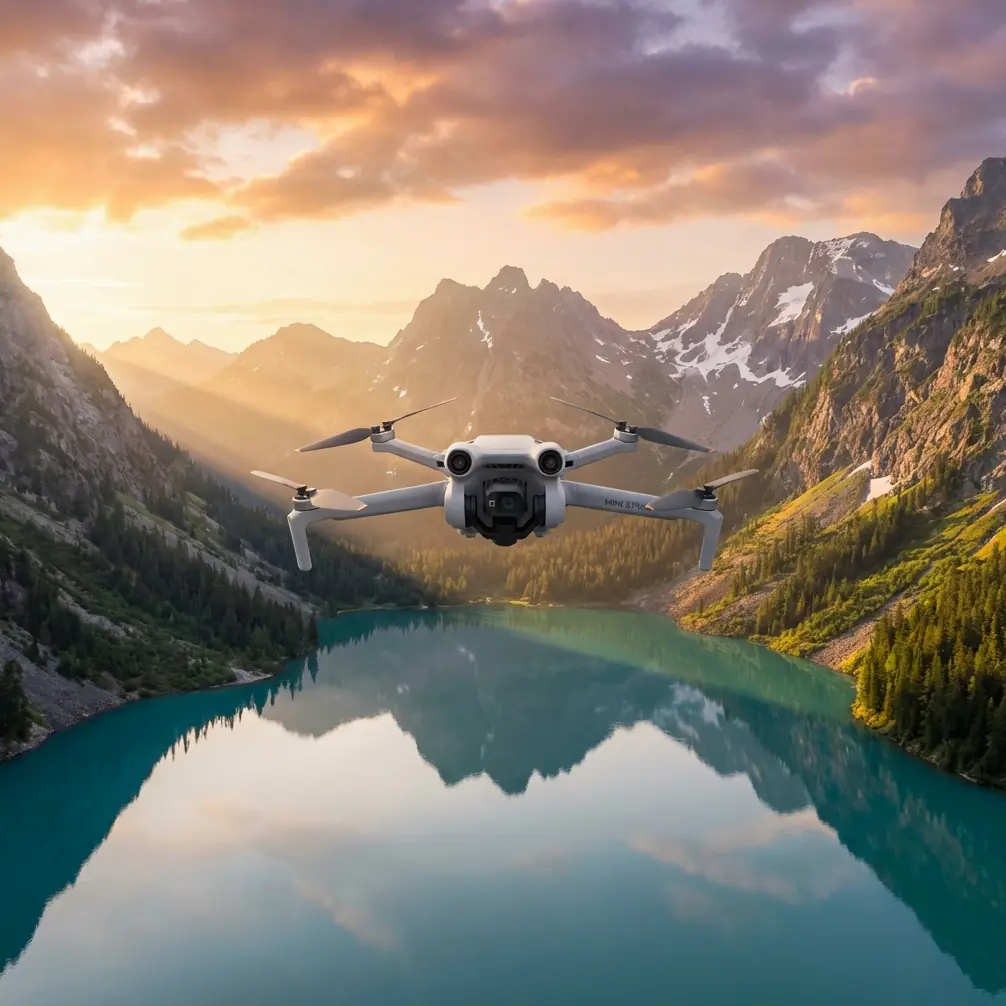
Mini 5 Pro for Solar Farm Monitoring in Complex Terrain: A Practical Field Tutorial
META: Learn how to plan Mini 5 Pro solar farm inspections in uneven terrain using photogrammetry field standards, control point logic, obstacle avoidance, ActiveTrack, D-Log, and antenna positioning tips for reliable coverage.
I spend a lot of time talking with photographers and drone crews who assume a small aircraft is automatically a “quick look” tool rather than a serious field instrument. That mindset breaks down fast at a solar site built across rolling ground, stepped embankments, drainage cuts, and access roads that twist around inverter blocks. In terrain like that, the Mini 5 Pro only becomes genuinely useful when you fly it with survey discipline.
That is the real story here. Not whether the aircraft is compact. Not whether it can produce attractive footage. The interesting question is how to extract repeatable, decision-grade monitoring data from a light platform while keeping operations efficient around a sprawling solar farm.
The answer starts on the ground, before takeoff.
Why complex solar terrain exposes weak flight planning
A flat rooftop array is forgiving. A utility-scale site built over uneven land is not. Elevation changes alter apparent panel spacing, shadows shift across strings, drainage channels interrupt movement, and service roads often create the only safe launch points. If your mission design is casual, your imagery may still look good on a tablet while failing the deeper test: can you compare one inspection cycle to the next and trust what changed?
That is where low-altitude digital aerial photogrammetry standards become surprisingly relevant to a Mini 5 Pro workflow. One field specification in the reference material makes a point many operators skip: the regional network and implementation plan should be determined by mapping scale, ground resolution, terrain characteristics, actual partitioning of the survey area, and map-sheet distribution, then optimized for the specific site. That sounds academic until you apply it to a solar farm.
Operationally, it means you should not treat the whole plant as one generic mission. Break it into logical blocks based on terrain behavior and inspection purpose. A ridge section, a drainage corridor, and a broad bench of panels may all need different flight heights, overlap strategies, and even different times of day. If your goal is maintenance monitoring, not just visuals, site partitioning matters as much as battery management.
Build the mission around control, not convenience
The reference standard also emphasizes technical design documentation and instrument checking before fieldwork. In plain terms: write the plan down, and make sure the tools are calibrated and within valid inspection periods.
For a Mini 5 Pro operator monitoring a solar farm, that translates into a simple but powerful routine:
- Define the objective for each sortie.
- Confirm aircraft, controller, IMU, compass, and camera status before launching.
- Use consistent image settings from one inspection cycle to the next.
- Record the exact launch point, prevailing wind direction, and antenna orientation.
- Keep each block repeatable enough that future flights can mirror it.
People often think calibration is only for survey crews carrying larger payloads. That is a mistake. On a site with sloped ground and reflective surfaces, small inconsistencies in camera angle, heading, or exposure can make panel anomalies harder to compare over time. Consistency is a data quality tool.
Ground control still matters, even with a compact drone
One of the most useful details in the source document is its guidance on photo control point selection. It says the target image should be clear, easy to identify, and suitable for stereo measurement, ideally at well-defined intersections or obvious corners. It also warns against choosing unstable or ambiguous features such as irregular objects or shadows. There is another hard detail many operators overlook: the point should not be too close to the image edge, with a minimum distance of 150 pixels from the photo boundary.
Why does that matter at a solar farm?
Because solar facilities are full of repetitive geometry. Row after row of nearly identical modules can trick both humans and software into false confidence. If you place or select control features poorly, stitching and comparison can drift in ways that are subtle enough to miss during a quick review. A gravel road corner, a painted service pad corner, or a stable intersection between access paths will usually outperform a random spot near a panel row. And if your reference point sits near the outer edge of the frame, distortion and lower interpretability make that point less reliable.
For practical fieldwork, I recommend choosing control features that satisfy three tests:
- They stay physically unchanged across inspection cycles.
- They are visible from your planned altitude and camera angle.
- They remain well inside the image footprint, not clipped toward the edges.
If you are placing temporary targets, put them where maintenance traffic will not move them and where glare from panel surfaces will not mask them.
The overlooked value of terrain-aware control placement
The source also notes that elevation control targets should sit in places with relatively small elevation variation, favoring line-feature intersections and flatter high points rather than sharp gullies, narrow ridges, or steep slopes. On a solar farm, that advice is gold.
Solar projects in hilly terrain often include drainage swales, berms, cut-and-fill transitions, and retention areas. Those spots may look visually distinctive, but they are poor choices for consistent control and reference interpretation. If you anchor your mission to unstable terrain signatures, your comparisons across months can become noisy.
Operationally, choosing flatter and more stable terrain references helps in three ways:
- It improves repeatability when comparing orthomosaic outputs.
- It reduces ambiguity when matching image features between flights.
- It lowers the chance that seasonal vegetation or shadow changes will corrupt your reference logic.
That is especially relevant when your monitoring task includes spotting encroaching vegetation, pooling water, settlement near foundations, or row alignment issues.
Antenna positioning advice for maximum range on solar sites
This is where field reality steps in. On solar farms, range problems often have less to do with raw aircraft capability and more to do with poor controller handling. The site itself creates challenges: metal structures, inverter stations, rolling ground, and long rows that encourage pilots to keep pushing straight ahead.
The simplest antenna rule is still the one most often ignored: do not point the tips directly at the drone. The broadside of the antenna pattern does the work. Keep the controller oriented so the flat face of the antennas is presented toward the aircraft’s path, and adjust as the drone changes position.
A few practical habits make a noticeable difference:
1. Launch from local high ground when possible
Even a modest rise can preserve line of sight over panel rows and terrain undulations. If your site has a service track on an elevated bench, that is often better than standing in a low drainage corridor.
2. Avoid putting your body between controller and aircraft
At longer distances, your torso can become part of the problem. Hold the controller clear of your chest and keep your stance aligned with the flight line.
3. Re-orient during lateral runs
Solar inspections often involve long cross-site passes. As the Mini 5 Pro moves from front-left to far-right relative to your position, rotate your body and controller instead of staying fixed.
4. Respect terrain masking
If the route drops behind a ridge or berm, the signal path can degrade fast. This is not a controller issue you can “power through.” Split the mission into smaller blocks and relocate as needed.
5. Stay away from inverter clutter during takeoff
Electrical infrastructure can be a noisy RF environment. If possible, launch a little offset from inverter pads and communications enclosures rather than right beside them.
If you want a field checklist specifically for controller orientation and solar-site line-of-sight setup, I usually share it through this Mini 5 Pro WhatsApp planning channel because it is easier to send with annotated diagrams.
Obstacle avoidance is useful, but it should not be your planning model
The Mini 5 Pro conversation often gets pulled toward obstacle avoidance, and yes, it matters. Around solar farms, obstacle sensing is valuable near perimeter fencing, weather stations, cable bridges, isolated poles, and vegetation encroachment zones. It is also reassuring when flying near uneven ground where apparent height can change quickly.
But obstacle avoidance should support a well-designed mission, not replace one.
Why? Because solar infrastructure creates visual patterns that can be deceptive. Repetitive rows, reflective surfaces, and narrow clearances are not ideal conditions for treating automated protection as your primary defense. In complex terrain, the more reliable approach is to set route geometry conservatively, maintain extra clearance over slope breaks, and use obstacle sensing as a backup layer.
A disciplined operator assumes terrain is dynamic and route margins should absorb that uncertainty.
ActiveTrack, subject tracking, and when not to use them
The context around Mini 5 Pro naturally brings up ActiveTrack and subject tracking. For promotional work at a solar plant, these features can help follow maintenance carts or capture operations teams moving through site lanes. That can be useful for training clips, stakeholder reporting, or documenting maintenance workflows.
For technical monitoring, though, be selective.
Tracking modes shine when the story is movement. They are less valuable when the task is rigorous comparison of panel conditions, erosion lines, access road degradation, or vegetation growth. In those cases, manual route consistency beats dynamic subject-based framing. A maintenance truck is not your reference. The site geometry is.
My rule is simple: use tracking for contextual storytelling, not for the core inspection dataset.
D-Log, QuickShots, and Hyperlapse each have a place
A solar monitoring mission often has two deliverables hiding inside one flight day. The first is technical evidence. The second is communication. Site owners, asset managers, EPC teams, and insurers do not always need the same kind of output.
That is where your capture modes should be separated by purpose.
D-Log for analysis-friendly archive material
If the Mini 5 Pro supports D-Log in your workflow, it is valuable when lighting is harsh and contrast across reflective panels, ground, and sky becomes difficult to balance. Keeping more tonal information can help when reviewing subtle surface issues or creating consistent post-processed reports across changing light conditions.
QuickShots for brief visual summaries
QuickShots can produce useful orientation clips for non-technical stakeholders, especially at the start of a reporting package. A short automated reveal can show terrain complexity, block layout, and site scale in seconds. Just do not confuse that with inspection data.
Hyperlapse for progress observation
Hyperlapse becomes interesting on construction-adjacent solar projects or expansion zones where roads, trenching, and staging areas change over time. It can also illustrate weather movement or shifting shadows across terrain, which is sometimes useful in operations briefings.
The key is not to fly one mode and expect it to satisfy every audience.
A field workflow that actually holds up
If I were setting up a Mini 5 Pro tutorial flight for solar monitoring in complex terrain, this is the sequence I would use:
Pre-field design
Map the site into terrain-based blocks, not just equal acreage sections. Use access roads, ridgelines, drainage features, and inverter groupings to divide the work.
Equipment check
Follow a preflight verification routine. The source standard’s insistence on checked and calibrated instruments is not bureaucratic filler. It is the backbone of repeatability.
Control feature selection
Choose stable, clear ground references. Favor crisp intersections and corners. Avoid shadows, irregular objects, and steep micro-terrain. Keep important reference points well away from image edges; the 150-pixel minimum edge distance from the standard is a smart discipline to carry over.
Launch position
Pick the best line-of-sight location, not just the nearest parking spot. Elevation and antenna geometry matter.
Core capture
Fly consistent routes for the technical record. Keep altitude, speed, heading logic, and image settings as stable as practical between visits.
Supplemental capture
After the technical mission, gather D-Log overview clips, selected QuickShots, or a short Hyperlapse if the report package needs visual context.
Post-flight notes
Record any deviations: changed launch point, stronger-than-expected wind, temporary glare issues, blocked access, or route edits due to vegetation or equipment activity.
That final note-taking habit is more valuable than most operators realize. When a future inspection reveals an apparent anomaly, those operational notes often explain whether the change is on the ground or in the capture conditions.
The bigger takeaway for Mini 5 Pro users
The most serious mistake small-drone operators make on solar farms is assuming lightweight gear excuses lightweight process. It does not. In fact, compact drones reward disciplined planning even more because their convenience can tempt you into shortcuts.
The field standard behind low-altitude digital photogrammetry makes two points that deserve to stay with every Mini 5 Pro pilot: first, mission design must reflect terrain, scale, and output requirements; second, control points and instruments must be handled with precision, not improvisation. Those are not abstract survey principles. They are practical safeguards against unreliable monitoring.
Used that way, the Mini 5 Pro becomes more than a camera in the air. It turns into a repeatable observation tool for solar sites where the land itself is part of the maintenance story.
Ready for your own Mini 5 Pro? Contact our team for expert consultation.