
Mini 5 Pro for Solar Farms in Low Light: A Practical Field
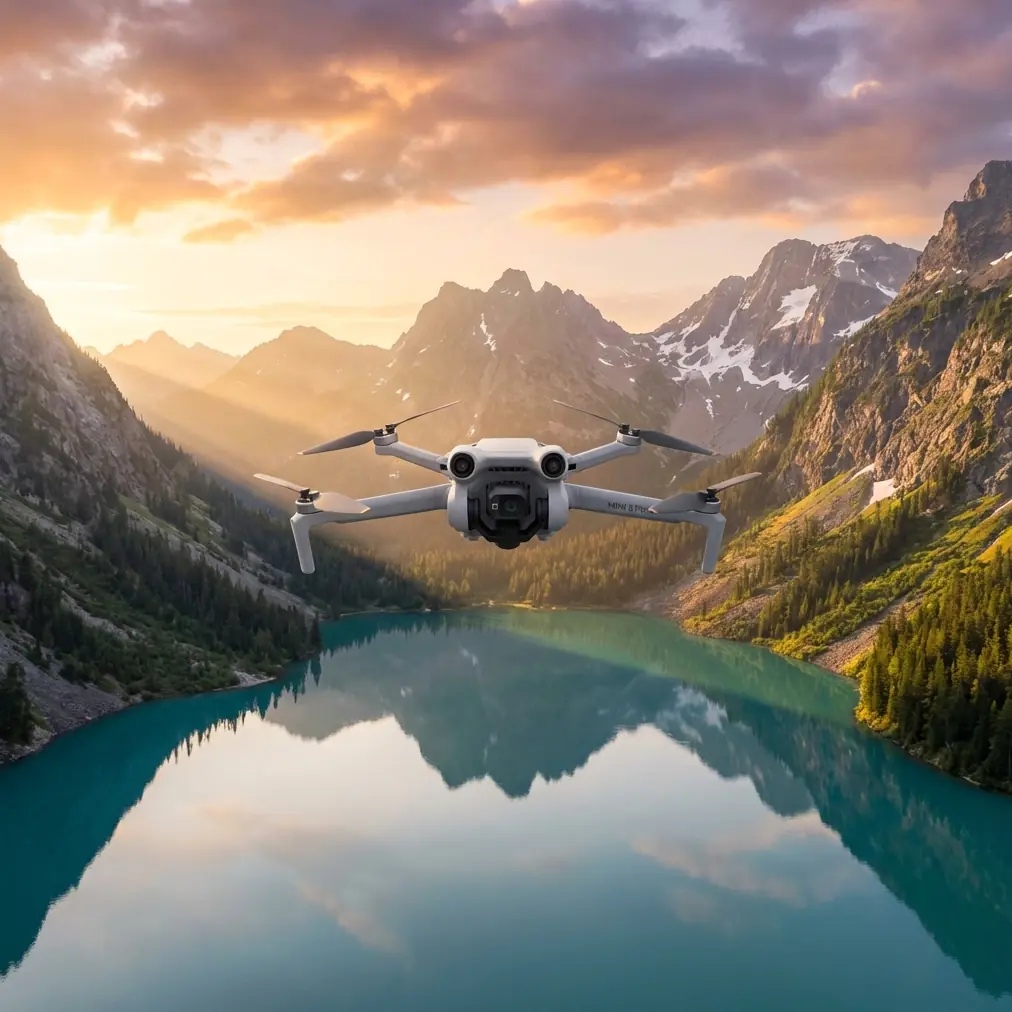
Mini 5 Pro for Solar Farms in Low Light: A Practical Field Guide
META: Learn how to use the Mini 5 Pro for low-light solar farm monitoring, with practical flight setup tips, obstacle avoidance checks, D-Log capture advice, ActiveTrack limits, and a critical pre-flight cleaning step.
Low-light inspection work on solar farms asks a lot from a compact drone.
You need stable flight in open but deceptively hazardous terrain. You need usable footage before the sun is fully up or after it starts dropping behind panel rows. You need to move efficiently without sacrificing safety. And if you are working with a subcompact aircraft like the Mini 5 Pro, the difference between a smooth sortie and a compromised one often comes down to process, not marketing specs.
That is the real story here.
For solar farm monitoring, the Mini 5 Pro makes sense when the job is frequent visual review rather than heavy-lift thermal work. It is small, fast to deploy, and easy to move across multiple sections of a site. But in low light, the aircraft’s intelligent features only help if the operator treats them as tools with limits. Obstacle avoidance, ActiveTrack, QuickShots, Hyperlapse, and D-Log can all support better results. None of them replace discipline.
This guide is built around that operational reality, with one step that deserves more attention than most pilots give it: cleaning the vision and sensing surfaces before takeoff.
Why low-light solar farm flights are different
A solar farm looks simple from the road. Once you are flying it, the environment becomes more complicated.
Panel rows create repetitive patterns that can confuse visual judgment. Service roads and drainage channels break up the site in ways that matter when altitude drops. Combiner boxes, poles, fencing, and vegetation sit exactly where a pilot is tempted to cut a corner. At dawn or dusk, contrast shifts quickly. Long shadows can hide elevation changes and narrow clearances.
That is where the Mini 5 Pro’s obstacle avoidance and tracking stack become relevant. In good conditions, these systems can reduce pilot workload and help maintain smoother, more consistent passes. In dim conditions, they become more sensitive to contamination, glare, and weak visual information. A tiny smear on a sensor window that would barely matter at noon can degrade confidence when the site is still half in shadow.
For solar farm work, operational significance is straightforward: low-light flying reduces visual margin, so the aircraft’s safety systems must start the flight in the best possible state.
The pre-flight cleaning step most pilots rush
Before you power up, clean the aircraft’s vision sensors, obstacle sensing windows, and camera lens.
Not casually. Deliberately.
Use a clean microfiber cloth and inspect for dust, pollen, dried moisture spots, and oily residue. Solar farms are often dusty environments. Even if the drone was packed clean, a short vehicle ride across service roads can leave a fine layer on the aircraft. Early morning condensation is another issue. A light film over the lens or sensor cover can soften detail and reduce the reliability of obstacle detection.
This is not cosmetic maintenance. It directly affects how the Mini 5 Pro interprets the environment.
If you plan to rely on obstacle avoidance for low-altitude corridor flying between rows or near perimeter fencing, clean sensing surfaces are part of the safety chain. If you want stable subject tracking with ActiveTrack on a maintenance vehicle moving through the site, the camera and vision systems need the clearest possible input. If you are capturing D-Log footage for later review of cracked panels, pooling water, or edge vegetation encroachment, lens clarity matters even more in flat, low-angle light.
I would treat this as a hard requirement, not a nice-to-have.
A good field sequence is simple:
- Remove the aircraft and unfold it fully.
- Inspect the lens first under angled light.
- Wipe all vision-related surfaces with a dry, clean microfiber.
- Check propellers while you are there for chips, bends, or embedded grit.
- Power on and confirm no sensor warnings before launch.
That entire routine takes a minute or two. On a large site, those two minutes are cheaper than repeating a flight because the footage came back hazy or the aircraft threw an avoidable sensing alert.
Best mission profile for low-light panel monitoring
With a Mini-class platform, low-light solar farm missions work best when they are tightly scoped.
Do not try to do everything in one battery.
Instead, break the job into three practical flight types:
1. Wide-area condition sweep
This is your high-level pass to document general site condition. Fly above the rows at a conservative altitude and capture broad-angle video or stills. The purpose is not defect confirmation. It is situational awareness.
You are looking for obvious issues:
- standing water
- storm debris
- vegetation growth near arrays
- access obstruction
- unusual soiling patterns
- damaged fencing or perimeter changes
In low light, this first pass benefits from smooth exposure and stable framing more than aggressive maneuvering. If you are filming for later review, D-Log is useful here because it preserves more grading flexibility in scenes with bright sky and dark panel rows in the same frame. That extra latitude matters at sunrise, when highlights can clip while shadows still hold critical detail.
2. Row-follow documentation pass
This is where repetitive structure helps you.
Fly parallel to panel rows rather than diagonally across them. It creates cleaner footage, makes review easier, and reduces sudden lateral surprises from posts, boxes, and edge hardware. If the Mini 5 Pro offers ActiveTrack or subject tracking modes that can follow a ground vehicle, use that cautiously on service roads, not through dense structural geometry.
Operationally, that distinction matters. Tracking a truck moving along a clear maintenance lane can free your hands to monitor framing and altitude. Tracking near a cluster of fixed equipment in weak light can increase uncertainty. The feature is helpful when the environment is simple enough for the aircraft to interpret correctly. It is not a substitute for route planning.
3. Short-form incident capture
If the sweep finds a concern, switch to a focused orbit, reveal, or timed pass. This is the only place where QuickShots or short Hyperlapse sequences can add real value for a solar operator.
Used sparingly, QuickShots help create clean visual context around a fault location for reporting. Hyperlapse can be effective for documenting changing shadow movement, cloud transition, or site activity over time. But these modes should support documentation, not entertainment. On a working energy site, every automated movement must justify itself.
How obstacle avoidance actually helps on a solar farm
Obstacle avoidance sounds most useful in forests and urban spaces. Solar farms are different. They look open, but they contain lots of low-complexity hazards that can still catch a pilot.
Think about:
- panel edges and support structures
- inverter pads
- cable runs near service areas
- fence lines
- isolated utility poles
- uneven terrain at row ends
In low light, the operational significance of obstacle avoidance is less about dramatic last-second saves and more about preserving buffer when your own depth perception is compromised by shadow and repetition.
That said, there is a catch. Vision-based systems generally perform best with strong texture and adequate light. If conditions are dim, dusty, or facing direct glare from the rising sun, you should expect reduced confidence. This is why that pre-flight cleaning step is not a side note. It improves the odds that the aircraft sees what it is supposed to see.
My rule: obstacle avoidance should support your route, never define it. Plan every pass as if you may need to complete it without automated intervention.
Camera setup for low-light inspections
For solar farm monitoring, your footage needs to be reviewable first and attractive second.
That changes the setup.
Use D-Log when dynamic range is the problem
If the sky is bright but panel rows are still dark, D-Log helps hold more information across the frame. This is especially useful during first-light flights when exposed metal, glass reflections, and sky brightness can push normal profiles too hard.
The tradeoff is that D-Log expects proper post-processing. If the client or operations team needs same-minute straight-out-of-camera delivery, use a standard color profile instead. But if footage will be reviewed later for condition assessment, D-Log gives you more room to recover shadow detail and control highlights.
Avoid extreme motion
Low light punishes fast movement. Even if the gimbal stabilizes well, quick directional changes can reduce the usefulness of the footage for inspection. Keep your path linear and your yaw inputs gentle. The more repeatable the pass, the easier it is to compare one flight against another.
Watch reflective glare
Solar panels are mirrors at the wrong angle. A slight reposition can turn a washed-out row into a readable one. If a pass is full of glare, do not just push through. Change angle, altitude, or timing.
That matters more than squeezing out another minute of battery.
ActiveTrack and subject tracking: use with judgment
The Mini 5 Pro’s tracking tools can be genuinely useful on solar sites when the task is operational storytelling or repeatable site documentation.
A few examples:
- following a maintenance cart on a service road
- documenting a technician’s route around a perimeter issue
- creating consistent progress footage for vegetation management
- producing a visual record of access conditions after heavy weather
Where pilots get into trouble is assuming tracking will understand intent. It will not. A solar farm presents repeating geometry, shadow bands, reflective surfaces, and intermittent obstructions. In low light, those variables become less forgiving.
So use ActiveTrack for clear, simple scenes with predictable movement. If the route narrows, the lighting drops, or structures crowd the frame, cancel the mode and fly manually.
If you are coordinating with a field team and want a quick sanity check before deployment, it is better to settle that in advance than improvise on-site. One practical way is to send your operating notes to a specialist team through this WhatsApp contact for Mini 5 Pro field questions.
A safe and efficient low-light workflow
Here is the workflow I recommend for small-aircraft solar monitoring missions:
Before arrival
Review site layout, sunrise or sunset angle, wind, access roads, and known hazard points.
At the vehicle
Assemble the aircraft away from blowing dust if possible.
Pre-flight
Clean lens and sensor surfaces. Check propellers. Confirm home point quality. Review your return route with low-light visibility in mind.
First takeoff
Climb, hover, and verify stable image, gimbal behavior, and any obstacle sensing alerts.
Primary pass
Run the wide sweep first while the light is changing fastest.
Secondary pass
Move to row-follow documentation once you know where the problem areas are.
Targeted capture
Use short manual reveals, QuickShots, or Hyperlapse only where they add reporting value.
Post-flight
Review clips immediately on-site. If glare, haze, or underexposure compromised key sections, refly before conditions change.
That last point is worth emphasizing. Low-light windows are short. If you wait until you are back at the office to discover a dirty lens or unusable contrast, the opportunity is gone.
What makes the Mini 5 Pro practical for this job
The Mini 5 Pro fits solar farm monitoring not because it can replace every inspection aircraft, but because it reduces friction for frequent visual checks.
Its compact form means crews are more likely to launch it for routine condition awareness instead of postponing flights that would benefit the site. Intelligent features like obstacle avoidance and ActiveTrack can reduce workload. D-Log gives more flexibility when lighting is uneven. QuickShots and Hyperlapse can support reporting when used with restraint.
Still, the strongest advantage is not any one feature. It is the combination of portability and structured use.
A well-prepared pilot with a clean lens, clean sensing surfaces, a clear route, and realistic expectations will get more from the Mini 5 Pro on a dim solar farm morning than a careless operator with every automation mode turned on.
That is the difference between owning a capable aircraft and running a dependable aerial workflow.
Ready for your own Mini 5 Pro? Contact our team for expert consultation.