
Mini 5 Pro Field Report: Smarter Mountain Power Line
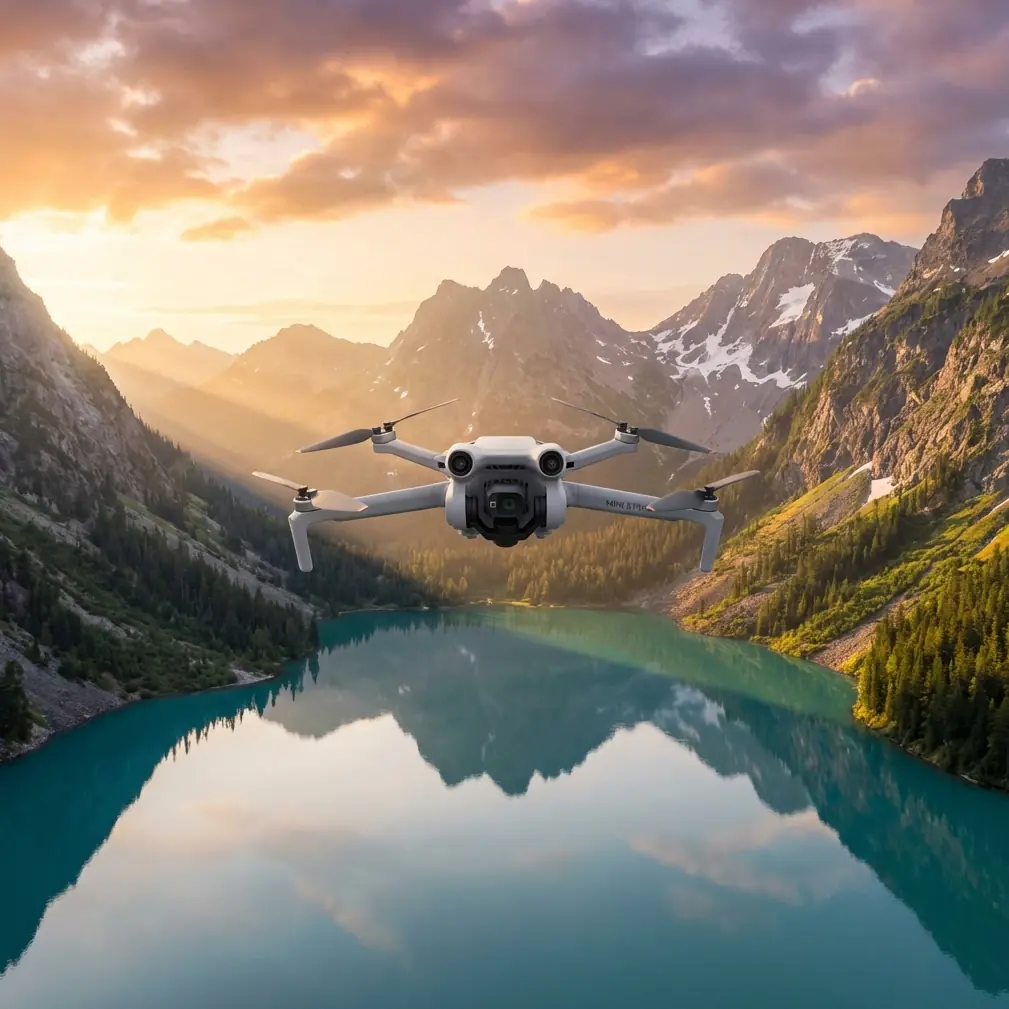
Mini 5 Pro Field Report: Smarter Mountain Power Line Monitoring Without a Heavy Airframe
META: A field-tested Mini 5 Pro guide for mountain power line inspection, covering obstacle avoidance, ActiveTrack, D-Log workflow, Hyperlapse mapping, and practical flight tactics.
Mountain power line work has a way of exposing every weakness in a small drone setup.
I learned that the hard way on a ridge inspection a few seasons ago. The assignment sounded simple enough: document a transmission corridor that crossed broken terrain, steep tree lines, and a narrow access road cut into the slope. On paper, a compact aircraft seemed ideal. In practice, the wind wrapped around the ridges, the lighting kept flipping from hard sun to deep shadow, and the line corridor itself created a visual trap. Poles, conductors, insulators, guy wires, and branches all competed for attention. A drone that feels excellent over open fields can start to feel very limited in that environment.
That is exactly why the Mini 5 Pro is such an interesting platform for mountain utility work. Not because it turns a consumer-sized aircraft into a replacement for a dedicated industrial inspection system. It does not. But because several of its likely strengths—omnidirectional obstacle avoidance, improved subject tracking, compact deployment, D-Log capture, automated flight assists like QuickShots and Hyperlapse, and a maturing ActiveTrack-style workflow—directly address the friction points that make mountain line monitoring inefficient.
This is a field report, not a spec-sheet rewrite. If your job is monitoring power lines in mountain terrain, what matters is not whether a feature sounds advanced. What matters is whether it reduces missed detail, saves battery cycles, or helps you come home with usable footage despite wind, elevation changes, and visual clutter.
Why the Mini 5 Pro fits this specific job
The obvious advantage is size. A sub-250-gram class aircraft changes how fast you can move between observation points. When you are hiking a service road, climbing to a turnout, or working from a narrow shoulder where setup space is poor, every gram matters. That operational significance is easy to underestimate until you have carried a larger aircraft, extra batteries, landing gear concerns, and a bigger case up a mountain track for half a day.
A compact drone gets airborne quickly. That means more short sorties from multiple angles instead of forcing one long, compromised flight path. For line monitoring, that can be the difference between merely seeing the corridor and actually checking hardware condition, vegetation encroachment, and terrain interaction around the poles.
The second advantage is obstacle avoidance. In mountain corridor work, “obstacle” does not just mean a tree. It can mean a branch hidden in shadow, a slope rising toward the aircraft faster than expected, or a conductor line that becomes visually confusing against a bright sky. Reliable multi-direction sensing matters because this environment punishes tunnel vision. If you are framing the insulator stack on a structure, it is easy to forget about the lateral drift caused by ridge turbulence. A drone with broad obstacle awareness gives you a bigger safety margin during those moments.
That safety margin is not a luxury. It is part of data quality. The more confidence you have in proximity operations, the more precisely you can position for repeatable shots.
The past problem: line work in broken terrain
Before aircraft like this became realistic tools, one of my recurring problems was angle consistency.
On mountain power lines, the perfect inspection angle often exists for only a few seconds. You launch from uneven ground, climb into a crosswind, rotate to keep the pole centered, then realize the sun has pushed one side of the frame into glare while the forest below drops into darkness. By the time you correct the exposure and slide into a safer line of travel, the drone is no longer where you wanted it.
That is where the Mini 5 Pro’s obstacle avoidance and tracking intelligence have real value. Subject tracking is often discussed in the context of action sports or travel content, but in corridor monitoring it can help stabilize your workflow around a structural target or linear path. ActiveTrack, used carefully, can help maintain framing on a utility structure while you concentrate on lateral positioning and elevation changes. I would never blindly trust tracking around conductors, but I absolutely value a system that reduces the number of constant manual micro-corrections.
Operationally, that means fewer jerky inputs, cleaner footage for review, and less pilot fatigue over repeated sorties.
How I would fly the Mini 5 Pro on a mountain line corridor
For this kind of work, I break the mission into three shot classes.
The first is the corridor establishing pass. This is where Hyperlapse can become more useful than most people expect. Not for cinematic vanity, but for showing terrain relationship over distance. A controlled Hyperlapse run along the line route can reveal slope transitions, encroaching vegetation zones, access constraints, and how the power line sits against ridges or gullies. When stakeholders need a quick visual understanding of the corridor, that compression of distance is efficient.
The second is the structure orbit or semi-orbit. Here, obstacle avoidance matters most. Around mountain poles, the danger rarely comes from one obvious obstacle. It comes from the blend of elevation gain, side wind, and background clutter. A cautious orbit, with enough standoff to avoid conductors, can document insulator condition, crossarm orientation, and surrounding vegetation pressure. This is also where QuickShots can be repurposed intelligently. I would not use them as a one-button shortcut and hope for the best. I would use them as a repeatable movement template when I need consistent geometry from multiple structures. Repeatability is useful in inspection.
The third is the close observational hover. This is where image profile matters. If the Mini 5 Pro offers D-Log capture, that is a serious practical benefit for mountain work. Bright sky, reflective hardware, and dark conifer backgrounds can create a brutal dynamic range challenge. D-Log gives you more room to recover highlight detail in the sky while preserving shadow information around the pole body or tree line. For anyone delivering footage to engineering teams, utility contractors, or documentation managers, that extra grading latitude can mean the difference between “visible enough” and genuinely informative footage.
A flat profile is not magic, of course. You still need correct exposure discipline. But on mountain assignments where the light changes every few minutes, D-Log is far more than a stylistic feature.
Obstacle avoidance is not just about crashes
A lot of pilots reduce obstacle avoidance to a yes-or-no safety feature. That misses the real operational impact.
In mountain inspection, obstacle avoidance helps smooth flight behavior in uncertain space. When the terrain rises sharply behind a structure, or the drone needs to side-slip near a tree edge to preserve a viewing angle, the sensing system acts like a second set of eyes. That matters because the pilot is often splitting attention between composition, line position, telemetry, wind feel, and return path.
For power line monitoring, smoother, more confident positioning translates directly into clearer records. You spend less time making defensive corrections and more time capturing usable detail. That can save battery life as well. On a small aircraft, battery efficiency is not a minor issue. If obstacle-aware flight helps you avoid wasted repositioning, you may finish an inspection sequence one battery earlier over the course of a day. In the field, that is operational gold.
ActiveTrack and subject tracking: useful, but with boundaries
I want to be careful here. Any automated tracking mode near power lines should be treated as an assistant, not an authority.
That said, there is a real use case. Subject tracking can help hold a selected structure in frame while the pilot adjusts altitude and path along uneven topography. In mountain terrain, the ground can fall away dramatically on one side of the corridor. Manual framing becomes surprisingly demanding when the aircraft is simultaneously managing height relative to the slope. A capable ActiveTrack implementation reduces that workload.
The key is how you use it. I would avoid relying on tracking when conductors are visually thin, when the background is extremely busy, or when gusts are forcing abrupt corrections. I would use it during cleaner line-of-sight segments, particularly where I want consistent visual reference on a tower or pole. Used this way, it improves repeatability without replacing pilot judgment.
That distinction matters more than marketing language ever will.
Camera workflow: why D-Log earns its place
The mountain environment exaggerates camera weaknesses. Midday sun on the upper ridge. Deep shade under the line corridor. Bright metal hardware. Dark timber. Occasional haze softening distant detail. If you shoot everything in a standard profile and hope auto processing sorts it out, your footage may look acceptable on a phone and still fail as technical documentation.
D-Log is useful because it keeps more tonal information available for post. When I review infrastructure footage, I care about whether I can separate the insulator edge from the sky, whether corrosion or wear stands out, and whether vegetation density near the line is visible without crushing shadow detail. A flatter profile helps preserve those decisions for later.
For a photographer moving into utility documentation, this is one of the Mini 5 Pro’s strongest crossover strengths. It lets a small aircraft produce footage that holds up better under serious review.
QuickShots and Hyperlapse in a working environment
These modes are often dismissed as lifestyle features. That is too simplistic.
QuickShots can be practical when you need a repeatable reveal from pole base to corridor overview, or a controlled retreat that shows clearance between vegetation and conductors. The trick is not to let the automation dictate the mission. Build the mission first, then use the mode if it serves the shot safely.
Hyperlapse is similar. On a mountain power line project, a Hyperlapse sequence can document route progression more efficiently than a long conventional clip. It compresses travel, shows terrain context, and makes pattern changes along the corridor easier to spot in review. For teams that need both technical records and a concise visual summary, that is useful.
If you want a practical discussion of flight setup ideas for this kind of terrain, I would point operators toward this direct field contact: message us here.
What the Mini 5 Pro does better than older small-drone habits
Older compact-drone workflows often demanded too much manual compensation. You flew around the drone’s weaknesses instead of focusing on the inspection objective. That usually meant more cautious distance, fewer aggressive angles, and footage that was safe but not especially informative.
The Mini 5 Pro changes that equation if its expected feature set performs as intended. Obstacle avoidance reduces risk near cluttered approaches. ActiveTrack and subject tracking reduce framing workload. D-Log improves footage resilience in high-contrast conditions. QuickShots and Hyperlapse add repeatable motion tools that can be repurposed for documentation rather than entertainment. And the light airframe keeps the overall mission mobile, which matters enormously on mountain routes with limited vehicle access.
That combination does not make the aircraft invincible. Wind still wins sometimes. Power lines still require conservative margins. Terrain can still interfere with signal and perception. But the aircraft becomes a more competent field partner, especially for teams or solo operators who need to gather a lot of visual information without hauling a much larger system.
My honest takeaway
If I had this drone on that difficult ridge assignment from years ago, the day would not have become effortless. Mountain line work never is. But it would have become more manageable in the ways that count.
I would have launched faster from awkward ground. I would have trusted the aircraft more around tree-lined approaches. I would have spent less energy fighting to keep structures framed. I would have brought home footage with better highlight and shadow retention for actual review. And I likely would have completed more useful passes before the weather shifted.
That is the standard I use for judging a drone for real field work. Not whether it sounds advanced online. Whether it solves the exact frustrations that used to slow the job down.
For mountain power line monitoring, the Mini 5 Pro looks like a very practical answer to a very specific problem: how to collect stable, readable, repeatable visual data in a place where both the terrain and the infrastructure are constantly trying to complicate the task.
Ready for your own Mini 5 Pro? Contact our team for expert consultation.