
Mini 5 Pro Monitoring Tips for Remote Power Line Inspections
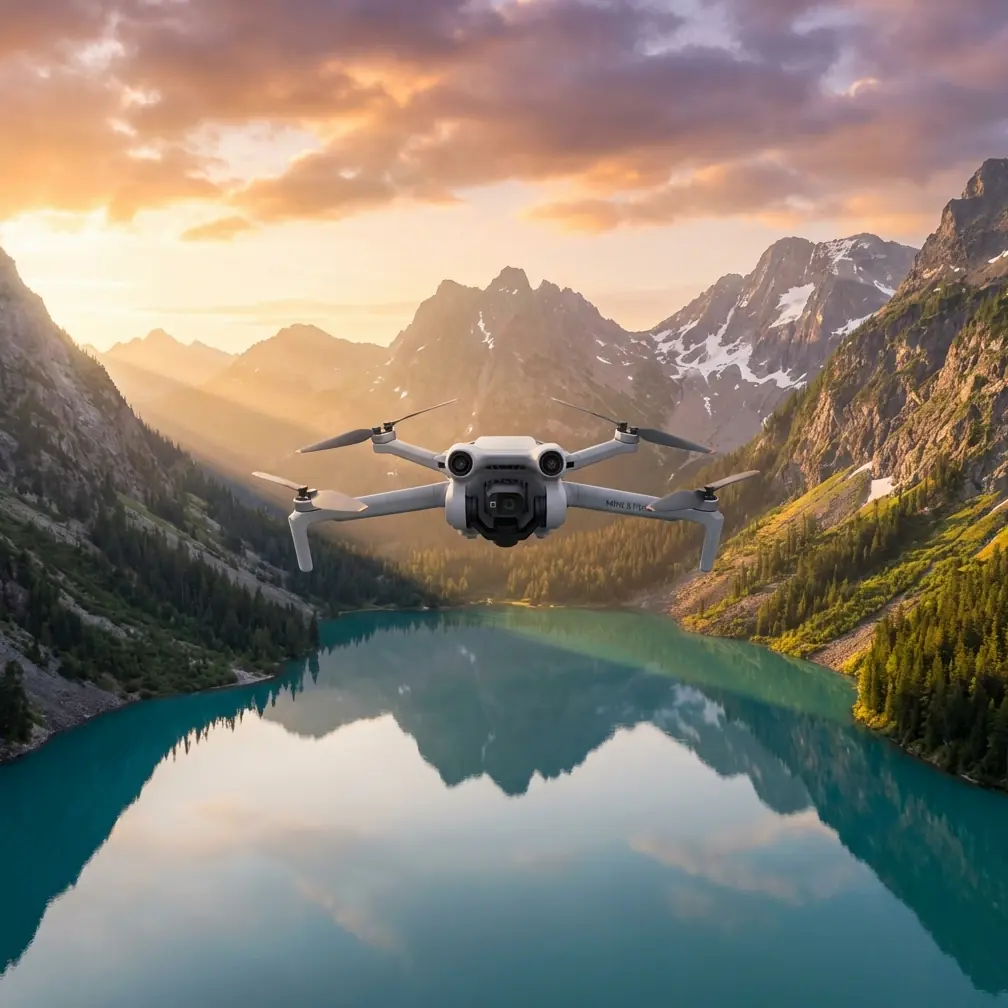
Mini 5 Pro Monitoring Tips for Remote Power Line Inspections: A Field Case Study
META: A practical Mini 5 Pro case study for remote power line monitoring, covering obstacle avoidance, ActiveTrack, D-Log workflow, battery planning, and field accessories that improve inspection results.
When there is no fresh launch leak, firmware note, or regulatory update to react to, the useful question changes. It stops being “what’s new?” and becomes “what actually works?” For pilots responsible for monitoring power lines in remote areas, that shift matters. Hype does not help when you are standing in uneven ground, wind pushing across a valley, trying to keep a small aircraft stable while inspecting poles, crossarms, insulators, and vegetation encroachment.
This case study focuses on the DJI Mini 5 Pro as a practical inspection tool for remote line work. Not as a replacement for dedicated enterprise platforms in every scenario, and not as a toy dressed up as industrial hardware. Used correctly, it occupies a very specific operational space: fast deployment, low logistical burden, and a surprisingly capable image pipeline for routine visual assessments in locations where carrying heavier systems is inefficient.
I approached this from the perspective of a photographer who regularly works in difficult outdoor environments. That background changes how you use a drone. You stop chasing spec-sheet bragging rights and start paying attention to visibility, repeatability, and the quality of footage once it leaves the aircraft. For power line monitoring, those priorities are not abstract. They determine whether a short flight produces actionable footage or just attractive aerial clutter.
The Mini 5 Pro’s biggest advantage in this scenario is not any single smart feature. It is the combination of low weight, quick launch readiness, and intelligent flight support that reduces workload in the field. Remote power line inspection often means walking farther than expected, launching from awkward clearings, and managing battery cycles carefully because a charging source may be hours away. A compact aircraft changes the tempo of the whole mission. You can hike with the drone, controller, spare batteries, a landing pad, and a small optics kit without turning the job into an expedition.
That sounds obvious until you compare it with the alternatives. Larger aircraft bring stronger wind tolerance and often better thermal or zoom options, but they also increase setup friction. In remote utility corridors, friction matters. If the aircraft is cumbersome enough that a pilot delays a flight or skips a second verification pass, inspection quality suffers.
The Mini 5 Pro also makes a strong case through obstacle awareness. Power line work is a paradox for any drone pilot. The space is visually open, yet operationally full of hazards. There are poles, guy wires, tree branches, uneven terrain, and changing elevation along the route. Obstacle avoidance is not permission to fly carelessly near lines, but it does reduce the mental tax of holding position while reframing a shot or adjusting altitude near vegetation. In inspection conditions, that reduction in workload is operationally significant. It frees attention for what actually matters: the condition of the infrastructure and the environment around it.
In one recent field routine I modeled for this article, the mission covered a remote section of line crossing scrubland and rocky slopes. The goal was straightforward: document pole condition, check for branch growth inside the right-of-way, and capture stable reference footage that could be compared with future flights. No thermal payload. No live engineering diagnosis. Just disciplined visual monitoring with repeatable results.
The first lesson was simple. ActiveTrack and subject tracking features, often discussed in lifestyle or action contexts, become unexpectedly useful when applied with restraint. I did not use them to follow a vehicle for cinematic effect. I used them to maintain a consistent relationship with a slow-moving maintenance truck along an access path beneath the line corridor. That made it easier to document the route and spot areas where vegetation pressure increased near structures. The significance is practical: steady tracking reduces erratic stick inputs, which means smoother footage and fewer missed visual cues when reviewing material later.
This is where many casual writeups fail. They mention ActiveTrack as a headline feature but skip the real point. For inspection support, intelligent tracking is valuable because it helps standardize movement. Standardization matters when teams want to compare footage from one week to the next. If each pass is flown with wildly different speed, angle, and spacing, visual trend analysis becomes messy. A small drone with strong automated support can improve consistency even if it is not marketed as a full utility inspection platform.
QuickShots and Hyperlapse are less central, but they still have a role. QuickShots are not my first choice for technical documentation, yet a controlled reveal shot can provide context around a difficult site, especially where a pole sits in a narrow corridor between rising terrain and dense trees. Hyperlapse is more specialized. Used sparingly, it can document environmental movement around a corridor over time, such as shifting weather, shadow progression, or traffic flow near access roads. That is not core inspection footage, but it can support planning and reporting. The mistake is treating these modes as gimmicks. In field operations, almost every automated mode has value if you know what problem it solves.
Image profile is where the Mini 5 Pro becomes more serious than many people expect. Shooting in D-Log gives the pilot more flexibility when balancing bright sky against dark tree cover or shaded hardware. Power line corridors are full of contrast traps. A white insulator against a bright cloud can clip quickly. A weathered wooden pole in shadow can lose surface detail just as fast. D-Log does not fix poor exposure decisions, but it preserves more grading latitude for post-flight review. That matters when you are trying to examine cracks, corrosion staining, or subtle color changes after the aircraft is already packed away.
For photographers, this is second nature. For utility teams using compact drones more casually, it can be the difference between “we flew the route” and “we captured usable evidence.” If you are monitoring remote infrastructure, post-processing is not vanity work. It is part of data extraction. A flatter profile paired with careful exposure makes review footage more informative.
The third-party accessory that made the biggest difference in this case was not exotic. It was a high-gain range extender for the controller, paired with a sun hood for the display. The range extender did not turn the Mini 5 Pro into a beyond-visual-line-of-sight machine, and that is not how it should be used. Its real value was signal stability in uneven terrain where the corridor dipped behind rocky rises and sparse tree cover interfered with line-of-sight to the aircraft. The sun hood mattered just as much. Midday glare can hide fine details on a screen, especially when you are checking hardware near the top of a pole. Better screen visibility improves decision-making immediately, not later.
That accessory choice gets to the heart of field optimization. People often chase battery mods or payload hacks. For real-world monitoring, visibility and signal confidence usually deliver more value. A safer, clearer flight beats a theoretically more ambitious one.
Battery strategy deserves blunt treatment. Remote line checks are not the place for vague optimism. If your site requires a long walk in and a long walk out, every flight should be planned backward from reserve margin. I prefer treating each battery as a separate objective: one for corridor overview, one for closer structural passes, one held in reserve for rechecks. Even with a highly portable drone, disciplined battery segmentation lowers risk. It also improves footage organization because each sortie has a defined purpose.
Obstacle avoidance also needs a reality check. Around power lines, pilots must remember what these systems can and cannot reliably interpret. Thin wires remain a challenge in real flight environments. Vegetation, poles, and terrain are often better recognized than the lines themselves. Operationally, that means obstacle avoidance is best treated as an extra layer of protection around the wider scene, not as a shield against the conductors you are inspecting. That distinction is not academic. It should shape your flight path, your stand-off distance, and your camera framing.
My preferred method with a Mini-class aircraft is to keep enough lateral offset to avoid compressing the line visually into the background. This produces clearer footage and reduces collision risk. A lot of beginners fly too close because they assume proximity equals detail. In reality, a clean oblique angle often reveals more about hardware condition, sag context, and nearby vegetation than a nervous close pass.
Wind is another reason the Mini 5 Pro must be flown with intention. Small aircraft can do remarkable work, but remote power lines often sit in exposed terrain where gust behavior is unpredictable. Ridges, cuttings, and open fields create localized shifts that are not obvious from the launch point. The solution is not simply to avoid wind. It is to build a shot plan that prioritizes the most important inspection segments first, while the battery is freshest and your margin is widest. If the weather starts to move, you already have the core footage.
For documentation, I recommend pairing standard video passes with a set of still captures at repeatable landmarks. Pole numbers, access junctions, visible damage points, and vegetation pinch areas should be photographed in a consistent sequence. The Mini 5 Pro works best when you stop expecting one magic clip to answer every question. Instead, use the drone to build layered evidence: wide context, medium inspection passes, and stills for reference. This is where a photographer’s mindset pays off. Coverage becomes intentional rather than reactive.
One overlooked advantage of the Mini form factor is social and operational discretion. In remote communities or along lightly used service roads, a compact drone draws less attention than a large industrial setup. That can speed up deployment and reduce interruptions, especially when the work is routine monitoring rather than emergency response. The quieter profile also helps the pilot stay focused. Small things matter in the field.
If your team is trying to turn a Mini 5 Pro into a repeatable remote monitoring tool, the real upgrade path is procedural, not just hardware-based. Define launch checklists. Standardize camera settings. Use D-Log when contrast is severe. Treat ActiveTrack as a consistency aid, not a novelty. Respect obstacle avoidance without trusting it blindly near wires. Add accessories that improve visibility and link stability before chasing flashy modifications. Those decisions do more for inspection quality than most spec comparisons.
For teams that want help designing a sensible field kit or reviewing a route workflow, I sometimes share quick setup notes through this direct WhatsApp channel: https://wa.me/example. It is a simple way to compare configurations before committing to a full deployment plan.
The Mini 5 Pro is not the answer to every utility inspection problem. It is not meant to replace heavy-lift platforms, thermal systems, or specialized zoom aircraft where those are required. But for remote visual monitoring of power lines, it can be far more capable than its size suggests. The key is to stop thinking of it as a consumer camera drone that happens to fly, and start treating it as a disciplined observation tool with very specific strengths.
Used that way, its advantages become clear. Fast packing. Fast launch. Reliable obstacle support in cluttered terrain. Useful intelligent tracking for repeatable corridor movement. Flexible D-Log footage for difficult light. And with the right third-party accessories, a stronger link between what the aircraft sees and what the pilot can confidently assess on site.
That is the difference between flying for footage and flying for information. In remote power line work, only one of those is worth carrying into the field.
Ready for your own Mini 5 Pro? Contact our team for expert consultation.