
Mini 5 Pro Monitoring Tips for Remote Highways When Weather
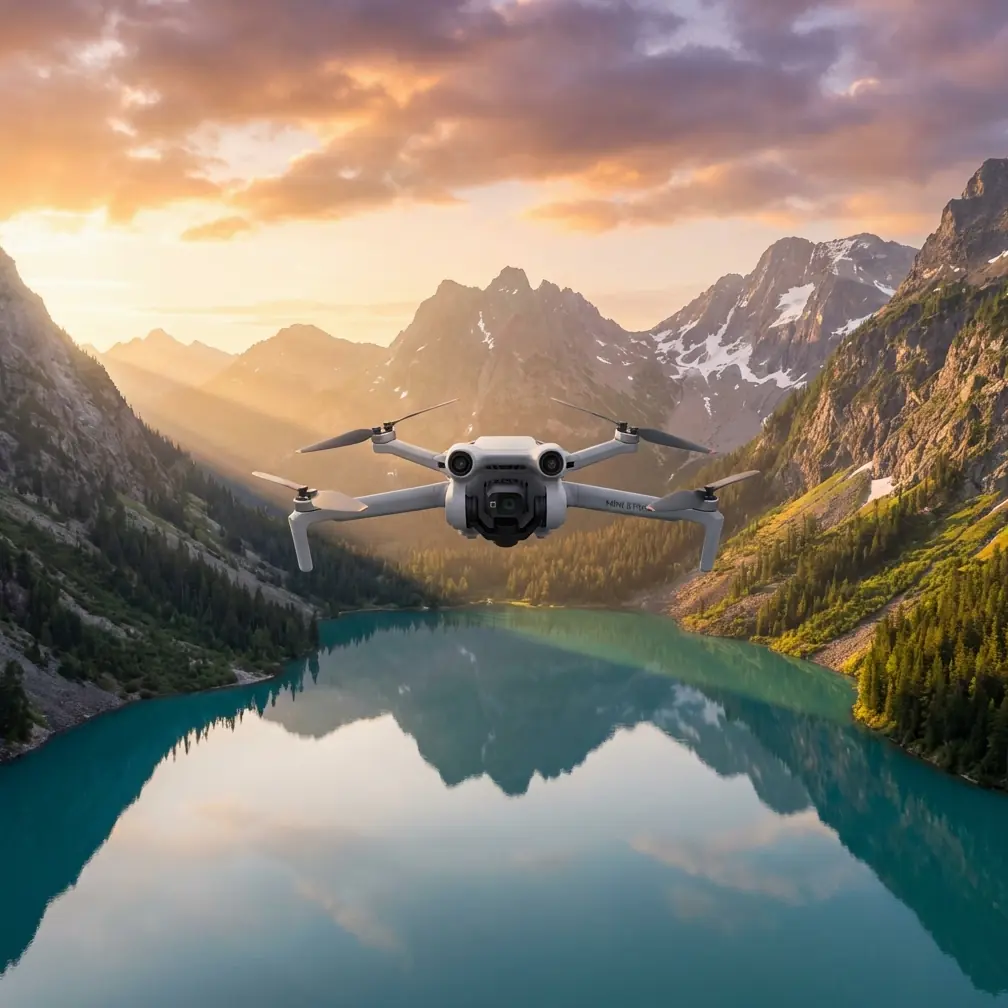
Mini 5 Pro Monitoring Tips for Remote Highways When Weather Turns Mid-Flight
META: A practical Mini 5 Pro tutorial for remote highway monitoring, covering obstacle avoidance, ActiveTrack, D-Log, Hyperlapse, and how to adapt safely when weather shifts during a mission.
Remote highway monitoring looks simple on paper. Put a compact drone in the air, trace the road corridor, collect footage, log problem spots, and head home. In the field, it is rarely that tidy. Terrain creates blind approaches. Traffic speed changes the timing of every pass. Wind behaves differently over cuttings, bridges, and embankments. Then the weather shifts halfway through the job and turns an ordinary flight into a real test of pilot judgment.
That is exactly where the Mini 5 Pro becomes interesting.
This is not a broad overview of what the aircraft can do in theory. This is a practical tutorial built around a specific use case: monitoring remote highways where you may be working alone, far from power, and with a narrow window to document conditions before light or weather deteriorates. If your goal is to inspect traffic flow, shoulder damage, drainage issues, vegetation encroachment, signage visibility, or post-incident road conditions, the Mini 5 Pro’s value is not just that it flies. It is that several of its core tools work together in a way that reduces workload when the environment becomes less cooperative.
Start with a corridor plan, not a scenic flight
Highway work punishes improvisation. The most common mistake is launching with a vague idea of “getting coverage” and then burning battery on indecisive repositioning.
Before takeoff, define three things:
- The operational corridor
- The priority evidence you need
- The fallback route if wind or visibility worsens
For remote roads, I usually divide the mission into short segments rather than one long linear run. A 2-kilometer section with a bridge, drainage crossing, and a blind curve should be treated as three separate information problems, not one continuous shot.
That matters because the Mini 5 Pro’s automated capture tools, including QuickShots and Hyperlapse, are useful only when they support a mission objective. For highway monitoring, the objective is clarity. You are not filming a travel reel. You are building a visual record that helps a crew, manager, or public-sector stakeholder understand what changed, where it changed, and how urgently it needs attention.
QuickShots can help establish context around an interchange, overpass, or slip road, especially when you need a short overhead reveal that shows how a defect sits within the wider road layout. Hyperlapse has a more specialized role. If you are documenting traffic buildup near a temporary closure or recurring congestion around a choke point, a controlled Hyperlapse sequence can compress 15 to 20 minutes of movement into something instantly readable. Used carefully, it becomes an operations tool rather than a creative extra.
Obstacle avoidance matters more on highways than many pilots expect
People hear “remote highway” and assume open airspace. Sometimes that is true. Often it is not.
Highway corridors hide a surprising number of hazards: lighting poles, sign gantries, utility lines, bridge cables, tree lines growing into the right of way, and abrupt elevation changes where the road cuts through terrain. Add changing light and a moving inspection angle, and the risk picture shifts fast.
That is where obstacle avoidance earns its keep. The operational significance is simple: it buys decision time.
A compact drone used for road work often has to fly near roadside features to get usable visual detail. If the aircraft can detect and respond to obstacles during a lateral move or a slow tracking pass, the pilot gets a critical extra moment to reassess framing, heading, and escape direction. On a mission with traffic noise, gusts, and pressure to keep moving, that margin is not theoretical. It can be the difference between completing the pass and aborting it safely.
I still recommend flying as if obstacle sensing does not exist. Maintain conservative stand-off distances. Avoid relying on automation near wires or thin roadside structures. But for highway monitoring in uneven terrain, a good obstacle avoidance system is more than a convenience feature. It reduces the chance that one rushed reposition destroys the mission.
Subject tracking and ActiveTrack are useful, with strict limits
There is a right way and a wrong way to use tracking tools around highways.
The wrong way is to treat ActiveTrack as an excuse to let the drone “follow traffic” while you stop thinking like an operator. That is not monitoring. That is handing control to automation in one of the least forgiving environments you can choose.
The right way is narrower and much more valuable.
ActiveTrack and subject tracking can help when your target is a maintenance vehicle, survey truck, or inspection convoy moving through a defined section of road. If the job is to document lane-edge degradation, shoulder collapse, barrier damage, or vegetation intrusion while the ground team moves at a consistent pace, tracking can stabilize your workflow. Instead of manually correcting every small speed change, you can concentrate on altitude, lateral spacing, obstacle picture, and the data you are trying to collect.
Operationally, that lowers pilot workload during the part of the mission where distractions usually multiply. You still need full oversight. You still need to know where bridges, signs, and poles are before the aircraft gets there. But in real field conditions, reducing repetitive control inputs can make your monitoring cleaner and safer.
If you need a second opinion on setting up a corridor workflow for your own site, you can message our UAV team here.
When weather changes mid-flight, the Mini 5 Pro workflow has to change with it
Let’s get to the part most pilots remember.
You launch in stable conditions. The first leg is smooth. Visibility is good enough to read the road surface cleanly, and the wind is manageable. Then halfway through the mission the weather pivots. It does not always arrive dramatically. Sometimes the first sign is movement in roadside vegetation you were not seeing ten minutes earlier. Sometimes the light flattens, reducing contrast on patched asphalt. Sometimes a crosswind develops over an elevated bridge deck while your launch point still feels calm.
This is where many remote highway flights go wrong. The issue is not just aircraft performance. The issue is mission discipline.
When conditions changed mid-flight on a recent highway-style workflow, the Mini 5 Pro handled the shift best when I changed the profile of the mission immediately. I shortened the run, raised my buffer from roadside structures, and abandoned the idea of one long continuous track. Instead, I switched to shorter, higher-certainty passes over the most important problem points. The drone’s stability and sensing support kept the aircraft composed enough to finish the necessary documentation, but the real lesson was procedural: weather changes should trigger a new mission plan, not a stubborn attempt to finish the old one.
The significance of this is practical. Mid-flight weather shifts affect three things at once:
- Groundspeed and battery efficiency
- Visual quality, especially surface texture and contrast
- Margin for safe return from remote locations
If you are monitoring a distant road section, every extra minute spent fighting a new headwind or searching for a better angle after light collapses erodes your reserve. That reserve matters more than the shot list.
A compact platform like the Mini 5 Pro is especially effective when you respect that reality. The aircraft gives you flexibility, but flexibility only pays off if you are willing to cut, simplify, and prioritize on the fly.
Use D-Log when the road scene has ugly contrast
Highways are full of harsh tonal extremes. Pale concrete barriers. Deep shadows under overpasses. Reflective road signs. Dark asphalt with patchwork repairs. Add broken cloud or a weather front moving through, and standard color profiles can clip highlights or bury defect detail in shadow.
This is where D-Log becomes more than a post-production luxury.
If your monitoring mission may feed into reporting, contractor review, or condition comparison over time, preserving tonal information matters. D-Log helps you hold detail across bright and dark parts of the same frame so you can better interpret drainage washout, edge cracking, pooled water, faded markings, and surface transitions during review.
Operationally, that means two things.
First, you keep more usable information when sunlight and cloud cover alternate during the same sortie. Second, your footage remains more consistent across separate passes, which helps when you are matching clips later to build a coherent record of the corridor.
That said, D-Log is worth using only if your downstream workflow can support it. If the footage needs to be handed off instantly with no grading or exposure normalization, a more direct profile may be the better choice. For many highway operators, the best setup is mixed capture: standard footage for immediate reference, D-Log on the critical segments where lighting is difficult or the defect detail really matters.
QuickShots are best for orientation, not diagnosis
QuickShots get dismissed too often by serious operators, and overused by new ones.
For remote highway monitoring, the right role is orientation. A brief automated reveal can show how a culvert sits relative to the carriageway, how a damaged shoulder connects to a bend, or how a closure affects the wider road geometry. That kind of shot is useful in reports because it helps non-pilots understand location context instantly.
What QuickShots should not do is replace your diagnostic footage.
You still need slow, deliberate passes at sensible angles. You still need top-down and oblique views where cracking, rutting, washout, or obstruction can actually be evaluated. Think of QuickShots as the opener in the evidence package, not the evidence itself.
Build a repeatable remote-highway flight pattern
If you want dependable results, standardize the mission. My preferred Mini 5 Pro pattern for remote highways looks like this:
1. High context pass
Start with a safe-altitude overview of the full segment. This gives you orientation, traffic behavior, wind feel, and an early look at any unexpected obstacles.
2. Targeted inspection passes
Drop to the altitude needed for the actual issue. Keep each pass short. One pass for surface condition, one for edge condition, one for drainage or structure if relevant.
3. Tracking pass if a ground asset is involved
Use ActiveTrack or subject tracking only when following a maintenance or inspection vehicle adds operational clarity.
4. Time-compression pass if traffic pattern matters
Run Hyperlapse only if queueing, lane merge behavior, or closure impact is part of the mission objective.
5. Exit early if weather starts rewriting the mission
Do not negotiate with a deteriorating sky. Capture the priority frames and recover with reserve.
The hidden benefit of this structure is consistency. When you revisit the same road section later, you can compare like with like. That is often more valuable than getting one dramatic flight.
What separates useful highway footage from wasted battery
Useful highway monitoring footage answers questions. Wasted battery produces attractive ambiguity.
Before landing, check whether your clips clearly show:
- Where the issue sits in the corridor
- How severe it appears from operational angles
- Whether adjacent infrastructure is affected
- How weather or traffic may be influencing the condition
- What someone on the ground should inspect next
If the answer is no, the problem is usually not the aircraft. It is the capture logic.
The Mini 5 Pro gives you a strong toolkit for this kind of work: obstacle avoidance for margin around roadside hazards, ActiveTrack and subject tracking for controlled vehicle-follow scenarios, QuickShots for situational context, Hyperlapse for traffic evolution, and D-Log for difficult light. None of those features replace judgment. Together, they make judgment easier to apply under pressure.
That is why this drone fits remote highway monitoring so well. Not because it removes complexity, but because it helps a disciplined operator manage complexity without carrying a larger system into the field.
And when the weather changes halfway through, that balance matters more than any spec sheet ever will.
Ready for your own Mini 5 Pro? Contact our team for expert consultation.