
Mini 5 Pro Field Report: Monitoring Mountain Highways When
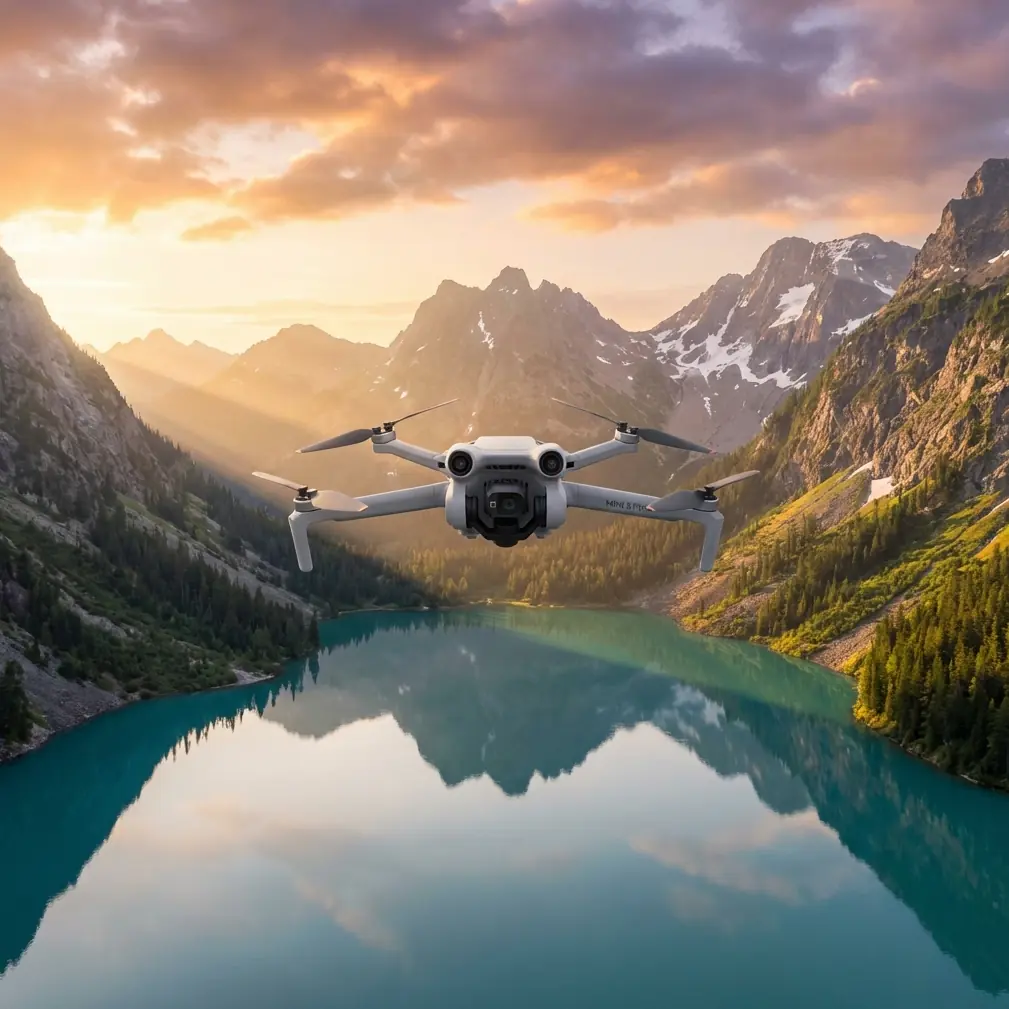
Mini 5 Pro Field Report: Monitoring Mountain Highways When the Weather Turns
META: A practical field report on using the Mini 5 Pro for mountain highway monitoring, with real-world guidance on obstacle avoidance, ActiveTrack, D-Log, QuickShots, Hyperlapse, and changing weather.
Mountain highway monitoring is one of those jobs that looks straightforward on a map and becomes far more demanding once you are on location. Elevation shifts. Wind funnels through cut slopes. Light bounces off guardrails, wet asphalt, snow patches, and rock faces in ways that can confuse both pilots and cameras. If the mission is to document traffic flow, inspect a landslide-prone shoulder, or keep visual records of maintenance progress, the aircraft needs to do more than simply get airborne. It needs to stay readable, controllable, and predictable when the environment stops cooperating.
That is where the Mini 5 Pro makes a strong case for itself.
This is not a generic spec-sheet take. Think of this as a field report built around a mountain highway scenario, the kind of operation where you launch from a narrow turnout, keep one eye on passing trucks, and hope the weather forecast is more honest than usual. On paper, compact drones are often discussed as travel-friendly camera tools. In practice, a platform like the Mini 5 Pro becomes much more interesting when you use it as a mobile observation system for infrastructure work.
The mission I have in mind is a common one: monitor a stretch of highway carved into mountain terrain, with steep drop-offs on one side and a wall of rock and tree cover on the other. The objective is simple enough. Capture roadway conditions, verify shoulder stability, document drainage performance, and create footage clear enough for engineers, road crews, or local agencies to review later. The challenge is that mountain roads rarely give you a stable operating environment for very long.
The day started clean. Light traffic. Thin cloud. Enough contrast in the scene to separate lane markings from older asphalt patches. Early in the flight, the Mini 5 Pro’s value showed up in the places that usually create pilot workload. Obstacle avoidance is not a flashy feature in this setting; it is a workload reducer. When you are running a low lateral pass near signposts, utility lines, tree edges, or uneven rock cuts, obstacle sensing gives you a margin that matters. Not because it replaces decision-making, but because mountain roads force you to make many small corrections in a short period of time. A drone that helps manage those corrections lets you focus on mission judgment rather than constant recovery inputs.
That distinction becomes even more important when the weather shifts mid-flight.
And it did. Fast.
What had been a workable monitoring window changed as colder air rolled through the valley. Wind began pushing across the road at an angle rather than down the corridor. A stretch of pavement that had looked dry from the launch point picked up a darker sheen. Visibility did not collapse, but the scene flattened. The contrast between road surface, shoulder debris, and drainage channels dropped noticeably in just a few minutes. This is where smaller drones can either become liabilities or prove their design.
The Mini 5 Pro handled the change the way a useful field aircraft should: by staying stable enough to finish the critical capture sequence without forcing an immediate retreat. That does not mean you ignore the conditions. Mountain wind is still mountain wind. But a drone that can hold position cleanly while you reassess is more valuable than one that turns every weather change into a rushed exit.
Operationally, two features matter here more than most people admit: obstacle avoidance and ActiveTrack.
Obstacle avoidance matters because weather rarely changes one variable at a time. When wind picks up near a mountain highway, it does not just move the aircraft. It changes your relative closure rate near terrain, poles, barriers, and roadside vegetation. If the drone is helping you manage proximity while you reposition, you are less likely to waste the next minute fighting drift near a hazard. That saved attention can be used for what actually matters: checking road condition, identifying shoulder erosion, or confirming whether runoff is crossing the lane.
ActiveTrack matters because highways are moving systems. If your task includes monitoring traffic movement through a work zone, following a maintenance vehicle, or documenting how vehicles navigate a compromised section of road, consistent framing becomes useful evidence. In a mountain environment, manual tracking can get messy quickly because the background is visually dense. Trees, switchbacks, exposed rock, and changing light all compete for attention. A subject tracking mode that keeps the vehicle or point of interest centered can reduce unnecessary camera corrections and produce footage that is easier to review later.
That does not mean you hand control to automation and stop thinking. It means you deploy automation where it reduces friction.
For mountain highway work, I would use ActiveTrack selectively. A snowplow, inspection truck, or lead maintenance vehicle moving at predictable speed through a known corridor is a sensible candidate. A fast-moving motorcycle entering blind curves near tall tree cover is less so. The feature is strongest when it is supporting a controlled documentation pass, not when it is asked to solve a chaotic scene.
The same logic applies to QuickShots. A lot of pilots treat them as social-first features. In infrastructure monitoring, that is too narrow a view. QuickShots can be useful when you need repeatable visual context around a fixed site. If crews are stabilizing a slope above a highway or clearing debris from a runoff channel, a short automated reveal can establish spatial relationships quickly: road alignment, hillside grade, work area footprint, and nearby risk points. That kind of footage can support reporting and briefings, not just highlight reels.
Hyperlapse is even more underrated in this role. On a mountain highway, change is often gradual until it suddenly is not. Cloud shadows move across the route. Fog rises from one drainage pocket before spreading. Traffic density shifts after a temporary closure is lifted. A well-planned Hyperlapse sequence can show environmental progression in a way standard video cannot. For monitoring teams, that has real operational value. You can compress 20 or 30 minutes of weather behavior into a short clip that shows how fast conditions evolved around a problem area.
Image profile matters too, especially when the weather refuses to stay consistent. D-Log gives you more room to preserve scene detail when highlights and shadows are fighting each other, which is exactly what happens on mountain roads. One moment the camera is reading bright sky over a ridge line. The next it is looking into a darker cut section with wet pavement and shadowed guardrails. A flatter profile helps keep those tonal swings manageable in post. If your footage is being reviewed for decision-making rather than entertainment, retaining surface detail in the road shoulder or texture in a slope face is not a luxury. It is part of the job.
There is also a practical reason D-Log helps in this scenario: weather transitions are messy to grade if your footage clips too early. When clouds thicken mid-flight, the scene can lose apparent sharpness not because the camera failed, but because contrast compressed. If you captured with enough latitude, you have a better chance of pulling back usable separation between lane markings, pooled water, gravel edges, and vegetation line. That can be the difference between footage that looks dramatic and footage that is actually useful.
The Mini 5 Pro also fits the physical reality of these missions. Mountain highways do not always offer ideal launch and recovery zones. Sometimes you are working from a gravel turnout barely wide enough for a service truck. Sometimes your safe takeoff area is uneven, damp, and bordered by brush. A smaller platform is easier to deploy quickly, easier to reposition when traffic or weather changes your plan, and easier to pack when the safest decision is to move to a second observation point. That portability is not a lifestyle advantage here. It is mission flexibility.
One lesson from this kind of operation is that smooth footage is not the only measure of success. Clarity of intent matters more. Before launch, define what the flight needs to prove. Are you documenting the extent of runoff crossing lanes? Tracking how vehicles merge around a damaged shoulder? Recording whether fresh rockfall has reached the travel path? Once that objective is clear, the Mini 5 Pro’s toolset starts to make more sense.
Use obstacle avoidance to protect the repositioning phase. Use ActiveTrack when the subject path is predictable enough to justify automation. Use QuickShots only when they add geographic context. Use Hyperlapse to reveal timing, not just atmosphere. Use D-Log when the scene’s brightness range threatens to eat your details.
When the weather changed during the flight I am describing, the smartest move was not to chase dramatic footage of the storm front. It was to tighten the mission. One pass over the drainage crossing. One angled lateral along the outer shoulder. One higher establishing shot to show traffic behavior through the problem section. Then recover before the conditions made the data less reliable. That discipline is what separates useful field work from attractive but disposable flying.
For teams building repeatable mountain highway workflows, the Mini 5 Pro’s real advantage is not any single mode by itself. It is the way those modes support faster, safer decisions under variable conditions. A drone in this class has to earn its place by reducing field friction. If it can help you maintain situational awareness, preserve footage quality in shifting light, and gather usable context before the weather closes the window, then it belongs in the kit.
I would also stress communication. On any roadside mission, especially in mountain terrain, the drone is only one part of the operation. The pilot needs a clear plan for visual observers, traffic awareness, and fallback landing options. If your team is refining a workflow for that kind of deployment, here is a direct line for operational questions: message us here. The right flight plan often matters more than the right camera setting.
So where does that leave the Mini 5 Pro for mountain highway monitoring?
It leaves it in a very credible position. Not because compact drones are magically immune to weather or terrain constraints. They are not. It leaves it there because the feature set aligns unusually well with the real pressures of this mission profile. Roads in mountainous areas demand quick deployment, precise movement near obstacles, adaptable tracking, and footage that holds up when lighting turns difficult. The Mini 5 Pro checks those boxes in a way that feels practical rather than theoretical.
If your work involves observing mountain corridors, documenting roadway conditions, or creating visual records that engineers and field teams can actually use, this aircraft deserves serious attention. The weather will still change faster than you want. The wind will still find the gaps. The terrain will still punish sloppy planning. But with the Mini 5 Pro, you have a platform that gives you a better shot at returning with footage that answers real questions.
And in field operations, that is the only standard that matters.
Ready for your own Mini 5 Pro? Contact our team for expert consultation.