
Mini 5 Pro for Highway Monitoring in Low Light
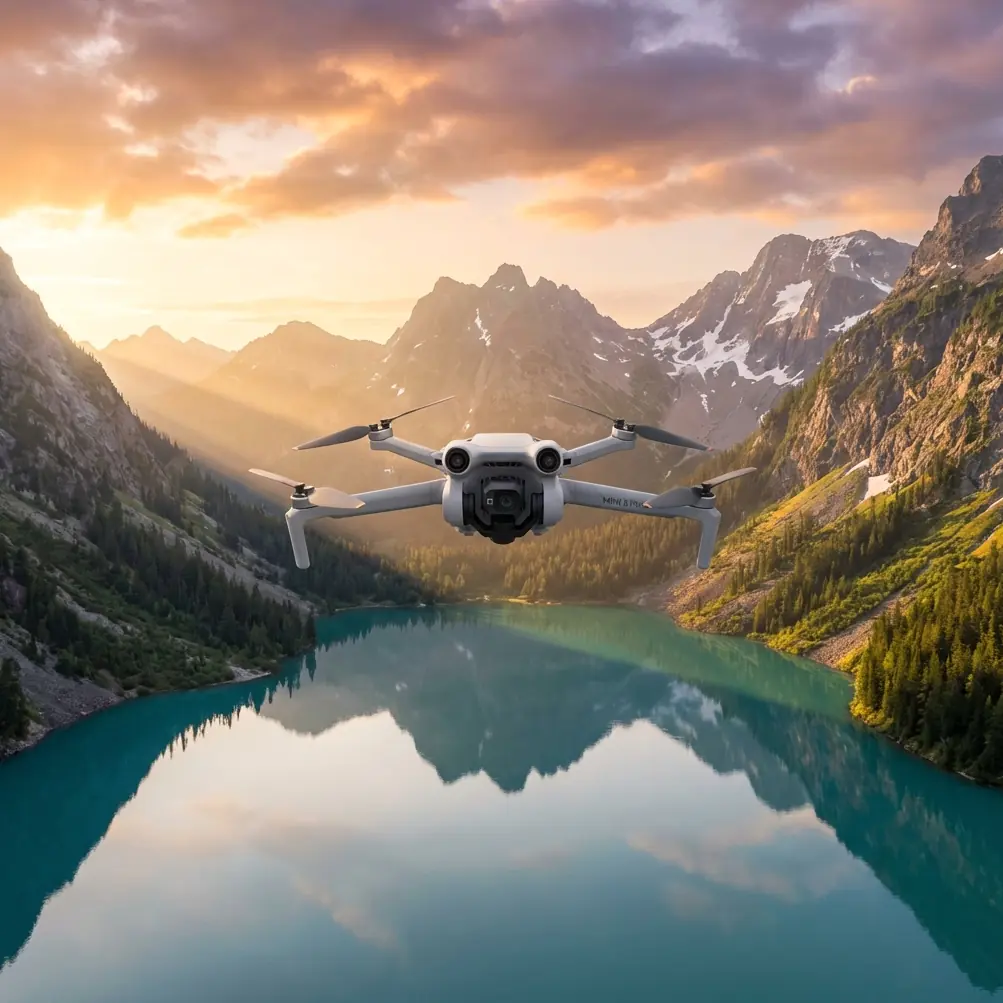
Mini 5 Pro for Highway Monitoring in Low Light: A Field Case Study
META: A practical Mini 5 Pro case study for low-light highway monitoring, covering obstacle avoidance, ActiveTrack, D-Log workflow, and antenna positioning for stronger range.
I’ve spent enough dawns and blue-hour shoots around roads to know that “low light” is a misleadingly gentle phrase. On a highway, low light means uneven illumination, streaking headlights, reflective lane paint, dark medians, wind shear from passing trucks, and very little margin for sloppy setup. If the aircraft is going to be useful, not just airborne, every system has to pull its weight.
That is why the Mini 5 Pro, at least in the way serious operators are likely to use it, deserves to be discussed as a field tool rather than a spec-sheet curiosity. This is not about cinematic fluff. It is about whether a compact drone can help document traffic flow, capture usable evidence in dim conditions, and maintain stable situational awareness without creating more workload for the pilot.
What follows is a case-style breakdown built around a realistic assignment: monitoring a highway corridor at low light for traffic pattern review, incident documentation, and visual reporting.
The assignment: a dim highway, moving subjects, and no patience for guesswork
The scenario starts before sunrise. A transportation contractor needs aerial footage of a multi-lane highway interchange during the hour when lighting is worst for imaging but best for spotting bottlenecks. Roadside poles create hard pools of light and long patches of darkness. Cars and trucks move quickly from one exposure zone to another. The objective is not artistic perfection. The objective is readable, stable footage that shows lane behavior, merging patterns, and the relationship between traffic density and road geometry.
This is exactly the kind of job where a small aircraft like the Mini 5 Pro can either surprise you or expose its limits quickly.
A larger drone gives you more room to brute-force the problem. A compact aircraft does not. It asks for cleaner decision-making. You need to think about obstacle avoidance sensitivity, subject tracking discipline, transmission stability, and how your camera profile will behave when taillights start clipping before the road surface lifts out of shadow.
Why the Mini 5 Pro format makes sense here
For highway monitoring, compact size is not just about convenience. It changes deployment speed and discretion. On roadside work, every minute on location matters. A drone that can be launched, repositioned, and recovered quickly reduces exposure to traffic hazards and keeps your team from lingering near shoulders and ramps.
The Mini 5 Pro’s real advantage in this use case is the combination of portability with intelligent flight support. Low-light highway work is mentally demanding because the pilot is juggling moving vehicles, roadside structures, legal standoff distances, signal quality, and changing visibility all at once. Features like obstacle avoidance and ActiveTrack are not there to replace judgment. They reduce cognitive load when used carefully.
That distinction matters. Operators who treat automation as permission to relax usually get weak results. Operators who use it as a second layer of protection get cleaner flights and more consistent footage.
The first operational decision: do not fly straight into the visual chaos
My preferred setup for this kind of mission is not centered over the highway. It is offset. I position the launch point where the aircraft can look across the traffic stream rather than directly chasing it along the roadway. That one decision improves several things at once.
First, it gives obstacle avoidance more readable geometry. Light poles, signage, overpasses, and sound barriers are easier for the pilot to anticipate when the aircraft is crossing visual planes instead of tunneling into them. Second, it produces more useful movement data because vehicles reveal lane changes and speed differences more clearly in diagonal or lateral compositions. Third, it helps transmission quality because you are less likely to put the drone behind layers of roadside clutter.
This is also where antenna positioning starts to matter more than many pilots realize.
Antenna positioning advice for maximum range
A lot of range complaints are not really about range. They are about bad controller orientation.
With the Mini 5 Pro, the basic rule is simple: do not point the antenna tips directly at the aircraft. The stronger signal zone typically extends broadside from the antenna faces, not from the ends. In practice, that means you want the flat sides of the antennas oriented toward the drone’s location, adjusting as the aircraft changes altitude and bearing.
On a highway job, this gets complicated because the drone often moves laterally while the pilot instinctively keeps staring at the screen. I make a habit of checking controller orientation every 20 to 30 seconds during longer tracking passes. That small discipline often does more for link stability than people expect. If you are filming from below an overpass edge or near overhead signage, even slight antenna misalignment can combine with concrete and steel to degrade the signal faster than open-field experience would suggest.
Operationally, the significance is huge. Better transmission stability means fewer interruptions during tracking, fewer forced altitude changes, and fewer moments where the pilot has to choose between preserving the shot and preserving the link. On traffic monitoring work, that choice should never be close.
Low-light image strategy: protect information, not just brightness
The biggest mistake I see in low-light highway footage is overexposing the scene to make it feel brighter. That usually destroys the very information the client needs. Headlights bloom, taillights smear, reflective road markings turn harsh, and the darker zones become noisy anyway.
A better workflow on the Mini 5 Pro is to expose with restraint and preserve highlight detail, especially around vehicle lighting and illuminated signage. If D-Log is available in your workflow, it becomes especially valuable here because it gives you more room to control contrast later without letting the bright elements dominate the frame. For traffic review, that flexibility matters. You want to separate lanes, vehicle clusters, and roadside features cleanly in post, not bake in a contrast curve that looks punchy on-site but falls apart during analysis.
This is one of those cases where “flat” footage is not a stylistic preference. It is an operational advantage. When road surfaces, barriers, and merge points live near the edge of visibility, extra grading latitude helps preserve useful distinctions.
I also avoid aggressive camera movement. Smooth lateral slides and slow climbs work better than dramatic pushes. In low light, fast movement multiplies blur and makes compression artifacts more obvious. If the purpose is monitoring, clarity beats excitement every time.
Obstacle avoidance in low light: useful, but never a permission slip
Let’s talk honestly about obstacle avoidance. It is valuable, but it should be treated as a support layer, not a guarantee. Around highways, the most dangerous obstacles are often the least cooperative visually: thin poles, wires near adjacent infrastructure, and sign structures that blend into dark backgrounds.
That said, obstacle sensing still changes the pilot’s margin for error in meaningful ways. When repositioning near a cloverleaf ramp or backing up to widen the scene, having the aircraft monitor its surroundings can prevent the kind of slow, embarrassing collision that happens when your attention is split between traffic movement and framing.
Its operational significance is strongest during transitions, not hero shots. If I am moving from a static overlook composition into a gentle tracking path, obstacle avoidance gives me confidence to keep the aircraft’s repositioning deliberate and conservative. I still pre-visualize the route. I still assume the system may miss something difficult to detect. But the added buffer is real.
For low-light work, the right mindset is: trust it enough to benefit from it, not enough to surrender to it.
ActiveTrack and subject tracking: use the system to follow patterns, not a single car
A highway is a terrible place to become obsessed with one vehicle unless the mission specifically requires it. The better application for ActiveTrack or subject tracking on the Mini 5 Pro is often not individual pursuit but controlled following of traffic behavior within a lane group or roadway segment.
For example, if congestion consistently forms at a merge point, I may use tracking tools to maintain a stable relationship with a lead vehicle cluster rather than a single target. That creates footage with far more analytical value. You can observe how spacing changes, where braking ripples begin, and whether one lane absorbs load differently from the next.
This is where compact intelligent drones can genuinely outperform manually flown footage from less disciplined operators. Subject tracking, when paired with careful altitude and lateral separation, reduces micro-corrections from the pilot. The result is steadier footage and more reliable visual context.
The catch is obvious: any automated tracking around traffic demands conservative boundaries. I do not rely on it near complex structures, and I do not let it drag the aircraft into a narrowing geometry just because the target remains lockable. Tracking is a servant, not a mission planner.
QuickShots and Hyperlapse: useful only if they serve the report
QuickShots and Hyperlapse sound like features for creators, and often they are. But on a highway monitoring assignment, they still have practical value if you use them with restraint.
A short programmed move can document the relationship between a frontage road, an on-ramp, and the main traffic flow in a way that a static frame cannot. Hyperlapse is particularly useful when the client wants to show the buildup and release of congestion over time. Instead of scrubbing through long raw clips, stakeholders get a compressed visual record of how density develops across a corridor.
The key is intent. If the move does not reveal a traffic pattern, a structural relationship, or a time-based change, it is decoration. I would rather deliver one clean hyperlapse of a bottleneck forming over 12 minutes than six flashy automated clips that tell the viewer nothing.
The field workflow that actually held up
On one representative low-light monitoring session, the workflow looked like this:
I launched from an offset service area rather than a shoulder. The aircraft climbed to a moderate observation height, not because higher is always safer, but because it improved the angle across two merge zones without putting the drone against a dark overpass backdrop. I oriented the controller antennas broadside to the aircraft and kept adjusting as it shifted laterally across the corridor. That maintained a stable transmission link through the whole observation window.
I opened with static establishing frames, then used slow lateral motion to reveal lane density changes. For the most problematic merge segment, I used tracking assistance to hold position relative to the traffic stream rather than manually chasing every small speed variation. The footage was captured with highlight protection in mind so headlights and signage remained controlled. The D-Log material later gave enough room to separate pavement texture, barriers, and vehicle movement during grading.
The resulting deliverable was not glamorous. It was useful. The client could see where the merge breakdown began, how far upstream braking propagated, and which lane transitions were producing the most disruption. That is the entire point.
If you want to compare notes on setup choices for similar flights, I put together a direct line for field questions here: message me here.
What makes the Mini 5 Pro a credible option for this job
Three things stand out.
First, intelligent support features matter more in low light than many pilots admit. Obstacle avoidance and ActiveTrack reduce workload when visibility, subject speed, and environmental clutter all increase at once.
Second, signal discipline is part of image quality. That sounds indirect, but it is true. If your antenna positioning is sloppy, your range confidence drops. Then your flight path gets timid or erratic. Then your footage suffers. A stable link is not separate from a stable mission.
Third, camera workflow decisions shape the final usefulness of the footage. Preserving highlights, using D-Log when appropriate, and avoiding overactive movement all help turn low-light aerial video from a noisy impression into an interpretable record.
Where pilots still get it wrong
They launch too close to the road. They rely on automation without defining limits. They keep the antenna tips pointed at the drone. They expose for “brightness” instead of information. They use QuickShots because the feature exists, not because the assignment needs it.
That is why a compact drone can feel brilliant in one operator’s hands and frustrating in another’s. The aircraft matters. The method matters more.
For highway monitoring in low light, the Mini 5 Pro is not interesting because it is small. It is interesting because, handled properly, it can produce structured, repeatable, field-usable results in conditions that punish weak technique. And that is a much tougher standard than simply getting airborne.
Ready for your own Mini 5 Pro? Contact our team for expert consultation.