
Mini 5 Pro for Remote Field Monitoring: What Actually
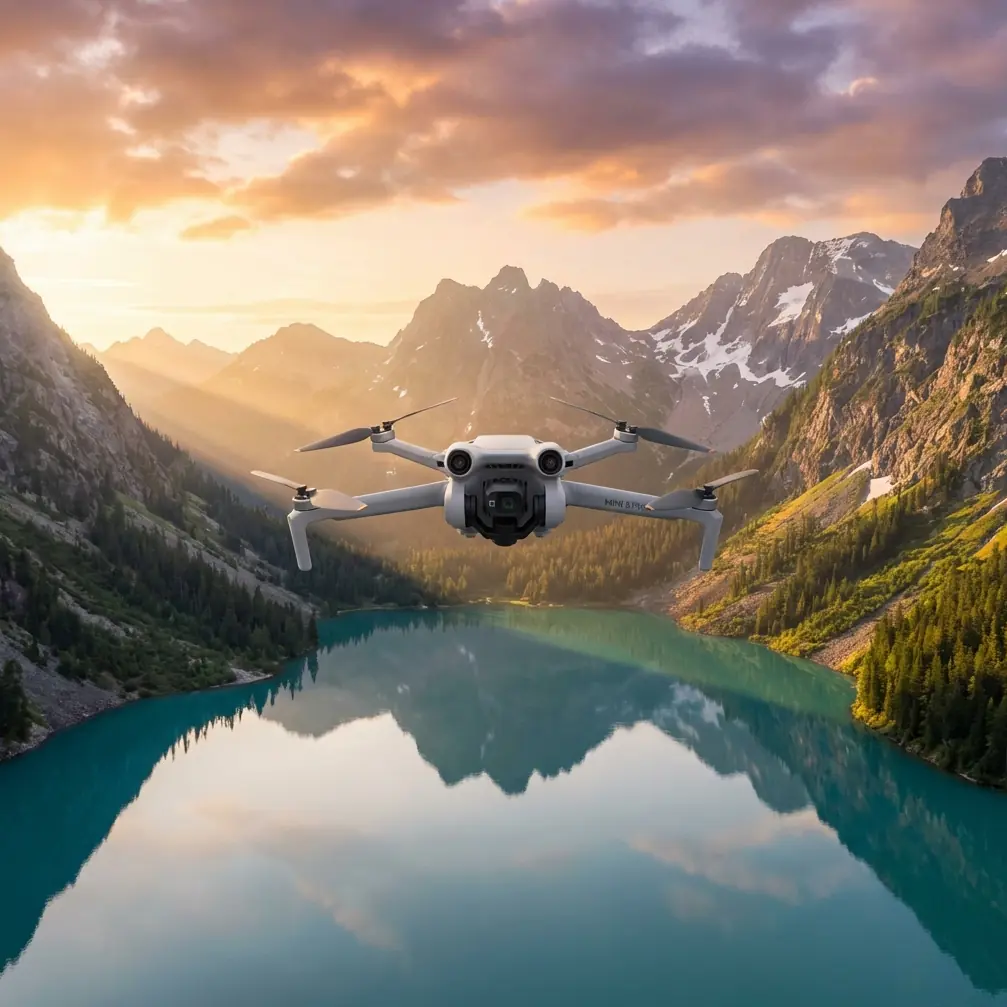
Mini 5 Pro for Remote Field Monitoring: What Actually Matters in Real Operations
META: A technical review of Mini 5 Pro for remote field monitoring, with practical lessons from power-line UAV inspection rules, airspace planning, route design, and real-world sensor performance.
When people talk about a compact drone for remote field monitoring, the conversation usually drifts toward camera specs and flight time fantasies. That misses the point. In the field, especially when you are covering isolated farmland, utility corridors, drainage lines, or perimeter roads, the drone that works best is not the one with the loudest headline feature. It is the one that fits into a disciplined workflow.
That is why the most useful lens for evaluating the Mini 5 Pro is not hobby flying. It is professional inspection logic.
I’ve spent years around imaging tools as a photographer, and the biggest shift I see in drones used for monitoring is this: image quality is no longer the only decision-maker. Reliability of the mission chain matters more. Can the aircraft be planned properly? Can it be flown legally in low-altitude airspace? Can the operator define repeatable routes based on terrain? Can the resulting footage be stored, reviewed, and compared over time? Those questions come straight out of formal UAV inspection practice, and they are exactly the questions that determine whether a compact aircraft like the Mini 5 Pro becomes genuinely useful for remote field work.
Why a field-monitoring review should start with regulation, not flight modes
A technical guide for unmanned helicopter power-line inspection lays out something many smaller drone users overlook: aerial work begins with compliance. It explicitly states that teams and organizations conducting UAV inspection activity must follow relevant aviation laws and regulations, including the Civil Aviation Law of the People’s Republic of China, basic flight rules, general aviation control provisions, and civil aviation authority rules. That may sound distant from a Mini 5 Pro flying over remote fields. It isn’t.
Operationally, this means the aircraft is only one part of the system. If you are monitoring remote agricultural land, water infrastructure, private estates, orchards, or utility-adjacent fields, your success starts before takeoff. Airspace use, local flight restrictions, and nearby civil aviation constraints shape what is possible. The same source also makes a second critical point: units and individuals organizing civil UAV activity should apply for the allocation and use of airspace according to the relevant regulations, accept flight activity management and air traffic services, and ensure flight safety.
That matters for Mini 5 Pro users because compact drones encourage spontaneity. Professionals should resist that temptation. In remote monitoring, “small” does not mean “procedurally exempt.” If the field sits under a sensitive route, near controlled airspace, or within a civil transport airport flight zone, the rule set changes fast. The guideline is blunt on this issue: without approval from the regional authority, UAV flights are prohibited in the airspace of civil transport airports. For anyone using the Mini 5 Pro to monitor fields near growing peri-urban zones, that single restriction can decide whether the mission happens at all.
So yes, obstacle avoidance and tracking features matter. But they sit on top of a legal and planning foundation. Ignore that foundation and the aircraft’s smartest features become irrelevant.
What the Mini 5 Pro needs to do well for remote fields
Remote field monitoring sounds simple until you do it for repeated, decision-making work. Then the challenges stack up.
Terrain changes. Tree lines distort line of sight. Drainage cuts produce abrupt elevation changes. Wind behaves differently over open ground than it does near embankments or shelter belts. Livestock move unpredictably. Signal conditions shift with distance and foliage. Light changes by the minute. A drone being used in that environment needs more than smooth cinematic appeal.
The Mini 5 Pro, judged through that practical lens, has to deliver in five areas:
- Predictable route execution
- Strong situational awareness through obstacle sensing
- Useful tracking for moving subjects or vehicles
- Image profiles suitable for analysis, not just social clips
- A workflow that supports repeat missions
That framework aligns surprisingly well with the structure described in the inspection guide. The document breaks UAV inspection into three parts: pre-flight preparation, flight inspection, and results processing. That three-stage model is far more useful for evaluating a field drone than any marketing checklist.
Pre-flight: where compact drones either become tools or toys
The source material says that before power inspection work, routes should be accurately planned by the ground-station operator according to route-planning standards and the geographical environment of each line, while the flight-control operator supervises and checks the plan. Even though that guidance was written for transmission-line inspection, the operational significance transfers almost perfectly to remote fields.
For a Mini 5 Pro mission, this translates into a simple but demanding discipline: every flight should be tied to geography, not mood.
If you are monitoring crop stress in a remote plot, checking fence breaches, surveying irrigation spread, or inspecting access roads after rainfall, route planning has to account for the land’s actual form. A flat rectangular field is easy. A broken patchwork of terraces, tree borders, poles, sheds, and water channels is not. This is exactly where obstacle avoidance earns its keep. Not as a flashy feature, but as an operational safety layer when terrain and structures complicate the route.
I remember one field session where the edge of a monitored property backed into rough scrubland. We were running a repeat pass near a drainage corridor at first light when a deer burst from the brush and crossed the route below the aircraft. A few seconds later, a pair of low branches entered the path as the drone adjusted around the line of trees. That sort of moment is where sensor intelligence stops being theoretical. In remote environments, wildlife is not a side note. It is part of the operating environment. A Mini 5 Pro with dependable obstacle sensing is not just protecting the aircraft from a branch strike; it is preserving continuity in the mission and reducing the need for abrupt manual corrections that can ruin comparison footage.
ActiveTrack, subject tracking, and when they are genuinely useful
Subject tracking in agricultural or rural monitoring gets dismissed too often as a content-creator feature. That is a mistake.
ActiveTrack and similar subject tracking tools can be useful when the monitored target is not the field itself but movement through the field. Think service vehicles crossing remote access roads, livestock shifts between sections, or inspection staff traversing irrigation lines or drainage infrastructure. In those cases, a compact drone that can hold visual lock on a target while maintaining obstacle awareness becomes a documentation tool rather than just a flying camera.
The operational caveat is obvious: tracking should never replace route planning. The inspection standard’s emphasis on supervised, accurate planning still applies. Tracking is a secondary capability layered over a controlled mission profile. It helps document anomalies. It does not define the mission architecture.
For photographers and visual operators, QuickShots and Hyperlapse can also have a place here, though not the one most people assume. They are not only for polished visuals. A controlled Hyperlapse of a road approach, canal line, or flood-prone perimeter can create a quick overview reference that helps teams compare conditions across dates. QuickShots are less central for formal inspection, but they can help create broader contextual visuals for landowners, agronomists, or remote-site managers who need a fast understanding of how a problem area relates to the whole property.
Camera profiles matter more when your footage has to hold up later
The same inspection document notes that result processing includes collection of flight data, photos, video materials, analysis, processing, and storage. That last part—storage and later analysis—is where many field-monitoring flights quietly fail. They capture footage, but not footage designed for reuse.
This is why D-Log or similar flat profiles matter on a Mini 5 Pro. Not because every farmer or site manager wants to color grade like a film editor, but because a flatter profile preserves flexibility when lighting is inconsistent. Remote field flights often happen early or late in the day, with strong contrast between bare ground, reflective water, crop canopy, and shadowed tree margins. If the footage is over-compressed in camera style, later analysis becomes harder. If the image retains tonal headroom, you have a better chance of extracting useful detail when comparing one monitoring session against another.
That is not a glamorous point, but it is a real one. Monitoring work is cumulative. The value is not only in what you see today. It is in what you can compare next month.
The airport issue is more relevant to field users than it looks
One of the clearest facts in the reference material is the restriction on UAV operations in civil transport airport airspace without regional approval. Some rural operators assume this does not concern them because they work “out in the fields.” Increasingly, that assumption is risky.
Fields on the edge of expanding towns, logistics corridors, or industrial zones may sit much closer to airport-related airspace than owners realize. The Mini 5 Pro’s portability makes it easy to carry into those environments, but portability does not shrink the regulatory perimeter. Before any repeated monitoring program begins, especially for commercial or industrial land management, users should verify airspace status and approval requirements. That single step can prevent wasted travel, grounded flights, or compliance issues that damage an otherwise sound operation.
Training still separates reliable operators from casual users
The document also states that unmanned helicopter inspection operators must be professionally trained and qualified in system operation. The aircraft category may differ, but the principle carries over directly. Compact drones reduce barriers to entry. They do not remove the need for operator competence.
For Mini 5 Pro field work, training is not just about stick control. It is about reading terrain, setting safe launch and recovery areas, understanding route geometry, managing battery margins over open land, reviewing footage critically, and knowing when automation should be overridden. In practical monitoring, the best flights often look uneventful. That is usually the result of good preparation, not luck.
A reliable field operator also understands the source document’s workflow logic:
- collect site data before the mission,
- plan the route using real geographic conditions,
- inspect the takeoff and landing area,
- fly with supervision and discipline,
- process and archive outputs methodically.
That structure is what turns a Mini 5 Pro into a repeatable monitoring platform.
Is the Mini 5 Pro a serious tool for remote fields?
If the goal is remote field monitoring rather than heavy-lift utility inspection, a compact aircraft can make a lot of sense. The Mini 5 Pro’s appeal lies in the intersection of agility and intelligence. Obstacle avoidance helps in mixed rural environments. ActiveTrack can support documentation of moving assets or personnel. D-Log improves post-flight usefulness. QuickShots and Hyperlapse can add context when overview communication matters.
But the more revealing lesson comes from the power-inspection guideline, not the feature list. Serious UAV work is built on process. The source gives us the bones of that process in black and white: comply with aviation law, apply for airspace where required, avoid airport-controlled zones without approval, plan each route according to terrain, and treat mission outputs as data to be collected, analyzed, and stored.
That is the standard I would use to judge the Mini 5 Pro for remote fields.
Not whether it can make a pretty sunrise clip. Whether it can support a lawful, repeatable, terrain-aware workflow that produces usable information over time.
If you are setting one up for that kind of work and want to compare route-planning habits, sensor use, or monitoring workflows, you can message a field drone specialist here.
The best compact monitoring drones are not the ones that promise the most. They are the ones that fit cleanly into how real work gets done. On that basis, the Mini 5 Pro looks most convincing when treated not as a gadget for occasional flights, but as a disciplined aerial observation tool for remote land management.
Ready for your own Mini 5 Pro? Contact our team for expert consultation.