
Mini 5 Pro for Extreme-Temperature Construction Monitoring
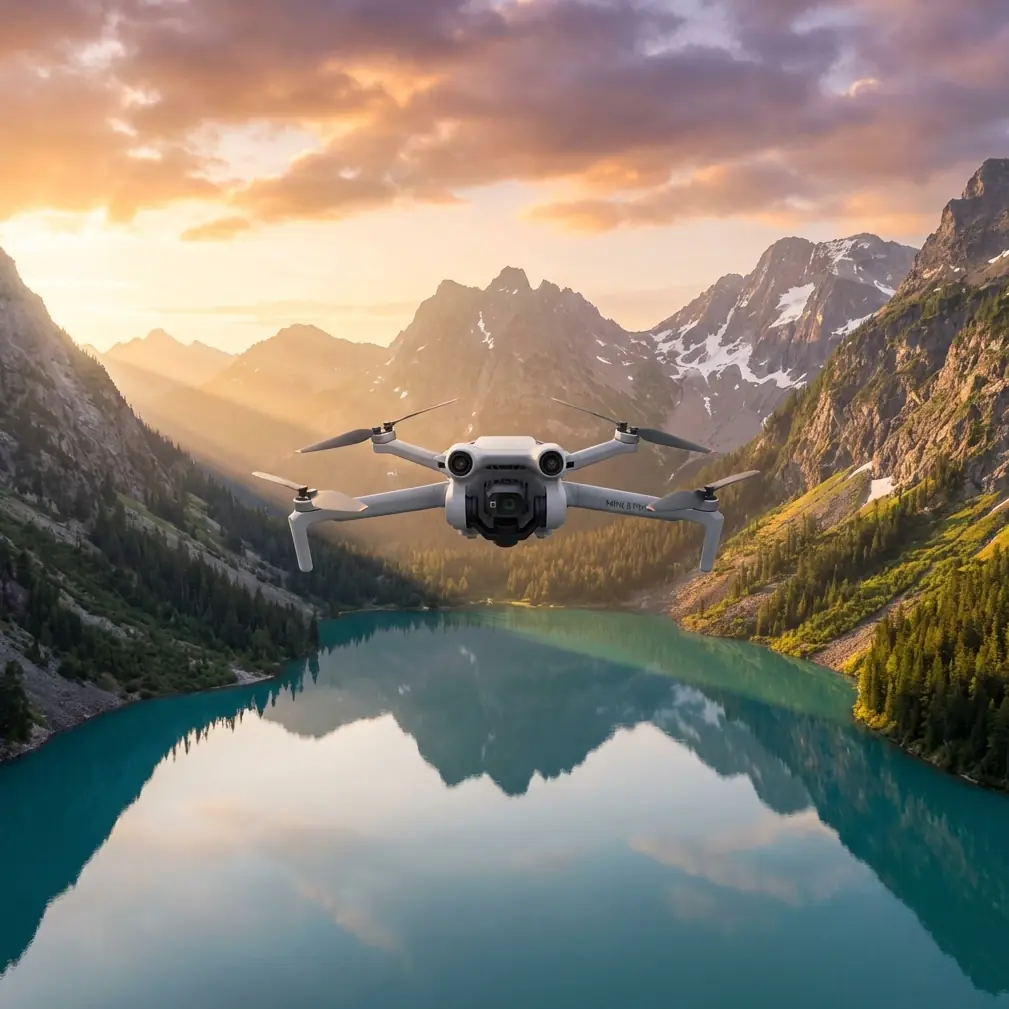
Mini 5 Pro for Extreme-Temperature Construction Monitoring: What Actually Matters in the Field
META: A technical review of how the Mini 5 Pro fits extreme-temperature construction site monitoring, with practical guidance on obstacle avoidance, ActiveTrack, D-Log workflows, and antenna positioning for stronger range.
Construction sites are hard on aircraft. Heat radiates off roofing membranes, winter wind cuts battery efficiency, dust hangs in the air, and the pilot is usually being asked for more than pretty footage. The mission is documentation, progress verification, safety visibility, and often evidence. If you are evaluating a Mini 5 Pro for that kind of work, the right question is not whether a compact drone can fly. It is whether a compact drone can deliver repeatable, usable data when temperature stress starts affecting both the aircraft and the person operating it.
That is where a technical review becomes more useful than a feature list.
I approach this as a photographer, but construction monitoring forces a different standard. Images need context. Video needs continuity. The aircraft needs to stay predictable when the environment is not. For a Mini 5 Pro, the appeal is obvious: low takeoff friction, compact footprint, and a camera package that can cover both inspection-style framing and polished reporting footage. But for extreme temperatures, the details that matter most are obstacle avoidance behavior, subject tracking reliability, profile flexibility like D-Log, and something too many pilots overlook until signal quality drops: antenna positioning.
Why extreme temperatures change the entire drone equation
Cold weather and high heat do not just make flying uncomfortable. They reshape the performance envelope. In winter, batteries sag earlier and voltage behavior becomes less forgiving under aggressive throttle inputs. In high summer, sensor temperatures climb, the aircraft may spend more energy stabilizing in thermals, and the controller screen can become harder to read exactly when you need a clean exposure check.
That affects construction work more than casual flying because site documentation usually depends on consistency. You may need to fly the same route every week, hold similar altitudes over a staging yard, or capture repeatable angles on structural steel, façade progress, drainage work, or crane movements. If environmental stress adds variability, your comparison value drops.
A Mini 5 Pro in this scenario needs to do three things well:
- maintain stable positioning over complex surfaces
- preserve enough image data for recovery in harsh light
- reduce pilot workload so attention stays on the site, not just on keeping the drone airborne
Those are not abstract priorities. They directly shape whether the aircraft is useful for real project monitoring.
Obstacle avoidance is not a luxury on active sites
On paper, obstacle avoidance sounds like a convenience feature. On a live build, it is a risk-control layer.
Construction sites are visually messy. You have scaffolding, temporary fencing, rebar cages, cables, half-finished edges, parked lifts, and reflective surfaces that can confuse depth judgment from the pilot’s position on the ground. In extreme temperatures, fatigue compounds the problem. Cold fingers slow control input. Heat reduces concentration. A drone that can help detect and react to obstacles is doing more than protecting itself. It is giving the operator margin.
For site monitoring, that margin matters most during lateral moves and low-altitude passes where you are trying to show progress relative to adjacent structures. If the Mini 5 Pro’s obstacle avoidance system is working well, it supports cleaner, safer route repetition. That is operationally significant because repeatability is the backbone of useful documentation. A project manager comparing this month’s slab pour footage to last month’s grading run does not care about specs in isolation. They care whether the aircraft can recreate the same path without introducing unnecessary risk.
The caution, of course, is that avoidance systems are assistive, not magical. In extreme heat shimmer or low-contrast winter light, every visual system can be challenged. Thin wires, narrow edges, and irregular mesh remain problem objects. The smart approach is to use obstacle sensing as a second set of eyes, not as a permission slip to fly carelessly.
ActiveTrack and subject tracking help more than marketing suggests
A lot of drone buyers associate subject tracking with sports clips, vehicles on forest roads, or social media motion shots. That misses how useful tracking can be on a worksite.
If you are documenting moving equipment, tracking a loader across stockpiles, following material movement from laydown yard to active zone, or building a visual record of site logistics, ActiveTrack becomes practical rather than flashy. It reduces the constant micro-correction that normally eats up pilot attention. In temperature extremes, lowering that cognitive load is not trivial. It can be the difference between a controlled mission and a rushed one.
There is also a reporting advantage. Construction stakeholders often understand process better when motion is preserved. A static overhead still tells you where things are. A tracked sequence shows how they move. That is useful for access route analysis, congestion points, and demonstrating workflow changes over time.
The real test is not whether subject tracking exists. It is whether it holds framing reliably enough to be trusted around partial obstructions, variable backgrounds, and changing light. On a construction site, the background can shift from pale concrete to dark asphalt to reflective metal in a few seconds. A Mini 5 Pro that handles that transition with stable tracking gives the operator more freedom to think like a documentarian instead of just a stick input machine.
D-Log is one of the most practical tools for high-contrast sites
Construction environments produce ugly light. White roofing, shiny ductwork, pale aggregate, and deep shadows under partially completed decks create contrast that standard color profiles often flatten or clip. This is where D-Log becomes one of the most operationally relevant tools in the aircraft.
A flatter profile gives you more room in post to recover highlights and preserve shadow detail. That is not just for cinematic grading. It matters when a superintendent wants to see both sunlit façade detail and shadowed access conditions under the same frame. If your footage is baked too hard, that information can disappear quickly.
On extreme-temperature days, light can be especially punishing. Bright summer sun drives glare and specular hotspots. Winter scenes with reflective surfaces can create exposure spikes that make normal profiles feel brittle. D-Log gives the editor more leverage to balance those conditions without making the final image look artificial.
For a photographer moving into construction documentation, this is one of the easiest ways to improve deliverables. You are not chasing mood. You are protecting information. On projects where visual records may need to support planning, coordination, or later review, that flexibility matters.
QuickShots and Hyperlapse are useful, but only when used strategically
QuickShots and Hyperlapse are often dismissed in technical discussions because they sound consumer-oriented. That is too simplistic.
QuickShots can be valuable for fast executive summaries. If a site lead needs a clean establishing sequence before a meeting, an automated move can produce a consistent visual opener without spending extra battery on manual setup. The key is restraint. These modes should support communication, not replace intentional flying.
Hyperlapse is more interesting than it first appears for construction monitoring. Long-duration change is exactly what building projects are about. A carefully planned Hyperlapse from a stable vantage can show equipment flow, concrete placement activity, or façade progression in a way that still images cannot. In extreme temperatures, though, planning matters more. Battery behavior, wind shifts, and atmospheric distortion all become more noticeable over time-compressed captures.
The Mini 5 Pro is most effective here when it is treated like a precision compact platform, not a toy with automated tricks. Use these modes to reveal process, not just to decorate the report.
Antenna positioning is still the easiest way to lose or gain range
Pilots love to debate transmission systems and forget the one factor they control every single flight: how they aim the controller antennas.
For maximum range and signal stability, do not point the antenna tips directly at the drone. That is the mistake I see most often. The strongest transmission zone typically projects broadside from the antenna faces, not off the ends. In practical terms, you want the flat sides of the antennas oriented toward the aircraft, with your controller position adjusted as the drone changes altitude and direction.
On construction sites, this becomes even more important because you are rarely flying in an open, interference-free field. Steel framing, temporary office units, power infrastructure, cranes, concrete walls, and parked machinery can all complicate the radio environment. If the aircraft moves behind a structure or dips below a roofline relative to your position, signal quality can degrade fast.
A few habits make a noticeable difference:
- Keep clear visual line of sight whenever site conditions allow.
- Stand where the fewest structures sit between controller and aircraft.
- Re-aim the antennas during long lateral passes instead of locking your hands in one position.
- Avoid sheltering beside containers, vehicles, or steel barriers that can interfere with transmission.
- If working from a rooftop or elevated platform, pay attention to how the aircraft’s angle changes as it descends along the building face.
This is not glamorous advice, but it is some of the highest-value advice a field operator can use. Range problems are often geometry problems before they are hardware problems. If you want stronger and more reliable control links, antenna discipline pays off immediately. If your team wants a field workflow review, I’d suggest starting with a quick operator checklist through our flight support chat.
Wind, heat shimmer, and cold-soak: what the footage actually looks like
Extreme conditions affect image quality in ways spec sheets do not summarize well.
In hot conditions, heat shimmer rising off asphalt, roofing, and concrete can soften detail even when the aircraft is technically in perfect focus. That means midday inspection shots over large paved areas may look less crisp than expected. The solution is often scheduling rather than settings. Early morning flights usually deliver better clarity, more stable air, and less thermal distortion.
In cold conditions, the challenge shifts. Air can be clearer, but batteries need more careful management and your own handling precision may degrade. A Mini 5 Pro used for site monitoring in winter should be flown with deliberate pacing. Let the system stabilize, avoid unnecessary punch-outs immediately after launch, and watch return thresholds conservatively.
From an image workflow perspective, this is another reason D-Log and stable automated assistance matter. You want latitude in post, and you want fewer pilot-induced errors while the environment is already adding its own variables.
Is the Mini 5 Pro actually suited to construction monitoring?
For many teams, yes, with limits.
A compact aircraft like the Mini 5 Pro makes sense when access speed, portability, and low setup friction are central to the workflow. That is often true for weekly progress updates, roof checks, perimeter overviews, and stakeholder reporting. It is especially attractive for professionals who need to move around large sites without carrying a heavier system all day.
The tradeoff is that compact drones reward discipline. You do not get to ignore weather, line of sight, radio geometry, or battery planning. On extreme-temperature jobs, that discipline becomes the operating system. The aircraft’s obstacle avoidance, ActiveTrack, QuickShots, Hyperlapse, and D-Log capabilities all have real value, but only when folded into a repeatable field method.
That method should look something like this:
- Fly earlier in hot weather when possible.
- Keep missions shorter and more structured in deep cold.
- Use obstacle avoidance to reduce risk around dense structures, not to justify aggressive paths.
- Use ActiveTrack selectively for moving equipment documentation.
- Shoot D-Log when contrast is harsh and post-processing matters.
- Treat antenna orientation as part of preflight, not as an afterthought.
That is where the Mini 5 Pro stops being a spec-sheet object and becomes a site tool.
For construction monitoring in extreme temperatures, the best aircraft is rarely the one with the loudest headline feature. It is the one that helps you capture consistent, readable, decision-useful visuals under pressure. If the Mini 5 Pro delivers stable flight, intelligent avoidance, dependable tracking, and enough image flexibility to survive brutal light, it earns its place. But the pilot still closes the gap between capability and results.
That remains true in every season.
Ready for your own Mini 5 Pro? Contact our team for expert consultation.