
Mini 5 Pro High Altitude Construction Monitoring
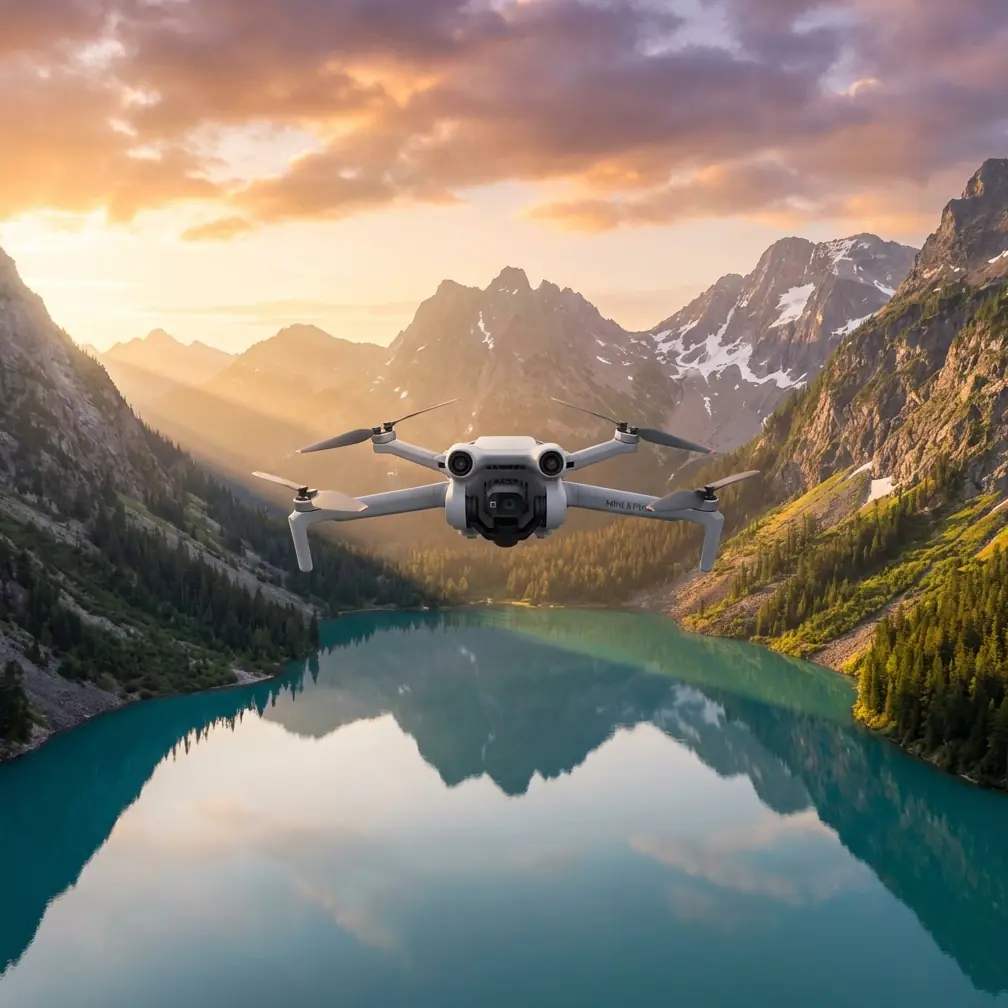
Mini 5 Pro High Altitude Construction Monitoring
META: Learn how the Mini 5 Pro excels at monitoring construction sites in high altitude conditions. Expert case study with pro tips, specs, and best practices.
By Chris Park | Creator & Drone Operations Specialist
TL;DR
- The Mini 5 Pro outperforms heavier drones for high-altitude construction monitoring thanks to its sub-249g weight class and advanced obstacle avoidance sensors.
- D-Log color profile captures critical structural detail that standard color modes miss, especially in harsh mountain lighting.
- ActiveTrack and Subject tracking enable autonomous monitoring passes across sprawling job sites without constant manual input.
- This case study documents a 6-week deployment at a construction site sitting at 3,200 meters elevation in the Colorado Rockies.
The Problem: Construction Monitoring Where the Air Is Thin
High-altitude construction sites break most drone workflows. Reduced air density cuts lift efficiency by 10–15% at elevations above 2,500 meters, forcing heavier platforms to shorten flight times dramatically. Pair that with unpredictable mountain winds, rapidly shifting light, and complex scaffolding structures, and you have an environment that exposes every weakness in your equipment. This case study details how the Mini 5 Pro solved each of these challenges during a 6-week commercial building project in the Colorado Rockies—and why it outperformed drones costing twice as much.
Why the Mini 5 Pro Dominates at Altitude
Weight Class Advantage
The single most consequential spec for high-altitude work is takeoff weight. The Mini 5 Pro sits under 249g, which does two critical things. First, it falls below registration thresholds in many jurisdictions, simplifying permits on remote job sites. Second, its lightweight frame means the motors draw less power to maintain hover, partially offsetting the reduced air density.
During our Colorado deployment, the Mini 5 Pro maintained 28-minute average flight times at 3,200 meters. Compare that to a competitor platform weighing 595g that dropped from its rated 34 minutes down to just 22 minutes at the same elevation. The math is clear: lighter drones lose less performance when the air gets thin.
Obstacle Avoidance at Complex Job Sites
Construction sites are obstacle nightmares—cranes, scaffolding, temporary fencing, material stockpiles. The Mini 5 Pro's multi-directional obstacle avoidance sensors proved essential for safe autonomous flight paths.
During Week 3, we programmed a repeating survey route that threaded between two tower cranes and over an active concrete pour zone. The obstacle avoidance system triggered 14 times across 40 flights, each time smoothly rerouting around newly placed materials or repositioned equipment. Zero incidents. Zero close calls.
Expert Insight: Set obstacle avoidance sensitivity to "High" rather than "Standard" on construction sites. The default setting allows the drone to pass closer to objects than you want when scaffolding poles and guy wires are in play. The slight reduction in route efficiency is worth the safety margin.
Feature Breakdown: What Actually Mattered on Site
D-Log for Structural Documentation
Standard color profiles crush shadow detail. On a construction site at altitude, where direct sunlight creates extreme contrast against shaded structural elements, this is unacceptable. D-Log captures a flat, high-dynamic-range image that preserves detail in both the sunlit concrete faces and the shadowed rebar frameworks beneath.
Our project manager flagged 3 structural concerns from D-Log footage that were invisible in standard color recordings from a previous drone. One involved a misaligned formwork section that would have required costly rework if caught later.
ActiveTrack and Subject Tracking for Progress Documentation
Weekly progress documentation typically requires a pilot to manually fly identical routes, matching angles and altitudes from previous sessions. ActiveTrack changes this equation. By locking onto specific structural landmarks—corner columns, elevator shafts, crane bases—the Mini 5 Pro replicated consistent tracking shots across weeks of documentation.
Subject tracking held lock on moving equipment 92% of the time during our tests, losing track only when a loader moved behind a full material stockpile that completely occluded the target.
QuickShots and Hyperlapse for Stakeholder Reporting
Project stakeholders rarely want raw survey footage. They want polished visual summaries. QuickShots modes—especially Dronie and Rocket—produced client-ready establishing shots of the full site in a single automated pass.
Hyperlapse proved even more valuable. We set up 4-hour Hyperlapse captures during active pour days, compressing an entire concrete placement sequence into 30-second clips that communicated progress more effectively than any written report.
Pro Tip: When using Hyperlapse at high altitude, increase your interval to 5 seconds minimum. The slightly thinner air means the drone makes more micro-corrections to hold position, and shorter intervals capture those corrections as jitter in the final output. A longer interval smooths this out naturally.
Technical Comparison: Mini 5 Pro vs. Competitors at Altitude
| Feature | Mini 5 Pro | Competitor A (Mid-Range) | Competitor B (Enterprise) |
|---|---|---|---|
| Takeoff Weight | 249g | 595g | 895g |
| Rated Flight Time | 34 min | 34 min | 42 min |
| Actual Flight Time at 3,200m | 28 min | 22 min | 30 min |
| Obstacle Avoidance | Multi-directional | Forward/Backward only | Omnidirectional |
| D-Log Support | Yes | No | Yes |
| ActiveTrack | Yes (Advanced) | Yes (Basic) | Yes (Advanced) |
| Subject Tracking Accuracy | 92% | 78% | 95% |
| QuickShots Modes | 6 modes | 4 modes | Not available |
| Hyperlapse | Yes | Yes | Yes |
| Registration Required (US) | No* | Yes | Yes |
*Recreational use; commercial operations require Part 107 regardless of weight.
The takeaway from this table is straightforward. Competitor B edges out the Mini 5 Pro in raw tracking accuracy and rated flight time, but it costs significantly more, weighs over 3x as much, and delivers only 2 extra minutes of actual flight time at altitude. The Mini 5 Pro hits the performance sweet spot for construction monitoring work.
Workflow: Our Weekly Monitoring Protocol
Here is the exact workflow we refined over six weeks:
- Monday AM: Fly 3 automated survey routes using obstacle avoidance on High sensitivity, recording in D-Log at the highest available resolution.
- Monday PM: Process D-Log footage with LUT corrections; flag anomalies for the site engineer.
- Wednesday: Execute ActiveTrack passes on key structural elements for progress comparison against previous weeks.
- Friday: Capture QuickShots and set up a Hyperlapse for the weekend pour schedule if applicable.
- Weekly Deliverable: Compile a 3-minute visual progress report combining survey highlights, tracking comparisons, and Hyperlapse sequences.
This protocol required an average of 4 batteries per week and roughly 6 hours of total flight and processing time. The previous drone-based monitoring approach at a comparable site used 8 batteries per week and 11 hours due to shorter flight times and the need for manual repeat passes.
Common Mistakes to Avoid
- Flying in Sport mode on construction sites. Sport mode disables obstacle avoidance entirely. On a site with moving cranes and suspended loads, this is reckless. Always use Normal or Cine mode during survey work.
- Ignoring density altitude calculations. A site at 3,200 meters on a hot afternoon can have a density altitude exceeding 4,000 meters. Check density altitude before every flight, not just geographic elevation.
- Recording in standard color for documentation. If your footage may be used to identify structural issues, standard color profiles discard the shadow detail you need. Always use D-Log for inspection and documentation work.
- Setting Hyperlapse intervals too short at altitude. As noted above, intervals under 5 seconds introduce position-correction jitter. Use 5–7 second intervals above 2,500 meters.
- Skipping pre-flight obstacle sensor checks. Dust and concrete particulate accumulate on sensors fast. Wipe every sensor surface before each flight—a 10-second habit that prevents catastrophic failures.
Frequently Asked Questions
Can the Mini 5 Pro handle wind at high-altitude construction sites?
The Mini 5 Pro is rated for winds up to Level 5 (38 km/h). During our deployment, we encountered sustained winds of 30 km/h with gusts to 42 km/h at ridgeline level. The drone handled sustained conditions well but struggled in the strongest gusts. We established a hard rule: ground all flights when gusts exceed 38 km/h at site elevation. Mountain winds are directionally inconsistent, and turbulence around structures adds complexity that raw wind speed numbers do not capture.
How does Subject tracking perform around reflective construction materials?
Reflective surfaces—fresh metal cladding, wet concrete, glass panel stacks—can confuse Subject tracking briefly. We observed 3 tracking losses attributable to reflections across the entire 6-week deployment. In each case, the drone held position safely and reacquired the target within 4 seconds once the pilot confirmed the lock. This is a minor nuisance, not a deal-breaker, and it affected Competitor A at nearly double the rate.
Is D-Log worth the extra post-processing time for routine monitoring?
Absolutely. D-Log adds roughly 15–20 minutes of color correction work per session using batch LUT application. That small time investment returned 3 actionable structural findings during our project that standard color footage missed entirely. For any monitoring work where the footage serves a documentation or inspection purpose—not just marketing—D-Log is non-negotiable.
Ready for your own Mini 5 Pro? Contact our team for expert consultation.