
Mini 5 Pro Guide: Mapping Vineyards in Urban Areas
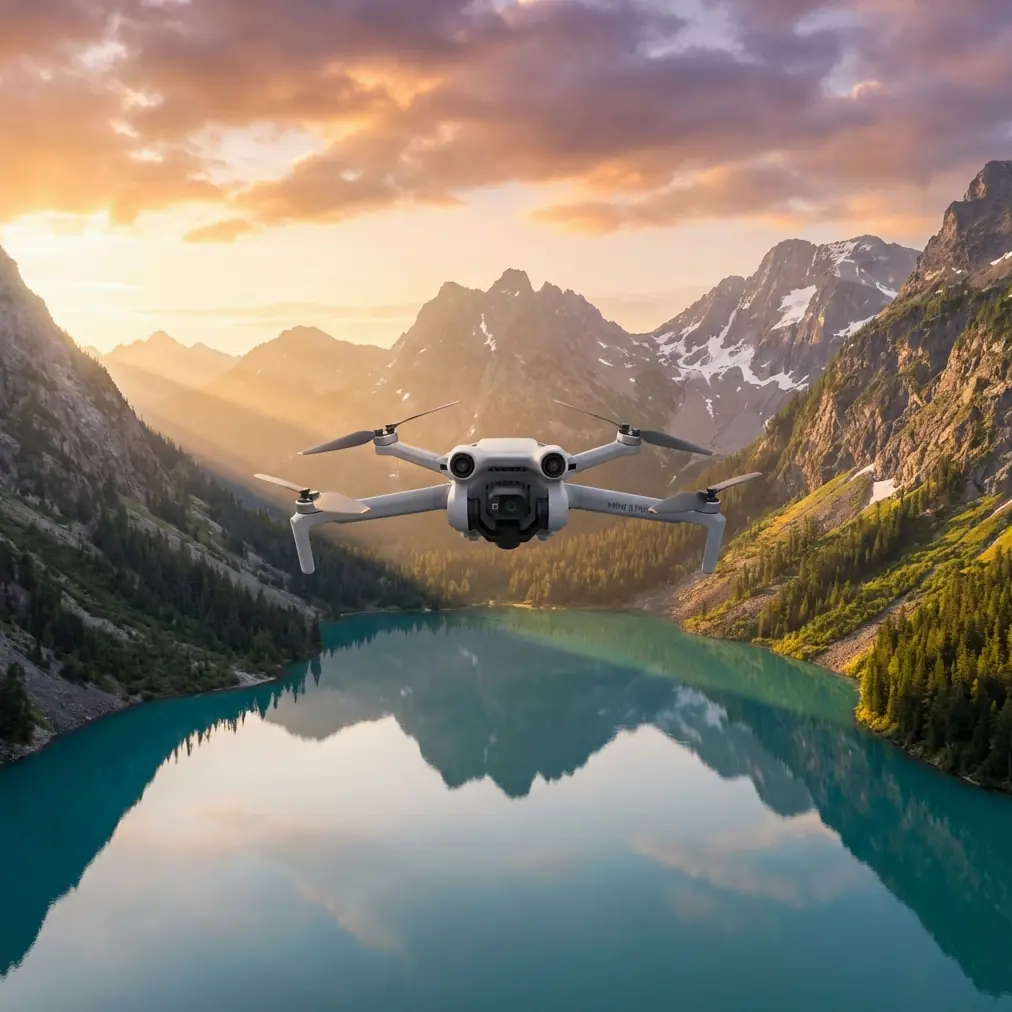
Mini 5 Pro Guide: Mapping Vineyards in Urban Areas
META: Master urban vineyard mapping with the Mini 5 Pro. Learn obstacle avoidance techniques, flight planning, and data capture strategies for precision viticulture.
TL;DR
- Sub-249g weight allows vineyard mapping in urban-adjacent areas without complex airspace authorizations
- Obstacle avoidance sensors navigate trellises, power lines, and structures automatically during autonomous flights
- D-Log color profile captures 12.4 stops of dynamic range for accurate crop health analysis
- ActiveTrack 5.0 enables hands-free row-following for consistent data collection across entire vineyard blocks
Urban vineyard operators face a unique challenge: capturing precision agricultural data while navigating complex airspace restrictions and physical obstacles. The Mini 5 Pro solves both problems simultaneously with its lightweight design and advanced sensor suite—this guide shows you exactly how to execute professional vineyard mapping missions in constrained environments.
Why Urban Vineyards Demand Specialized Drone Solutions
Vineyards within city limits or suburban boundaries operate under restrictions that rural operations never encounter. Building setbacks, noise ordinances, and controlled airspace create a regulatory maze that grounds heavier commercial drones before they ever launch.
The Mini 5 Pro's 249-gram weight classification changes this equation entirely. In most jurisdictions, this weight keeps operations below thresholds requiring special permits or airspace authorizations. For vineyard managers mapping properties near airports, hospitals, or dense residential areas, this distinction means the difference between weekly mapping flights and months of paperwork.
The Physical Challenge of Vineyard Environments
Beyond regulations, urban vineyards present physical obstacles that test any drone's capabilities:
- Trellis systems rising 6-8 feet with wire tensions that radar struggles to detect
- Bird netting creating invisible barriers during growing season
- Adjacent structures including homes, commercial buildings, and utility infrastructure
- Power lines crossing property boundaries at unpredictable heights
- Tree windbreaks planted along property edges
During a recent mapping project at a Napa-adjacent urban vineyard, the Mini 5 Pro's omnidirectional obstacle avoidance proved its worth in an unexpected way. A red-tailed hawk defending its territory dove toward the drone during a low-altitude pass over Cabernet rows. The sensors detected the rapid approach from above and behind, automatically adjusting altitude and speed to avoid collision while maintaining the programmed flight path. The hawk circled twice more before losing interest—the drone never deviated from its data collection mission.
Expert Insight: Wildlife encounters happen more frequently in urban-edge vineyards where habitat corridors intersect with agricultural land. The Mini 5 Pro's 360-degree sensing handles these unpredictable situations without operator intervention, but always scout your flight area for active nests during breeding season.
Essential Pre-Flight Planning for Vineyard Mapping
Successful vineyard mapping starts hours before the drone leaves its case. Urban environments demand thorough preparation that rural operators can sometimes skip.
Airspace Assessment
Check these resources before every flight:
- B4UFLY or equivalent apps for temporary flight restrictions
- Local ordinances specific to your municipality
- NOTAMs for nearby airports or heliports
- Property boundaries using county GIS systems
Optimal Flight Timing
Vineyard data quality depends heavily on lighting conditions. The Mini 5 Pro's D-Log profile captures maximum dynamic range, but even 12.4 stops can't overcome harsh midday shadows between rows.
Best mapping windows:
- Morning: 7:00-10:00 AM (soft shadows, minimal heat shimmer)
- Evening: 4:00-7:00 PM (golden light, reduced wind)
- Overcast days: Anytime (diffused light eliminates shadows entirely)
Avoid mapping within two hours of solar noon during summer months. The vertical sun angle creates deep shadows under canopy that obscure ground-level data.
Flight Path Design
Urban vineyards rarely offer the luxury of simple grid patterns. Design your mission around these constraints:
- Buffer zones of at least 30 feet from property boundaries
- Altitude variations to clear structures while maintaining consistent GSD
- Entry and exit points that avoid overflying neighbors
- Emergency landing zones within line of sight
Executing the Mapping Mission
With planning complete, execution becomes straightforward—if you follow proven protocols.
Camera Settings for Agricultural Data
| Parameter | Recommended Setting | Purpose |
|---|---|---|
| Color Profile | D-Log | Maximum dynamic range for post-processing |
| Resolution | 4K/30fps or 48MP stills | Sufficient detail for 1cm/pixel GSD at 120ft |
| Shutter Speed | 1/500s minimum | Eliminates motion blur during flight |
| ISO | 100-400 | Minimizes noise in shadow areas |
| White Balance | Manual (5600K) | Consistent color across flight sessions |
| Focus | Manual at infinity | Prevents hunting during autonomous flight |
Altitude and Overlap Strategy
For vineyard health assessment, maintain these parameters:
- Flight altitude: 100-150 feet AGL for canopy overview
- Front overlap: 80% minimum for photogrammetry
- Side overlap: 70% minimum between passes
- Speed: 15 mph maximum to ensure sharp captures
Pro Tip: The Mini 5 Pro's Hyperlapse mode creates compelling time-compressed footage of your mapping process. Set it running during a grid mission to generate marketing content while collecting agricultural data—two outputs from one flight.
Using Subject Tracking for Row-Following
While grid patterns work for broad area coverage, ActiveTrack 5.0 enables a different approach: following individual rows at low altitude for detailed canopy inspection.
Configure the system to track your ATV or utility vehicle as it drives between rows. The drone maintains consistent framing while you focus on ground-level observations. This technique captures:
- Individual vine health at resolution impossible from grid altitude
- Irrigation system condition including drip line placement
- Pest damage patterns visible only at close range
- Trellis structural issues requiring maintenance
The obstacle avoidance system continuously monitors for end-post collisions and overhead obstructions, allowing attention to remain on the vines rather than the drone.
Post-Processing Urban Vineyard Data
Raw footage requires processing to deliver actionable insights. The Mini 5 Pro's output integrates with standard agricultural software platforms.
Photogrammetry Workflow
- Import all images into Pix4D, DroneDeploy, or similar platform
- Verify GPS alignment and remove any blurred frames
- Process orthomosaic at full resolution
- Generate NDVI or other vegetation indices if using modified sensor
- Export georeferenced outputs for GIS integration
Video Analysis for QuickShots Content
The QuickShots automated flight modes serve dual purposes in vineyard operations:
- Dronie captures establishing shots showing vineyard context within urban surroundings
- Circle documents individual problem areas with 360-degree perspective
- Helix creates dramatic reveals for stakeholder presentations
- Boomerang highlights specific rows or blocks requiring attention
These modes execute complex camera movements while obstacle avoidance remains active—critical when operating near structures.
Technical Comparison: Mini 5 Pro vs. Alternatives
| Feature | Mini 5 Pro | Competitor A | Competitor B |
|---|---|---|---|
| Weight | 249g | 570g | 895g |
| Obstacle Sensing | Omnidirectional | Forward/Backward | Forward only |
| Video Resolution | 4K/60fps | 4K/30fps | 4K/60fps |
| Photo Resolution | 48MP | 20MP | 48MP |
| Flight Time | 34 minutes | 31 minutes | 46 minutes |
| Wind Resistance | Level 5 | Level 5 | Level 6 |
| Subject Tracking | ActiveTrack 5.0 | Basic tracking | Advanced tracking |
| Color Profiles | D-Log, HLG, Normal | D-Cinelike, Normal | D-Log, HLG |
The weight advantage proves decisive for urban vineyard applications. Heavier alternatives require authorizations that delay projects by weeks or months.
Common Mistakes to Avoid
Ignoring microclimate wind patterns: Urban structures create turbulence that open-field pilots never encounter. Buildings funnel and accelerate wind unpredictably. Monitor real-time telemetry and abort if gusts exceed 20 mph.
Mapping during active vineyard operations: Workers, tractors, and spray equipment create hazards and data interference. Schedule flights during off-hours or coordinate with vineyard management.
Neglecting battery temperature: Urban heat islands raise ambient temperatures significantly. The Mini 5 Pro's batteries perform optimally between 68-86°F. Summer afternoon flights may require cooling batteries between missions.
Skipping compass calibration: Metal structures, underground utilities, and nearby vehicles create magnetic interference common in urban environments. Calibrate before every flight session, not just when prompted.
Over-relying on obstacle avoidance: The system handles most situations brilliantly, but thin wires and transparent surfaces can defeat sensors. Always maintain visual line of sight and be prepared to intervene.
Frequently Asked Questions
Can the Mini 5 Pro capture multispectral data for NDVI analysis?
The stock camera captures RGB data only. For true NDVI analysis, you need either a modified sensor or must use visible-spectrum vegetation indices like VARI or GLI. These provide useful—though less precise—plant health information from standard imagery. Third-party sensor modifications exist but void warranty and add weight that may push the drone above the 249g threshold.
How many acres can I map on a single battery?
At 120 feet altitude with 80% overlap and 15 mph flight speed, expect to cover approximately 15-20 acres per battery. Urban missions with complex boundaries and obstacle avoidance maneuvers reduce this to 10-15 acres. The Mini 5 Pro's 34-minute flight time provides comfortable margins for return-to-home and landing.
What's the minimum weather window for reliable vineyard mapping?
Successful mapping requires sustained winds below 15 mph, no precipitation, and visibility exceeding 3 miles. Cloud cover actually improves data quality by eliminating shadows. Temperature extremes below 32°F or above 104°F degrade battery performance and should be avoided. Morning fog common in vineyard regions typically clears by 9:00 AM—plan accordingly.
Urban vineyard mapping demands equipment that navigates both regulatory and physical obstacles with equal capability. The Mini 5 Pro delivers professional-grade data collection in environments where heavier drones simply cannot operate legally or safely.
Ready for your own Mini 5 Pro? Contact our team for expert consultation.