
Mini 5 Pro for Solar Farm Mapping: Why Composition
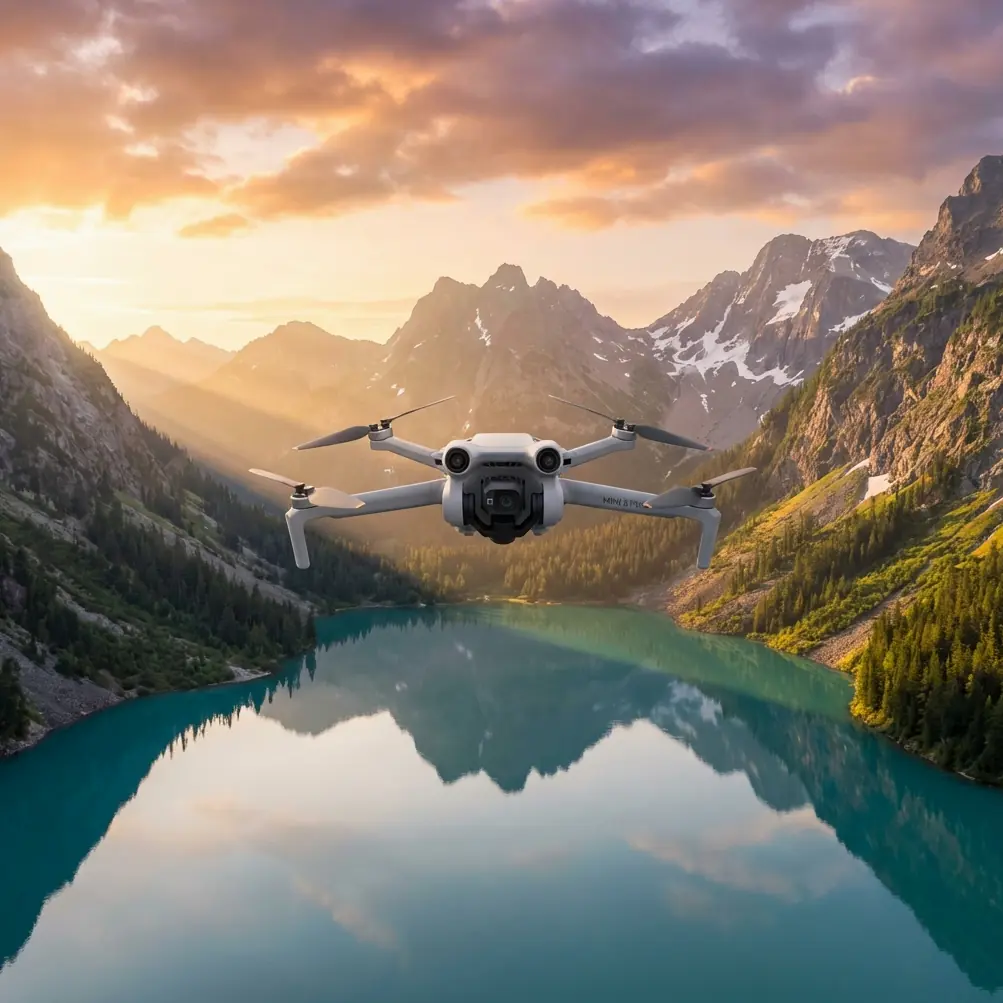
Mini 5 Pro for Solar Farm Mapping: Why Composition Discipline Matters More Than Another Spec Sheet
META: A technical review of how Mini 5 Pro can be used for solar farm mapping in dusty environments, with a photographer’s perspective on composition, flight intelligence, and field workflow.
Most articles about a drone like the Mini 5 Pro get trapped in the usual loop: sensors, flight modes, image profiles, obstacle avoidance, subject tracking, then a quick nod to “cinematic results.” That misses the real question for field operators.
If you are mapping a solar farm in dusty conditions, the challenge is not just keeping the aircraft in the air or collecting enough images. The challenge is producing usable visual data and presentation-ready imagery without falling into repetitive, low-value capture habits. That is where a photography principle from a recent composition article becomes surprisingly relevant.
The source piece makes two points that matter here. First, beginners often overestimate the complexity of composition and end up frustrated before they build a workable system. Second, common methods such as the rule of thirds, symmetry, and leading lines are foundational, but become a problem when treated as rigid laws. That distinction is highly practical for Mini 5 Pro operators working above long rows of panels.
On a solar site, symmetry is everywhere. Repeating geometry is everywhere. Leading lines are almost unavoidable. If you rely on those patterns mechanically, every flight starts to look the same, and worse, every deliverable starts to communicate the same limited story. You may capture enough for an attractive reel, but not enough for a client, EPC team, asset manager, or operations lead trying to understand layout, dust accumulation, edge conditions, access routes, or how the full site sits within the surrounding terrain.
Why this matters specifically for Mini 5 Pro
Mini-class aircraft are often underestimated on industrial jobs because people equate compact size with casual use. In dusty solar environments, the opposite can be true. A lighter, more portable aircraft can be deployed quickly across multiple blocks, launched from tighter staging areas, and repositioned with less downtime. That agility matters when the site is large, the light is changing fast, and dust in the air can flatten contrast.
But compact aircraft also punish lazy visual discipline. You cannot rely on “big drone presence” to compensate for weak planning. The Mini 5 Pro, especially when paired with tools like D-Log for grading latitude and intelligent functions such as ActiveTrack, QuickShots, Hyperlapse, and obstacle avoidance, gives you a flexible imaging platform. The real differentiator is whether the pilot understands how to organize the scene.
That is why the composition article is more than a beginner pep talk. Its core argument—that rules are there to guide the viewer’s eye and build aesthetic coherence, not to be applied like a template—maps directly onto solar farm operations.
The three composition traps on solar farm jobs
The article warns against treating composition as something mysterious and intimidating. In field work, that mindset usually appears in a different form: the operator assumes “technical capture” and “good framing” are separate tasks. They are not.
When you are documenting a site, framing affects interpretation. It tells the viewer what matters.
1. Thinking composition is too complicated to apply during a technical mission
This is the first trap. Many operators assume mapping flights are automated and cinematic flights are creative, so there is no reason to think deeply about composition during a survey day. That split is artificial.
Even if your core mission is orthomosaic capture, there are always supporting shots that shape how stakeholders read the site. A low oblique pass across panel rows can reveal cleaning patterns. A slightly elevated side angle can show how access roads interact with drainage paths. A wide establishing frame can give context to substation placement, perimeter fencing, or terrain undulation.
The source article’s point about frustration is operationally significant here. Teams that believe composition is inherently difficult often avoid trying anything beyond standard overheads. They leave value on the table. With Mini 5 Pro, a disciplined shot plan is usually enough: one overhead set, one high oblique set, one symmetry-based hero angle, and one “rule-breaking” frame that prioritizes storytelling over textbook balance.
That is not complicated. It is repeatable.
2. Treating rule-of-thirds, symmetry, and leading lines like fixed formulas
The reference specifically names three compositional tools: rule of thirds, symmetrical framing, and leading lines. Solar farms naturally invite all three.
Rows of modules produce instant leading lines. Inverter stations and service lanes often create strong balance points. Central aisle views almost beg for symmetry.
The mistake is assuming those visual patterns are automatically effective.
For example, a perfectly centered aisle shot may look clean, but if the dust haze is strongest at the vanishing point, the image can become visually dead. A rule-of-thirds placement of the substation may feel “correct,” yet fail to communicate how the site’s panel blocks relate to each other. A leading-line composition may pull the eye beautifully through the frame, while hiding the actual issue the client cares about, such as dust buildup near the lower edge of certain strings.
The article’s warning about rigid application explains why so much industrial drone content feels interchangeable. Operators find one visual formula and repeat it. The result is technically acceptable but informationally thin.
With Mini 5 Pro, this is where D-Log can help more than people expect. In dusty conditions, flatter capture gives you room to recover subtle tonal separation during grading. That means the leading lines of panel rows, maintenance roads, and fence boundaries remain legible instead of collapsing into one low-contrast mass. Composition and color workflow are connected. If the viewer cannot clearly read the lines you are using to guide attention, the composition fails, regardless of how “correct” it looked in the field.
3. Forgetting that composition exists to direct attention
This is the most useful idea from the source. Composition is not a checklist. Its job is to guide the viewer’s eye and create visual order.
That principle has direct value in solar documentation.
If your audience is an O&M team, show dust behavior, wash access, edge rows, and maintenance paths. If your audience is an investor or project stakeholder, reveal scale, symmetry, and site integration. If your audience is a marketing team, emphasize rhythm, pattern, and environmental context. If your audience is an engineering lead, prioritize legibility over dramatic framing.
Same drone. Same site. Different visual hierarchy.
Mini 5 Pro’s intelligent flight aids can support that hierarchy if used deliberately. Obstacle avoidance matters when flying low near fencing, trackers, lighting poles, and service structures, especially in windy, dusty areas where visibility can soften. ActiveTrack and subject tracking are not just for lifestyle footage; on site they can help maintain consistent framing of moving inspection vehicles or personnel along access roads when producing progress documentation. QuickShots and Hyperlapse can work too, but only if they serve a communication goal. A Hyperlapse of panel rows under changing light can be powerful for showing atmospheric conditions or the scale of a site, but it becomes empty if it is included just because the mode exists.
Dust changes how composition behaves
Dust is not just a maintenance issue. It changes image structure.
In clean air, leading lines read sharply from foreground to horizon. In dusty air, distant geometry can soften and merge. Contrast drops. Panel surfaces can reflect more diffusely. White service roads may flare brighter than expected. The whole frame becomes less about line precision and more about tonal layering.
That is why rigid composition rules become less reliable in these environments. A centered, symmetrical shot that works on a clear morning may lose all impact in afternoon haze. A rule-of-thirds layout may become stronger if you intentionally place the clearer, higher-contrast area of the frame where the eye enters first.
This is one of the best reasons to review the site visually before committing to a fixed capture formula. The source article argues for flexibility after mastering the basics. For solar farm fieldwork, that translates into adapting shot structure to atmospheric conditions, not forcing conditions to fit a preselected style.
A practical Mini 5 Pro field workflow
Here is the workflow I would use as a photographer covering a dusty solar site with Mini 5 Pro.
Start with the “boring” frames
Get the essential overhead and high-oblique coverage first. This gives you your documentation baseline and protects the mission if wind or dust worsens later. Keep altitude choices consistent enough that rows, aisles, and boundaries remain comparable from block to block.
Use symmetry once, not everywhere
The source specifically references symmetrical composition as a basic tool. On a solar site, one strong symmetrical frame can establish order and scale brilliantly. Ten of them just flatten the story. Use the centered aisle shot or perfectly balanced top-down frame as an anchor image, then move on.
Let leading lines explain function, not just aesthetics
Leading lines from panel rows should guide the eye toward something meaningful: a substation, a maintenance corridor, a wash crew route, a section transition, or a terrain break. If the lines lead nowhere of operational interest, the shot is decorative but not useful.
Break the “correct” rule when the site demands it
This is the heart of the reference article. Once you understand the standard rules, you can depart from them. On site, that might mean placing a key service road dead center because it better explains logistical access. Or weighting the frame heavily to one side because the dust plume or terrain slope is part of the story. Rule-breaking is not random. It is purposeful.
Capture in D-Log when the atmosphere is working against you
Dust can wash out fine separation between rows and service features. D-Log helps preserve grading flexibility so those structures remain readable later. That matters for both stakeholder presentations and archive value.
The accessory that actually helped
One third-party addition made a noticeable difference in this kind of work: a landing pad designed for dusty ground operations. It sounds unglamorous compared with a lens filter or another software feature, but on solar farms it is one of the most practical upgrades you can bring.
A compact aircraft launching directly from dusty gravel or packed earth is exposed to rotor wash kicking debris into the air right where the camera and gimbal are working hardest. A simple third-party foldable landing pad improves launch and recovery cleanliness, shortens turnaround stress, and reduces how much airborne dust is stirred at the moment you most need a stable start. It does not eliminate environmental exposure, but it improves consistency.
On jobs where image clarity and repeatable operations matter, that is not a trivial gain.
Where intelligent modes fit in without becoming gimmicks
Mini 5 Pro users often ask whether QuickShots, Hyperlapse, ActiveTrack, and obstacle avoidance belong on a technical assignment. They do, but only after the mission logic is clear.
QuickShots can generate concise overview material for client updates. Hyperlapse can show changing light, cloud movement, or the scale of an installation over time. ActiveTrack can maintain a clean relationship with a moving service vehicle for workflow documentation. Obstacle avoidance adds margin when maneuvering near structures or when dust reduces visual confidence.
The mistake is letting automation dictate the visual outcome. The source article criticizes mechanical use of compositional rules; the same criticism applies to automated flight modes. If the drone is deciding the style and the pilot is just accepting it, the output will probably look polished but generic.
The real takeaway
What makes Mini 5 Pro effective for solar farm mapping in dusty environments is not one feature. It is the combination of portability, imaging flexibility, and enough flight intelligence to let an experienced operator adapt quickly. But adaptation only works if the operator understands what the frame is trying to do.
That is where the composition article lands with surprising force. It reminds us that even basic tools—rule of thirds, symmetry, leading lines—are not there to be obeyed blindly. They exist to organize attention. Once you grasp that, a site full of repetitive solar geometry stops being visually limiting and starts becoming legible.
If you are building a field kit or refining your workflow for Mini 5 Pro deployment on energy projects, I’d suggest discussing practical setup choices with someone who understands both drone operations and visual output. For direct field-related questions, message a Mini 5 Pro workflow specialist.
The best solar farm imagery does more than look tidy from above. It helps people see the site clearly, understand its patterns, and make decisions with confidence. That requires more than automation and more than rules. It requires judgment.
Ready for your own Mini 5 Pro? Contact our team for expert consultation.