
Mini 5 Pro for Mountain Power Line Mapping
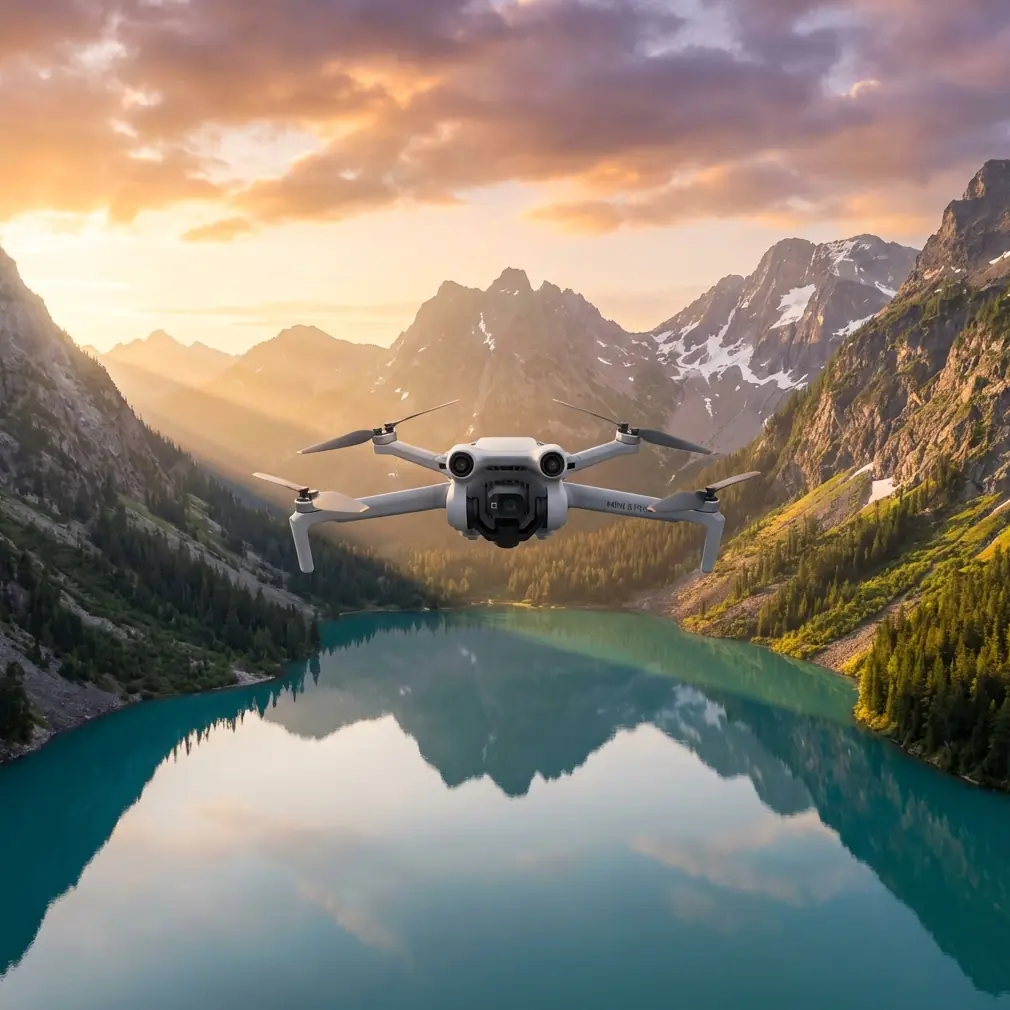
Mini 5 Pro for Mountain Power Line Mapping: What Actually Matters in the Field
META: A practical Mini 5 Pro guide for mapping power lines in mountain terrain, with workflow tips on obstacle avoidance, ActiveTrack, D-Log, Hyperlapse, and a critical pre-flight cleaning routine.
Mountain power line work exposes every weakness in a small drone workflow.
The terrain rises faster than your eye expects. Wind curls around ridges and pushes the aircraft sideways just when you need a steady line. Bright sky behind dark cables wrecks exposure if you let auto settings do all the thinking. And if your obstacle sensors are dusty, the aircraft’s safety net may be compromised at the exact moment you’re flying near uneven slopes, trees, poles, and conductor corridors.
That is why the Mini 5 Pro, at least in the way many pilots are hoping to use it, is not just about portability. For mountain utility mapping, the value is in how its intelligent flight stack, tracking tools, imaging controls, and small-aircraft practicality work together under pressure.
I shoot landscapes and infrastructure as a photographer first, which means I care about what the camera sees. But for power line documentation in mountainous areas, the camera is only one piece of the job. The bigger issue is whether the aircraft can help you gather clean, repeatable visual data without turning every sortie into a wrestling match with terrain.
The real problem with mountain power line mapping
On paper, the assignment sounds simple: follow a line segment, document pole positions, capture corridor context, and produce imagery useful for planning or inspection support.
In the field, that neat plan breaks apart quickly.
A mountain power route rarely behaves like a straight, flat corridor. One span crosses a valley. The next skirts a stand of trees. A tower or pole may sit on a slope where GPS perspective makes depth judgment harder than expected. You are also dealing with a visual subject that can be surprisingly difficult for a compact camera system: thin lines, bright reflections, deep shadow below, and a sky that may be several stops brighter than the terrain.
This is where people underestimate the operational significance of two features often treated like brochure filler: obstacle avoidance and D-Log.
Obstacle avoidance matters because mountain work compresses safe margins. You are not flying in an open field. You are dealing with terrain that can rise into your flight path, vegetation that blends into the background, and utility structures that create cluttered geometry. A drone that can better sense its surroundings gives the pilot more room to focus on framing, route consistency, and data capture discipline.
D-Log matters because the scene itself is hostile to ordinary color profiles. If you are trying to preserve detail in clouds while also retaining information in the darker hillside or under-structure area, a flatter profile can give you far more usable tonal information in post. For utility mapping and corridor documentation, that translates into clearer visual evidence, not just prettier footage.
The safety step most pilots rush past
Before any mountain mission, I start with a cleaning routine. Not glamorous. Not optional.
If you care about obstacle sensing, clean the vision sensors and any protective surfaces around them before takeoff. Also inspect the main camera lens and the downward sensing area. Dust, fingerprints, dried moisture spots, and pollen are common in mountain environments, especially after transport or a previous landing on rough ground.
Why does this matter operationally?
Because obstacle avoidance is only as trustworthy as the aircraft’s ability to see. A smudged sensor can degrade detection reliability. A dirty lens can soften image detail you need for line corridor review. On a power line route, small visibility losses compound fast. Thin conductors are already challenging visual subjects. Add haze, flare, or sensor contamination and you have reduced your margin before the props even start.
My standard pre-flight cleaning kit is simple: air blower, soft brush, microfiber cloths kept in sealed bags, and lens-safe cleaning fluid used sparingly. I clean in the shade if possible. Then I do a short hover check to verify stable behavior and camera clarity before heading toward the corridor.
That tiny ritual is one of the highest-value habits a Mini 5 Pro pilot can adopt. Fancy features mean less if the aircraft begins the mission half-blind.
Why a compact aircraft makes sense in the mountains
A lot of mountain infrastructure work begins with access constraints.
You may hike part of the route. You may launch from a narrow roadside pull-off. You may need to relocate several times in one day as the line disappears behind terrain. A compact aircraft changes the rhythm of the whole job. Faster setup, easier hand-carry movement between observation points, less fatigue, and fewer excuses to skip a useful angle.
That practicality becomes a data quality issue. If a drone is easy to reposition, pilots are more likely to choose better launch points instead of forcing bad geometry from one location. Better geometry means cleaner line-of-sight, safer standoff, and more useful imagery.
This is one reason the Mini platform remains attractive for civilian utility support. It lowers the friction between “we should capture this span too” and actually doing it.
ActiveTrack and subject tracking: useful, but only if you use them intelligently
Mountain power line mapping is not a one-button tracking exercise. No serious operator should treat it that way.
Still, ActiveTrack and related subject tracking functions can be genuinely useful in support roles. Not for locking onto a conductor itself as if the drone should autonomously patrol critical infrastructure, but for maintaining framing on a reference subject, vehicle movement along access roads, or corridor context shots where repeatable composition helps communication.
The operational significance here is efficiency. If the drone can help hold a consistent framing pattern while you manage altitude, terrain spacing, and light, you reduce pilot workload. That can lead to steadier footage and more complete visual records.
The caution is obvious: mountain terrain and utility environments are cluttered. Tracking should support pilot control, not replace judgment. I treat these modes as helpers for secondary documentation sequences, not as the backbone of a close-in infrastructure mission.
Obstacle avoidance is not permission to fly casually
This point deserves blunt language.
Obstacle avoidance is a safety layer, not a substitute for route planning. In mountain utility work, you should still define your corridor, identify terrain pinch points, consider wind exposure on ridge lines, and maintain conservative separation from structures and conductors.
Why is this especially relevant for a Mini 5 Pro-type aircraft?
Because a small drone can tempt pilots into overconfidence. It feels nimble. It packs easily. It seems less intimidating than a larger platform. But mountains punish sloppy assumptions. A compact aircraft can still be pushed off line by rotor wash interactions near surfaces, localized gusts, and changing elevation references.
Used correctly, obstacle avoidance buys you time. It may help detect hazards during lateral moves or while reframing around a pole or tree line. Used incorrectly, it encourages a false sense of immunity.
For mapping work, disciplined spacing and deliberate speed still matter more than any automated protective feature.
Camera settings that make utility footage more useful
When I’m documenting mountain power corridors, I care less about cinematic drama and more about extracting useful visual information.
That is where D-Log earns its place. In harsh mountain light, especially midday or under broken cloud, you often need to hold detail in both the sky and the landform. A flatter profile gives you a better foundation for grading and analysis later. If a hillside below the line route falls into heavy shadow, D-Log can help preserve texture that would otherwise collapse.
This is not just a photographer’s preference. It has practical value for teams reviewing vegetation proximity, access conditions, slope stability cues, and structure visibility.
QuickShots and Hyperlapse can also play a role, but not in the way hobby content usually frames them.
QuickShots are useful for fast contextual captures. A short automated reveal can show how a power line segment sits within the mountain landscape. That helps communicate terrain relationships to planners, land managers, or clients who were never on site.
Hyperlapse can be even more valuable than people expect. Over the course of changing light, cloud movement, or shifting fog, a Hyperlapse sequence can show visibility patterns across the corridor. In mountain regions where weather windows are narrow, that perspective can help explain why a route was surveyed from one side of a ridge rather than another, or why a second sortie may be needed.
Neither mode replaces core mapping passes. They supplement them with context.
A practical problem-solution workflow
Here is the field logic I recommend for a Mini 5 Pro mission around mountain power lines.
Problem: uncertain terrain clearance
Solution: Start with a wide establishing pass at conservative altitude and distance. Use that pass to read terrain rise, tree encroachment, and wind behavior. Let obstacle avoidance support your situational awareness, but do not tighten in until you understand the corridor.
Problem: poor visibility from dirty optics or sensors
Solution: Build the pre-flight cleaning routine into your checklist every time. Clean the lens. Clean the obstacle sensing surfaces. Confirm image sharpness in a short hover recording.
Problem: inconsistent footage that is hard to review later
Solution: Use repeatable movement patterns. Slow lateral passes, stable orbit-like context shots where safe, and measured ascents to show line relation to terrain. If light is contrast-heavy, capture in D-Log for more flexible recovery.
Problem: visual context is missing for non-pilot stakeholders
Solution: Add one or two QuickShots or a short Hyperlapse to show terrain scale, access constraints, and weather behavior around the route. These clips often explain more than a folder of disconnected stills.
Problem: pilot workload increases in cluttered terrain
Solution: Use ActiveTrack or subject tracking selectively for support shots where consistent framing saves effort, but keep manual oversight central. Tracking is an assistant, not the mission commander.
What photographers notice that utility teams sometimes miss
A photographer tends to notice light first. Utility teams tend to notice access first. The best mountain mapping workflow respects both.
For example, if you fly when the sun is high and the sky is hard, the lines may disappear visually against bright background. Shift your angle and they come back. If low cloud is rolling through a valley, a Hyperlapse can reveal a pattern that affects safe and useful capture timing. If the camera profile is too contrasty, shadow detail under a structure may vanish even though the pilot thought the shot looked fine on the controller.
This is why the Mini 5 Pro conversation should not be reduced to specs. What matters is whether the aircraft helps you capture interpretable material under difficult real-world conditions. Obstacle sensing, tracking modes, D-Log, and automated shot types each contribute to that goal differently.
When small size becomes a strategic advantage
In mountain work, repositioning is often the hidden cost center.
A team may need to move from a valley road to a higher turnout, then hike to a more open launch point to avoid tree cover and regain line-of-sight. A portable aircraft means those decisions are easier to make quickly. That improves both safety and output quality.
It also means you can collect layered documentation from multiple vantage points instead of forcing one compromised flight path. One pass may prioritize corridor context. Another may focus on pole approach angles. A third may record terrain relationships. Small aircraft workflows make that kind of iterative capture more realistic in a single day.
If you are planning a field setup for this sort of work and want to compare launch strategy or payload expectations, you can message a drone specialist here.
The Mini 5 Pro mindset for mountain line mapping
The biggest mistake I see is treating a small intelligent drone as either a toy or a miracle. It is neither.
For mountain power line mapping, the Mini 5 Pro makes sense when used as a disciplined visual documentation tool. Its likely strengths in obstacle avoidance help in terrain-rich environments. ActiveTrack and subject tracking can reduce framing burden in selected scenarios. D-Log gives you a better chance of preserving detail in high-contrast mountain scenes. QuickShots and Hyperlapse add context that can improve communication beyond the pilot team.
But the most practical lesson is still the simplest one: start clean.
Clean sensors support obstacle avoidance. Clean glass supports image clarity. Clear imagery supports better decisions. In mountainous utility work, where the environment is already stacking the odds against you, that chain matters.
Everything else builds from there.
Ready for your own Mini 5 Pro? Contact our team for expert consultation.