
Mini 5 Pro Field Report: Mapping Windy Highway Corridors
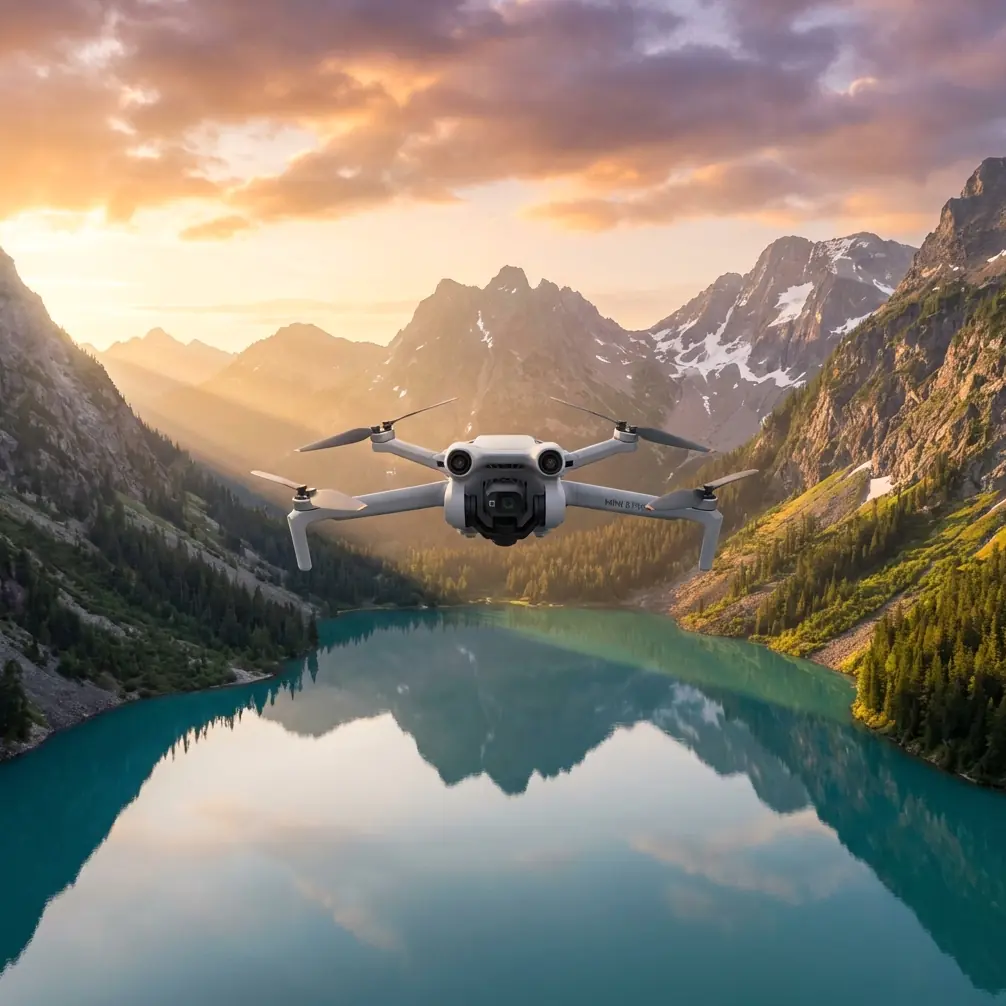
Mini 5 Pro Field Report: Mapping Windy Highway Corridors with Water-Style Survey Discipline
META: A field-tested look at using Mini 5 Pro for windy highway mapping, drawing from proven UAV survey methods in large-area water infrastructure inspection, GPS waypoint flight, terrain output, and pre-flight sensor care.
Highway mapping in wind is where small-drone marketing claims usually fall apart.
On paper, a compact aircraft can seem ideal for corridor work: quick deployment, low logistical burden, easy repositioning between stations. In the field, though, a highway project adds friction. You are working along long, linear stretches with changing terrain, moving air over embankments, roadside obstacles, heat shimmer, reflective surfaces, and a constant need to maintain consistent image quality across multiple launch points. If the aircraft is going to earn its place, it has to do more than take attractive footage. It has to produce repeatable survey value.
That is why the best way to think about the Mini 5 Pro is not as a “small camera drone,” but as a compact field instrument. And one of the clearest frameworks for judging that comes from an unexpected place: UAV workflows used in water conservancy and water-resource inspection.
A Chinese water-industry drone solution document lays out a practical chain that translates surprisingly well to highway corridor work. The sequence is simple: bring the drone to the target area by vehicle, fly the site with aerial imaging equipment, process the images in office software, and generate terrain mapping products to support design and inspection. It sounds basic. Operationally, it is the entire job.
For highway mapping in windy conditions, that structure matters because it removes romance from the process. The drone is there to shorten field time, capture clean data, and convert air time into usable mapping outputs.
Why a water-infrastructure workflow fits highway mapping
The reference material focuses on water engineering, reservoir zones, rivers, and major hydraulic hubs. It also points out a familiar pain point: traditional manual surveying takes too long, costs more, and struggles to meet project timelines when terrain is broad or difficult. That should sound familiar to anyone mapping roadside cut slopes, drainage alignments, access corridors, interchange edges, or long construction sections exposed to crosswinds.
Large water projects and long highway corridors have one thing in common: scale punishes slow methods.
The source specifically notes that UAV aerial surveying can show its “absolute advantage” on large-area terrain measurement, including mountainous reservoir areas and major river works. Highway corridors in broken terrain behave the same way. You may not be mapping a reservoir basin, but you are still dealing with elevation change, elongated geometry, and a need to stitch coverage into a coherent terrain model.
One data point from the source deserves attention: UAV mapping was cited as delivering more than 6x the mapping efficiency of an RTK plus total-station workflow for terrain map creation. No one should copy that number blindly onto every road job, but the directional lesson is sound. Once corridor length expands and access becomes segmented, a drone’s advantage is not just speed in the air. It is the compression of the whole field cycle: arrival, launch, capture, reposition, and image-based terrain generation.
For a Mini 5 Pro operator, that means success is not about trying to imitate a heavy enterprise platform. It is about exploiting compact deployment where repeated setup would otherwise kill productivity.
The Mini 5 Pro advantage in windy roadside work
A highway team rarely gets a perfect launch environment. Wind accelerates through open sections, curls around sound barriers, and lifts over bridges and graded shoulders. A larger aircraft may still outperform a compact drone in raw weather tolerance, but the Mini 5 Pro can stay competitive when the mission is broken into disciplined segments.
That is where the water-inspection model helps again. The source describes a vehicle carrying the UAV to each inspection area, then flying according to pre-planned GPS coordinate points using automatic flight. For highway mapping, that is exactly how a Mini 5 Pro should be used in wind: not as a single heroic end-to-end run, but as a corridor mission divided into controlled blocks.
You drive to the segment. You launch from a safe pull-off or approved work zone. You fly a waypoint-based section. You recover, review, move, and repeat.
This method reduces the amount of time the aircraft spends fighting inconsistent air across one oversized mission. It also improves image consistency because each segment can be planned around local wind direction, sun angle, traffic adjacency, and obstacle density.
The source also emphasizes that combining high-resolution imagery with high-precision GPS enables rapid information monitoring and more intuitive analysis. That pairing is critical for roads. Highway stakeholders do not just need pretty orthos. They need interpretable outputs: drainage paths, shoulder condition, temporary works progress, embankment change, spoil movement, access-road wear, and relation to nearby water channels.
A compact drone becomes useful when its imagery can be trusted enough to support these decisions.
Start with the least glamorous step: clean before you fly
If you are using a Mini 5 Pro around highways, especially in dry or windy conditions, the most underrated safety and data-quality habit is a pre-flight cleaning pass.
Dust from aggregate shoulders, fine grit from asphalt edges, pollen, and vehicle exhaust residue build up fast. Before powering up, inspect and gently clean the forward, rear, downward, and side-facing vision sensors if your Mini 5 Pro configuration includes them, along with the main lens and any protective surfaces around the obstacle sensing system. Do not rush this step.
Why mention this in a mapping article? Because obstacle avoidance and positioning aids only help if they can see clearly. In windy roadside work, you are often launching near signs, barriers, utility lines, vegetation, or temporary site fencing. A film of dust on the sensing surfaces can degrade how confidently the aircraft perceives its surroundings. That affects not only flight safety but mission consistency, particularly during low-altitude takeoff, landing, and any automated return sequence.
The same goes for the camera. If you are generating mapping outputs from image sets, a dirty lens can introduce haze, contrast loss, and subtle degradation that only becomes obvious during stitching. One minute of cleaning on the ground is cheaper than discovering soft image quality back in processing.
Obstacle avoidance is helpful, but planning still wins
Readers looking up the Mini 5 Pro often want to know whether obstacle avoidance makes it a better tool for corridor mapping. The answer is yes, but with a condition: obstacle sensing is support, not strategy.
On highways, the real threat is not only obvious objects. It is the combination of crosswind drift, visual clutter, and abrupt changes in elevation near overpasses, retaining walls, gantries, and roadside trees. Obstacle avoidance can provide a margin, especially during setup, manual repositioning, and recovery. But mapping flights should still be designed conservatively. Maintain clean flight lines. Avoid squeezing through complex spaces just because sensors exist. Keep altitude and side offsets appropriate to the terrain and corridor width.
If you are capturing supplemental visual material after the mapping run, features like ActiveTrack, subject tracking, QuickShots, and Hyperlapse can add project communication value. A site team may want a clean visual of traffic management layouts, phased earthworks, or drainage construction progress. Those modes can help produce usable presentation media quickly. They are not the backbone of the survey mission, though. Treat them as secondary capture once the core map data is secure.
Wind changes how you build the mission
The source document’s GPS-coordinate auto-flight concept is especially relevant here. In calm conditions, operators are tempted to improvise. In wind, improvisation creates uneven overlap, variable ground speed, and inconsistent geometry across the image block.
A better pattern for the Mini 5 Pro is this:
- define short, logical corridor sections
- preload route structure around known GPS positions
- fly into the wind on the more demanding legs where practical
- preserve overlap margins rather than trimming them
- monitor whether gusts are changing aircraft yaw behavior or image consistency
That workflow mirrors the source’s recommendation to precompile GPS coordinate points before the inspection flight. Its significance is operational, not theoretical. Route discipline helps a compact drone behave like a survey tool instead of a recreational camera platform.
If your corridor includes drainage channels, culverts, sediment ponds, or roadside retention basins, this is where the water-sector reference becomes even more relevant. The original document was built around water-resource investigation and patrol map generation. Along many highways, those water features are not side issues. They are central to maintenance and compliance. A Mini 5 Pro mission can collect the highway corridor and the adjacent water-management assets in one coordinated pass sequence, provided the flight blocks are planned intelligently.
Processing is where the fieldwork becomes useful
One of the strongest points in the reference text is that the aerial job is not finished until office software processes the imagery into terrain maps or inspection maps. That sounds obvious, but many Mini-series discussions stop at flight experience and camera specs. Professional users should care more about output reliability.
For windy highway mapping, image processing tells you whether the field method was sound. Did the aircraft maintain enough consistency for successful reconstruction? Did the corridor edges hold together? Were embankments and drainage structures captured clearly enough to support interpretation? Did repeated launches produce a coherent final surface?
The water-industry workflow specifically mentions generating a topographic map for engineering survey and design support, then producing patrol maps so ground personnel can quickly grasp resource conditions. Translate that directly to roads: your orthomosaic, terrain model, and progress maps should help engineers, supervisors, and field crews understand the site immediately, not after a long verbal explanation.
That is the real benchmark. If the output shortens decision time, the Mini 5 Pro has done its job.
Camera modes still matter, just not for the reason most people think
D-Log is often discussed as a creative feature, but on infrastructure jobs its value is less about cinematic style and more about preserving flexibility when lighting is difficult. Highway surfaces can shift from dark asphalt to pale concrete, reflective lane markings, metal barriers, and shadowed drainage cuts in one run. If you are collecting non-primary visual documentation alongside your mapping work, a flatter profile can protect highlight and shadow detail for later review.
That said, do not confuse graded video assets with mapping data. Keep your survey capture settings stable and purpose-built. Then, if needed, use D-Log for separate contextual footage that helps explain the corridor to stakeholders.
This is also where the Mini 5 Pro’s portability pays off. After the mapping sequence, you can collect supporting visuals from the same deployment without bringing in a second aircraft. For some teams, that means one field visit can satisfy both engineering documentation and communication needs.
Where the Mini 5 Pro fits best
The source material repeatedly stresses rapid implementation, strong mobility, and high-resolution imaging as UAV advantages for water-resource surveys and patrols. Those same strengths define the Mini 5 Pro’s best role in highway work.
It fits when the job requires:
- fast deployment from multiple roadside positions
- repeated short corridor captures instead of one giant mission
- visual access to hard-to-reach embankments or drainage features
- frequent progress checks where sending full ground crews is inefficient
- quick conversion of image sets into understandable map products
It is especially useful where traditional manual survey alone would be slow, disruptive, or difficult to scale across long project extents. The water-sector source also highlighted places that are hard to access by foot or boat. Highway teams know the equivalent: soft shoulders, steep drainage edges, median barriers, slope faces, and live-traffic adjacency. A compact UAV reduces exposure by moving the first layer of observation into the air.
A final field note from Chris Park’s perspective
If I were building a Mini 5 Pro workflow for windy highway mapping tomorrow, I would borrow the water-infrastructure playbook almost intact.
Not the industry label. The discipline.
Drive the aircraft to each targeted section. Build route segments around GPS-planned coordinates. Clean the sensors before every launch. Let obstacle avoidance support you, but do not lean on it lazily. Capture with enough consistency that processing software can return terrain and inspection products the project team can actually use. Judge success by map clarity and turnaround, not by flight time bragging rights.
That is the part many buyers miss. Compact drones prove themselves after landing.
If you are evaluating whether this kind of segmented Mini 5 Pro corridor workflow fits your own projects, you can message a drone workflow specialist here and compare mission planning ideas against your site conditions.
The most useful lesson from the reference document is not tied to dams or reservoirs alone. It is that UAV value comes from connecting mobility, GPS-based automation, high-resolution image capture, and office processing into one repeatable chain. The Mini 5 Pro becomes credible for highway mapping when you treat it that way.
Ready for your own Mini 5 Pro? Contact our team for expert consultation.