
Mini 5 Pro for High-Altitude Forest Mapping
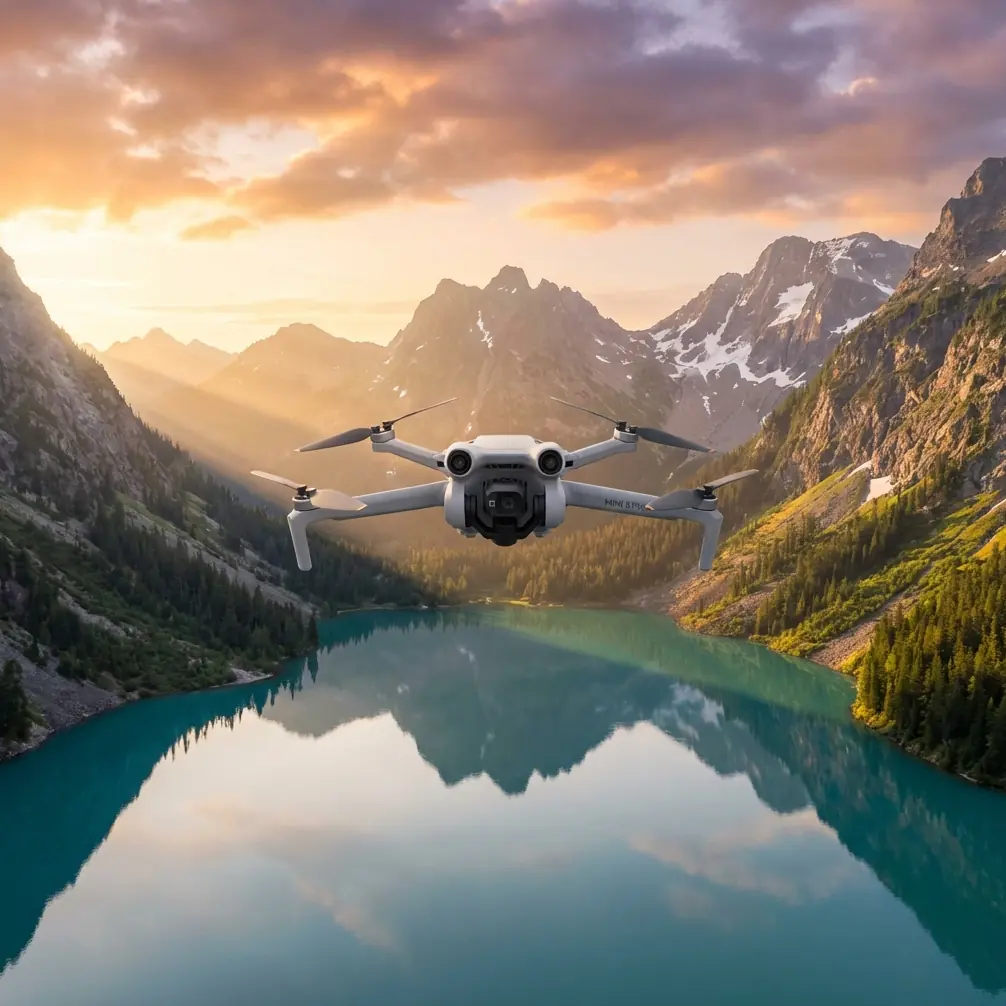
Mini 5 Pro for High-Altitude Forest Mapping: What Actually Matters in the Field
META: A technical review of Mini 5 Pro for high-altitude forest mapping, covering range discipline, obstacle avoidance, ActiveTrack, D-Log, antenna positioning, and why larger autonomous VTOL trends matter.
Forest mapping at altitude exposes every weak assumption a pilot can make about a compact drone.
Battery estimates get optimistic. Signal behavior changes with terrain. Wind is rarely uniform. Tree canopies confuse depth perception, and cold air can cut into endurance just enough to ruin what looked like a clean grid plan on the tablet. That is why interest around the Mini 5 Pro is not really about headline features in isolation. For serious operators, the question is simpler: can a lightweight platform deliver dependable mapping support in complex, elevated terrain without turning every mission into a compromise?
That is the right lens for evaluating the Mini 5 Pro.
I have been thinking about that question alongside a very different aircraft story from XPONENTIAL 2026. AIRO Group Holdings publicly unveiled a full-scale autonomous VTOL aircraft in Detroit, built on Jaunt Air Mobility’s autonomous slowed-rotor platform. The civilian significance is not the defense angle mentioned in the original reporting; it is the direction of the market. Jaunt’s platform is being developed in mission variants that include cargo logistics and remote operations. That matters because it shows where aerial system design is heading across categories: more autonomy, more operational flexibility, and more emphasis on completing work reliably in places where terrain and distance punish weak aircraft choices.
The Mini 5 Pro obviously does not compete with a full-scale autonomous VTOL. It sits in another class entirely. But the same operational pressures show up in miniature when you are mapping forests in high altitude conditions. Reliable remote operations, controlled flight paths, dependable obstacle sensing, and strong link management are no longer “advanced” extras. They are baseline requirements if your output is supposed to be usable.
Why high-altitude forest mapping is harder than many pilots expect
On paper, forests seem straightforward to map. You define a survey area, set your overlap, launch, and let the aircraft work. In real mountain or upland terrain, the practical picture changes.
First, elevation shifts distort your effective AGL if your mission planning is too simplistic. A route that is safe over a ridgeline may be uncomfortably close to the canopy in a descending section of valley forest. Second, conifer tops and irregular canopies can interfere with visual estimation, especially under flat light. Third, radio behavior is affected by slope, vegetation density, and your own body position relative to the controller antennas. And finally, weather at altitude tends to be less forgiving. You can launch in acceptable conditions and find the aircraft flying into stronger crosswind layers only a short distance away.
This is where a Mini 5 Pro setup has to be judged not by marketing shorthand but by how its systems support disciplined operation.
Obstacle avoidance is not a luxury over forests
A lot of mapping discussions treat obstacle avoidance as something more relevant to recreational filming than survey support. I disagree, especially in forested highland environments.
When you are flying near broken canopy edges, small clearings, rising terrain, or mixed stands with protruding deadwood, obstacle sensing becomes a margin tool. It is not there to compensate for poor planning. It is there because real terrain is messy, and canopy heights are never as uniform as your desktop map suggests.
For a Mini 5 Pro operator, obstacle avoidance earns its value most in transition phases: launch-out from a constrained opening, repositioning between blocks, or low-altitude visual inspection passes to verify terrain before running a formal mapping route. In dense wooded areas, that extra layer of environmental awareness can prevent the kind of small branch strike that does not make news but absolutely does kill a day’s data capture.
The limitation, of course, is that obstacle sensing is not infallible in thin branches, low-contrast scenes, or harsh backlighting. So the operational significance is not “the drone will save you.” It is that a pilot who understands the sensing envelope can use it to reduce risk while still planning conservative altitudes and route geometry.
ActiveTrack and subject tracking have a place in mapping workflows
At first glance, ActiveTrack and subject tracking sound unrelated to forest mapping. They are usually discussed in the context of moving people, bikes, or vehicles. But in real fieldwork, those tools can still be useful.
Suppose you are supporting a forestry crew, documenting a route through a stand, monitoring a team moving between sample plots, or capturing repeatable visual context around a survey corridor. Subject tracking lets the Mini 5 Pro act as a fast documentation platform before or after structured mapping. That means fewer manual camera corrections while you concentrate on terrain, wind, and position.
The key is not to confuse tracking footage with survey-grade mapping output. They serve different purposes. Mapping generates measurable spatial data. Tracking helps document access paths, crew movement, canopy transitions, and conditions around the worksite. Used properly, ActiveTrack is not a gimmick here. It is a practical field documentation aid.
D-Log matters more in forests than many people realize
High-altitude forests often produce ugly lighting. Bright sky openings and dark canopy pockets can appear in the same frame. If your goal includes visual interpretation, habitat review, slope condition checks, or change documentation, those contrast extremes can become a problem.
This is where D-Log becomes genuinely useful. A flatter capture profile preserves more flexibility when balancing shadow detail against bright highlights. In mountain forests, that can mean the difference between seeing texture in dense tree cover and ending up with crushed dark areas that hide what you were trying to document.
For anyone building reports, presenting environmental conditions to stakeholders, or comparing seasonal changes, D-Log gives the Mini 5 Pro a stronger technical footing than a standard baked-in look. It does add post-processing responsibility. But for serious operators, that is a reasonable trade.
QuickShots and Hyperlapse are not just for social media
I know the usual reaction. QuickShots and Hyperlapse are dismissed as decorative features. In survey operations, that misses the point.
QuickShots can be useful for rapid site orientation material. Before a formal mapping run, a short automated reveal or orbit can create a visual record of canopy continuity, ridge shape, access tracks, and nearby obstacles. That kind of context becomes surprisingly valuable later when you are matching field notes to actual terrain.
Hyperlapse has a different role. In a high-altitude forest environment, weather and shadow movement tell a story that still imagery often cannot. A controlled Hyperlapse sequence can document fog behavior, cloud shadow sweep, or changing light over a stand before committing to a mapping sortie. If you are trying to decide whether contrast conditions are stable enough for useful imagery, that short sequence may save you from collecting inconsistent data.
So yes, these are creative tools. But they can also support operational judgment when used with intent.
Antenna positioning advice for maximum range
This is where compact-drone performance is won or lost.
In mountain forest environments, pilots often blame the aircraft for link weakness when the real problem is controller handling. If you want the best possible range and signal consistency from a Mini 5 Pro, antenna positioning has to become second nature.
The basic rule is simple: do not point the antenna tips directly at the aircraft. The strongest part of the transmission pattern is broadside to the antenna faces, not off the narrow ends. In practical terms, angle the antennas so their flat sides are presented toward the drone’s expected flight path.
A few field habits make a real difference:
- Stand where you maintain the cleanest line of sight above nearby shrubs, vehicles, and slope breaks.
- If the aircraft is flying out across a valley, rotate your body with it rather than keeping your controller fixed at a lazy angle.
- Avoid hugging the edge of metal structures, parked trucks, or rock walls that can complicate signal behavior.
- Raise the controller slightly rather than tucking it low against your torso.
- If you are flying along a slope, reposition yourself early so the ridge itself does not become the signal obstacle.
This sounds minor until you test it. In forested uplands, disciplined antenna orientation can be the difference between a stable feed and repeated dropouts at exactly the wrong part of the mission.
A second, less discussed point: maximum range is not really the objective. Maximum link quality is. For mapping, stable telemetry and predictable control matter more than bragging rights about distance. In high-altitude forest work, if range extension is forcing you into poor line-of-sight geometry, it is bad planning, not good flying.
If you need practical setup help for a mountain mapping workflow, it can be easier to walk through the terrain profile directly with someone who understands field constraints: message a drone specialist here.
What the XPONENTIAL 2026 VTOL reveal tells us about smaller mapping drones
The AIRO and Jaunt reveal is worth mentioning because it reflects a broader industry truth. At XPONENTIAL 2026 in Detroit, AIRO unveiled a full-scale autonomous VTOL aircraft based on Jaunt Air Mobility’s slowed-rotor platform, with mission development focused in part on cargo logistics and remote operations. Those are not just big-aircraft themes. They represent the exact operational values filtering down into compact UAV expectations.
Remote operations matter because forestry sites are often difficult to access, far from infrastructure, and operationally expensive if repeated visits are required. Autonomy matters because consistency beats improvisation when you are trying to produce usable geospatial outputs. Mission-specific design matters because one aircraft profile never fits every task.
The Mini 5 Pro should be viewed through that same practical lens. It is not “good” because it has a long feature list. It is good if its obstacle avoidance, route discipline, imaging options, and tracking functions reduce field friction while preserving data quality. That is the same logic driving development at the larger end of the autonomous VTOL market, only scaled down to a platform a forestry operator can deploy quickly.
A realistic Mini 5 Pro workflow for high-altitude forest mapping
If I were building a dependable field routine around the Mini 5 Pro in this scenario, it would look something like this:
Start with a visual reconnaissance pass from a safe buffer altitude. Use that to verify canopy height variation, dead snags, wind behavior over ridges, and any hidden terrain rise your map base may understate. Capture a short orientation sequence if the client or internal team will need site context later.
Next, establish a takeoff position that supports direct line of sight for the longest leg of the route. This is where antenna planning begins before the props ever spin. Pick the spot that gives you the cleanest signal geometry, not the most comfortable place to stand.
Then run the mapping mission with conservative altitude margins over the highest probable canopy points, not the average stand height. If lighting is difficult and interpretation value matters, record in D-Log for more grading flexibility afterward.
Use obstacle avoidance as a support layer during transitions and recovery, not as a substitute for route discipline. If the mission also needs crew or corridor documentation, use ActiveTrack separately from the mapping run so your outputs stay organized by purpose.
Finally, review link quality as seriously as battery performance. A mission that returns with full coverage but unstable telemetry is not a clean success. It is a warning.
The real value of Mini 5 Pro in this niche
For high-altitude forest mapping, the Mini 5 Pro’s value is not that it can do a bit of everything. It is that the right mix of compact deployment, intelligent sensing, trackable imaging modes, and flexible color capture can support a professional workflow when operated with intention.
That is also why the broader autonomous aircraft market matters, even when the headline story involves a full-scale VTOL from AIRO and Jaunt rather than a compact mapping drone. The industry is moving toward aircraft that do useful work in difficult places with less friction, more autonomy, and better mission adaptation. Forest mapping at altitude demands exactly that mindset.
The Mini 5 Pro fits best when treated not as a toy with pro branding, but as a small aerial tool that becomes genuinely capable only when the pilot understands terrain, signal geometry, and data priorities.
That is the difference between flying over a forest and actually mapping one well.
Ready for your own Mini 5 Pro? Contact our team for expert consultation.