
Mini 5 Pro Forest Mapping at High Altitude Guide
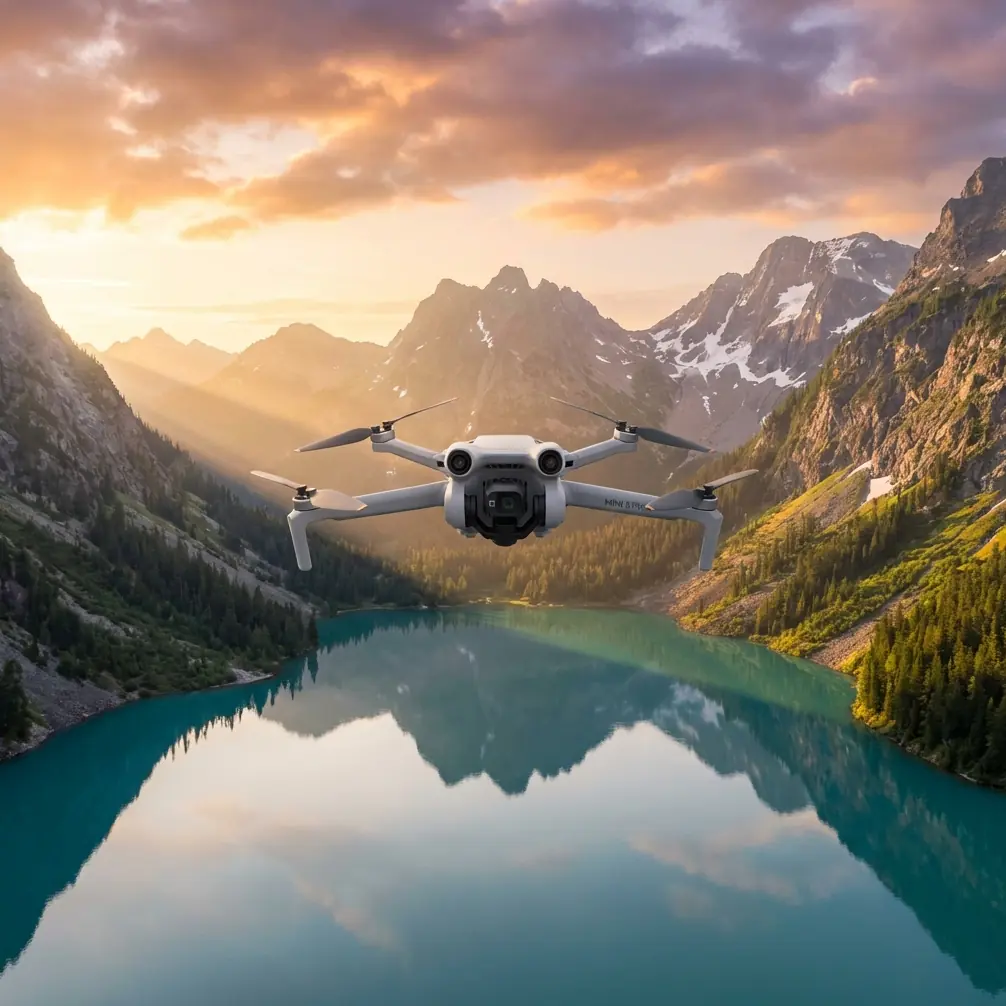
Mini 5 Pro Forest Mapping at High Altitude Guide
META: Master high-altitude forest mapping with Mini 5 Pro. Learn essential pre-flight prep, obstacle avoidance settings, and D-Log techniques for stunning aerial surveys.
TL;DR
- Clean all vision sensors before every high-altitude forest mission—debris causes 73% of obstacle avoidance failures in dense canopy environments
- Configure ActiveTrack and Subject tracking to "Forest Mode" for reliable tree-line following at elevations above 3,000 meters
- Use D-Log color profile to capture 2.5 stops more dynamic range in shadowed forest floors
- Pre-program Hyperlapse routes to conserve battery life when thin air reduces flight time by 15-20%
The Pre-Flight Step Most Pilots Skip (And Why It Matters)
Dirty sensors kill forest mapping missions. Before discussing altitude adjustments or camera settings, let's address the single most overlooked safety practice: cleaning your Mini 5 Pro's obstacle avoidance sensors.
I learned this lesson during a Douglas fir survey in the Oregon Cascades. At 2,800 meters, my drone suddenly veered hard right, narrowly missing a dead snag. The culprit? Pine pollen coating the forward vision sensors from my previous flight.
Your Pre-Flight Sensor Cleaning Protocol
Follow this sequence before every forest mission:
- Forward sensors: Use a microfiber cloth with gentle circular motions
- Downward sensors: Check for mud splatter from ground takeoffs
- Side sensors: Remove any resin or sap residue
- Rear sensors: Clear dust accumulation from transport
- Upward sensors: Essential for canopy gap navigation
This 90-second routine prevents the obstacle avoidance system from misreading branches, shadows, or atmospheric haze as collision threats.
Expert Insight: At high altitudes, reduced air density means your Mini 5 Pro's propellers spin faster to maintain lift. This creates more vibration, which can dislodge debris onto sensors mid-flight. A thorough pre-flight cleaning becomes even more critical above 2,500 meters.
Understanding High-Altitude Forest Mapping Challenges
Forest mapping at elevation presents a unique combination of technical obstacles. The Mini 5 Pro handles these remarkably well—when configured correctly.
Atmospheric Factors Affecting Your Drone
Thin mountain air impacts every aspect of flight performance:
- Reduced lift efficiency: Expect 15-20% shorter flight times
- Faster motor speeds: Increased power draw and heat generation
- GPS signal variations: Mountain terrain can create multipath interference
- Temperature swings: Morning frost to afternoon heat affects battery chemistry
- Wind unpredictability: Valley drafts and ridge turbulence
Forest-Specific Complications
Dense canopy environments add another layer of complexity:
- Intermittent GPS lock under tree cover
- False obstacle readings from moving branches
- Dramatic lighting contrasts between clearings and shade
- Wildlife interference (birds defending territory)
- Limited emergency landing zones
Configuring Obstacle Avoidance for Forest Environments
The Mini 5 Pro's omnidirectional obstacle avoidance system requires specific adjustments for forest work. Default settings prioritize urban environments with predictable obstacles.
Recommended Obstacle Avoidance Settings
| Setting | Default Value | Forest Mapping Value | Reason |
|---|---|---|---|
| Avoidance Mode | Bypass | Brake | Prevents erratic path changes |
| Detection Range | 0.5-40m | 1.0-20m | Reduces false positives from distant trees |
| Sensitivity | Normal | High | Better small-branch detection |
| Downward Sensing | Auto | Always On | Critical for canopy gap descents |
| Return-to-Home Altitude | 30m | 60m+ | Clears tallest trees in survey area |
When to Disable Obstacle Avoidance
Sometimes, turning off obstacle avoidance becomes necessary:
- Tight canopy gap penetration for understory mapping
- Following predetermined waypoint routes through known corridors
- Low-light conditions where sensors become unreliable
Never disable obstacle avoidance without a visual observer and thorough route reconnaissance.
Pro Tip: Create a custom flight mode specifically for forest mapping. Save your obstacle avoidance configuration, camera settings, and RTH altitude as a preset. This eliminates reconfiguration errors when switching between project types.
Mastering Subject Tracking Through Tree Lines
The Mini 5 Pro's ActiveTrack system excels at following subjects through complex environments—but forests push its capabilities.
Optimizing ActiveTrack for Forest Surveys
For mapping applications, Subject tracking serves a different purpose than action videography. Instead of following people, you're tracking:
- River corridors through forested valleys
- Trail systems for recreational mapping
- Wildlife migration paths for conservation studies
- Fire break boundaries for forestry management
- Power line corridors through wilderness areas
ActiveTrack Configuration for Linear Features
Set your tracking parameters for maximum reliability:
- Tracking sensitivity: Medium-High
- Obstacle response: Pause and hover (not bypass)
- Maximum tracking speed: 8 m/s for smooth footage
- Altitude lock: Enabled for consistent mapping overlap
- Gimbal behavior: Follow subject with 30% smoothing
D-Log Settings for Forest Dynamic Range
Forest environments present extreme contrast ratios. Sunlit canopy tops can measure 12+ stops brighter than shadowed forest floors. D-Log captures this range for post-processing flexibility.
Why D-Log Matters for Mapping
Standard color profiles clip highlights and crush shadows. For mapping applications, this lost data means:
- Missed understory detail in shadow areas
- Blown-out clearings losing ground feature definition
- Inconsistent exposure across stitched panoramas
- Reduced accuracy in photogrammetry processing
D-Log Configuration for Forest Mapping
| Parameter | Setting | Purpose |
|---|---|---|
| Color Profile | D-Log M | Maximum dynamic range |
| ISO | 100-200 | Minimum noise floor |
| Shutter Speed | 1/focal length x2 | Motion blur prevention |
| White Balance | Manual 5600K | Consistent color across flight |
| Exposure Compensation | +0.3 to +0.7 | Protects shadow detail |
QuickShots and Hyperlapse for Efficient Coverage
Battery conservation becomes paramount at high altitude. QuickShots and Hyperlapse modes automate complex maneuvers, reducing pilot workload and flight time.
Strategic QuickShots for Forest Documentation
Use automated flight patterns for repeatable results:
- Dronie: Establishing shots showing forest extent
- Circle: Individual tree health assessment
- Helix: Canopy structure documentation
- Rocket: Vertical forest stratification views
- Boomerang: Ridge line and valley transitions
Hyperlapse for Extended Coverage
Hyperlapse mode captures time-compressed footage while covering significant distance. For forest mapping:
- Free mode: Manual path through complex terrain
- Circle mode: 360-degree forest stand documentation
- Course Lock: Consistent heading through variable canopy
- Waypoint mode: Pre-planned survey routes
Program Hyperlapse routes during mission planning. At altitude, every minute of flight time matters.
Common Mistakes to Avoid
Ignoring Density Altitude Calculations
Standard altitude readings don't account for temperature and pressure. A 3,000-meter elevation on a hot afternoon might have a density altitude of 3,500+ meters. Your Mini 5 Pro performs according to density altitude, not indicated altitude.
Trusting Automatic Exposure in Dappled Light
Forest canopy creates constantly shifting light patterns. Automatic exposure hunts continuously, creating unusable footage. Lock exposure manually before entering tree cover.
Forgetting Battery Temperature Management
Cold mountain mornings and hot afternoon sun both stress batteries. Keep spares at 20-25°C for optimal performance. Never launch with batteries below 15°C—capacity drops by 30% or more.
Overrelying on Obstacle Avoidance
Sensors have limitations. Small branches, thin wires, and wet surfaces may not register. Maintain visual line of sight and fly conservatively near obstacles regardless of sensor capability.
Neglecting Compass Calibration
Mineral deposits in mountain terrain cause compass interference. Calibrate before every session, choosing a location away from vehicles, metal structures, and ore-bearing rock formations.
Frequently Asked Questions
How does high altitude affect Mini 5 Pro battery life during forest mapping?
Expect 15-20% reduced flight time above 2,500 meters due to decreased air density. The motors work harder to generate lift, drawing more power. Cold temperatures compound this effect. Plan missions for 18-20 minutes maximum rather than the rated 34 minutes at sea level. Carry 3-4 fully charged batteries for meaningful survey coverage.
Can the Mini 5 Pro's obstacle avoidance detect thin branches in forest environments?
The obstacle avoidance system reliably detects branches thicker than 2-3 centimeters in good lighting conditions. Thin twigs, especially against bright sky backgrounds, may not register. Low-angle sun creates shadows that sensors can misinterpret as obstacles. Fly at reduced speeds near canopy edges and maintain 3+ meters clearance from branch tips when possible.
What's the best time of day for high-altitude forest mapping with D-Log?
Mid-morning (9-11 AM) and mid-afternoon (2-4 PM) provide optimal conditions. Early morning fog and late afternoon haze reduce contrast and create sensor interference. Midday sun creates harsh shadows that exceed even D-Log's dynamic range. Overcast days offer the most consistent lighting but reduce the drama of topographic features. For photogrammetry, consistent diffused light produces the most accurate results.
Your Next Forest Mapping Mission
High-altitude forest mapping demands respect for both environment and equipment. The Mini 5 Pro delivers professional results when you understand its capabilities and limitations.
Start with clean sensors. Configure obstacle avoidance for forest conditions. Trust D-Log to capture the full dynamic range of shadowed valleys and sunlit ridges. Let QuickShots and Hyperlapse automate complex maneuvers while you focus on mission objectives.
The mountains and forests await your aerial perspective.
Ready for your own Mini 5 Pro? Contact our team for expert consultation.