
Mini 5 Pro Mapping Tips for Fields in Complex Terrain
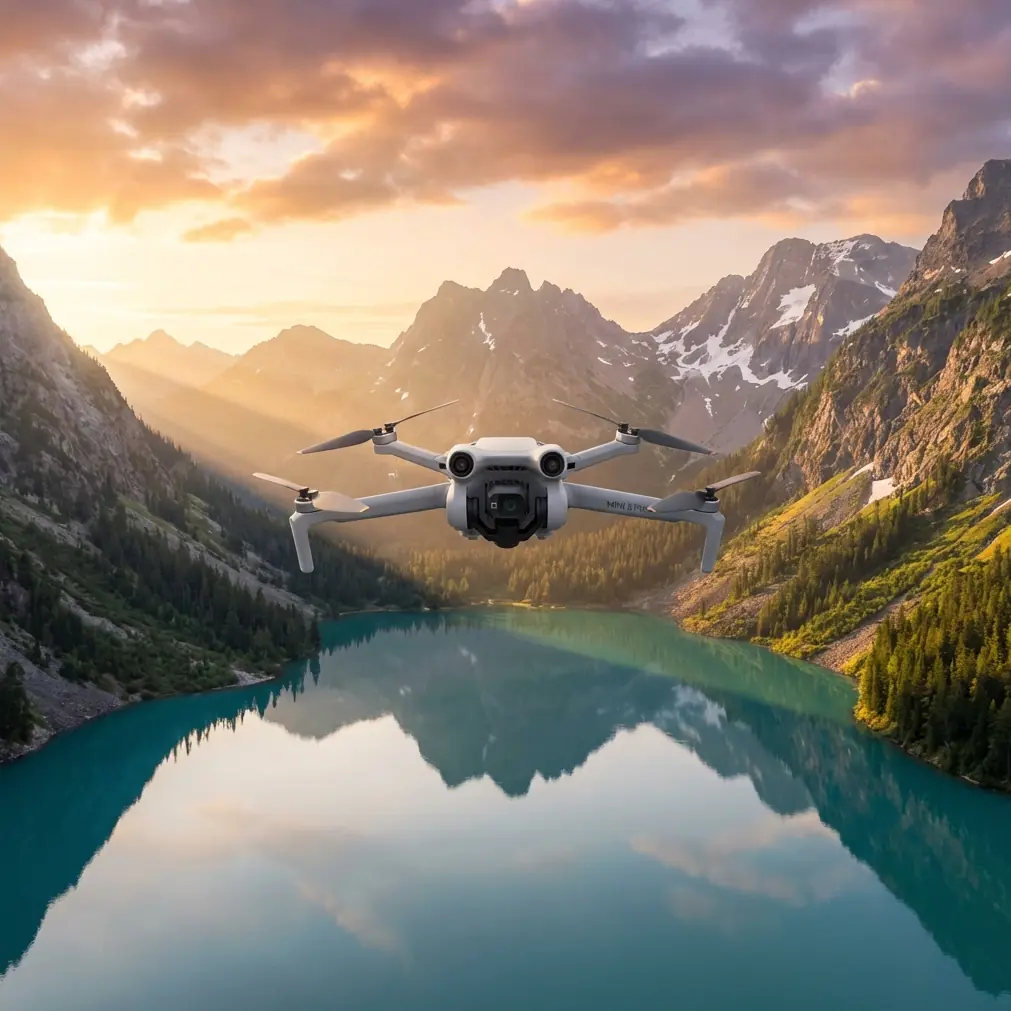
Mini 5 Pro Mapping Tips for Fields in Complex Terrain: What Autonomy News Really Tells Us
META: Mini 5 Pro mapping tips for complex terrain, including obstacle avoidance prep, pre-flight sensor cleaning, ActiveTrack limits, D-Log capture, and smarter field mission planning.
By Chris Park
Most drone pilots look at a logistics-aircraft headline and move on. That’s a mistake.
A recent contract award to Near Earth Autonomy offers a useful clue about where the whole UAV market is heading. Naval Air Systems Command selected the Pittsburgh-based autonomy company for the MARV-EL Increment 2 program, funding a prototype uncrewed Bell 505 built with Bell Textron, Moog, and XP Services. Strip away the platform size and mission profile, and one signal becomes obvious: autonomy is still the center of gravity.
That matters to anyone flying a Mini 5 Pro over farmland with broken elevation, tree lines, irrigation hardware, terraced edges, or narrow access lanes. Field mapping in complex terrain is not just about camera quality or battery count. It is about whether the aircraft can sense the environment consistently, maintain stable pathing, and help the pilot avoid bad decisions when terrain starts working against line of sight.
The Bell 505 prototype in that contract is a very different aircraft from a sub-250-gram class camera drone. Still, the operational lesson carries over cleanly. Serious UAV work keeps moving toward dependable autonomous behavior, not manual heroics. For a Mini 5 Pro pilot, that means the best mapping results come from treating obstacle sensing, tracking intelligence, and capture discipline as mission-critical systems rather than convenience features.
The real field-mapping problem: terrain makes simple plans fail
Flat demonstration fields are misleading.
A field bordered by poplars, drainage ditches, utility poles, greenhouses, or sloped embankments creates a different kind of mapping job. The aircraft may encounter sudden contrast shifts, partial GNSS masking near trees, changing wind behavior over ridges, and low-angle obstacles that are easy to miss when you build a route from a tablet.
This is where many operators make a subtle mistake. They assume mapping accuracy is decided in the air. In reality, the mission often succeeds or fails before takeoff.
If you are using a Mini 5 Pro in complex terrain, your first safety and image-quality step should be boring and physical: clean the vision sensors and camera glass before powering up for the mission. Dust, dried mist, pollen, fertilizer residue, and oily fingerprints can compromise obstacle avoidance behavior and reduce the consistency of the visual data the aircraft uses to understand its surroundings. In field environments, that contamination builds up faster than many pilots realize.
People love talking about AI flight features. Very few talk about wiping down the sensors properly before launch. They should.
A dirty forward or downward sensing system can turn a cautious route into an unpredictable one, especially when flying low over patterned crops or transitioning near terraces and orchard edges. On a mapping run, that can mean anything from hesitant braking to unnecessary route interruption to subtle path inconsistency that leaves you with uneven overlap.
What a logistics-drone contract has to do with your Mini 5 Pro
The Near Earth Autonomy award is not relevant because your Mini 5 Pro is about to become a cargo helicopter. It is relevant because it highlights what mature UAV programs prioritize: trusted autonomy integrated with the airframe and supported by specialist partners.
That contract joins Near Earth Autonomy with Bell Textron, Moog, and XP Services to develop an uncrewed Bell 505 prototype. Operationally, that kind of team structure reflects a simple truth: reliable autonomous flight is a system problem, not a single-feature problem. Airframe behavior, control authority, sensing, software logic, and mission execution all have to work together.
The same logic applies at small scale in field mapping.
Mini 5 Pro pilots often get distracted by one headline feature at a time. Obstacle avoidance. ActiveTrack. QuickShots. D-Log. Hyperlapse. Each sounds useful on its own, but mapping in complex terrain only gets better when you understand how these tools interact and where they stop being helpful.
Obstacle avoidance is not a substitute for route design. Subject tracking is not mapping automation. QuickShots are not survey outputs. D-Log does not improve agronomic accuracy by itself. Hyperlapse does not document a field if your path was inconsistent. The aircraft can support the mission, but the operator still has to shape the mission correctly.
That is the practical takeaway from bigger autonomy programs: trust the system, but build the workflow around its real operating envelope.
A better problem-solution workflow for complex terrain
Problem 1: Terrain edges create hidden collision risk
In farmland, obstacles rarely sit where the map suggests they do. Tree canopies lean. Trellis wires sag. Irrigation rigs shift. A berm can hide posts on the far side. If you are working near uneven elevation, the visual relationship between aircraft and obstacle changes fast.
Solution: Use obstacle avoidance as a guardrail, not a route planner
The Mini 5 Pro’s obstacle avoidance features matter most when they are backing up a conservative route plan. Keep enough altitude margin over slope transitions. Avoid threading between tree walls and hard vertical objects just because the drone can “see” them. Build wider turns than you think you need. If your field boundary is cluttered, split one complicated mission into two cleaner passes.
This is where that sensor-cleaning step pays off. Obstacle avoidance can only help if the aircraft has a clear visual read on the environment. In agricultural settings, a small film of dust can be the difference between confident obstacle perception and reduced reliability. That is not theory; it is operational discipline.
Problem 2: Operators misuse tracking features during documentation flights
ActiveTrack and subject tracking are powerful tools, but they are often misapplied in field work. A tractor inspection pass, moving irrigation check, or follow-along clip for farm documentation can look smooth, but tracking logic is designed around a subject, not around survey geometry.
Solution: Separate cinematic capture from mapping capture
Use ActiveTrack when you need contextual visuals of equipment movement, staff workflow, or field access routes. Do not confuse that with a mapping mission. Mapping needs repeatability, overlap, and predictable framing. Tracking can enrich a reporting package, but it should sit beside the mapping output, not replace it.
This distinction becomes more valuable in complex terrain. If a machine is moving along a sloped edge road or near tree cover, tracking may prioritize the subject while the surrounding hazard picture changes. Obstacle avoidance helps, but it should not encourage a mixed-purpose flight where you expect a tracking shot to also deliver clean map-grade coverage.
If you need help sorting out which modes are best for your acreage and terrain profile, you can message our field team here.
Problem 3: Pilots collect attractive footage that is weak for analysis
A lot of field operators come home with beautiful clips and poor decision-support imagery. Nice sunlight. Good color. Little value.
Solution: Use D-Log intentionally
D-Log is useful because it preserves more grading flexibility in scenes with harsh contrast, such as bright sky over dark tree belts, reflective irrigation channels, and patchy hillside shadow. For field documentation, that means you can recover more visual detail when reviewing drainage patterns, crop edge stress, access-road condition, or erosion signs.
Its operational significance is simple: complex terrain often creates ugly lighting. D-Log gives you more room to interpret the scene after the flight instead of locking yourself into a baked look that buries shadow detail or clips highlights.
That does not make D-Log a replacement for specialist multispectral workflows. It does make it far more practical when your mission includes both mapping support and visual reporting for landowners, agronomists, or farm managers who need to see the site clearly.
Problem 4: Pilots overlook fast pre-visualization tools
Many field teams either map everything in full detail or guess where issues are. Both approaches waste time.
Solution: Use QuickShots and Hyperlapse as scouting layers, not toys
QuickShots are often dismissed as social features, but they can be useful when you want a fast, repeatable establishing view of field boundaries, access points, tree encroachment, or water movement around a parcel. Hyperlapse can also help document change over time, especially when weather, irrigation, or vehicle movement affects how a site behaves across a short window.
Used correctly, these tools can help you decide where the actual mapping mission should focus. On complex terrain, that matters. Instead of surveying every acre with the same intensity, you can use a short pre-visualization sequence to identify problematic slopes, canopy-shadow zones, and obstacle-heavy margins before committing to the main flight.
The key is not to confuse speed with completeness. QuickShots and Hyperlapse are decision aids. They are not substitutes for structured data capture.
Why autonomy still depends on the pilot
The MARV-EL contract is a reminder that advanced drone operations are moving toward more autonomous execution. But even high-level programs do not eliminate planning; they reward it.
Near Earth Autonomy was chosen to develop an uncrewed Bell 505 prototype, and that selection alone says something meaningful. As UAV missions grow in complexity, the market values companies that can make aircraft behave predictably without constant stick input. For everyday Mini 5 Pro operators, the civilian version of that lesson is straightforward: better results come from reducing improvisation.
For field mapping, that means:
- cleaning the aircraft’s sensing surfaces before launch
- checking the route against elevation changes, not just field boundaries
- separating cinematic functions from survey functions
- using obstacle avoidance as protection rather than permission
- choosing D-Log when contrast conditions are likely to hide useful detail
- using ActiveTrack only when the mission goal is truly subject-based
- scouting smartly before committing to full capture
The difference between a casual drone flight and a dependable field operation is rarely dramatic. Usually it is a stack of small, disciplined choices.
A practical Mini 5 Pro field routine that works
If I were preparing a Mini 5 Pro for complex-terrain field work tomorrow morning, this is the order I’d care about most.
First, airframe and sensor cleaning. Camera glass, vision sensors, landing area. No shortcuts.
Second, boundary review with terrain in mind. Not just “where is the field,” but “where do slopes, poles, trees, wires, and equipment storage create risk?”
Third, mission separation. Decide whether the flight is for mapping, visual inspection, progress documentation, or marketing support. One sortie can include more than one purpose, but each segment should be deliberate.
Fourth, capture settings. If contrast will be harsh, D-Log earns its place. If the goal is movement documentation, ActiveTrack may help. If you need a quick spatial read of the site before detailed work, a short QuickShot or Hyperlapse pass can save time.
Fifth, conservative execution. Give obstacle avoidance the cleanest possible chance to work by not forcing the aircraft into tight terrain problems you could have avoided in planning.
That routine is less glamorous than talking about autonomous future flight. It is also what produces dependable results now.
The bigger lesson for Mini 5 Pro buyers and operators
The most useful thing in that recent autonomy news is not the aircraft model, the contract office, or the institutional scale. It is the emphasis on dependable autonomous behavior as the foundation of useful UAV work.
When Naval Air Systems Command funds a prototype under MARV-EL Increment 2, and when a company like Near Earth Autonomy is selected alongside Bell Textron, Moog, and XP Services, the message is clear: sophisticated drone missions live or die on how well the aircraft perceives, decides, and executes.
Your Mini 5 Pro mapping workflow follows the same principle at a smaller scale.
If you fly over complex fields, the smartest move is not chasing every intelligent feature at once. It is building a workflow that lets those features operate cleanly and predictably. Start with sensor cleanliness. Respect obstacle avoidance without leaning on it blindly. Use ActiveTrack only where it truly belongs. Capture in D-Log when terrain and lighting demand flexibility. Let QuickShots and Hyperlapse support planning, not distract from it.
That is how a compact drone becomes a serious field tool.
Ready for your own Mini 5 Pro? Contact our team for expert consultation.