
Mini 5 Pro for Low-Light Field Mapping: What Actually
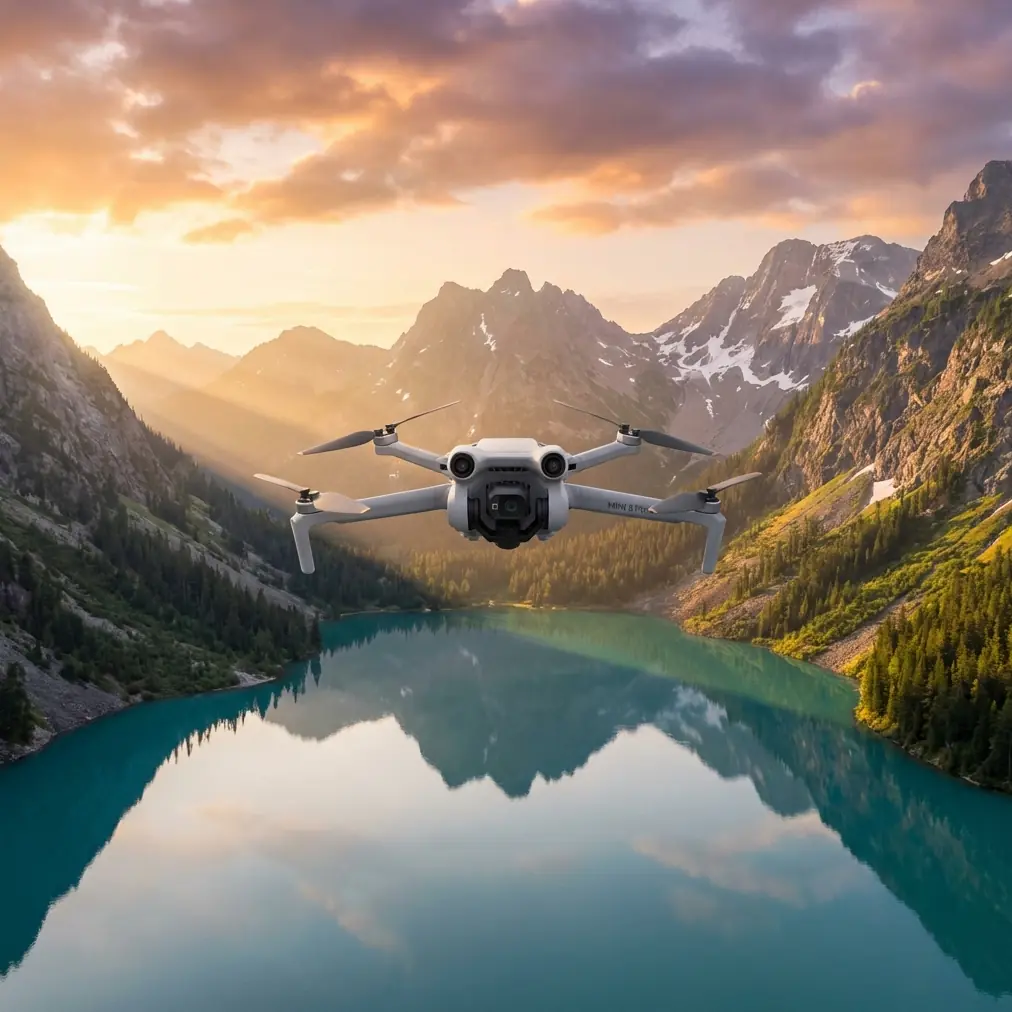
Mini 5 Pro for Low-Light Field Mapping: What Actually Matters in the Real World
META: A technical review of the Mini 5 Pro for low-light field mapping, with practical insights on obstacle avoidance, D-Log, ActiveTrack, and accessory choices that improve results.
Field mapping at dusk sounds simple until you try to do it with a compact drone. Light drops fast. Tree lines turn into dark walls. Power lines disappear into the background. Uniform crops lose texture. A small aircraft that feels effortless at noon suddenly asks much more from its camera, sensors, stabilization, and flight logic.
That is the right context for evaluating the Mini 5 Pro.
Not as a lifestyle drone. Not as a travel gadget. As a working platform for someone who needs usable visual data over farmland when the light is poor and the window to fly is short.
I approach this as a photographer first, but low-light field mapping is not really about pretty footage. It is about extracting readable information from difficult scenes. The question is whether the Mini 5 Pro can produce files and flight behavior that hold up when contrast is weak, shadows are deep, and situational awareness matters more than cinematic flair.
Since there is no specific new release bulletin or recent official update to anchor this piece, the most honest way to make this useful is to focus on the operational side of the Mini 5 Pro setup many pilots care about right now: how to configure a compact drone for low-light agricultural work, where the strengths are, and where the limits still show.
Why low-light mapping is harder than most pilots expect
Fields at low light are deceptive. To the eye, conditions can still seem manageable. To a drone camera, they are often borderline.
The main problem is not simply darkness. It is low micro-contrast. Soil boundaries flatten out. Ruts and irrigation lines fade. Wet patches merge into surrounding ground. If you are trying to inspect crop stress, drainage behavior, fence lines, or access paths near sunset, the drone has to preserve subtle tonal differences without drowning the image in noise reduction.
This is where D-Log becomes relevant in a practical way, not just a creative one.
A flatter profile such as D-Log gives you more room to retain highlight detail in bright sky bands while keeping shadow information in darker ground areas. On a field edge at dusk, that matters. You may be dealing with a bright western horizon and near-black crop rows in the same frame. A standard profile can look punchy on the controller screen yet throw away detail you later wish you had. D-Log usually gives a more forgiving file for post-flight analysis, provided you expose carefully and do not underexpose out of fear.
That “provided” matters. Compact drones in poor light do not like aggressive lifting in post. The better method is usually to expose as far to the right as conditions allow without clipping critical highlights. For mapping-style passes, that often means accepting a slower shutter than you would for a dramatic tracking shot, then relying on stable flight and measured speed instead of forcing high ISO.
The hidden value of obstacle avoidance after sunset
Low-light field work changes the value proposition of obstacle avoidance.
In bright daylight, obstacle sensing can feel like a convenience feature. In dim light near hedgerows, barns, silos, utility poles, and tree belts, it becomes part of your risk management stack. A small drone used for field mapping often flies near boundaries, access roads, drainage cuts, or windbreaks. Those are exactly the areas where depth perception becomes less reliable on the live feed.
Obstacle avoidance is not magic, and it should never replace route planning. But on a compact aircraft like the Mini 5 Pro, it has operational significance because it reduces the margin for a minor visibility mistake to become a major recovery problem. If you are flying a low-altitude pass to inspect field edge damage, a sudden rise in vegetation or an unlit wire corridor can catch you out quickly.
The caveat is equally important: obstacle sensors are not equally dependable in all low-light conditions. Deep shadow, low-contrast backgrounds, fine branches, and wires remain problem areas. That means the feature is best treated as a secondary layer, not permission to push harder. Pilots mapping fields in fading light should still bias toward higher safety altitudes on transit legs and only descend where the route is clean and already understood.
That discipline matters more than raw confidence in the aircraft.
ActiveTrack and subject tracking are not just for athletes and cyclists
Most people hear ActiveTrack or subject tracking and think action content. For field work, the use case is narrower but still real.
If you are documenting a moving farm vehicle, a walking inspection team, or livestock movement near a boundary, subject tracking helps maintain framing while you focus on spatial awareness and altitude. In low light, that can reduce controller workload at the exact moment when you need mental bandwidth for environmental judgment.
It is not a replacement for a proper mapping pattern, and it will not give you survey-grade outputs by itself. But for hybrid missions, where you need both broad situational coverage and follow-style observation, ActiveTrack can save time. You can record contextual movement around a problem area, then switch back to deliberate manual passes for the wider scene.
The operational significance here is efficiency. Light at dusk is finite. If a tracking mode shortens the time needed to capture supporting footage of a vehicle path, water flow route, or perimeter check, you have more of that narrow light window left for the critical overhead runs.
QuickShots and Hyperlapse: useful, but only in the right slice of the workflow
QuickShots and Hyperlapse sound decorative in a technical review, yet they are not useless for field operations.
QuickShots can be a fast way to create orientation footage around a fixed landmark such as a pump station, equipment shed, or damaged corner of a field. That matters if you hand material to a land manager, agronomist, or insurer who was not on site. A brief automated reveal can provide immediate geographic context that still images sometimes fail to communicate.
Hyperlapse has a more selective value. For low-light mapping specifically, it can illustrate movement trends such as shifting shadows, vehicle circulation, or cloud cover rolling over a property. The danger is that pilots use it when the mission really calls for sharper, slower, more controlled image capture. In other words, Hyperlapse is a supporting tool, not the main event.
If the goal is to assess field condition, you want repeatable angles, stable exposure, and minimal ambiguity. The automated creative modes are best used after the essential documentation is already secured.
Why a third-party accessory can make the Mini 5 Pro more useful
The most worthwhile third-party upgrade for this kind of work is often not flashy. It is a well-made strobe.
A compact, lightweight anti-collision strobe mounted cleanly on the Mini 5 Pro can improve visual orientation dramatically during late-evening operations, especially on return legs when the drone is silhouetted against dark ground. That does not improve the camera image directly. It improves pilot awareness, which in real operations may matter just as much.
I have seen pilots obsess over filters for dusk and ignore visibility. For low-light field mapping, I would put a quality strobe ahead of most accessories. It helps you reacquire the aircraft visually, judge heading more quickly, and maintain safer separation around trees or structures when ambient light collapses faster than expected.
A second useful add-on is a high-gain sun hood for the controller or phone screen. It sounds almost contradictory to mention glare control in a low-light article, but evening flights often involve a bright horizon and a dark foreground. That mix can make the display harder to read than you expect. Better screen visibility means better exposure decisions and safer route adjustments.
If you are deciding where to improve capability first, choose accessories that strengthen control and awareness before chasing stylistic image tweaks.
Camera handling for field detail in weak light
The Mini 5 Pro succeeds or fails here based on pilot choices more than menu labels.
For low-light mapping passes, avoid the temptation to let the drone handle everything automatically. Auto settings often react to changing sky brightness in ways that produce inconsistent files across a single run. When you later compare one field section to another, that inconsistency becomes a problem.
A more reliable approach is to lock the variables you can live with. Keep white balance fixed so the color of one pass does not drift against the next. Use D-Log if you are comfortable grading and want more tonal flexibility. Fly slower than you think you need to. Let stabilization do its job. Preserve detail first, then decide what needs aesthetic cleanup later.
This is also where the compact form factor of the Mini 5 Pro creates both an advantage and a limit. The advantage is obvious: it is easy to launch quickly when a brief weather gap opens or when you only have 20 minutes of workable twilight. The limit is that a small drone is more exposed to subtle wind and lower-light sensor constraints than a larger platform built for heavier imaging tasks.
That does not rule it out for field mapping. It simply means expectations should be set correctly. The Mini 5 Pro is strongest when used for fast reconnaissance, targeted inspection, and visually informed decision-making. It is less convincing when pilots expect it to behave like a dedicated survey aircraft in every condition.
Practical flight pattern advice for dusk field work
If I were setting up a Mini 5 Pro specifically for this job, I would keep the workflow disciplined:
Start with a higher-altitude orientation pass while there is still residual light in the sky. This gives you a readable overview and helps identify dark obstacles before you descend. Then move into low, slow edge runs only where you already understand the terrain. Save any ActiveTrack-based supporting footage for the middle of the mission, not the end, when light is falling fastest. Finish with return paths that keep generous clearance from trees and built structures.
That sequence sounds ordinary. It is not. It acknowledges the reality that low-light flying punishes improvisation.
I would also avoid overreliance on a single capture type. Shoot your structured passes, then grab a few oblique stills from key trouble spots. In flat light, oblique angles often reveal surface texture that top-down views suppress. If drainage, wheel damage, or erosion is the concern, that extra angle can be the difference between “possibly there” and “clearly visible.”
For pilots building a repeatable workflow, the smartest move is to create a short preflight checklist tuned to dusk operations. If you want to compare setups or accessories with other field pilots, this quick WhatsApp chat link is a practical way to exchange notes without turning the process into guesswork.
Where the Mini 5 Pro stands for this use case
The Mini 5 Pro makes the most sense for operators who need speed, portability, and enough imaging control to extract useful detail from difficult evening conditions. Its real strengths for low-light field mapping are not glamorous. They are the things that reduce friction: compact deployment, obstacle avoidance as a backup layer near boundaries, D-Log for preserving tonal range, and tracking features that save time when you need supporting footage of moving activity.
Two features stand out in operational terms.
First, D-Log matters because dusk scenes can contain both a bright horizon and heavily shadowed crops in one frame. That wider grading latitude can preserve field information that a standard look may crush or clip. Second, obstacle avoidance matters because mapping often pushes the aircraft near treelines, poles, and structures at the exact time of day when visual contrast is falling. Used correctly, it adds a meaningful safety margin.
The supporting tools—ActiveTrack, subject tracking, QuickShots, Hyperlapse—are not the headline for this mission, but they become useful when you treat them as time-saving supplements rather than as the mission itself.
My view, as someone who cares about both image quality and field practicality, is straightforward: the Mini 5 Pro is a strong low-light reconnaissance and documentation platform if you fly it like a disciplined operator, not like a content creator chasing the last light for style alone. Add a reliable strobe, keep your exposure strategy deliberate, and respect the limitations of small-sensor work after sunset. Do that, and the aircraft becomes far more than a casual flyer.
Ready for your own Mini 5 Pro? Contact our team for expert consultation.