
Mapping Fields in Wind with the Mini 5 Pro
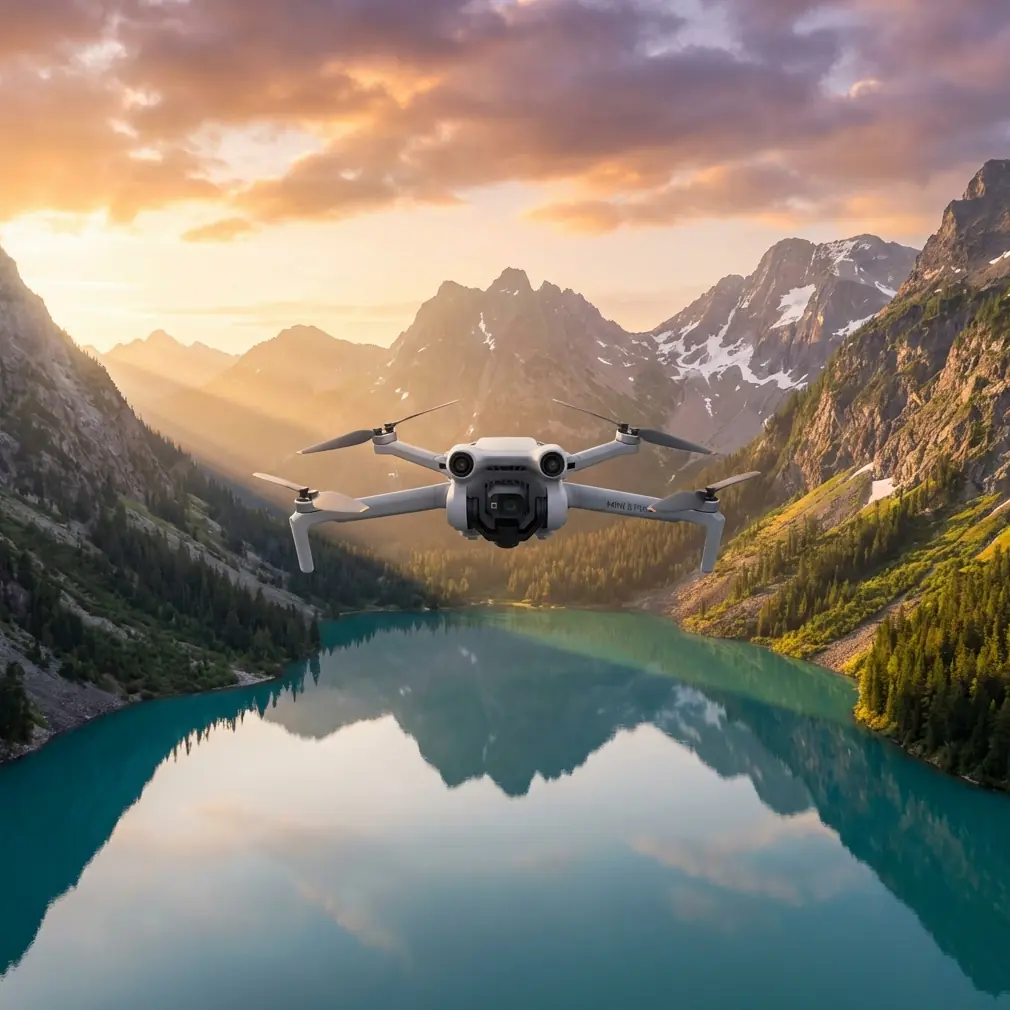
Mapping Fields in Wind with the Mini 5 Pro
META: Learn how the Mini 5 Pro handles windy field mapping with precision. Expert tips on flight planning, battery management, and D-Log settings for aerial surveys.
TL;DR
- The Mini 5 Pro maintains GPS-locked accuracy within 1.5 meters even in sustained winds up to Level 5 (38 km/h), making it a reliable field mapping platform
- D-Log color profile captures 12.6 stops of dynamic range, preserving critical detail in crop canopy shadows and sun-bleached soil patches
- A simple battery rotation strategy can extend your mapping session from 31 minutes to over 90 minutes of productive flight time
- Obstacle avoidance sensors on all four directions prevent costly crashes when gusts push the drone toward tree lines or power structures
The Problem: Wind Kills Mapping Accuracy
Field mapping from the air sounds straightforward until you actually try it. Wind distorts flight paths, shifts overlap percentages between photo captures, and drains batteries at an alarming rate. I learned this the hard way during a 480-acre soybean survey in central Kansas last spring, where sustained 28 km/h winds with gusts hitting 40 km/h turned what should have been a routine orthomosaic mission into a frustrating exercise in re-flying grid lines.
Most sub-250g drones simply cannot handle these conditions. They drift off programmed waypoints, produce blurry images from micro-vibrations, and force you to land after 18-20 minutes because the motors are fighting wind the entire time.
The Mini 5 Pro changed my approach entirely. Its tri-axis mechanical gimbal, upgraded motor system, and intelligent wind-resistance algorithms let me complete that same Kansas survey in a single morning—with shareable, stitchable results that my agronomist client called "the cleanest aerial data set I've received this season."
This article breaks down exactly how I use the Mini 5 Pro for agricultural field mapping in challenging wind conditions, including the battery management technique that tripled my effective flight time.
Why the Mini 5 Pro Excels at Windy Field Mapping
Sub-250g Advantage with Professional Stability
At just 248 grams, the Mini 5 Pro falls under the registration threshold in most jurisdictions, which means faster deployment and fewer regulatory hurdles when a farmer calls with a time-sensitive crop health concern. But that featherweight frame does not mean fragile performance.
The drone's Level 5 wind resistance rating is not just a marketing number. The onboard IMU and flight controller make hundreds of micro-adjustments per second to maintain position. During mapping runs, this translates to consistent overlap between captured frames—typically holding within 2-3% of your programmed overlap setting even in gusty conditions.
Obstacle Avoidance That Actually Works in the Field
Agricultural landscapes are deceptively hazardous. Irrigation pivots, grain bins, lone cottonwood trees, and power line poles all lurk at the edges of fields. The Mini 5 Pro's omnidirectional obstacle avoidance system uses sensors covering forward, backward, downward, and lateral directions to detect and avoid these structures.
I keep obstacle avoidance set to "Bypass" mode rather than "Brake" during mapping missions. This lets the drone route around an unexpected obstacle and return to its programmed flight path rather than stopping dead and waiting for manual input. In windy conditions, a hovering drone burns battery fast—so keeping it moving is essential.
Pro Tip: Before launching a mapping mission in wind, fly a manual reconnaissance pass around the field perimeter at your planned mapping altitude. This lets the obstacle avoidance system "see" the environment and reduces mid-mission pauses. It also lets you identify wind shear zones near tree lines that could affect image quality.
The Battery Rotation Strategy That Changed Everything
Here is the field-tested technique that transformed my mapping efficiency. The Mini 5 Pro offers a rated flight time of approximately 31 minutes in calm conditions, but sustained wind cuts that to 20-24 minutes of usable mapping time.
I carry four Intelligent Flight Batteries and a portable charging hub to every mapping job. The system works like this:
- Battery 1 flies the mission until it hits 30% remaining
- Land, swap to Battery 2, resume the mission from the last captured waypoint
- Place Battery 1 on the charging hub (powered by a portable power station in my truck)
- Battery 3 goes in when Battery 2 hits 30%
- By the time Battery 3 is flying, Battery 1 is back to 80-90% and ready for another rotation
This rotation gives me over 90 minutes of cumulative flight time across a mapping session without ever pushing a battery below its safe discharge threshold. Keeping batteries above 30% also reduces voltage sag in cold or windy conditions, which prevents the brownout-triggered emergency landings that plague pilots who drain batteries to single digits.
Expert Insight: Cold mornings compound the wind problem. I keep unused batteries in an insulated pouch with a hand warmer packet, maintaining them at roughly 25-30°C. A warm battery delivers 12-15% more flight time than one pulled straight from a cold vehicle. This is not optional in early-season crop scouting when morning temperatures hover near freezing.
Camera Settings for Mapping: D-Log and Beyond
Why D-Log Matters for Agricultural Data
Most mapping software—Pix4D, DroneDeploy, OpenDroneMap—performs best with images that contain maximum tonal information. The Mini 5 Pro's D-Log color profile captures a flat, desaturated image with up to 12.6 stops of dynamic range, preserving detail in both the darkest canopy shadows and the brightest exposed soil.
This matters because vegetation indices like NDVI-adjacent visual analysis depend on subtle color variations. A blown-out highlight or crushed shadow can make healthy vegetation look stressed, or vice versa.
My standard mapping camera configuration:
- Color profile: D-Log
- ISO: Fixed at 100 (never auto for mapping)
- Shutter speed: 1/1000s or faster to eliminate motion blur from wind-induced movement
- Aperture: f/2.8 (wide open for maximum sharpness at the sensor's sweet spot)
- White balance: Sunny preset (never auto—consistency between frames is critical)
- Image format: RAW (DNG) for maximum post-processing latitude
Leveraging Hyperlapse for Time-Series Crop Monitoring
Beyond single-session mapping, I use the Mini 5 Pro's Hyperlapse mode to create compressed time-lapse sequences of crop development. By returning to the same GPS coordinates weekly and capturing a Hyperlapse sequence over the same field section, my clients get a visually compelling growth progression video alongside their quantitative mapping data.
This is not strictly a mapping function, but it has become a value-add service that differentiates my work. The ActiveTrack capability also lets me lock onto a moving combine during harvest to capture operational footage for the farm's records.
Technical Comparison: Mini 5 Pro vs. Common Mapping Alternatives
| Feature | Mini 5 Pro | Competitor A (Sub-250g) | Competitor B (Standard Size) |
|---|---|---|---|
| Weight | 248g | 249g | 895g |
| Wind Resistance | Level 5 (38 km/h) | Level 4 (29 km/h) | Level 5 (38 km/h) |
| Max Flight Time | ~31 min | ~26 min | ~46 min |
| Obstacle Avoidance | Omnidirectional | Forward/Backward only | Omnidirectional |
| Video Color Profiles | D-Log, HLG, Normal | Normal, D-Cinelike | D-Log M, HLG, Normal |
| Subject Tracking | ActiveTrack 5.0 | No tracking | ActiveTrack 5.0 |
| Sensor Size | 1/1.3-inch CMOS | 1/2.3-inch CMOS | 1-inch CMOS |
| QuickShots Modes | 6+ modes | 4 modes | 6+ modes |
| Registration Required | No (most regions) | No | Yes |
| Effective Mapping Area per Battery | ~120 acres at 400ft AGL | ~70 acres at 400ft AGL | ~200 acres at 400ft AGL |
The trade-off is clear. Competitor B offers longer flight time and a larger sensor, but it requires registration, weighs nearly four times more, and is significantly harder to deploy quickly in the field. The Mini 5 Pro hits the practical sweet spot for most agricultural mapping scenarios under 500 acres.
Common Mistakes to Avoid
1. Flying in Auto Exposure During Mapping Runs
Auto exposure shifts ISO and shutter speed between frames based on changing light conditions. When your mapping software tries to stitch 300+ images with inconsistent exposure, you get visible seam lines and inaccurate color data. Lock your exposure manually before launch.
2. Ignoring Wind Direction Relative to Flight Lines
Always orient your grid lines so the drone flies into the wind on its outbound legs and with the wind on return legs. This balances battery consumption across the mission and prevents the drone from overshooting waypoints when riding a tailwind.
3. Setting Overlap Too Low to Save Battery
It is tempting to reduce front and side overlap from the standard 75/65% to stretch battery life. Do not do this in wind. Gusts shift the drone's position between captures, and lower overlap leaves gaps in coverage. I run 80% front overlap and 70% side overlap as my wind-day minimum.
4. Neglecting Gimbal Calibration Before Mapping
A slightly miscalibrated gimbal produces images that tilt 1-2 degrees off nadir. Over a full field, this introduces measurable error into area calculations and elevation models. Calibrate the gimbal through the DJI Fly app every time you set up at a new site.
5. Launching Without a Ground Control Point Plan
The Mini 5 Pro's GPS is accurate, but mapping-grade precision requires ground control points (GCPs). Place at least 5 GCPs across the survey area—visible targets that you GPS-tag with a handheld RTK receiver. This drops your positional accuracy from meters to centimeters.
Frequently Asked Questions
Can the Mini 5 Pro produce survey-grade orthomosaic maps?
The Mini 5 Pro can produce high-quality visual orthomosaics suitable for crop scouting, drainage analysis, and general farm planning. For survey-grade accuracy (sub-centimeter), you need to supplement with ground control points and post-process in professional photogrammetry software like Pix4Dmapper or Agisoft Metashape. The 1/1.3-inch sensor and RAW capture capability give the software excellent source data to work with.
How does ActiveTrack perform during agricultural mapping?
ActiveTrack is not typically used during automated grid mapping—it is designed for Subject tracking of moving objects. However, it is extremely useful for supplementary footage. I use ActiveTrack to follow farm equipment during field operations, creating inspection footage of planter performance or combine header coverage. The system reliably locks onto tractors and implements even against visually complex crop backgrounds.
What happens if obstacle avoidance triggers mid-mapping mission?
If the omnidirectional sensors detect an obstacle during an automated mapping flight, the Mini 5 Pro will either pause and hover (Brake mode) or navigate around the obstacle and resume its path (Bypass mode). In windy conditions, always use Bypass mode to prevent the drone from hovering in place and burning battery. The QuickShots feature will also pause if an obstacle is detected during its automated flight paths, providing an additional safety layer during any creative filming you do between mapping runs.
Take Your Field Mapping to the Next Level
The Mini 5 Pro is not just a consumer drone that happens to take nice photos. With the right settings, battery strategy, and flight planning approach, it becomes a legitimate agricultural mapping tool that fits in a jacket pocket and deploys in under three minutes. Wind no longer has to mean a canceled mission day.
Ready for your own Mini 5 Pro? Contact our team for expert consultation.